Saskatchewan Rules for Riding a Ditch
Riding an ATV or UTV in Saskatchewan is an incredible way to experience the vast beauty of our province, but it often brings a lot of confusion, especially when it comes to navigating the grey areas of ditch riding. Many riders wonder where they can and can't go, how close is too close to the road, and what happens if they get it wrong. This guide aims to clear up that confusion, diving deep into the specific rules and common sense practices you need to know to safely and legally ride your machine in Saskatchewan's ditches.
The Core Rule: Keeping Your Distance from the Travelled Portion
One of the most foundational, and often misunderstood, rules for ATV and UTV operation in Saskatchewan revolves around maintaining a safe distance from the main traffic lanes. It’s not just about avoiding cars; it’s about understanding the specific legal parameters that define where your machine is permitted. This is where the infamous "2 Metre Rule" comes into play.
Understanding the "2 Metre Rule"
At the heart of Saskatchewan's regulations for ditch riding is the "2 Metre Rule." This rule, as outlined in [Saskatchewan Ditch Riding and the 2-Metre Rule], mandates that when you are operating your ATV or UTV in a ditch adjacent to a highway, grid road, or other public road, you must stay at least two metres from the "travelled portion" of that highway or road. Now, what exactly constitutes the "travelled portion"? It's not just the paved or gravelled surface where cars drive. It generally refers to the part of the road designed and maintained for vehicular traffic, including the shoulder that vehicles might use.
The intent behind this rule is multifold: first, it’s a critical safety measure. Maintaining this distance creates a buffer zone between your off-road machine and fast-moving traffic, significantly reducing the risk of collisions. Picture a semi-truck flying down a provincial highway; the suction and spray alone can be a hazard, let alone the potential for a vehicle to swerve. Second, it helps preserve the integrity of the road infrastructure itself. Ditches are designed for drainage, and heavy machines, particularly during wet conditions, can cause erosion or damage that impacts road stability. Lastly, it defines a clear legal boundary. Without it, riders might inadvertently stray too close, leading to dangerous situations or potential infractions. For example, if you're riding a wide side-by-side like those offered by SuperATV and you're not paying attention, that two-metre gap can disappear quicker than you think.
What Happens If You Don't Maintain the Distance?
Ignoring the 2 Metre Rule can lead to some pretty significant headaches. A peace officer who observes you operating your ATV or UTV closer than two metres to the travelled portion of a road can issue you a ticket. The penalties for such infractions can be steep, with [Saskatchewan Fines Capped at $1,000] under the Act. Beyond the immediate financial sting, there's the much larger issue of safety. Being too close to traffic dramatically increases your risk of an accident. Even if you're an experienced rider, the actions of other drivers are unpredictable. A momentary lapse in concentration, a sudden gust of wind, or an unexpected road hazard could put you in harm's way.
Think about the enforcement side of things. Peace officers, including RCMP and local bylaw enforcement, are quite familiar with these rules. They aren't looking to ruin your fun, but they are tasked with ensuring public safety. If you're seen consistently violating the distance rule, it signals a disregard for safety and regulations, which can lead to closer scrutiny of your overall riding practices. Moreover, in the unfortunate event of an accident, if it's found you were not adhering to the two-metre rule, it could have serious implications for liability and insurance claims, even if you weren't directly at fault for the collision itself.
The Importance of Visibility and Caution
When you're riding in a ditch, even adhering strictly to the two-metre rule, you're still in a proximity to public roadways where traffic moves at high speeds. This makes visibility paramount, and exercising extreme caution is non-negotiable. It's not enough just to be behind the two-metre line; you need to be seen and predictable.
Daytime visibility can be enhanced by wearing brightly coloured riding gear. Fluorescent colours like neon green or orange stand out against most natural Saskatchewan backdrops. Some riders even attach a tall whip flag to their machine, especially if riding in areas with tall grass or undulating terrain that might obscure their view from the road. For machines like those equipped with SuperATV accessories, adding LED light bars or amber strobe lights can also dramatically improve your presence, particularly in dusty conditions or at dusk/dawn.
At intersections, approaches, or anytime you need to cross a road, caution takes on an even greater importance. Always slow down, look both ways multiple times, and assume that drivers on the main road might not see you. Make eye contact with drivers if possible, and signal your intentions clearly. Remember that while you might be legally entitled to cross, the onus is on you to do so safely without impeding traffic or causing a hazard. Never assume a driver will yield to you. Practicing defensive riding means anticipating potential risks and acting proactively to mitigate them, not just reacting to what happens around you.
Navigating Specific Ditch Riding Scenarios and Exceptions
While the 2-metre rule provides a solid framework, riding in Saskatchewan’s vast landscape often presents unique situations. Understanding how to handle road crossings, bridges, and local municipal variations is crucial for a smooth and legal ride.
Crossing Highways and Roads
One of the most common questions riders have is about crossing roads when they're operating in a ditch. The [Saskatchewan's All Terrain Vehicles Act] is quite clear on this, outlining specific procedures that must be followed to ensure safety and legality. When you need to cross a highway, grid road, or any other public roadway, you are required to do so by the shortest, most direct route possible. This isn't the time for meandering diagonals; it's a straight shot across to the ditch on the other side.
Crucially, before you even begin to cross, you must bring your machine to a complete stop. This isn't a rolling stop; it's a full halt, allowing you to thoroughly check for oncoming traffic in both directions. Furthermore, if you have any passengers on your ATV or UTV, they are required to dismount the machine before the crossing commences and walk across the road separately. Only once the machine has safely crossed and is on the other side, can passengers then re-mount. This rule, outlined in [Saskatchewan Crossings Require Passengers to Dismount], is a direct safety measure to minimize exposure to traffic during the crossing. Imagine a multi-passenger UTV, like some of the larger SuperATV models, trying to make a quick crossing with a full crew. The time it takes, and the increased area it occupies, can be significantly risky. Therefore, the safest practice is for all but the operator to dismount and cross on foot, and for the operator to cross using [Saskatchewan Crossings by the Shortest Route].
Bridges, Culverts, and Other Structures
What about when your ditch riding path encounters a bridge, a culvert, or a weir? These structures present specific challenges and rules that often catch riders off guard. Generally, the All Terrain Vehicles Act considers these structures as part of the "highway" or "roadway" for the purposes of ATV operation. This means you cannot typically operate your ATV or UTV on a bridge, over a culvert, or across a weir if it's part of a public thoroughfare, as this would put you directly on the travelled portion of the road.
The expectation is that you would find a safe and legal way to bypass these structures, often by utilizing the shortest route across the adjacent road or by finding a legal crossing point upstream or downstream if a suitable alternative exists. Riding directly on a bridge meant for vehicle traffic poses immense safety risks, both for you and for other road users. Not only is it illegal, but the narrow confines and potential for unexpected traffic make it extremely dangerous. Always look for alternative routes or be prepared to dismount and walk your machine across if no other safe, legal option presents itself, adhering to the same rules as crossing a regular highway.
Municipal Bylaws and Ditch Riding
Here's where things can get a little tricky. While the provincial [Saskatchewan's All Terrain Vehicles Act] sets the baseline rules for ATV and UTV operation, municipalities across Saskatchewan have the authority to enact their own bylaws that can either permit or prohibit ATV and UTV use within their specific jurisdiction. This means that what's perfectly legal in one rural municipality (RM) might be strictly prohibited in an adjacent town or village.
For example, a rural municipality might have a bylaw that allows ATVs and UTVs to operate on certain designated ditches or even some low-traffic grid roads within their boundaries, possibly to facilitate access for agricultural purposes or to specific recreational areas. Conversely, a town or village might have a blanket ban on ATV and UTV operation within all its corporate limits, including all ditches, shoulders, and streets, to address noise concerns or pedestrian safety.
It is absolutely imperative that before you ride in any new area, especially if you're entering a different RM, town, or village, you take the time to inquire about their specific local bylaws. A quick call to the municipal office or a check of their official website can save you a significant headache and a potential fine. Getting caught unaware can be frustrating, particularly if you're visiting from out of town and were simply following provincial rules. This is why the advice in [Saskatchewan Municipal Bylaws on Roads] is so critical – always do your homework!
Essential Equipment and Rider Responsibilities for Ditch Riding
Riding in Saskatchewan’s ditches isn't just about knowing where you can go; it’s also about ensuring you and your machine are properly equipped and that you understand your responsibilities as an operator. This isn't just good practice; it’s often the law.
Lighting, Flags, and Visibility Gear
When you're out riding, especially in ditches, visibility is your best friend. Even if you're not riding at night, overcast days, dusty conditions, or areas with tall grass can significantly reduce how well other road users can see you.
For riding during the hours of darkness (half an hour after sunset to half an hour before sunrise), your ATV or UTV must be equipped with a functional headlight and taillight. These aren't suggestions; they're legal requirements. Your headlight needs to illuminate the path ahead effectively, and your taillight must be clearly visible from behind. It’s also a good idea to ensure your brake lights are working. Beyond the legal minimum, consider adding aftermarket lighting. This is where brands like SuperATV really shine, offering a wide array of LED light bars, spot lights, and flood lights that can dramatically improve your visibility and your ability to see terrain features. Some riders also opt for amber strobes or flashing lights, particularly for utility machines or when riding in areas with heavy dust.
In terms of personal gear, bright, fluorescent clothing is always a wise choice. It helps you stand out against the landscape, making you more noticeable to vehicle traffic, other riders, and even wildlife. Attaching a brightly coloured whip flag to your machine, especially if it's over seven feet tall, can also be incredibly effective, particularly if you're riding in tall crops or hilly terrain where your machine might be obscured from view. This simple addition can extend your visible profile significantly, providing an extra layer of safety.
Insurance and Licensing Requirements
Many new riders are surprised to learn that even for off-road machines like ATVs and UTVs, there are significant insurance and licensing requirements in Saskatchewan. This is particularly true when you operate these machines anywhere near or on public roadways, which includes ditches.
First and foremost, you are legally required to carry a minimum amount of liability insurance. The [Saskatchewan Minimum Insurance Requirement] specifies a minimum of $200,000 in third-party liability coverage. This insurance protects you financially if you are found at fault for an accident that causes injury to another person or damage to their property. Without it, you could be personally responsible for devastating costs. Peace officers have the right to ask for proof of this insurance, so always carry it with you when you ride. Remember, [Two Hundred Thousand in Coverage] is the floor, and many experienced riders opt for higher limits for greater peace of mind.
Secondly, operating an ATV or UTV on public land, including ditches adjacent to roads, requires you to hold a valid driver's licence. [Saskatchewan Requires a Driver's Licence] for operators of these machines, with specific rules regarding age and supervision. Generally, operators must be at least 16 years old and possess a valid Class 1, 2, 3, 4, or 5 driver's licence. There are exceptions for younger riders (12-15 years old) who can operate an ATV under direct adult supervision, provided the supervisor meets specific criteria (e.g., holding a licence for at least 365 days). However, these exceptions are often subject to additional conditions, such as the younger rider having completed an approved safety course. Always confirm the specific age and supervision rules before allowing a minor to operate.
Helmet and Eye Protection Mandates
Safety gear isn't just about looking the part; it's about protecting yourself from serious injury. In Saskatchewan, wearing an approved helmet and appropriate eye protection is a non-negotiable legal requirement when operating an ATV or UTV.
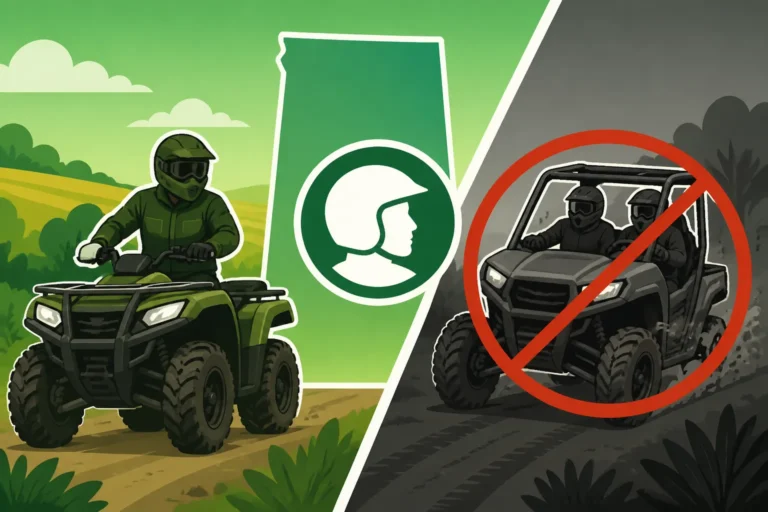
The [Saskatchewan Helmet and Eye Protection Rules] mandate that every operator and passenger on an ATV or UTV must wear a helmet that meets recognized safety standards, such as those set by DOT (Department of Transportation), Snell, ECE (Economic Commission for Europe), or CSA (Canadian Standards Association). This means a regular bicycle helmet won't cut it. The helmet must be properly secured with the chin strap fastened. A helmet is your primary defence against head injuries, which can be life-altering, even in low-speed accidents. Ditch riding, with its potential for unexpected bumps, ruts, and obstacles, makes a good helmet absolutely essential.
Alongside a helmet, you must wear eye protection. This can be in the form of goggles or a face shield integrated into your helmet. The purpose is to protect your eyes from dust, flying debris, insects, branches, and even the wind, all of which can impair your vision and lead to an accident. Imagine hitting a patch of gravel kicked up by a passing car or a branch whipping into your face while you're trying to navigate a narrow ditch – proper eye protection prevents those momentary distractions from becoming serious incidents. Even if your machine, perhaps a UTV from SuperATV, has a windshield, eye protection is still generally required as it may not fully protect against all hazards.
Practical Tips for Safe and Respectful Ditch Riding
Beyond the legal requirements, there are plenty of common-sense practices that will make your ditch riding experience safer, more enjoyable, and ensure you remain a good neighbour in our shared Saskatchewan landscape.
Respecting Private Property
It cannot be stressed enough: just because you're in a ditch doesn't mean you're immune to trespass laws. Many ditches run alongside private property, such as farmland, pastures, or residential yards. The boundary between public ditch and private land can sometimes be unclear, especially in rural areas where fences might be absent or far from the road. [Saskatchewan Trespass Law for Riders] makes it very clear that entering private land without permission is illegal, and property owners have the right to enforce this.
Always assume that land bordering a ditch is private property unless you have explicit knowledge or signage indicating otherwise. If you need to access private land from a ditch, or if you believe the ditch itself might encroach on private property, you must seek and obtain permission from the landowner first. This could mean a quick phone call, a polite knock on the door, or looking for posted signs. Trespassing can lead to confrontation, fines, and even legal action from landowners who are simply trying to protect their property. Being a respectful rider means understanding and honouring these boundaries.
Environmental Considerations
As outdoor enthusiasts, we all have a responsibility to minimize our impact on the environment. Ditch riding, while a common practice, needs to be done with an awareness of the local ecosystem. The ditches often serve as critical drainage pathways, habitat for small animals, and can contain sensitive vegetation.
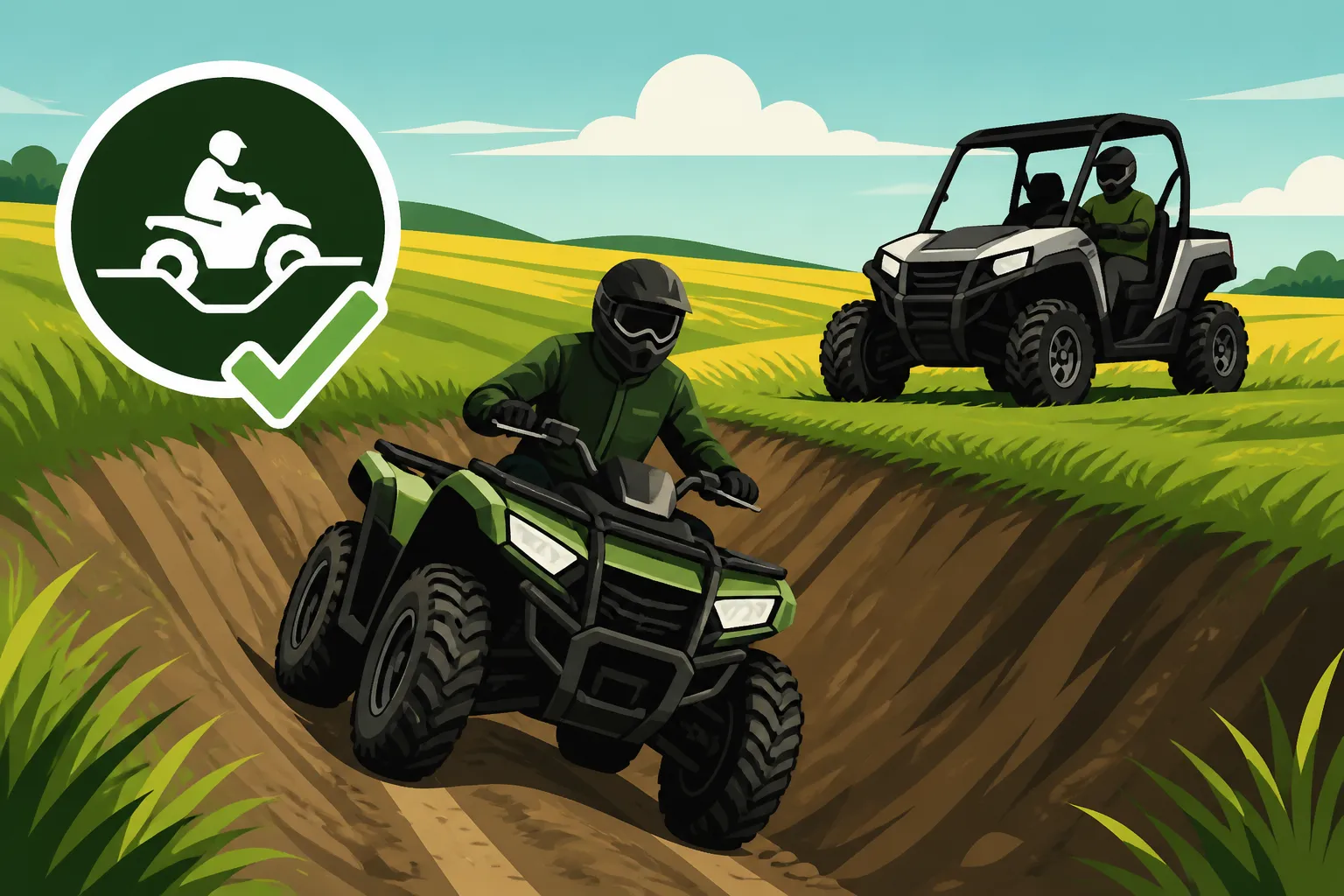
Avoid riding through extremely wet or muddy areas if you can. While getting stuck can be part of the adventure, excessive rutting can damage the ditch's ability to drain properly, lead to erosion, and create unsightly scars on the landscape. Stick to established paths or areas where your impact will be minimal. Be mindful of noise, especially when riding near residential areas or livestock. While ATVs and UTVs are inherently noisy, being considerate can help maintain positive relationships with local residents and farmers. Finally, always practice "Leave No Trace" principles. Pack out everything you pack in, and if you see any litter, consider picking it up. Our natural spaces are a privilege to enjoy, and we all play a part in preserving them.
What to Do If Stopped by a Peace Officer
It’s an inevitable part of riding in areas where regulations exist: at some point, you might be stopped by a peace officer. Whether it's the RCMP, a provincial park officer, or a local bylaw enforcement officer, knowing how to respond can make the encounter smooth and respectful for everyone involved.
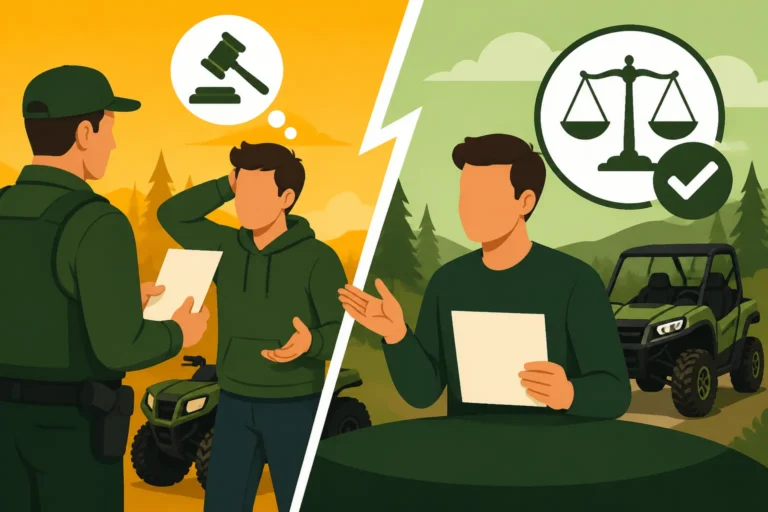
Firstly, if you see an officer signalling you to stop, do so safely and promptly. Pull over to the side of the ditch or road, turn off your engine, and keep your hands visible. Be polite and cooperative. The officer will likely ask for your driver's licence, proof of vehicle ownership (such as a bill of sale, as there's no provincial registration for ATVs), and proof of insurance. This is why it’s crucial to carry these documents with you every time you ride. As detailed in [Saskatchewan Equipment Checks by Officers], officers are within their rights to inspect your machine and your paperwork.
Answer their questions truthfully and respectfully. If you don't understand a question, politely ask for clarification. If you are issued a ticket and you believe it is unwarranted, you can certainly express your disagreement calmly, but the time for full debate is in court, not on the roadside. Accept the ticket and then follow the instructions on it to dispute it if you choose to. Remember, the officer is doing their job to enforce [Saskatchewan's All Terrain Vehicles Act] and ensure everyone's safety. A cooperative attitude goes a long way.
Disclaimer
This article is for general informational purposes only and does not constitute professional advice. Laws, prices and regulations vary by location and change over time. Consult a qualified professional for guidance on your specific situation.