Saskatchewan Rules for Riding After Dark
When the sun dips below the horizon in Saskatchewan, and you're still out on your ATV or UTV, the experience changes dramatically. What was a clear path just moments ago can become a maze of shadows and deceptive terrain, and the stress of wondering if your machine is even legal to ride after dark can really put a damper on your adventure. This guide aims to clear up all the confusion surrounding Saskatchewan's specific rules for riding ATVs and UTVs after dark, helping you stay safe and compliant.
Understanding Saskatchewan's Core Lighting Requirements for Night Riding
Riding an ATV or UTV after dark isn't just about throwing on any old light and hoping for the best. Saskatchewan's regulations are quite clear on what your machine needs to be equipped with to be considered safe and legal for night operation. It's all about making sure you can see where you're going and, crucially, that other people can see you.
Essential Lighting Equipment You Must Have
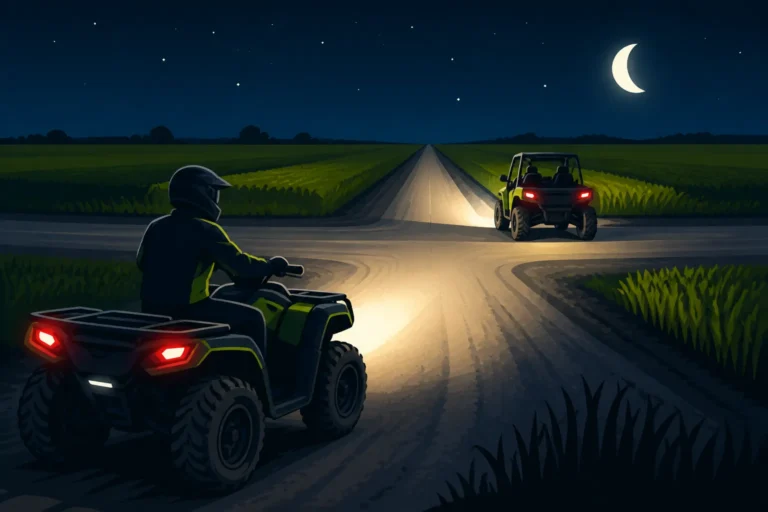
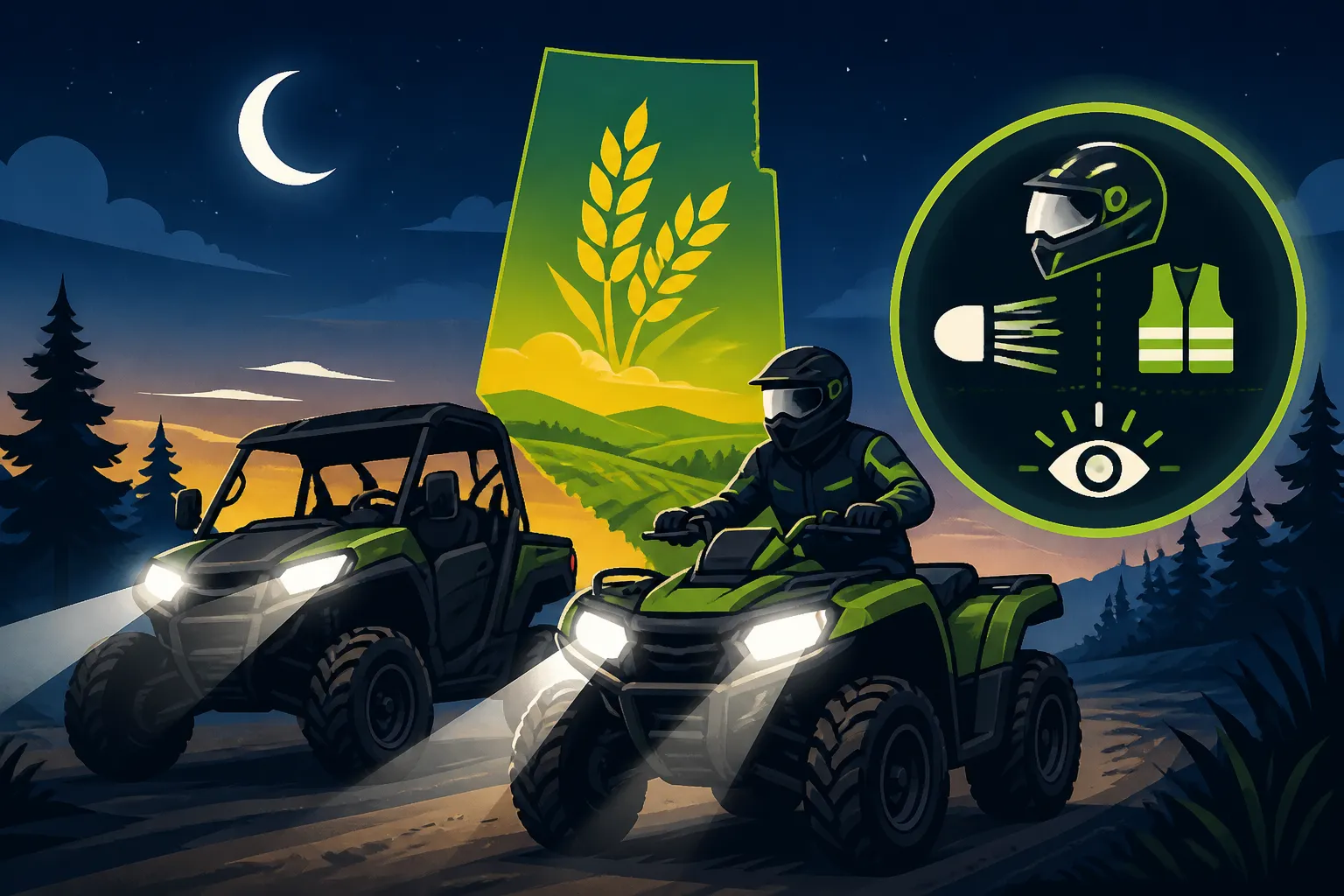
The All Terrain Vehicles Act in Saskatchewan lays out precise requirements for machines operating when visibility is reduced or during the period between one-half hour after sunset and one-half hour before sunrise. This isn't just a suggestion; it's a non-negotiable legal mandate designed to prevent accidents and ensure everyone's safety. Primarily, your ATV or UTV must be equipped with at least one headlight that emits a white light, visible for a reasonable distance ahead. This headlight needs to be operational and bright enough to illuminate your path effectively.
Beyond just seeing where you're headed, it's equally important that you're seen by others. Therefore, your machine must also have at least one taillight that emits a red light to the rear, visible from a specific distance. This taillight is crucial for preventing rear-end collisions, especially if you're riding on a public road allowance or shared trail. Furthermore, you're required to have a red reflector on the rear of your machine, which serves as a passive safety feature, reflecting light from other vehicles even if your taillight fails. These elements, combined, form the basic legal lighting package for any night ride.
Many riders, understanding the inherent risks of low-light conditions, choose to go beyond these minimums. Aftermarket lighting solutions, such as LED light bars or auxiliary spotlights, can significantly enhance your visibility and field of vision. Companies like SuperATV offer a wide range of robust lighting products designed specifically for the rugged demands of ATV and UTV use, providing brighter, more durable options than standard factory lights. Investing in better lighting isn't just about compliance; it's a critical safety upgrade that can make a real difference when navigating challenging terrain in the dark.
The Importance of Maintenance and Functionality
It’s one thing to have the required lights on your ATV or UTV; it’s another thing entirely for them to actually work. A burnt-out bulb or a faulty connection isn't just an inconvenience; it can render your machine illegal for night operation and put you in a dangerous situation. Before heading out after sunset, a thorough pre-ride inspection of all your lighting components is absolutely essential. This means checking your headlight, taillight, and any auxiliary lights to ensure they illuminate properly and consistently.
Wiring issues are a common culprit for lighting failures, especially on machines that see a lot of off-road action with vibrations and exposure to the elements. Loose connections, frayed wires, or corroded terminals can all lead to intermittent or complete light failure. Taking a few minutes to wiggle wires, inspect connections, and confirm functionality can save you a hefty fine and, more importantly, prevent an accident. Remember, a peace officer won't care if your taillight just went out; if it's not working when they observe you, you're in violation.
Regular maintenance extends beyond simple checks. Replacing bulbs when they start to dim, ensuring lenses are clean and free of mud or debris, and protecting wiring from abrasion are all part of responsible night riding preparation. Some riders even carry spare bulbs or a small repair kit for quick fixes on the trail. Just like you wouldn't head out with low tire pressure, you shouldn't venture into the dark without confidence in your machine's lighting system. This diligence is particularly important if you frequently ride older machines or those that are subjected to harsh conditions.
Navigating Specific Night Riding Scenarios and Rules
Saskatchewan's rules for riding ATVs and UTVs aren't just about what lights you have; they also dictate how you operate your machine in specific environments after dark. Understanding these nuances is key to a legal and safe ride, whether you're cruising a grid road or an unlit trail.
Direction of Travel at Night on Highways and Roads
One of the most frequently misunderstood aspects of riding ATVs and UTVs in Saskatchewan, especially after dark, pertains to operating on highway ditches or shoulders. While the [Saskatchewan Ditch Riding and the 2-Metre Rule] allows for limited access to these areas, there are strict stipulations for night travel. The All Terrain Vehicles Act specifies that when operating an ATV or UTV in the ditch or on the shoulder of a public highway, you must travel in the same direction as the adjacent vehicular traffic flow. This rule is paramount for safety, as it minimizes the risk of head-on collisions with other vehicles that might be pulling off the road or entering the ditch for various reasons.
The reason for this rule is simple: visibility. In the dark, even with your machine's lights on, you are a much smaller and less predictable presence than a full-sized vehicle. Traveling against traffic flow dramatically increases the closing speed between your ATV/UTV and oncoming vehicles, leaving less time for either operator to react. Furthermore, a driver scanning the road might not anticipate an off-highway vehicle approaching from the "wrong" direction in the ditch. Adhering to the "same direction as traffic" rule is a critical measure to enhance your safety and the safety of others sharing the road allowances.
Always be mindful of the specific timeframes too: these rules apply when "visibility is reduced" or "during the period between one-half hour after sunset and one-half hour before sunrise." This isn't just about full darkness; foggy conditions, heavy rain, or even dense smoke can trigger these reduced visibility rules. Always err on the side of caution. If you're unsure, assume the night riding rules are in effect and position your machine to travel with the flow of traffic, staying as far to the right as safely possible within the 2-metre rule.
Visibility and Personal Protective Equipment After Dark
While your ATV's lighting system is crucial, your personal visibility as a rider after dark is equally important. Even the brightest headlights might not fully illuminate you, particularly from the side or when you're dismounted. This is where personal protective equipment (PPE) designed for enhanced visibility truly shines. Wearing reflective gear can significantly increase your chances of being seen by other riders, motorists, or pedestrians, even at a distance.
Think about investing in a high-visibility vest, jacket, or even reflective strips for your helmet and clothing. Many modern riding jackets incorporate reflective piping and panels, which can be an excellent choice for added safety without looking like a construction worker. Similarly, some helmet manufacturers offer models with built-in reflective elements, or you can easily add reflective decals. The key is to create as much surface area as possible that will bounce light back to its source, making you stand out against the dark background.
This isn't merely about legal compliance, as there aren't specific mandates for reflective clothing under the ATV Act, but it's an essential aspect of proactive safety. Imagine riding with a group at night; if someone gets separated or has a mechanical issue, highly visible gear can make it much easier for others to locate them. Combine your well-maintained machine lighting with thoughtful personal reflective gear, and you've dramatically improved your overall safety profile when riding after dark.
Legal Repercussions and Safety Best Practices
Ignoring Saskatchewan's rules for riding ATVs and UTVs after dark isn't just risky; it can lead to significant legal troubles and put your insurance coverage in jeopardy. Understanding the consequences and embracing proactive safety measures are vital for every responsible rider.
Penalties for Non-Compliance with Night Riding Rules
Saskatchewan takes the safety rules outlined in The All Terrain Vehicles Act seriously, and failing to adhere to the lighting requirements for night riding can result in concrete penalties. If a peace officer stops you and finds your machine's lights are non-compliant, you could face fines. These aren't just minor slaps on the wrist; [Saskatchewan Fines Capped at $1,000] are possible for various offences under the Act, and improper lighting certainly falls into the category of endangering public safety.
Beyond the immediate financial hit, there could be other, more severe repercussions. In some cases, depending on the severity of the non-compliance or if other offences are committed concurrently, your machine could potentially be seized or impounded. This means not only paying a fine but also incurring towing and storage fees to retrieve your ATV or UTV, which can quickly add up. Furthermore, operating a non-compliant machine, particularly in a manner that contributes to an accident, could significantly impact your insurance coverage, potentially leading to denied claims or increased premiums.
It's crucial to remember that ignorance of the law is not an excuse. As a rider, you are expected to know and follow all applicable regulations. This responsibility extends to ensuring your machine is always in safe operating condition, especially when engaging in activities like night riding that inherently carry higher risks. A momentary lapse in judgment or a forgotten pre-ride check could have lasting financial and legal consequences.
Enhanced Safety Practices for Night Riding
While adhering to the legal minimums for lighting is a must, truly safe night riding involves going above and beyond. The reduced visibility, altered depth perception, and potential for encountering wildlife all demand a more cautious and deliberate approach. One of the most fundamental safety practices is to reduce your speed. What looks like a clear path in daylight can hide unseen hazards like ruts, rocks, or fallen branches at night. Slowing down gives you more time to react to unexpected obstacles your lights might pick up at the last second.
Always try to ride with a buddy or in a group, especially at night. If one person encounters a problem – a breakdown, a flat tire, or even an injury – having others present can be a lifesaver. Ensure everyone in the group has functioning lights and a way to communicate, whether by radio or cell phone (though service can be spotty in many Saskatchewan riding areas). Carrying extra lights, such as a headlamp for yourself and a spare flashlight on your machine, is also a smart move, providing backup illumination if your primary lights fail.
Finally, familiarize yourself with your riding area during daylight hours before attempting to navigate it at night. Unfamiliar trails can be disorienting and dangerous in the dark. Be extra cautious at intersections, crossings, and anywhere you might encounter other vehicles, pedestrians, or wildlife. Remember that reflective trail markers can be incredibly helpful for navigation, especially if you download [Saskatchewan ATV Trail Map Downloads] beforehand. These layers of safety practices, combined with legal compliance, ensure a much more enjoyable and secure night riding experience.
Special Considerations and Municipal Variations
Riding ATVs and UTVs in Saskatchewan isn't a one-size-fits-all scenario, especially when it comes to night operation. Different land types and local jurisdictions can have their own unique rules that impact your ability to ride after dark.
What to Expect When Riding in an Organized Event or on Crown Land at Night
When participating in an organized ATV or UTV event in Saskatchewan, the event organizers are usually responsible for ensuring that all participants are aware of and comply with the necessary rules, which often include specific lighting and safety requirements for night portions of a ride. These events might have permits that allow for certain operations not typically permitted, but they will still prioritize safety and proper machine outfitting. Always clarify the event's specific rules regarding night riding before you sign up, as they might have stricter guidelines than the provincial minimums, such as requiring additional auxiliary lighting or specific reflective gear.
Riding on Crown Land, which is vast and diverse across Saskatchewan, presents its own set of considerations. While the provincial All Terrain Vehicles Act applies generally, specific Crown Land areas may have additional restrictions or prohibitions on riding after dark, particularly in sensitive ecological zones or areas prone to wildlife conflicts. For example, some administrative orders might limit or entirely prohibit ATV access during certain hours to protect wildlife or prevent disturbances. It’s always prudent to check with the Ministry of Environment or the local authority responsible for the specific Crown Land you plan to ride on. Information on [Saskatchewan Crown Land Riding Explained] can provide a good starting point, but always seek localized details for night operations.
Sometimes, organized groups or clubs have special agreements for riding on Crown Land, which might include specific conditions for night use. These agreements are often tied to maintaining trails or using specific designated routes. If you're riding with a club, they will usually provide guidance on what's permissible. However, as an individual rider, the onus is on you to verify that night riding is permitted and that your machine meets all necessary requirements, both provincial and localized. This might mean visiting a local park office or calling a regional land management office before you haul your machine out.
How Municipal Bylaws Can Impact Night Riding
One of the biggest variables when it comes to ATV and UTV riding in Saskatchewan is the power of local municipalities. While the province sets overarching rules, individual cities, towns, villages, and rural municipalities have the authority to create their own bylaws that can significantly impact how and where you can ride within their boundaries, including after dark. This means that what's legal in one municipality might be completely prohibited just a few kilometres down the road. This can be incredibly frustrating for riders who just want to enjoy their machines without fear of unknowingly breaking a local rule.
For instance, a rural municipality might have a bylaw that allows ATVs to operate on certain grid roads during daylight hours for agricultural purposes, but completely restricts all ATV traffic on those same roads after sunset. Or, a resort village might prohibit ATVs from operating on any municipal road or green space after a certain evening hour, regardless of whether your machine has proper lighting. These bylaws are often enacted for noise control, public safety, or to prevent disturbance to residents. It's not uncommon for communities to have different rules depending on the specific streets or areas, such as residential zones versus industrial parks.
Before you plan any night riding within the boundaries of a specific municipality, it is absolutely essential to check their local bylaws. This might involve looking up their official website, calling the municipal office, or reviewing local signage. Resources like [Saskatchewan Bylaw Lookups Before You Ride] can help you find where to start your research. Ignoring these local rules can lead to fines, impoundment, and strained relationships with local residents and authorities. Always remember that provincial law provides a baseline, but municipal bylaws can, and often do, add further restrictions, especially concerning night use and noise.
Here's a quick summary of key night riding requirements and best practices:
| Category | Requirement/Best Practice | Details |
|---|---|---|
| Legal Lighting | Headlight (white) visible for reasonable distance | Essential for seeing and being seen. Ensure it's working properly. |
| Taillight (red) visible to the rear | Crucial for preventing rear-end collisions. Must be functional. | |
| Red Rear Reflector | Passive safety, reflects light even if taillight fails. | |
| Machine Maintenance | Pre-ride inspection of all lights | Check bulbs, wiring, connections. Replace dimming lights. |
| Direction of Travel | On highway ditches/shoulders: travel with traffic flow after dark | Minimizes collision risk, adheres to [Saskatchewan Night Travel Direction Rules]. |
| Rider Visibility | Wear reflective clothing/gear | Enhances your visibility to others, even if machine lights are bright. Options from companies like SuperATV can help. |
| Safety Practices | Reduce speed; avoid unfamiliar terrain | Compensates for reduced depth perception and hidden hazards. |
| Ride with a buddy or in a group | Provides assistance in case of breakdown or injury. | |
| Carry extra light sources (headlamp, flashlight) | Backup in case of primary light failure. | |
| Local Bylaws | Check municipal regulations for night riding prohibitions/restrictions | What's legal provincially may be restricted locally; refer to [Saskatchewan Municipal Bylaws on Roads]. |
| Crown Land/Events | Verify specific rules for designated Crown Land areas or organized events | Additional restrictions may apply; always check with relevant authorities or event organizers. |
Disclaimer
This article is for general informational purposes only and does not constitute professional advice. Laws, prices and regulations vary by location and change over time. Consult a qualified professional for guidance on your specific situation.