Saskatchewan Equipment Checks by Officers
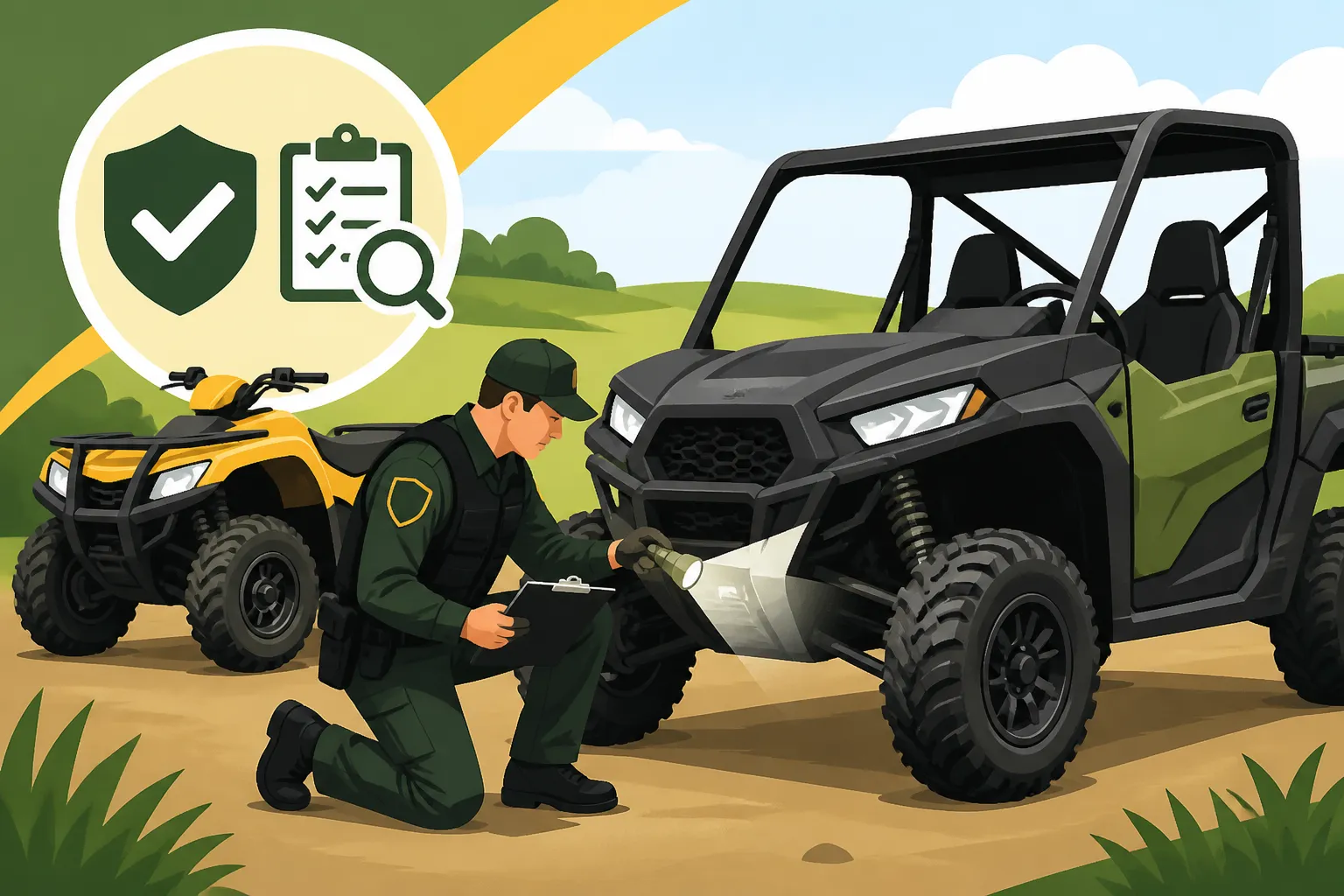
Riding your ATV or UTV across Saskatchewan's vast landscapes, whether you're working on the farm, heading to the cabin, or just enjoying some trail time, is a unique freedom. But that freedom comes with responsibilities, and occasionally, you might find yourself in a situation where a peace officer wants to conduct an equipment check. It's a moment that can make even the most seasoned rider a little nervous, wondering if everything on their machine is in order. This guide is here to demystify what officers are looking for during these roadside or trailside inspections, helping you understand the regulations and ride with complete confidence, knowing your machine is compliant and safe.
Why Peace Officers Conduct Equipment Checks on Saskatchewan Quads
It's natural to feel a bit scrutinized when a peace officer signals you to stop, but understanding why they conduct equipment checks can help shift your perspective. These stops aren't typically about catching riders out; they're primarily about ensuring safety, upholding the integrity of our shared spaces, and maintaining compliance with the province's All Terrain Vehicles Act. Officers want to make sure everyone is safe and that machines aren't posing a risk to the rider, other trail users, or the environment.
Ensuring Rider and Public Safety
One of the most fundamental reasons for equipment checks is safety. An ATV or UTV that isn't properly maintained or equipped can be a serious hazard. Imagine a machine with faulty brakes on a busy grid road, or one with a broken headlight out on a dark trail – these scenarios can lead to severe accidents. Officers are checking for these critical safety components to prevent injuries and fatalities. They’re ensuring that basic functions like stopping, seeing, and being seen are fully operational, protecting both you and those around you, whether that's another rider, a pedestrian, or someone in a passing vehicle. A functioning machine is a safe machine, and these checks are a proactive measure to keep our recreational and working environments as safe as possible for everyone.
Upholding Provincial Regulations and Bylaws
Beyond immediate safety concerns, officers are also tasked with ensuring that riders are adhering to the specific rules laid out in [Saskatchewan's All Terrain Vehicles Act] and any municipal bylaws. Saskatchewan might not have a provincial registration system for ATVs, but it absolutely has regulations governing how and where they can be operated, and what equipment they must carry. For instance, specific rules apply to operating in ditches, on Crown land, or within municipal boundaries. These checks help to reinforce those regulations, ensuring that the privilege of riding in these areas isn't abused. Compliance also helps to manage environmental impact, reduce noise complaints, and ensure respectful use of public and private lands.
Addressing Community Concerns and Specific Patrols
Sometimes, equipment checks are part of a broader response to community concerns. If a particular area has seen an increase in noise complaints, reckless riding, or incidents involving improperly equipped machines, officers might increase patrols and conduct more frequent checks there. This targeted approach aims to address specific issues that impact residents or other land users. For example, if there's been an issue with quads damaging sensitive ecosystems, officers might be specifically looking for modifications that suggest off-trail riding or lack of proper environmental controls. Similarly, during hunting seasons or busy long weekends, increased patrols might include equipment checks to ensure hunters are complying with rules about carrying firearms on machines, or that machines are ready for heavier loads or longer trips.
The Essential Equipment Every Saskatchewan ATV and UTV Needs
When a peace officer pulls you over, they’re not just looking at you; their eyes will quickly scan your machine for several key pieces of equipment. Knowing exactly what these are and ensuring they’re in good working order is your first line of defense against a citation. Think of it as a pre-ride checklist that every responsible operator should complete before hitting the trail or road.
Mandatory Lighting and Reflectors
Visibility is paramount, especially when riding around dawn, dusk, or in less-than-ideal weather conditions. The Act is quite clear on lighting requirements. Your ATV or UTV must be equipped with at least one headlight that emits a white light, visible for a substantial distance, and one taillight that emits a red light, also visible from a certain distance. If you're riding after sunset or before sunrise, or anytime visibility is poor, these lights must be on. Beyond just being present, they need to be functional. An officer will check if your high and low beams work (if applicable), and if your taillight illuminates correctly. [Saskatchewan Lighting Requirements on a Machine] are specific, and not having proper, working lights can quickly lead to a ticket. Many riders also choose to upgrade their lighting with brighter LED bars from brands like SuperATV, which, while not always mandatory, significantly enhance safety and visibility beyond the minimum requirements.
Functional Brakes and Exhaust System
Brakes are perhaps the most critical safety feature on any vehicle, and ATVs and UTVs are no exception. An officer will expect your machine to have fully functional service brakes that can bring the machine to a safe and complete stop. This includes checking that the brake lever or pedal moves freely and returns, and that the braking action is effective. Often, officers will do a quick visual inspection of the brake lines and pads if easily accessible. Equally important is your exhaust system. It must be in good repair and designed to effectively muffle engine noise. Excessive noise from a modified or damaged exhaust system is not only a nuisance but a violation. Furthermore, a proper exhaust system must include a spark arrestor. This is a crucial device designed to prevent hot carbon particles from escaping the exhaust and potentially igniting dry vegetation, a very real fire hazard in Saskatchewan's often dry landscape. [Saskatchewan Spark Arrestor Guidance] highlights the importance of this, especially during wildfire season.
Tires and General Machine Condition
While not always explicitly listed with the same detail as lights or brakes, the general condition of your tires and the overall machine speaks volumes about your commitment to safety. Officers will be looking for tires with adequate tread depth and no obvious damage like deep cuts or bulges that could indicate an imminent failure. Seriously worn tires compromise traction and control, especially on varied terrain. Beyond tires, the officer may do a quick visual check for loose parts, significant fluid leaks, or other obvious mechanical issues that could pose a safety risk. This isn't usually a deep mechanical inspection, but rather a glance to ensure the machine isn't falling apart. Keep your machine well-maintained, and you'll easily pass this aspect of a check. Investing in high-quality parts, even for routine maintenance, from reputable sources can make a big difference in both performance and longevity.
Here's a quick overview of key equipment officers commonly check:
| Equipment Item | Key Check Point | Purpose | Compliance Note |
|---|---|---|---|
| Headlight(s) | Operational (white light) | See and be seen during low light | One minimum, must be on when required |
| Taillight(s) | Operational (red light) | Be seen from the rear | One minimum, must be on when required |
| Brake Light(s) | Illuminates when brakes applied | Signal deceleration | Critical for preventing rear-end collisions |
| Service Brakes | Functionality (stops machine safely) | Essential control and safety | Must be effective and in good repair |
| Exhaust System | Muffled, no excessive noise | Noise reduction, community peace | No modifications causing excessive noise |
| Spark Arrestor | Present and functional | Prevents wildfires | Manufacturer-installed or equivalent is mandatory |
| Tires | Adequate tread, no obvious damage | Traction, control, safety | Keep tires in good condition |
| Mirrors (if applicable) | Present and functional for road use | Rearward visibility | Often required for street-legal UTVs |
Paperwork and Personal Gear: What Else Officers Look For
An equipment check isn't solely about the machine itself. Officers are also authorized to verify that you, as the operator, are properly licensed, insured, and are carrying any necessary documentation. Furthermore, your personal protective equipment is a major component of safe operation, and officers will certainly be checking for compliance there.
Operator Licences and Age Restrictions
Just like driving a car, operating an ATV or UTV on public lands, ditches, or roads in Saskatchewan requires you to have a valid driver's licence. This isn't just a suggestion; it's a hard rule. An officer will ask to see your licence to confirm you are legally entitled to operate a motor vehicle. Beyond simply having a licence, there are also strict age requirements for operating ATVs. Generally, riders must be 16 years of age or older to operate an ATV without direct supervision. There are specific exceptions for younger riders (12 and over) who are supervised or have completed an approved safety course. However, for most adults, having your valid driver's licence readily available is crucial. [Do You Need a Licence for an ATV in Saskatchewan?] explains these nuances in detail, and it’s critical to know them before you ride, especially if you have younger family members joining you.
Proof of Insurance
While Saskatchewan ATVs don't have provincial registration, they absolutely require insurance, especially when being operated off private land. The law mandates a minimum amount of liability insurance. An officer will ask for proof of this insurance. This could be a physical card or a digital copy on your phone, but it needs to be accessible and verifiable. This insurance protects you and others in the event of an accident. Without it, you could face significant fines and be held personally liable for damages. [Saskatchewan Insurance Requirements for Riders] are non-negotiable, and failing to provide proof of insurance is a common reason for tickets during equipment checks. Make sure your policy is current and that you always have proof with you when riding.
Helmet and Eye Protection Requirements
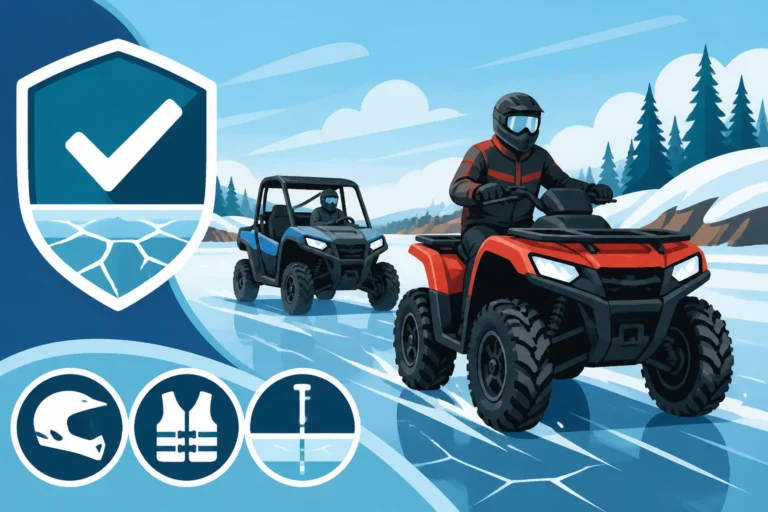
This is perhaps one of the most visible and easily checked aspects of personal safety gear. Saskatchewan has a mandatory helmet law for ATV and UTV operators and passengers. Your helmet must be designed specifically for ATV use and meet recognized safety standards (such as DOT or Snell). It needs to be properly fastened on your head. Beyond the helmet, eye protection is also required. This means goggles or a face shield that is shatterproof. [Saskatchewan Helmet and Eye Protection Rules] are clear: tinted visors or goggles are fine during the day, but not at night when they impair visibility. Officers take these rules very seriously because head injuries are a leading cause of severe injury or death in ATV accidents. Don't risk your safety or a fine; wear the appropriate gear every time you ride.
Avoiding Fines and Ensuring a Smooth Check
No one wants to get a ticket or have their ride interrupted by a lengthy stop. By being prepared and understanding how to interact with officers, you can make equipment checks smooth and painless, ensuring you spend more time enjoying the trails and less time dealing with paperwork.
Pre-Ride Inspections and Regular Maintenance
The best way to avoid issues during an equipment check is proactive maintenance. Before every ride, especially if you're going on a longer trip or to a new area, do a quick walk-around inspection. Check your lights, test your brakes, ensure your tires are properly inflated and have good tread, and listen for any unusual noises from the exhaust. Keep your machine generally clean so officers can easily see components like your spark arrestor or VIN. Regular maintenance, following your machine's service schedule, will keep everything in top working order. If you're modifying your machine, perhaps with performance parts from SuperATV, always ensure these modifications comply with the Act and don't compromise safety or regulatory requirements. A well-maintained machine not only passes checks but also performs better and lasts longer.
Know Your Local Bylaws and Riding Restrictions
While the provincial Act sets a baseline, individual municipalities and even specific Crown land areas can have additional bylaws or restrictions that impact where and how you can ride. Some towns might prohibit ATVs on certain streets, while others might have specific speed limits or curfews. [Saskatchewan Municipal Bylaws on Roads] can vary widely, and ignorance is rarely accepted as an excuse. Before you trailer your machine to a new riding area, take a few minutes to look up the local regulations. This shows respect for the community and can prevent you from inadvertently riding in a prohibited zone or violating a lesser-known rule. Officers are often patrolling these areas precisely because of local rules, so being informed is key.
How to Respond During a Stop
If a peace officer signals you to stop, do so safely and promptly. Pull over to the side of the trail or road where it's safe for both you and the officer. Turn off your engine, remove your helmet, and keep your hands visible. Be polite and respectful. The officer will likely state the reason for the stop and ask for your licence, proof of insurance, and possibly for you to demonstrate certain equipment (like your lights or brakes). Answer their questions honestly and directly. If they point out an issue, acknowledge it. Arguing or being uncooperative can escalate the situation unnecessarily. Most officers are simply doing their job to ensure public safety. By being cooperative and prepared, you can often resolve an equipment check quickly and get back to your ride. Remember, if you are found in violation, [Saskatchewan Ticket Costs for Riders] can add up quickly, so prevention and compliance are always the best strategies.
Disclaimer
This article is for general informational purposes only and does not constitute professional advice. Laws, prices and regulations vary by location and change over time. Consult a qualified professional for guidance on your specific situation.