The Winter Exception for Frozen Lakes and Rivers
Few things in Saskatchewan are as iconic as the vast, open skies, the endless horizon, and in winter, the mesmerizing expanse of our frozen lakes and rivers. For ATV and UTV enthusiasts, these frozen landscapes can look like an open invitation, a massive playground stretching further than the eye can see. But here on the Prairies, we know better than to assume anything when it comes to riding rules, especially when ice and public safety are involved. It's a common frustration: one minute you're legally riding a ditch, the next you're wondering if that frozen slough or river crossing is going to land you a ticket. This guide is here to clear up the confusion surrounding the "winter exception" for ATVs and UTVs on frozen bodies of water in Saskatchewan, helping you understand where you can ride, the crucial safety precautions, and how to navigate the sometimes murky waters of provincial laws and local bylaws.
Understanding Saskatchewan's General Rules for ATVs on Roads and Land
Before we dive into the specifics of frozen water bodies, it’s absolutely critical to understand the baseline rules for ATV and UTV operation in Saskatchewan. Our province's regulations are designed to keep everyone safe, whether they're on a quad, in a car, or simply enjoying the outdoors. Ignoring these foundational principles can not only lead to fines but, more importantly, put yourself and others at serious risk.
The Core Prohibition on Highways and Roadways
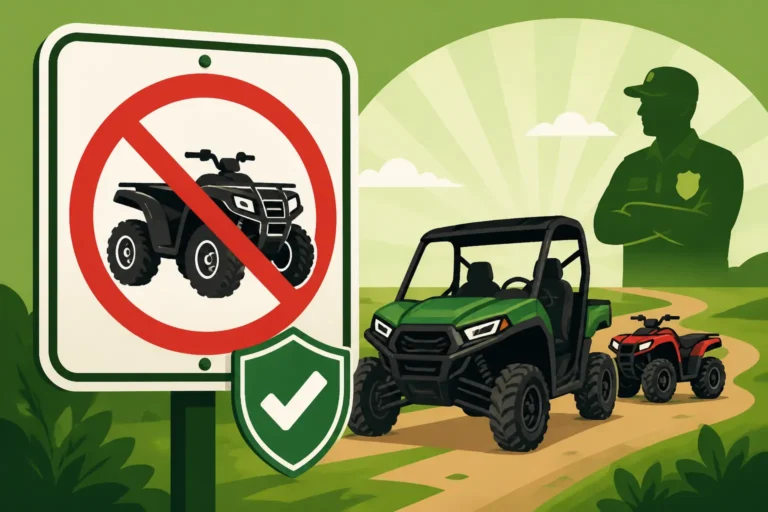
Let’s be blunt: for the most part, you can’t just cruise your ATV down the main highway or even many paved municipal roads in Saskatchewan. The province's [Saskatchewan's All Terrain Vehicles Act] is quite clear on this. ATVs and UTVs are primarily designed for off-road use, not for sharing space with cars, trucks, and semi-trailers on high-speed roadways. This isn't just a bureaucratic rule; it's a safety imperative. Imagine the speed differential, the lack of turn signals, and the vulnerability of a rider on a quad against a logging truck. It’s a recipe for disaster.
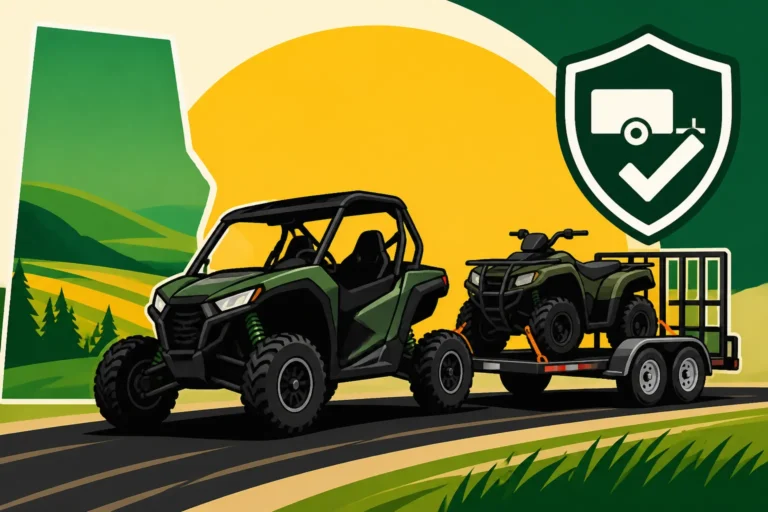
This prohibition extends beyond just the paved asphalt. In many cases, it also applies to the shoulders and even the immediate vicinity of these highways. The idea is to keep these powerful, often quick-handling machines off surfaces where they can interact negatively with conventional traffic. Riders often express frustration over this, feeling like they're being boxed out of convenient travel, but the logic is undeniably rooted in preventing serious accidents. If you need to transport your machine to a riding area, your best bet is always to load it onto a trailer.
Ditch Riding and the 2-Metre Rule
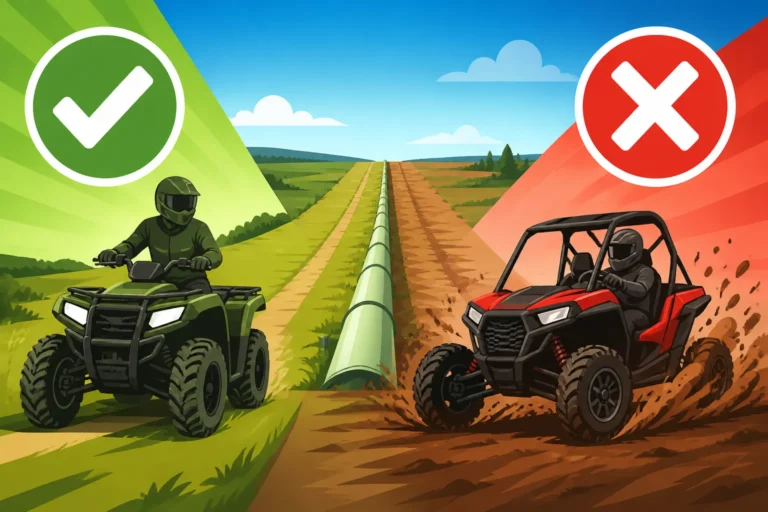
Now, here's where things get a little more nuanced, and it’s a rule many Saskatchewan riders are familiar with. While main roadways are generally off-limits, our province does allow for what's commonly known as "ditch riding" under specific conditions. This refers to operating an ATV or UTV in the ditch alongside a public highway or road. It's a common sight across the Prairies, especially for farmers and rural residents needing to get from one field to another or access various parts of their property.
The critical stipulation here is the [Saskatchewan Ditch Riding and the 2-Metre Rule]. The Act states that an ATV or UTV must be operated at least two metres from the travelled portion of the highway. This two-metre buffer is crucial. It’s designed to create a safety zone between the off-road machine and the moving traffic. It acknowledges the need for rural access while still prioritizing the safety of motorists. Straying too close to the main road, even unintentionally, can land you in trouble with law enforcement, not to mention putting you in a precarious position with fast-moving vehicles. It’s a balance, and understanding this rule is fundamental to legal ATV use outside of private land.
Crown Land Access and Administrator Orders
Saskatchewan has vast tracts of Crown land, offering incredible opportunities for outdoor recreation, including ATV and UTV riding. However, accessing and riding on Crown land isn't always a free-for-all, and this is particularly relevant when we start talking about water bodies. While many areas are open for responsible use, the provincial government, through various ministries, has the authority to issue "administrator orders" that can restrict or prohibit ATV access in specific areas.
These orders are usually put in place for reasons like environmental protection, wildlife management, or public safety, especially during high-risk periods such as wildfire season. For example, a severe drought might lead to a complete ban on ATV use in certain forested Crown land areas to prevent sparks from igniting a blaze. It's not uncommon for these orders to include or specifically mention water bodies and their immediate surroundings. Therefore, before heading out onto any Crown land, it's always wise to check for current restrictions or closures. Just because it's Crown land doesn't mean it's open season, and you could be subject to penalties under [Saskatchewan Crown Land Prohibition Regulations] if you ignore an active order.
The Specific Winter Exception for Frozen Water Bodies
Now, let's get to the heart of the matter for winter riders: the special rules that apply when lakes and rivers freeze solid. This is where Saskatchewan acknowledges a long-standing tradition of winter recreation and utility, but with important caveats that prioritize safety above all else.
What the Exception Allows
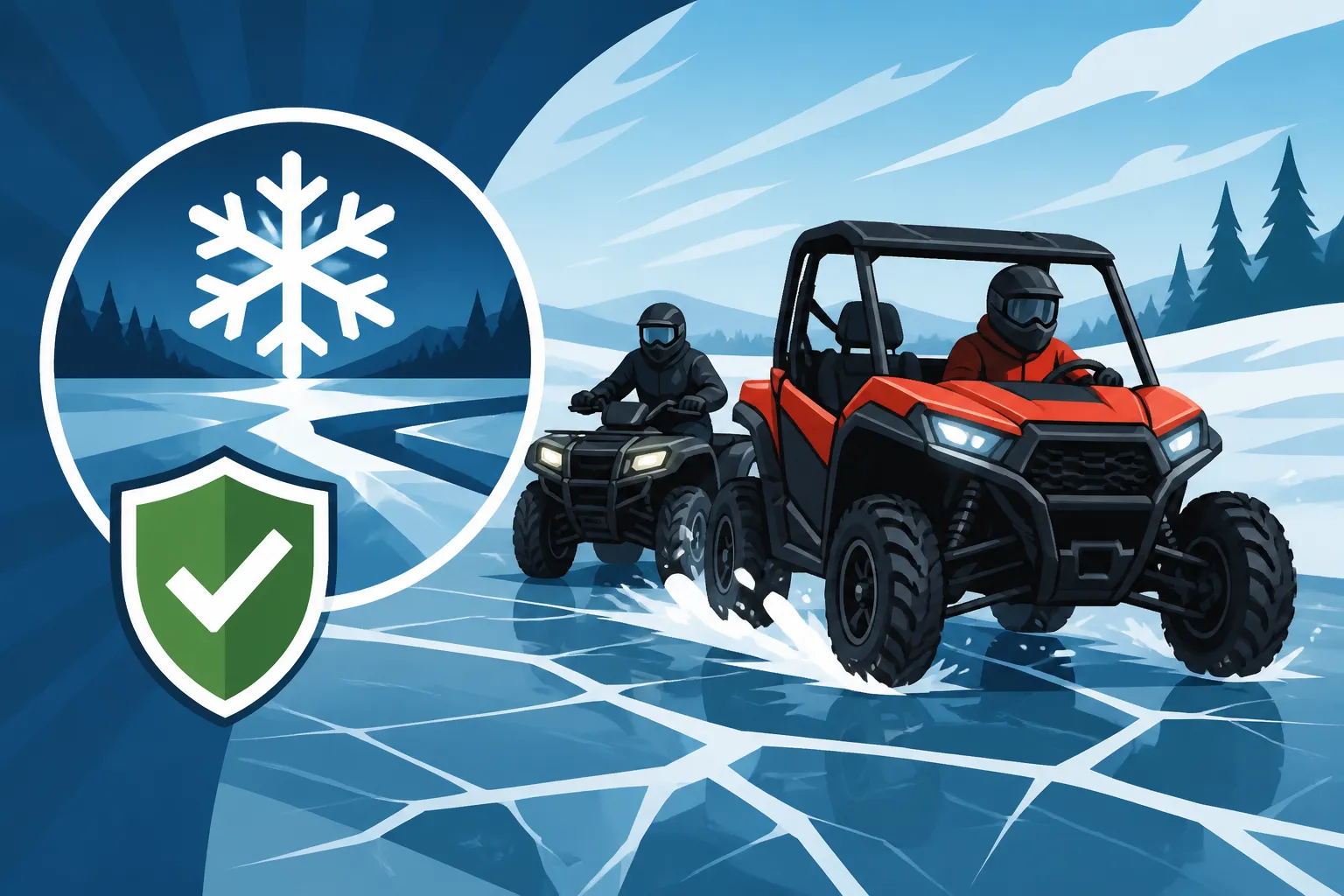
Here’s the good news for winter enthusiasts: under [Saskatchewan's All Terrain Vehicles Act], there is indeed a specific exception that allows for the operation of ATVs and UTVs on frozen lakes and rivers. This isn't a loophole; it's a deliberate provision recognizing that once these massive bodies of water are "entirely covered by ice and snow" and "frozen over," they transform from navigable waterways into stable, albeit still dangerous, surfaces that can be utilized for travel and recreation. This is a huge relief for many, from ice fishers heading to their favourite spots to remote cabin owners needing winter access.
Think about the sheer scale of some of our provincial lakes – Diefenbaker, Last Mountain, or Emma Lake, for instance. Once frozen, they become vast, relatively flat expanses, often offering the most direct routes across terrain that would be impassable in summer. This exception is critical for the lifestyle and livelihoods of many rural Saskatchewan residents. It means that during the cold winter months, the provincial rules that typically keep you off a road or a particular piece of land might not apply to the surface of a solidly frozen lake or river. This opens up a world of winter adventure, from exploring new areas to simply enjoying the unique beauty of our winter landscape. You'll find specific details in guides like [Saskatchewan Rules for Riding a Frozen Lake] and [Saskatchewan Rules for Riding a Frozen River].
Conditions and Limitations of the Exception
While the winter exception is a boon for riders, it comes with strict conditions. The key phrases in the Act are "frozen over" and "entirely covered by ice and snow." These aren't just suggestions; they are the legal thresholds that must be met for the exception to apply. So, what exactly do they mean in practical terms? "Frozen over" implies a state of solid, stable ice capable of supporting the weight of an ATV or UTV, plus its rider and any gear. This is not a thin layer of skim ice or a partially frozen surface. It means the body of water is genuinely solidified from shore to shore, or at least across the intended path of travel.
Furthermore, "entirely covered by ice and snow" means exactly that. The presence of open water, slushy areas that haven't properly frozen, or significant areas of thin ice would mean the conditions are not met. Riders must exercise extreme caution and judgment. Even if the majority of a lake or river is frozen, isolated areas with currents, springs, or recent thaws can create treacherous conditions. It's not enough for it to look generally frozen; it needs to be safely frozen. Always remember that this exception doesn't override basic safety principles; it hinges on the physical reality of a safe, solid surface. Your personal responsibility for checking ice conditions is paramount.
Dangers and Precautions on Ice
Despite the legal exception, riding on frozen water bodies is inherently dangerous. It’s a risk that must be approached with the utmost respect and preparation. Ice is dynamic; it expands, contracts, and can hide treacherous conditions beneath a blanket of snow. A few inches of ice might be sufficient for a person, but an ATV or UTV requires significantly more, and even then, conditions can change rapidly. Pressure ridges, caused by the shifting and buckling of ice sheets, can appear suddenly and create dangerous obstacles or thin spots. Open water leads are another ever-present threat, especially on larger rivers with currents or near areas where warm water enters the system.
Never, ever assume the ice is safe. Always check ice thickness before venturing out, and continue to monitor conditions throughout your ride. Many experienced ice riders use spud bars or augers to test thickness. Furthermore, avoid areas of discoloured ice, slushy spots, or ice that has a "rotting" appearance. Riding alone on ice is a significant gamble; always try to go with a buddy or group. Equip your machine with accessories like a winch from a reputable brand like SuperATV – it might not pull you out of open water, but it can be a lifesaver if you get stuck in deep snow or a pressure ridge. Crucially, carry personal safety gear: ice picks, a throw rope, and ideally, a flotation suit. This isn't just about avoiding a ticket; it's about staying alive.
Navigating Access Points and Local Bylaws
Getting to the frozen lake or river can sometimes be as tricky as assessing the ice itself. While the provincial Act gives you the green light on the frozen surface, it doesn't automatically grant you permission to cross private land or ride down every town street to get there. This is where understanding access points and local rules becomes paramount.
Accessing Frozen Water Bodies from Land
The provincial exception for riding on frozen water bodies is great, but it doesn't exist in a vacuum. You still need a legal way to get your ATV or UTV onto that frozen surface. This often means you'll be crossing land, and that land belongs to someone. Attempting to cross private property without permission is trespassing, plain and simple, and can lead to serious legal consequences under [Saskatchewan Trespass Law for Riders]. Farmers and landowners are rightly protective of their property, especially during hunting season or when livestock are present. Always seek explicit permission from the landowner before crossing their fields, pastures, or private access roads to reach the ice.
Some communities or provincial parks might have designated access points for ice users. These are usually public launches or managed areas where it's understood that ATVs and other ice-going vehicles can safely and legally enter the frozen lake or river. Always look for signage or inquire with local authorities if you're unsure about public access. Never create your own access point by cutting fences or driving over sensitive natural areas. Planning your route, including your entry and exit points, is an essential part of a responsible winter riding trip.
Municipal Bylaws and Restrictions
This is another layer of complexity that riders often overlook: municipal bylaws. While the province grants the general exception for frozen water, individual cities, towns, villages, and rural municipalities (RMs) have the power to enact their own bylaws that can affect ATV and UTV operation within their specific boundaries. This means that while you might be legally riding on the middle of a frozen lake, the rules might change drastically as you approach the shoreline within a particular municipality.
For example, a village like Candle Lake or the District of Lakeland might have bylaws that prohibit ATVs from specific streets, public beaches, or even certain portions of the lake closest to residential areas. These bylaws are often put in place to address concerns like noise, public safety (especially where children might be playing near the shore), or environmental protection. It’s not uncommon for a municipality to require a special permit or plate to operate an ATV within its borders, even if you’re just trying to get to the lake. Before you head out, especially to a new area, it is your responsibility to check the local bylaws. Websites like [Saskatchewan Municipalities With ATV Bylaws] can provide a starting point, but calling the local municipal office is often the best way to get definitive answers. Don't assume that because it's legal provincially, it's legal everywhere locally.
Combining Provincial Rules with Local Specifics
Understanding how the provincial winter exception interacts with local bylaws can feel like navigating a legal minefield, but it's crucial for avoiding fines and maintaining good relationships with communities. Let's consider a hypothetical scenario: you're planning a trip to Emma Lake in northern Saskatchewan. The provincial Act allows you to ride on the frozen surface of the lake. However, if you plan to launch your UTV from a public access point within, say, the Village of Emma Lake, you would need to investigate their specific bylaws.
That village might have a bylaw prohibiting ATVs on paved streets, or requiring a specific local permit to access the lake from a municipal boat launch. So, even though the lake itself is open provincially, your access route could be restricted. You might have to trailer your machine right up to the designated snow-covered launch area, or you might find that certain sections of the shoreline are completely off-limits to machines. The takeaway here is to always "think local" in addition to "thinking provincial." A general rule of thumb is that if you're in an organized community or approaching a designated public area, assume there might be additional rules in play. These local regulations exist for specific reasons, and respecting them helps ensure continued access for everyone.
Safety Gear, Insurance, and Responsible Riding on Ice
Riding on frozen water bodies is a unique challenge that demands a higher level of preparation and caution than perhaps any other form of ATV or UTV use. It’s not just about knowing the rules; it’s about equipping yourself, insuring yourself, and acting responsibly to mitigate the very real risks involved.
Essential Safety Gear for Ice Riding
First and foremost, the standard provincial safety requirements for ATVs still apply when you’re on the ice. This means a proper, certified helmet is mandatory, along with adequate eye protection. The [Saskatchewan Helmet and Eye Protection Rules] are not optional; they are your first line of defense in any accident. However, when riding on frozen water, your gear list needs to expand significantly to address the specific dangers of ice.
Think about cold weather protection: layered clothing, insulated boots, and waterproof outer shells are crucial to protect against exposure if you do break through. Beyond that, specialized ice safety gear is non-negotiable. This includes ice picks or claws, which you wear around your neck, to help you pull yourself out of the water if you go through the ice. A long throw rope, easily accessible, can be a lifesaver for rescuing a buddy or being rescued yourself. A reliable GPS or mapping app is vital, as whiteout conditions or unfamiliar terrain can quickly disorient you on a vast, featureless frozen lake. And for truly remote or deep-winter expeditions, a survival kit, a communication device (satellite messenger, not just a cell phone which might lose signal), and even a flotation-assisted snowmobile suit or ice fishing suit can provide precious extra minutes of survival time in frigid water.
Insurance Requirements and Liability on Water
Just like riding on land, operating an ATV or UTV on frozen water in Saskatchewan requires you to have adequate insurance. The [Saskatchewan's Minimum Insurance Requirement] is not suspended just because you're on a frozen lake. You need to carry proof of liability insurance, and for good reason. Accidents can and do happen on the ice: collisions with other machines, hitting a pressure ridge and rolling over, or even going through the ice and causing a recovery operation that costs a substantial amount of money.
If you’re involved in an accident on the ice and are found to be at fault, your liability insurance is what will protect you from potentially devastating financial claims. Consider this: if your machine breaks through the ice and creates a hazard for others, or if a rescue operation is required due to your negligence, the costs can be immense. While the minimum insurance might satisfy the legal requirement, many experienced riders opt for higher liability limits and comprehensive coverage, especially if their machine is valuable. Talk to your insurance broker about specific coverage for ice riding and ensure your policy adequately reflects the risks involved. Don't assume your home policy or auto policy will cover your ATV on the ice; it's a unique situation that often requires specific recreational vehicle insurance.
Environmental Considerations and Best Practices
Responsible riding extends beyond just legal compliance and personal safety; it also encompasses minimizing your impact on the natural environment and respecting other users of our frozen landscapes. Frozen lakes and rivers are shared spaces, often used by ice fishers, snowmobilers, cross-country skiers, and even ice skaters. Be mindful of others and operate your machine courteously. This means slowing down when passing ice shacks or groups of people, avoiding excessive noise, and always being aware of your surroundings.
Environmentally, while the ice might seem robust, the underlying ecosystem is still sensitive. Avoid disturbing shoreline vegetation or wildlife habitats when accessing the ice. If you’re carrying fuel or other fluids, ensure they are secured to prevent spills. It’s also good practice to carry a small shovel and a fire extinguisher, especially if your machine is equipped with aftermarket accessories like enhanced lighting or engine modifications. A spark arrestor on your exhaust is always a good idea, even on ice, as stray embers can start fires in surrounding dry grass or near exposed shorelines. Brands like SuperATV offer various storage solutions that can help you secure your gear, preventing spills and ensuring you leave no trace behind. Pack out everything you pack in, including any fishing line, garbage, or broken parts. Our natural spaces are precious, and it’s up to all of us to keep them pristine.
Enforcement and Penalties
Even with the winter exception, law enforcement actively patrols popular ice riding areas to ensure compliance with the [Saskatchewan's All Terrain Vehicles Act] and local bylaws. Don't assume that because you're on a vast, frozen lake, you're beyond the reach of the law. Peace officers, including RCMP, conservation officers, and municipal bylaw enforcement, are fully authorized to enforce regulations on frozen water bodies.
What Officers Look For
When a peace officer encounters ATV and UTV riders on a frozen lake or river, they are primarily looking for adherence to safety rules and legal operation. Their concerns are multi-faceted. First, they'll verify that the conditions for the winter exception are actually met – is the water body truly "frozen over" and "entirely covered by ice and snow"? If there are visible patches of open water or dangerously thin ice, you could be in violation. Second, they'll check for mandatory safety gear, especially helmets and eye protection. Riding without a helmet on the ice is a quick way to get a ticket and put yourself at severe risk.
Officers will also verify proof of insurance. Just like on land, you must be able to produce proof of at least [Saskatchewan's Minimum Insurance Requirement] if requested. Beyond these basics, they'll be observing your conduct: are you operating safely and responsibly, or are you driving recklessly, creating a nuisance, or disturbing other users? They'll also be aware of any local municipal bylaws that apply to the area, particularly near shorelines or within designated zones. Lastly, impaired operation, whether by alcohol or drugs, carries extremely serious penalties, just as it would on a highway. An ATV is a motor vehicle, and impaired driving laws apply fully on the ice.
Fines and Other Consequences
The consequences for violating the [Saskatchewan's All Terrain Vehicles Act] or local bylaws on frozen water bodies can be significant. Under the provincial Act, [Saskatchewan Fines Capped at $1,000] are typical for many offences. This might include riding without a helmet, operating an unregistered machine (if the specific municipality requires a local registration), or failing to carry proof of insurance. These fines can quickly add up, turning an enjoyable winter outing into a costly mistake.
However, fines are just one potential consequence. In more serious cases, particularly for repeat offences or dangerous operation, an officer may have the authority to seize and impound your ATV or UTV. Getting a seized machine back can be a lengthy, expensive, and frustrating process, often involving impound fees, storage costs, and the resolution of legal proceedings. If you're charged with impaired operation, the penalties escalate dramatically, potentially including licence suspension, hefty fines, mandatory education programs, and even jail time. Furthermore, if your actions cause damage or injury to others, you could face civil liability claims in addition to any criminal or provincial charges. Understanding these potential repercussions should reinforce the importance of safe and lawful operation every time you venture onto the ice.
Winter Riding Regulations on Frozen Water Bodies
Let's lay out the key aspects of riding on frozen water bodies in Saskatchewan in a clear, concise format. This table summarizes the main points of consideration for riders heading out onto a frozen lake or river.
| Aspect | Permitted Under Winter Exception | Prohibited/Caution Required |
|---|---|---|
| Location | Entirely frozen lakes and rivers, covered by ice and snow | Open water, partially frozen areas, thin ice |
| Access | Designated public access points, private land with explicit permission | Trespassing on private land, undesignated areas within municipalities |
| Provincial Law | Operation on solid, frozen water bodies | Ignoring specific administrator orders or park restrictions |
| Local Bylaws | Following all municipal ordinances for specific areas (e.g., permits) | Operating on prohibited streets, beaches, or areas near shorelines |
| Safety Gear | Helmet, eye protection, ice picks, throw rope, survival kit, flotation suit | No helmet, inadequate eye protection, lack of essential ice safety gear |
| Insurance | Minimum liability insurance required, proof carried on person | No insurance, inadequate coverage for potential risks |
| Operation | Safe, courteous operation; awareness of other users | Reckless driving, excessive speed, disturbing other users, impaired operation |
| Environmental | Minimizing disturbance, proper waste disposal | Littering, fluid spills, damaging sensitive shoreline habitats |
| Fines/Penalties | N/A (for lawful operation) | Up to $1,000 fine for various offences, potential impoundment, impaired driving charges |
Checking Conditions: Your #1 Responsibility
The single most important takeaway for anyone considering riding an ATV or UTV on a frozen lake or river in Saskatchewan is that you are ultimately responsible for checking and confirming the safety of the ice. There's no magical provincial agency that declares a lake "safe" for ATVs. Ice conditions can vary wildly across a single body of water, from one day to the next, and even from hour to hour depending on weather, currents, and snow cover. What was safe yesterday might be dangerous today. This constant variability is why vigilance is key.
Before you even think about unloading your machine, make it a habit to check local ice reports, consult with experienced local riders, and most importantly, perform your own checks. Use an ice auger to measure thickness in multiple spots, particularly where you plan to drive. Understand the different types of ice – clear, blue ice is generally stronger than opaque, white, or slushy ice. Be wary of inlets, outlets, narrow points, and areas around structures like docks or aerators, as these can have significantly thinner ice. Snow cover can insulate ice, preventing it from thickening, or it can hide dangerously thin spots. The romance of the frozen landscape is intoxicating, but it demands respect and careful assessment.
When Administrator Orders Still Apply
Even with the general winter exception for frozen water bodies, it's crucial to remember that [Saskatchewan Crown Land Prohibition Regulations] and other administrator orders can still impact your riding. While the Act might technically allow riding on a frozen lake, specific orders related to Crown land, provincial parks, or ecological reserves might override or further restrict that access. For example, a provincial park might have specific regulations regarding ATV use, even on its frozen lake sections, perhaps restricting access to certain areas for wildlife protection or requiring a special permit.
Similarly, during periods of extreme fire risk, even if an area's waterways are frozen, a provincial administrator might issue a blanket ban on all off-road vehicle use in certain regions, which could include accessing frozen lakes if the entry points or surrounding lands pose a fire hazard (e.g., dry grass around the shore). Always check the latest provincial advisories and park regulations before heading out. Just because a lake is frozen doesn't mean it's exempt from all other forms of regulation. A quick check of the provincial parks website or calling the local park office can save you a lot of grief.
Preparing Your Machine for Winter Ice Riding
Beyond your personal safety gear, giving your ATV or UTV some love and preparing it for the unique demands of ice and extreme cold can make a huge difference in your riding experience and safety. Cold weather can be brutal on machines. Ensure your battery is in top condition; cold cranking amps are essential for reliable starts. Check your antifreeze levels and ensure your cooling system is properly maintained. Consider running a synthetic engine oil, as it performs better in extreme cold.
Tires are another critical component. While standard ATV tires work, some riders opt for specific tread patterns or even studded tires for better grip on icy surfaces, especially if navigating sloped access points or varying conditions. For serious ice travel, some SuperATV accessories like track systems can convert your wheeled machine into an absolute powerhouse on snow and ice, offering superior flotation and traction – though these come with their own considerations for speed and handling. Always perform a thorough pre-ride inspection: check brakes, lights, fluid levels, and ensure all nuts and bolts are tight. A breakdown in freezing temperatures on a remote lake is not just an inconvenience; it can be a life-threatening situation.
Disclaimer
This article is for general informational purposes only and does not constitute professional advice. Laws, prices and regulations vary by location and change over time. Consult a qualified professional for guidance on your specific situation.