Saskatchewan Rules for Riding a Rail Bed
It's a common sight across the vast Saskatchewan landscape: old railway lines, sometimes overgrown, sometimes just a faint scar on the prairie, that look like an enticing path for an ATV or UTV. Many riders, new and old, often wonder if these abandoned or disused rail beds can offer a convenient shortcut or a unique riding experience. However, the reality is far more complex than a simple "yes" or "no," and misunderstanding the rules can lead to serious fines, personal injury, or even legal trouble. This guide will cut through the confusion, explaining the legal standing, inherent dangers, and far better alternatives to riding your off-road machine on rail beds in Saskatchewan.
Understanding What a Rail Bed Is And Isn't in Saskatchewan
When we talk about a "rail bed" in Saskatchewan, it's easy to picture a dusty, unused path stretching into the horizon. But the truth is, not all rail beds are created equal, and their history dictates their present-day status and legal accessibility. Understanding this distinction is the first step to staying safe and legal.
The Historical Context of Rail Beds in Saskatchewan
Saskatchewan, like much of Western Canada, was crisscrossed by railway lines that were essential for development, agriculture, and connecting communities. Over the decades, as technologies advanced and economic landscapes shifted, many of these lines became redundant. Railway companies sometimes abandoned sections, pulled up tracks, and repurposed or sold off the land. What's left are often the raised, graded pathways – the "rail beds" – that once supported the steel rails and wooden ties.
These remnants can range from clearly defined, gravelled paths to barely discernible earthen mounds swallowed by native grasses. Sometimes you'll find old wooden bridges still standing, or culverts that once channelled water beneath the tracks. It's a fascinating part of our provincial history, but just because a track is gone doesn't mean the land is automatically open for recreation. The legacy of its past use still heavily influences its current status, often meaning it remains private property or subject to specific land use rules.
Who Actually Owns Former Rail Beds Now?
This is where the waters get really murky for many riders. When a railway company "abandons" a line, the land doesn't always automatically become public property. In many cases, the land might revert to adjacent landowners, or it might become Crown land. Sometimes, the railway company retains ownership, even if the tracks are gone and the line is disused. These situations are often governed by old survey plans, historical land grants, and complex legal agreements that aren't readily apparent to the casual observer.
Imagine pulling up to what looks like a perfect, unused stretch of rail bed. You might assume it's public. However, it could be that the farmer whose fields border the path actually owns that section of land, or perhaps a different private entity acquired it. In some instances, a municipality might have taken ownership for a specific purpose, like a utility corridor. Without clear signage or public designation, it's nearly impossible to know the exact ownership status on the ground, which puts the onus squarely on the rider to avoid trespassing. This ambiguity is a significant reason why caution is paramount when considering these routes.
Distinguishing Rail Beds from Other Trails
It's crucial to understand that a "rail bed" is not inherently a "trail" in the sense of a designated recreational pathway. While some abandoned rail beds have been formally converted into multi-use trails (e.g., for hiking, cycling, snowmobiling), these are typically clearly marked, maintained, and often managed by a provincial park, municipality, or a local recreation group. These designated trails will have signage indicating permitted uses, rules, and sometimes even require a permit, like those seen in some provincial parks.
The vast majority of disused rail beds, however, are simply unmaintained strips of land. They haven't been assessed for safety for motorized vehicles, nor have they been legally opened for ATV or UTV use. Lacking official designation means they often pose unforeseen hazards, are not covered by any recreational agreements, and are almost certainly considered private property or restricted Crown land. Don't assume that because it looks like a trail, it's free to ride; always check for official designation and permission first.
The Legal Realities of Riding ATVs on Rail Beds in Saskatchewan
The allure of riding an ATV or UTV on a wide-open, seemingly abandoned rail bed is understandable. It feels like an adventure, a path less travelled. However, the legal landscape in Saskatchewan is quite clear on property rights and land use, and most rail beds fall into categories that prohibit recreational ATV traffic. Ignoring these rules can lead to serious legal consequences.
The General Prohibition on Riding on Railway Property
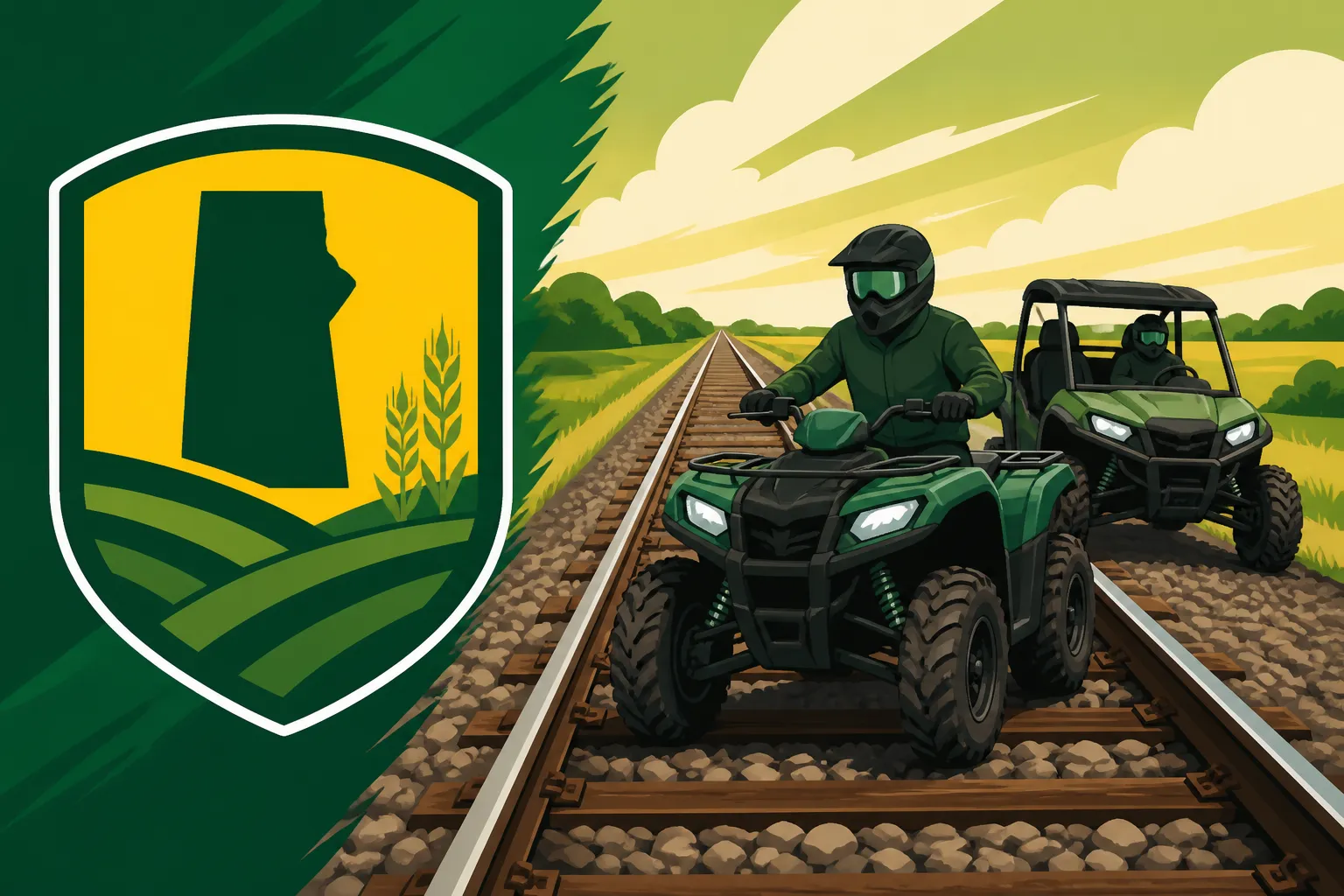
First and foremost, it's absolutely critical to understand that riding an ATV or UTV on an active railway line or property is illegal, incredibly dangerous, and can lead to severe penalties. This includes the tracks themselves, the immediate surrounding land, and any associated railway infrastructure. Even if a line appears to be used infrequently, it is still active railway property, and trespassing is a serious offense. Trains are fast, heavy, and cannot stop quickly, making any interaction with an off-road vehicle potentially catastrophic.
Even for lines that appear abandoned or have had the tracks removed, the land may still be owned by the railway company or a successor entity. Unless there has been a formal disposition of the land and it has been clearly designated for public recreational use, it should be considered private property. This means that riding on such a rail bed without explicit permission is trespassing, regardless of whether a train will ever pass through. The general rule is: if it looks like a rail bed, assume it's not open for riding unless you have clear, undeniable evidence to the contrary.
Trespassing Laws and Implications for Riders
Saskatchewan has clear trespassing laws, and they apply just as much to ATV and UTV riders as to anyone else. If you are on private property without the owner's permission, you are trespassing. As discussed, many rail beds, even abandoned ones, are private property or managed Crown land where recreational vehicle use is restricted. This means that if you're caught riding on a rail bed without permission, you could face fines and legal action.
Landowners, whether private citizens, corporations, or the Crown, have the right to protect their property. Being caught trespassing can result in a significant fine under [Saskatchewan Trespass Law for Riders], and a landowner could pursue civil action for damages if your machine caused any harm. Furthermore, if a peace officer encounters you on private property, they can issue a ticket. This isn't just about avoiding a ticket; it's about respecting property rights and avoiding unnecessary conflict with landowners, who are often simply trying to protect their assets and ensure safety.
Crown Land vs. Private Land: Different Rules, Same Caution
The distinction between Crown land and private land is important, but it doesn't automatically grant access to rail beds that may have reverted to Crown ownership. While [Saskatchewan Crown Land Access Rules] can permit ATV use in certain areas, this is often subject to specific regulations, administrative orders, and designated trails. A former rail bed on Crown land is not automatically a designated trail.
For example, large tracts of Crown land may have restrictions on motorized vehicle access to protect sensitive ecosystems, prevent wildfires, or manage wildlife. [Saskatchewan Crown Land Riding Explained] outlines that riders must check for specific administrator orders or designated trail networks. Without clear signage indicating that a specific rail bed on Crown land is open for ATV use, it should be considered off-limits. The same caution applies: assume restriction unless clear permission or designation exists. Always do your homework, consult local authorities or land managers, and look for official maps or signage before venturing onto any rail bed, even if you suspect it's Crown land.
The Hidden Dangers of Rail Bed Riding for ATVs and UTVs
Beyond the legal risks, riding an ATV or UTV on a rail bed in Saskatchewan presents a host of physical dangers that many riders simply don't consider. These aren't designated trails; they are often neglected remnants of infrastructure, and their condition can be unpredictable and treacherous, even for robust machines equipped with accessories from companies like SuperATV.
Unpredictable Terrain and Structural Integrity
One of the most significant physical hazards of riding on an old rail bed is the unpredictable terrain. While the grade itself might be relatively flat, what's beneath the surface, or what's missing from the surface, can be extremely dangerous. You might encounter:
- Rotting Ties and Rail Scraps: Even if the main rails have been removed, wooden ties can be partially buried, rotted, or sticking out at odd angles, posing trip hazards or capable of puncturing tires. Metal spikes, plates, or small sections of rail might still be present, hidden by vegetation.
- Crumbling Bridges and Culverts: Old railway bridges, especially wooden trestles or steel girder bridges that haven't been maintained for decades, can be severely compromised. Decking might be rotted, supports rusted, or entire sections could have collapsed. Crossing these structures with the weight of an ATV or UTV is an enormous risk. Similarly, culverts might be washed out, creating large, unseen ditches.
- Overgrown Vegetation and Hidden Obstacles: Decades of neglect mean many rail beds are heavily overgrown with brush, weeds, and even small trees. This vegetation can conceal rocks, holes, old equipment, or construction debris, turning a seemingly smooth path into a minefield.
- Erosion and Washouts: Without maintenance, rail beds are susceptible to erosion from rain and snowmelt. This can create deep ruts, gullies, and unstable edges, especially where the bed is elevated.
Even a machine outfitted with heavy-duty protection, such as a SuperATV full skid plate system, might protect your undercarriage from some impacts, but it won't prevent a catastrophic fall through a rotten bridge or a rollover from a hidden washout. These dangers are real and can lead to severe injury, costly damage to your machine, or even leave you stranded in a remote area.
The Risk of Encounters with Trains and Other Users
While many rail beds are truly abandoned, not all are. Some "disused" lines might still see occasional traffic from short-line railways, industrial spurs, or maintenance vehicles. Relying on the assumption that a line is inactive can be a fatal mistake. Even if you haven't seen a train in years, that doesn't guarantee one won't appear, often with little to no warning.
Furthermore, even on truly abandoned sections, you are likely to encounter other users who are not expecting motorized vehicles. Hikers, joggers, dog walkers, cyclists, and sometimes even equestrians or snowmobilers (if it's a multi-use trail in winter) use these corridors. An ATV or UTV approaching quietly around a bend can create a dangerous surprise, leading to collisions or conflict. These non-motorized users have different expectations and rights on such paths, and operating a heavy, fast machine among them is a recipe for disaster.
Environmental Impact and Wildlife Concerns
Riding off-road machines on undesignated paths, including most rail beds, can have significant negative environmental impacts. The heavy tires of ATVs and UTVs can compact soil, damage sensitive vegetation, and contribute to erosion, especially on slopes or near water bodies. This can disrupt natural drainage patterns and degrade habitat for local wildlife.
Many rail beds also pass through critical wildlife corridors or sensitive ecological areas. Disturbing these areas can stress wildlife, interfere with breeding patterns, or displace animals from their natural habitats. Responsible riding means sticking to designated trails where the environmental impact is managed and minimized. Respecting the land is part of being a good rider, and that often means avoiding areas not explicitly set aside for motorized recreation.
Liability and Insurance Considerations
Getting into an accident on an unauthorized rail bed raises serious questions about liability and insurance coverage. Your ATV or UTV insurance policy, while essential for riding legally in Saskatchewan as per [Saskatchewan Insurance Requirements for Riders], typically has exclusions for illegal activities, including trespassing.
If you are injured while riding on private property without permission, your personal injury claims might be significantly hampered, and your insurance company could deny coverage for medical expenses or machine damage. Even worse, if you cause damage to property or injure another person while trespassing, you could be held personally liable for substantial costs, and your insurance might not step in to protect you. [Saskatchewan Owner Liability Rules] indicate that an owner can be held liable for a rider's mistakes. The financial and legal ramifications of an incident on a rail bed can be far more severe than simply receiving a ticket under [Saskatchewan Fines Capped at $1,000]. It's a risk simply not worth taking when safer, legal alternatives exist.
| Rail Bed Status | Ownership Implications | ATV/UTV Riding Status | Key Risk Factors |
|---|---|---|---|
| Active Railway Line | Owned by railway company | Illegal & Extremely Dangerous | Active trains, severe legal penalties, death |
| Disused/Abandoned Track Removed | May still be railway property, or reverted to private/Crown | Generally Illegal (Trespassing) | Unseen hazards, other users, liability, fines |
| Designated Multi-Use Trail | Managed by province/municipality/club | Potentially Legal (Permitted Use Only) | Check signage, permits, specific rules for ATVs |
| Ambiguous/Unmarked | Unknown ownership, assumed private | Assume Illegal (Trespassing) | All of the above, plus confusion of ownership |
Safer and Legal Alternatives for Saskatchewan ATV Riders
It's clear that riding on rail beds in Saskatchewan is fraught with legal pitfalls and significant physical dangers. But don't despair! Saskatchewan offers plenty of fantastic, legal, and safe opportunities for ATV and UTV riders to enjoy the province's diverse landscapes. The key is knowing where to look and how to prepare properly.
Exploring Designated Provincial Park Trails
Saskatchewan has recognized the growing popularity of ATV and UTV riding and has established designated trail systems in some of its provincial parks. These trails are specifically designed and maintained for off-road vehicles, offering a safe and managed environment for your adventures.
For example, [Moose Mountain Provincial Park ATV Trails] offers a network of trails where riders can explore the park's natural beauty. Similarly, [Narrow Hills Provincial Park ATV Trails] provides another excellent option, often with stunning scenery and varied terrain. These parks often require a permit and sometimes a brief orientation to ensure riders understand the rules of the trail, such as speed limits, environmental protection measures, and proper trail etiquette as outlined in [Saskatchewan Rules of Operation on a Trail]. While there's usually a small fee or a free permit process, it's a small price to pay for legal, safe, and enjoyable riding on trails built with riders in mind. Always check the specific park's regulations before you go, as rules can vary.
Utilizing Crown Land with Proper Permission
Saskatchewan is home to vast tracts of Crown land, and while not all of it is open for unbridled ATV use, a significant portion can be accessed legally with the right approach. The crucial element here is understanding [Saskatchewan Crown Land Access Rules]. Simply seeing "Crown land" on a map doesn't automatically grant you permission to ride your ATV wherever you please.
Often, specific regions of Crown land are managed for multiple uses, including forestry, grazing leases, and recreation. You might need to contact the relevant ministry (e.g., Environment, Agriculture) to inquire about specific areas or to obtain permission if required. [Saskatchewan Crown Land Riding Explained] details that certain administrative orders might restrict motorized access in sensitive zones. For example, some areas might be closed during specific times of the year to protect wildlife during calving or nesting seasons. Respecting these rules and obtaining any necessary permissions ensures you're riding legally and responsibly, preserving these valuable public lands for everyone.
Understanding Municipal Bylaws and Ditch Riding
For many rural riders in Saskatchewan, ditch riding is a common way to get from point A to point B. The [Saskatchewan Ditch Riding and the 2-Metre Rule] allows for riding within two metres of the travelled portion of a highway, under specific conditions. However, this isn't a blanket permission across the entire province. Municipalities have the power to enact their own bylaws that can further restrict or prohibit ATV use on ditches, grid roads, or even within town limits.
It's vital to research the specific [Saskatchewan Municipal Bylaws on Roads] for any rural municipality, village, or town you plan to ride in or through. Some communities might have designated routes or specific hours of operation, while others might ban ATVs entirely from certain areas. For example, some resort villages might require a municipal plate or permit, like those described in [Saskatchewan Municipal Plate Schemes], to ride on their streets or ditches. Always check with the local municipal office before you head out to avoid an unexpected ticket. Riding legally on these local access points is often a matter of quick research and respecting local rules.
Engaging with ATV Clubs for Organized Riding
One of the best ways to find legal, safe, and fun riding opportunities in Saskatchewan is by joining a local ATV or UTV club. These clubs, like those mentioned in [Saskatchewan ATV Clubs Worth Joining], are typically affiliated with provincial organizations and often work directly with landowners, municipalities, and the provincial government to establish and maintain designated trail systems.
Club membership often comes with access to private trails through formal agreements, organized group rides, and a wealth of local knowledge about safe and legal riding areas. Clubs are invaluable resources for finding out where you can ride, rather than guessing where you might be able to. They advocate for responsible riding, contribute to trail maintenance, and help ensure the longevity of ATV recreation in the province. Plus, they're a great way to meet fellow enthusiasts and share your passion for the outdoors. You might even find product recommendations for accessories like winches or lighting from SuperATV that are genuinely useful for club rides.
By focusing on these established, legal alternatives, Saskatchewan ATV and UTV riders can enjoy the thrill of off-road adventure without the constant worry of legal repercussions or the severe physical dangers associated with riding on rail beds. Always prioritize safety, respect property rights, and ride responsibly. Your machine, your wallet, and your well-being will thank you for it.
Disclaimer
This article is for general informational purposes only and does not constitute professional advice. Laws, prices and regulations vary by location and change over time. Consult a qualified professional for guidance on your specific situation.