Saskatchewan Winter Water Body Exception
The biting cold of a Saskatchewan winter often brings with it the allure of vast, frozen landscapes, and for many ATV and UTV enthusiasts, that means the tempting expanse of a frozen lake or river. However, the open ice, while appearing as a seamless highway, is often subject to strict regulations and significant dangers that many riders overlook. This guide is here to shed light on the specific "Saskatchewan Winter Water Body Exception" under the province's All Terrain Vehicles Act, explaining when and how you can legally and safely navigate frozen waters with your off-road machine.
Understanding the Core Prohibition on Water Bodies
It’s easy to look at a wide-open frozen lake and see a perfect playground for your quad or side-by-side. The temptation to carve tracks across the glassy surface or use it as a shortcut is strong, but before you venture out, it’s crucial to understand the baseline rule that governs ATV and UTV operation on water bodies in Saskatchewan. The Act itself is quite clear on its general prohibition, and understanding this foundation is key to appreciating the winter exception.
The General Rule: No Riding on Lakes and Rivers
Generally speaking, operating an ATV or UTV directly on a lake, river, or other body of water within Saskatchewan is not permitted. This isn't just a suggestion; it's a fundamental restriction embedded in [Saskatchewan's All Terrain Vehicles Act]. The province doesn't want off-road vehicles tearing up sensitive aquatic ecosystems, causing erosion, or disturbing wildlife habitat during warmer months. Think of it this way: your quad is designed for land, not for navigating waterways, even shallow ones. This primary prohibition serves as a protective measure, keeping machines away from areas where they could cause significant environmental damage or pose a risk to other water users.
This general rule applies year-round, meaning that during the spring, summer, and fall, you absolutely cannot just drive your ATV into a creek bed, across a shallow lake, or along a riverbank with the intention of using the water body as part of your trail. Doing so not only puts you at risk of fines but also contributes to the degradation of these vital natural resources. Many riders, especially those new to the province, mistakenly assume that "off-road" means any terrain, including water, but the legal framework in Saskatchewan draws a clear line.
Why the Prohibition Exists: Safety and Environmental Concerns
The reasons behind restricting ATVs and UTVs from water bodies are multifaceted, extending beyond just immediate environmental impact. From an ecological standpoint, ATVs can introduce pollutants like fuel and oil into aquatic environments, disturb sediment, and damage vegetation crucial for fish spawning and wildlife habitat. The churning of tires can muddy waters, affecting clarity and temperature, which are critical for many species. Furthermore, repeated access points can lead to significant erosion along shorelines, impacting water quality and land stability.
Beyond the environmental aspects, there are significant safety concerns. Water bodies, even seemingly calm ones, can hide submerged obstacles, sudden drops, or varying depths that are invisible from the surface. An ATV or UTV is heavy, and getting stuck in mud or soft ground near water can quickly become a dangerous situation for the operator. Even shallow water can quickly become a mechanical hazard, damaging electrical systems, engines, and other components not designed for submersion. The general prohibition is a blanket rule designed to protect both our precious natural resources and the riders themselves from avoidable risks.
What Constitutes a "Water Body" Under the Act
When the Act refers to a "water body," it’s important to understand the breadth of this definition. It’s not just limited to the major lakes like Last Mountain or the South Saskatchewan River. This term encompasses virtually any natural accumulation of water, including lakes, rivers, streams, creeks, ponds, sloughs, and even temporary wetlands that might form after heavy rain or snowmelt. Essentially, if it’s a natural feature that holds water, it falls under the purview of these regulations.
This broad definition means riders need to exercise caution and judgment, particularly in areas with numerous sloughs or meandering waterways, common in many parts of Saskatchewan. The intent is to prevent the indiscriminate use of ATVs and UTVs in or on any water-filled depression or channel. Understanding this comprehensive definition helps riders avoid accidental infractions, reminding them that even a small, seemingly insignificant bog or seasonal creek is considered a "water body" that generally prohibits ATV and UTV operation.
The Saskatchewan Winter Water Body Exception Explained
While the general rule is "no riding on water bodies," Saskatchewan's legislation does make a critical exception for winter conditions. This exception acknowledges the unique state of frozen lakes and rivers, recognizing that they can offer safe, traversable surfaces under specific circumstances. However, this isn't a free pass; the exception comes with important conditions and expectations for rider responsibility.
When the Exception Applies: "Sufficiently Frozen" Conditions
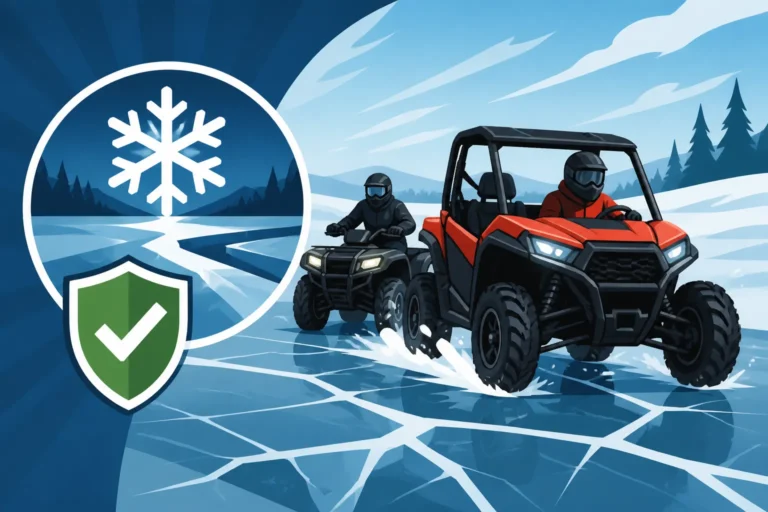
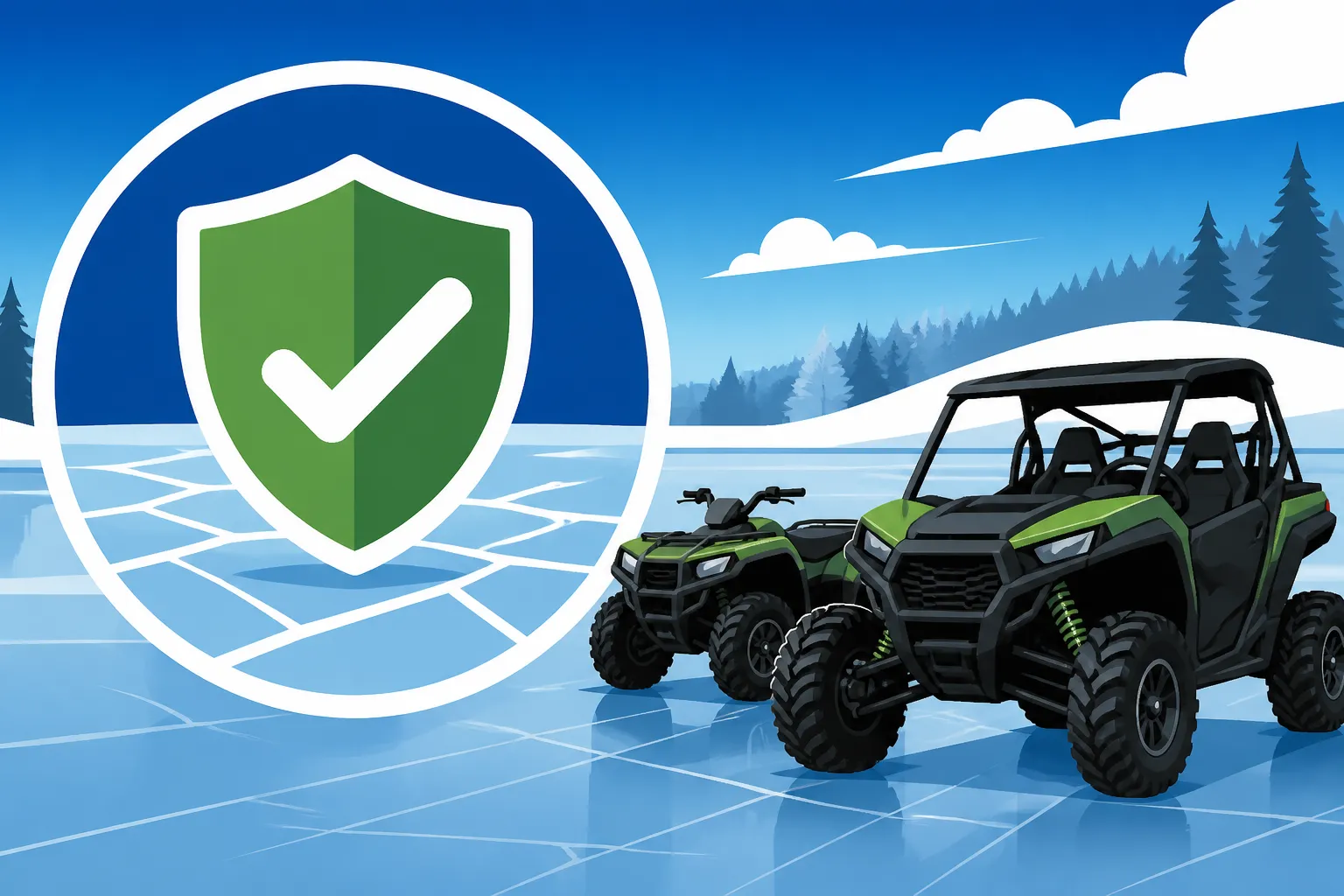
The pivotal phrase in the Act is "when the body of water is sufficiently frozen to support the weight of the all terrain vehicle." This is the cornerstone of the winter water body exception. It means that once a lake or river has developed a solid, stable layer of ice capable of bearing the load of your machine, the general prohibition on riding on that water body is temporarily lifted. This exception is designed to allow safe passage and, to some extent, recreational use of these frozen expanses during the colder months.
It's important to stress that "sufficiently frozen" is not an arbitrary term. It implies a level of ice thickness and integrity that minimizes the risk of breaking through. This typically means many inches of clear, solid ice, not just a thin crust. The exception is a nod to the practicalities of winter travel and recreation in a northern climate, where frozen water bodies often become convenient pathways or safe zones for specific activities. However, the onus is squarely on the rider to ensure these conditions are met.
Who Determines "Sufficiently Frozen" and Rider Responsibility
Here's where it gets tricky, and where rider responsibility becomes paramount: there isn't a provincial agency that goes around declaring specific lakes or rivers "sufficiently frozen" for ATV traffic. That determination rests solely with the operator of the ATV or UTV. You, the rider, are responsible for assessing the ice conditions before venturing out. This means you need to be knowledgeable about ice safety, vigilant about checking conditions, and willing to turn back if there's any doubt.
This individual responsibility means looking for public advisories, talking to local experts, and, most importantly, conducting your own checks. Factors like recent temperature fluctuations, snow cover (which can insulate thin ice), currents, springs, and even the presence of existing tracks can all influence ice stability. If you operate an ATV or UTV on ice that isn't sufficiently frozen and an incident occurs, you are held accountable. This can lead to serious consequences, not just physically, but legally, including charges under the Act if an officer determines you were operating unsafely. Always remember that while the exception exists, it doesn't absolve you of the duty to ensure your safety and the safety of others.
The Specifics of the Exception: Traversing vs. Recreational Riding
The phrasing of the exception often leads to questions about its scope: does "sufficiently frozen" mean you can just play around on the ice, or is it primarily for crossing? While the Act doesn't explicitly differentiate between simply traversing a water body and using it for extensive recreational riding, the underlying spirit of the law and general safety practices lean towards caution. The exception permits operation on the frozen surface, but it's not an open invitation to treat it like a dry field.
For example, using a frozen lake as a shortcut to get from one part of your cabin property to another, or to access a remote ice fishing spot, falls clearly within the intent of the exception for "travel." Extensive, high-speed recreational riding, especially in areas where ice thickness might be variable or where other users (like ice fishers, cross-country skiers, or even snowmobilers) might be present, requires an even higher degree of caution and consideration. Remember that regardless of whether you're traversing or riding for fun, rules like [Saskatchewan Minimum Insurance Requirement] and [Saskatchewan Helmet and Eye Protection Rules] still apply. Always think about the potential impact of your actions on the ice, especially in terms of noise, safety, and disturbing other users of the frozen environment.
Navigating the Risks of Winter Water Body Riding
Riding on frozen water bodies, even when "sufficiently frozen," inherently carries risks. The environment is dynamic, and conditions can change rapidly. Understanding and mitigating these risks is crucial for any rider hoping to take advantage of the winter exception. It’s not just about the law; it’s about coming home safe.
Assessing Ice Thickness and Stability
The most critical aspect of safe winter water body riding is accurately assessing ice thickness and stability. It's not enough to guess or rely on outdated information. Ice thickness can vary dramatically even on the same body of water, due to currents, springs, underwater structures, and recent weather. For ATVs and UTVs, significantly thicker ice is required compared to a person walking or a snowmobile. Many experts recommend at least 8-12 inches of clear, solid ice for a single ATV, and considerably more for heavier UTVs or multiple machines.
Always start by checking near the shore and working your way out cautiously. Look for signs of weakness such as discoloured ice (grey or dark ice is weaker than clear blue ice), cracks, slush, or open water. Pay particular attention to areas around inlets, outlets, points of land, and pressure ridges, as these are common spots for thinner ice. Carry an ice chisel or auger to physically check thickness at regular intervals. Never assume that just because one area is safe, the entire body of water is. Conditions can change day by day, or even hour by hour, especially with fluctuating temperatures. This vigilance is paramount, as demonstrated in guidelines like [Saskatchewan Rules for Riding a Frozen Lake] and [Saskatchewan Rules for Riding a Frozen River].
Essential Safety Gear and Practices for Ice Travel
Beyond checking the ice, equipping yourself with the right safety gear and adopting smart practices can be the difference between a close call and a tragedy. No matter how confident you are in the ice, prepare for the worst. This includes:
- Ice picks: Worn around your neck, these are invaluable for pulling yourself out of the water if you fall through.
- Throw rope/bag: A floating rope that can be tossed to a person who has fallen in, allowing them to be pulled to safety.
- Warm, waterproof clothing: Layered, breathable, and designed for extreme cold. A flotation suit can offer both warmth and buoyancy.
- Communication device: A fully charged cell phone (in a waterproof bag) or satellite messenger, as cell service can be spotty in remote areas.
- First aid kit: Equipped for cold-weather emergencies.
- Navigation: A GPS device with pre-loaded maps or a paper map and compass, to avoid getting disoriented in whiteout conditions or unfamiliar terrain.
- Buddy system: Never ride alone on ice. Travel with at least one other machine, keeping a safe distance between vehicles.
When riding, maintain a moderate speed, avoid sudden stops or turns, and distribute weight evenly. If you hear cracking sounds, immediately slow down, reduce weight (e.g., have passengers dismount if safe), and head back to shore by the same path you came. Always inform someone of your planned route and expected return time.
Legal and Personal Liability in Case of an Incident
Operating an ATV or UTV on frozen water bodies means taking on significant legal and personal liability. If you, or someone you are supervising, falls through the ice, gets injured, or causes damage, you are likely to be held responsible. This responsibility can manifest in several ways:
- Charges under the ATV Act: If a peace officer determines you were operating your machine on ice that was not "sufficiently frozen," you could face fines and penalties.
- Civil lawsuits: If your actions lead to injury or death of another person, or damage to their property (e.g., an ice fishing shack), you could be sued for negligence. The costs associated with such lawsuits can be astronomical, potentially including medical bills, lost income, and pain and suffering. [Saskatchewan Liability Claims After a Crash] can be severe.
- Rescue costs: If emergency services are called to extract you or your machine from the ice, you may be liable for the costs of that rescue operation.
- Insurance implications: While your [Saskatchewan Insurance Requirements for Riders] typically cover basic liability, operating recklessly or in violation of the Act might lead to your claim being denied. It's crucial to understand your policy's specifics regarding off-road and winter water body use.
This serious consideration underscores the importance of exercising extreme caution and good judgment. The "exception" is not an invitation for careless behaviour; it's a conditional allowance that comes with a heavy burden of responsibility.
Differentiating ATV and Snowmobile Rules on Ice
It's common to see both ATVs and snowmobiles on frozen lakes and rivers in Saskatchewan, especially during peak winter months. However, it's vital to understand that while both can utilize the winter water body exception, the rules, expectations, and safety considerations for each machine type can differ subtly. Misunderstanding these differences can lead to confusion and potential hazards when riding in mixed groups.
How Snowmobiles Are Treated Differently on Frozen Surfaces
Snowmobiles, unlike ATVs and UTVs, are specifically designed for snow and ice travel. Their wide tracks distribute weight more efficiently across snow and ice, and their chassis are built to handle impacts and navigate deep snow. Because of this fundamental design difference, the perception and practicalities of snowmobile operation on frozen water bodies are somewhat different. [Saskatchewan Snowmobile Registration Compared] highlights these differences even further, as snowmobiles have a provincial registration system that ATVs do not.
While snowmobilers still must adhere to safe ice practices, the acceptable ice thickness for a snowmobile is generally less than for an ATV or UTV due to their lighter weight and broader footprint. Furthermore, snowmobile clubs often groom trails across frozen lakes, implicitly indicating safer routes. This creates a cultural norm where snowmobiles are perhaps seen as having more inherent access to frozen water bodies than ATVs. However, it is critical for both types of riders to understand that "sufficiently frozen" still applies, and no designated snowmobile trail guarantees absolute safety from thin ice. The shared responsibility for ice safety remains.
Implications for Mixed-Machine Riding Groups
When ATVs, UTVs, and snowmobiles ride together on frozen water bodies, special care must be taken. The weight differences alone mean that ice conditions suitable for a snowmobile might be dangerously thin for a heavier ATV or a multi-passenger UTV. Riders in mixed groups should always default to the safety requirements of the heaviest machine in the group. This means that if you're riding a UTV with a couple of friends and a snowmobiler wants to join, everyone needs to abide by the ice thickness recommendations for the UTV.
Furthermore, riding styles and speeds often differ. Snowmobilers typically travel at higher speeds than ATVs on open, flat ice. This can create challenges for maintaining safe distances, especially if one machine breaks down or encounters an unexpected hazard. Communication is key in mixed groups. Establish clear hand signals, agree on a maximum speed, and have a plan for what to do if someone encounters trouble. Remember that everyone in the group, regardless of their machine, is subject to the same [Saskatchewan Rules of Operation on a Trail] (or in this case, on the ice) and general safety regulations.
Key Differences in Ice Safety Protocols
The table below summarizes some key differences in safety protocols when operating ATVs/UTVs versus snowmobiles on frozen water bodies:
| Feature | ATV/UTV Ice Safety Protocol | Snowmobile Ice Safety Protocol |
|---|---|---|
| Minimum Ice Thickness | Generally 8-12 inches (20-30 cm) for clear, solid ice. More for heavier machines or groups. | Generally 5-8 inches (12-20 cm) for clear, solid ice. |
| Weight Distribution | Concentrated weight on four tires, higher ground pressure. | Distributed weight over long track, lower ground pressure. |
| Speed on Ice | Moderate, careful speed to avoid cracking ice or sudden stops. | Can travel faster, but caution still needed for bumps/cracks. |
| Recovery if Break-Through | More challenging due to heavier machine and potential for submergence. Winch often essential. | Lighter, often easier to pull out with ropes/manual effort. |
| Preferred Terrain | Best on clear ice, limited deep snow. | Excels in deep snow, good on clear ice. |
| Safety Gear | Ice picks, throw rope, survival kit. | Ice picks, throw rope, survival kit. (Shared essentials) |
| Legal Framework | Governed by The All Terrain Vehicles Act; exception based on "sufficiently frozen." | Governed by The Snowmobile Act; similar "sufficiently frozen" principles. |
This table illustrates why a "one size fits all" approach to ice safety in mixed groups can be dangerous. Always prioritize the safety of the most vulnerable or heaviest machine when making decisions about venturing onto frozen water.
Practical Considerations and Local Bylaws
Beyond the provincial Act, riders need to be aware of local regulations and practical advice to ensure a safe and enjoyable winter riding experience on Saskatchewan's frozen water bodies. What might be permitted provincially could be restricted locally, and common sense combined with preparation goes a long way.
Checking Local Bylaws and Administrator Orders
While the provincial Act outlines the general framework for ATV and UTV use, many municipalities and specific land management bodies have their own bylaws or administrator orders that can affect your riding plans. A rural municipality might have specific rules regarding access to certain lakes, speed limits on frozen surfaces, or even complete prohibitions on ATV use on particular water bodies within their jurisdiction, even if provincially they would be considered "sufficiently frozen." Similarly, areas managed by Saskatchewan Parks, like those near [Moose Mountain Provincial Park ATV Trails] or [Narrow Hills Provincial Park ATV Trails], may have specific regulations regarding ATV use on frozen lakes within park boundaries, or require special permits.
Before heading out, it's always a good idea to contact the local rural municipality office, provincial park office, or Indigenous band office to inquire about any specific bylaws or orders that might apply to the area where you intend to ride. Ignorance of a local bylaw is not a valid defence if you receive a fine. Some areas might have specific rules for environmentally sensitive zones or designated recreation areas, so do your homework. These local rules often exist for specific reasons, whether it's to protect local wildlife, manage conflict between different user groups, or address unique safety concerns.
Tips for Planning a Safe Winter Water Body Ride
Planning is paramount for safe winter riding, especially on frozen water. Here are some actionable tips to integrate into your preparation:
- Monitor Weather Forecasts: Keep an eye on temperatures, snowfalls, and wind chill. Rapid temperature changes can weaken ice, and heavy snow can insulate thin ice, making it harder to assess. High winds can create whiteout conditions, making navigation on a wide-open lake extremely difficult.
- Talk to Locals: Reach out to local residents, ice fishers, or other experienced riders. They often have the most up-to-date and accurate information on specific lake conditions, known hazards, and typical ice patterns.
- Map Your Route: Even on a seemingly flat lake, it's easy to get disoriented, especially in low light or foggy conditions. Use a GPS device or a detailed map to plan your route, identify potential hazards (like known thin spots or open water), and mark your entry and exit points.
- Inform Someone: Always tell a trusted person your detailed riding plan, including where you're going, your route, who you're with, and when you expect to return. This information is critical if you become overdue and need assistance.
- Pack an Emergency Kit: Beyond personal safety gear, include items like a tow rope or winch, shovel, extra fuel, fire starter, a powerful flashlight, basic tools, and enough high-energy food and water for longer than you expect to be out. A small stove for hot drinks can also be a lifesaver.
- Understand Your Machine's Limits: Be realistic about what your ATV or UTV can handle in extreme cold or deep snow, especially if you plan to venture off the clear ice. Ensure your machine is in top mechanical condition, with a full tank of fuel.
Recommended Gear for Saskatchewan Winter Conditions
Operating an ATV or UTV in a Saskatchewan winter means battling some truly extreme conditions. The right gear not only enhances safety but also makes the experience far more enjoyable. Beyond the ice safety gear mentioned earlier, consider these for overall winter riding:
- Heated Grips/Thumb Warmers: A game-changer for hand comfort and control in frigid temperatures. Many ATVs come with these, but SuperATV offers aftermarket options if your machine doesn't. Keeping your hands warm is crucial for maintaining dexterity and preventing frostbite.
- Wind Protection: A full-face helmet with a heated visor (to prevent fogging), a windshield on your ATV, or a full cab enclosure for UTVs, are invaluable. The wind chill at even moderate speeds in sub-zero temperatures can be brutal.
- Layered Clothing: Start with a moisture-wicking base layer, add insulating mid-layers (fleece or down), and finish with a waterproof and windproof outer shell. Avoid cotton, which absorbs moisture and loses its insulating properties when wet.
- Warm Boots: Insulated, waterproof boots are essential. Your feet will be exposed to cold, and potentially wet, conditions. Consider boots rated for extreme cold.
- Heavy-Duty Tires: While not directly for ice, proper winter tires can offer better grip in snowy approaches to water bodies and on mixed terrain. SuperATV and other brands offer specialized tires for various conditions.
- Winch: An absolute necessity for winter riding, especially if venturing into deep snow or uncertain ice conditions. Getting stuck is common, and a winch provides critical self-recovery capability.
Being prepared for the elements and the specific challenges of winter water body riding will dramatically increase your safety and allow you to truly appreciate the unique beauty of Saskatchewan's frozen landscapes.
Disclaimer
This article is for general informational purposes only and does not constitute professional advice. Laws, prices and regulations vary by location and change over time. Consult a qualified professional for guidance on your specific situation.