Saskatchewan Rules for Riding Near a School
It can be incredibly frustrating to figure out the rules for riding your ATV or UTV in Saskatchewan, especially when you're near populated areas. There's a lot of confusion about where you can and cannot go, and the thought of accidentally breaking a rule, especially around a sensitive spot like a school, can cause a lot of anxiety. This guide is here to cut through that confusion, explaining the specific rules and expectations for operating your off-road machine in the vicinity of schools and other community hubs in Saskatchewan.
The General Framework: ATVs on Saskatchewan Roads and Public Spaces
Before we dive into the specifics of school zones, it's crucial to understand the broader legal landscape for ATVs and UTVs in Saskatchewan. Unlike some provinces, Saskatchewan has its own unique set of regulations, and they're not always intuitive for those used to car rules. Your off-road machine isn't treated like a regular vehicle, and that means you can't just cruise down any street.
What the All Terrain Vehicles Act Says About Public Roadways
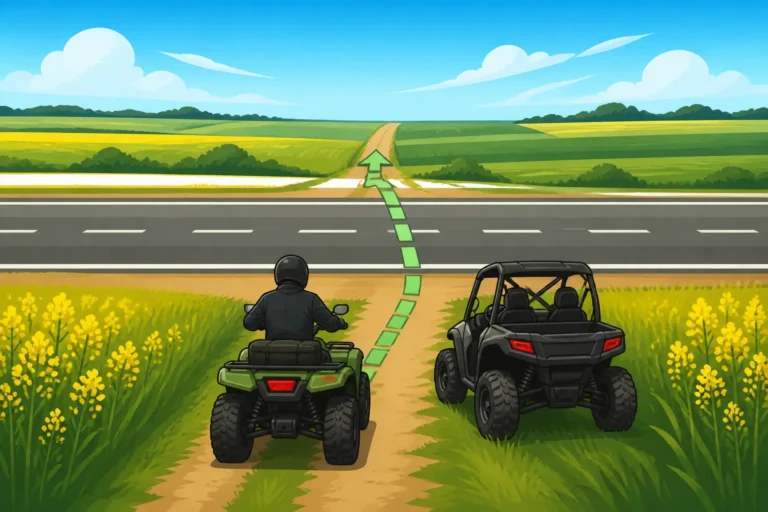
The foundational document governing ATVs in Saskatchewan is the All Terrain Vehicles Act. Generally speaking, this provincial act is pretty clear: ATVs are not permitted on provincial highways or public roads, with some critical exceptions. You're mostly confined to private land or designated trails. However, the Act does allow for some riding on the shoulder or ditch adjacent to certain roadways, provided you maintain a specific distance from the travelled portion. This "2-metre rule" is often misunderstood, and it's a frequent point of contention for riders. The idea is to keep these powerful machines separate from high-speed vehicular traffic. For more detail on these basic allowances, you can refer to [Saskatchewan ATV Road Rules Explained]. It's not a free-for-all, and the spirit of the law is very much about keeping ATVs in appropriate off-road environments.
Now, this provincial act provides the base layer, but it doesn't always address the hyper-local nuances of urban or semi-urban environments. That's where things get a bit more complicated, especially when you're talking about areas with a lot of pedestrian traffic and young people. The provincial rules set a floor, not necessarily a ceiling, on restrictions.
Municipal Bylaws: The Local Layer of Rules
Here's where things can get truly tricky for riders. While the province sets the overarching framework, individual cities, towns, and rural municipalities in Saskatchewan have the power to create their own bylaws that can further restrict, or in some specific cases, permit ATV use within their boundaries. This means that what's acceptable in one rural municipality might be strictly prohibited in a neighbouring village. This patchwork of rules is a significant source of frustration for riders who travel through different areas.
When it comes to areas like schools, parks, or residential streets, municipalities often step in to fill the gaps left by the broad provincial act. They might enact bylaws explicitly prohibiting ATV traffic on specific streets, within certain distances of public buildings, or during particular hours. These bylaws are designed to address local concerns about noise, safety, and property damage. Ignoring them can lead to significant penalties, even if you believe you're following the provincial act. It’s always your responsibility to know the local rules, and a good starting point is to understand [Saskatchewan Municipal Bylaws on Roads]. Many riders find themselves in trouble not because they're intentionally breaking laws, but because they simply don't know the specific local ordinances.
The Underlying Principle: Safety First
Behind all these rules, both provincial and municipal, is a paramount concern for safety. ATVs and UTVs are powerful machines, often heavy and capable of high speeds and rapid acceleration. They handle very differently than cars and can be harder to see, especially for young children or drivers of larger vehicles. When you introduce these machines into environments with pedestrians, especially children, the risk of accidents increases dramatically.
Schools, playgrounds, and residential streets are places where children walk, play, and gather. Their behaviour can be unpredictable, and they may not always be aware of their surroundings. This makes these areas particularly sensitive. The rules prohibiting or severely restricting ATV use near schools aren't about penalizing riders, but about protecting the most vulnerable members of the community. It's about minimizing the chance of an accident, reducing noise disturbances during school hours, and ensuring a safe environment for learning and play. Riders who truly understand and respect this principle are the best ambassadors for the sport.
Specific Prohibitions Around Schools and Residential Zones
So, what does this all mean when you're actually out riding and find yourself near a school? The answer leans heavily towards caution and, more often than not, a strict "no-go" policy. It's not just about avoiding the schoolyard itself, but also the surrounding streets and properties.
Why Schools Are Designated No-Go Zones
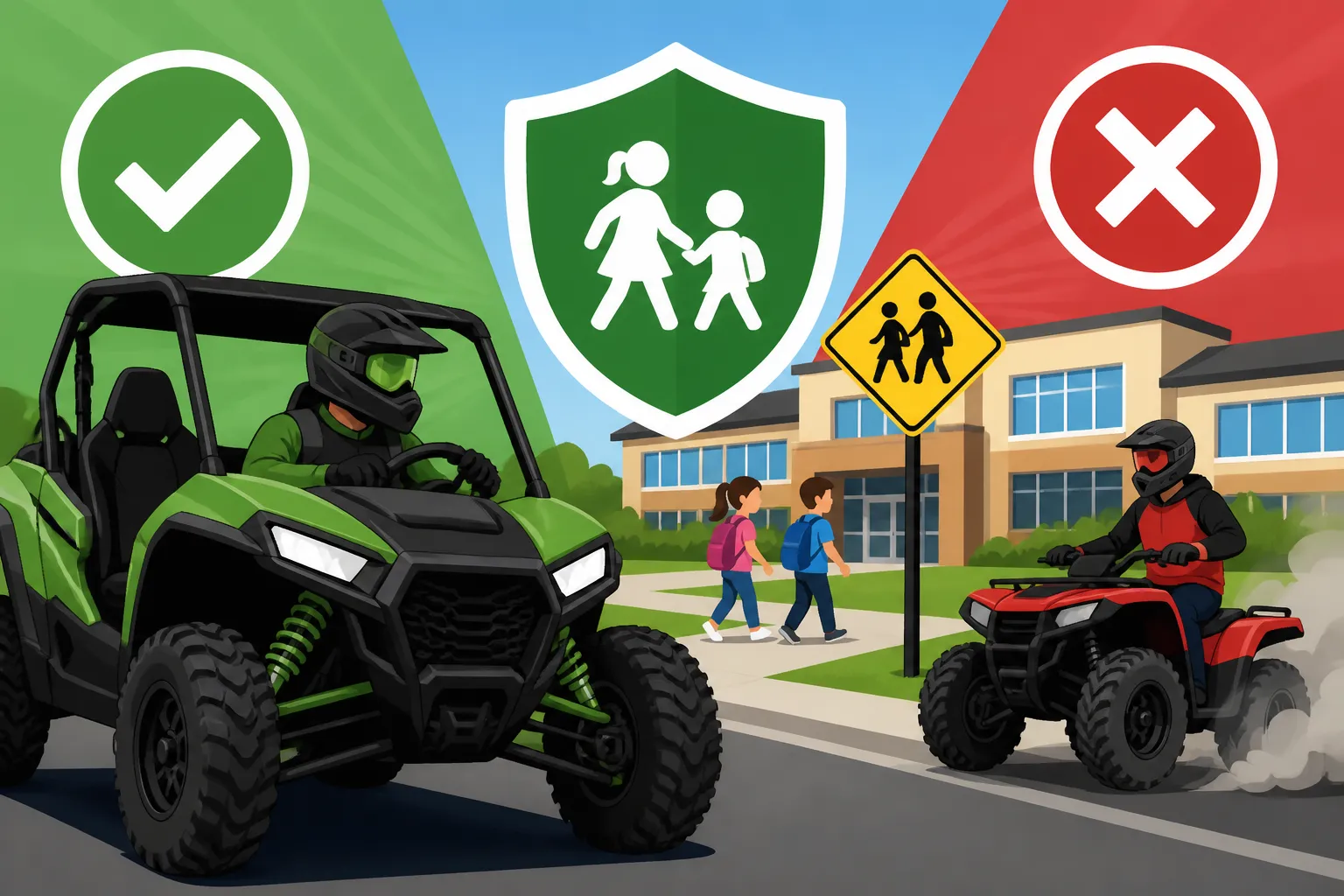
Schools are hubs of activity, particularly during drop-off, pick-up, and recess. Children, sometimes as young as five or six, are constantly moving, often excited and not always paying close attention to traffic. Introducing ATVs or UTVs into this environment creates an unacceptable level of risk. The noise alone can be disruptive, startling children or making it difficult for them to hear approaching vehicles. The potential for collisions, especially with smaller, more vulnerable pedestrians, is extremely high.
Beyond the immediate safety concerns, there's also the aspect of public perception and the peaceful enjoyment of community spaces. No parent wants to worry about off-road vehicles zipping past their child's school. These areas are designated for learning and play, not for recreational vehicle use. Municipalities often have specific bylaws in place to prohibit riding on school property, adjacent sidewalks, or even within a certain radius of the school grounds during operational hours. The goal is to create a safe buffer zone, which is why you'll often see specific [Saskatchewan Bylaws That Prohibit Riding] in these sensitive areas.
Understanding "Near a School": Defining the Prohibited Area
The term "near a school" isn't always precisely defined in the provincial act, but it's usually very clear in municipal bylaws. Some bylaws might state a specific distance, such as "within 100 metres of any school property line." Others might explicitly list specific streets or zones where ATV use is prohibited during certain hours, especially those that border school properties. Without clear provincial guidance on this specific distance, municipalities step in to provide clarity.
It's vital for riders to check the specific bylaws for any town or city they plan to ride near. What constitutes "near" in a small hamlet might be very different from a bustling urban centre like Saskatoon or Regina, where designated school zones are clearly marked and heavily enforced. Riders often make the mistake of assuming a general provincial rule applies everywhere, only to find out they've violated a local ordinance. Before you even load up your machine, it's worth checking local government websites or calling the municipal office to inquire about their specific ATV bylaws, especially if your route takes you close to residential areas.
Common Scenarios and Misunderstandings
Many riders find themselves inadvertently breaking rules around schools, often due to a lack of awareness rather than malicious intent. A common scenario might be cutting through a back alley that happens to run adjacent to a school playground, or using a less-travelled side street to get from one permitted riding area to another. While these might seem like harmless shortcuts, if they fall within a prohibited school zone, they are still violations.
Another misunderstanding comes from the idea of "passing through." Some riders believe that as long as they aren't stopping or actively riding on school property, a quick transit through a nearby street is acceptable. However, if that street is designated as a prohibited zone by local bylaw, even passing through is illegal. The key is to plan your route carefully, using official maps or local guidance to entirely bypass school zones and other sensitive areas. Remember, your off-road machine is subject to rules that differ significantly from a regular car, especially when navigating [Saskatchewan Rules for Riding a Town Street]. The best advice is: if in doubt, stay out.
Consequences of Riding Illegally Near Schools
The repercussions of riding an ATV or UTV where it's not allowed, especially near a school, can be severe. It's not just a slap on the wrist; there can be significant financial penalties, your machine could be seized, and you could face serious legal liability if an accident occurs. These consequences are designed to deter dangerous behaviour and protect the public.
Fines and Penalties for Infractions
If a peace officer catches you riding your ATV or UTV illegally near a school, you're looking at a fine. The specific amount can vary depending on whether the charge is laid under the provincial All Terrain Vehicles Act or a local municipal bylaw. Under the provincial act, fines can be substantial, with the maximum capped at $1,000 for many offences. Municipal bylaws often have their own fine schedules, which can also be quite steep. For example, some municipalities might levy fines specifically for noise violations or trespassing in prohibited areas, in addition to or instead of, ATV-specific charges.
These fines aren't just a minor inconvenience; they can be a serious hit to your wallet. You're not only paying the fine itself, but there might also be administrative fees, court costs, and potentially increased insurance premiums. It's a costly lesson, and one that is easily avoided by simply knowing and following the rules. Understanding [Saskatchewan Fines Capped at $1,000] gives you a sense of the upper limit of what you might face provincially.
Vehicle Seizure and Impoundment
Perhaps one of the most immediate and impactful consequences of riding illegally is the potential for your ATV or UTV to be seized and impounded. Peace officers in Saskatchewan have the authority to impound machines that are being operated in violation of the All Terrain Vehicles Act or specific municipal bylaws. This isn't just a threat; it happens regularly. Your machine could be towed away on the spot, leaving you without your ride and facing a whole new set of expenses.
Once seized, retrieving your machine isn't a simple process. You'll likely need to pay impoundment fees, storage fees, and potentially other administrative charges, which can add up quickly. These costs are on top of any fines you might receive. The process for getting a machine released can be complicated, involving proving ownership and ensuring all outstanding fines and fees are paid. To learn more about this, you can look into [Saskatchewan Seizure and Impoundment Rules]. It’s a huge deterrent, and for good reason – taking a machine off the road is an effective way to stop unsafe riding immediately.
Community Impact and Enforcement
When ATVs are ridden illegally near schools or in residential areas, it erodes public trust and can lead to increased enforcement and more restrictive bylaws. Residents, especially parents, are rightly concerned about safety and noise. Complaints from the community are a primary driver for police and municipal authorities to crack down on illegal ATV use. This can result in increased patrols, targeted enforcement efforts, and potentially even more stringent bylaws being enacted, further limiting where responsible riders can enjoy their machines.
The actions of a few irresponsible riders can negatively impact the entire ATV community. If you care about preserving riding opportunities, it's essential to be a good ambassador for the sport. This means strictly adhering to all rules, particularly in sensitive areas like school zones, and understanding that your choices have a ripple effect. Peace officers are often responding to legitimate public concerns, and they are well within their rights to stop, question, and ticket riders who are operating unlawfully.
Best Practices for Responsible Riding Near Populated Areas
Being a responsible ATV or UTV rider in Saskatchewan means more than just having fun; it means being knowledgeable, respectful, and proactive in avoiding conflicts. When you're near populated areas, these best practices become even more critical.
Planning Your Route to Avoid Sensitive Areas
The most effective way to avoid issues with schools and residential zones is to simply plan your route to steer clear of them entirely. Before you even leave your garage, consult maps, local municipal websites, or even community forums to understand where prohibited areas lie. Don's just assume; actively research.
If you know you'll be riding in an area with schools, mark them on your map or GPS and ensure your planned route takes you well away from them. This might mean taking a slightly longer or less direct path, but it's a small price to pay for peace of mind and legal compliance. It’s also wise to avoid shortcuts through alleys, parks, or undeveloped land that might unknowingly border a school. Your goal should be to keep your machine strictly on legally designated trails or private property. Many local clubs, if available, can provide maps of approved riding areas.
Communicating with Local Authorities
If you're unsure about specific bylaws or permissible riding areas, don't guess – ask! Reach out to the local municipal office, the RCMP detachment, or your local bylaw enforcement. They are the best sources of up-to-date and accurate information. While it might seem like a hassle, a quick phone call or email before you ride can save you a lot of grief (and money) later on.
You can often find contact information for local administration on municipal websites. Explain your planned route and ask about any specific restrictions, especially concerning schools, parks, or residential zones. This proactive approach not only keeps you informed but also demonstrates your commitment to responsible riding, which can go a long way in fostering good relationships between riders and communities. Understanding [Saskatchewan Municipalities With ATV Bylaws] is a key step in this communication.
Emphasizing Rider Responsibility and Public Perception
Every time you fire up your ATV or UTV, you're not just representing yourself; you're representing the entire riding community. How you conduct yourself directly influences public perception of off-road enthusiasts. Riding responsibly, especially near populated areas, helps to maintain a positive image and can even help protect existing riding opportunities.
This includes riding quietly, keeping speeds appropriate, and demonstrating courtesy to others. While responsible riders equip their machines with robust safety features and check for any recalls, focusing on parts like reinforced cages or high-quality harnesses (from reputable manufacturers, including brands like SuperATV, known for off-road accessories) is only part of the equation. The other, and arguably more critical, part is knowing and following the local bylaws and provincial acts that dictate where you can even ride. Be mindful of noise, dust, and potential disruption. When people see ATVs being operated safely and respectfully, they are less likely to advocate for further restrictions. Conversely, reckless or illegal riding quickly leads to public outcry and stricter enforcement.
Here's a quick summary of the key differences to keep in mind:
| Feature | General ATV Act Rules (Provincial) | Rules Near Schools/Residential Areas (Often Municipal) |
|---|---|---|
| Road Access | Generally prohibited on highways/roads; limited ditch/shoulder use. | Often strictly prohibited on all roads, streets, and alleys. |
| Proximity to Buildings | No specific provincial rule on distance from buildings. | Frequently explicit bylaws prohibiting within X metres of schools, parks, etc. |
| Noise Restrictions | General noise provisions under other acts (e.g., summary offence). | Specific noise bylaws may apply, particularly during school hours. |
| Enforcement | RCMP, Provincial Enforcement. | RCMP, Municipal Bylaw Officers. |
| Signage | General "No ATV" signs or implicit from Act. | Specific [Saskatchewan Sign Requirements for Prohibitions] for clarity. |
| Penalties | Fines up to $1,000, vehicle seizure. | Municipal fines (variable), vehicle seizure possible. |
Disclaimer
This article is for general informational purposes only and does not constitute professional advice. Laws, prices and regulations vary by location and change over time. Consult a qualified professional for guidance on your specific situation.