No Tint After Sunset
It’s a beautiful sunny day out on the trails, and you’ve got your favourite tinted goggles on, keeping the glare out of your eyes and making the ride enjoyable. But as the sun starts to dip below the horizon, painting the Saskatchewan sky in hues of orange and purple, a common question pops into many riders' minds: can I keep these on, or am I breaking a rule? It’s a moment of truth that many of us face, navigating the desire for comfort and style against the law and, more importantly, safety. This guide is here to shed some light on Saskatchewan’s specific regulations regarding tinted eyewear for ATV and UTV riders, particularly when riding after sunset, and help you prepare for a safe and legal ride no matter the time of day.
Understanding Saskatchewan's Eye Protection Rules for ATV Riders
Riding an ATV or UTV in Saskatchewan is an exhilarating experience, whether you're working on the farm, exploring Crown land, or just enjoying a weekend ride on a local trail. However, with that freedom comes the responsibility of adhering to safety regulations designed to protect you and others. One of the most critical, and sometimes overlooked, aspects of rider safety involves proper eye protection.
The General Requirement for Eye Protection
Saskatchewan law is quite clear: if you’re operating an ATV or UTV, you must wear suitable eye protection. This isn’t just a recommendation; it’s a legal requirement enshrined in [Saskatchewan Helmet and Eye Protection Rules]. The reason behind this rule is simple and incredibly practical. Imagine tearing down a gravel road or a bush trail; the amount of dust, small rocks, twigs, and insects flying through the air is considerable. A stray branch could whip back and catch your eye, or a pebble kicked up by another machine could do serious damage. Without proper eye protection, you’re exposing yourself to a myriad of hazards that could lead to severe injury, impaired vision, or even a crash. It’s about keeping your vision clear and your eyes safe from the unexpected elements that are a natural part of off-road riding.
Beyond the obvious physical protection, eye protection also contributes to a more comfortable ride. Nobody wants to be squinting against the wind, dealing with watery eyes, or constantly blinking away debris. Goggles or a shatterproof face shield allow you to focus on the trail ahead, react quickly to changing terrain, and fully enjoy the experience without constant distractions. This fundamental rule applies to all riders, regardless of age or experience, because the hazards of the trail don't discriminate.
Accepted Standards for Eye Protection
When the law says "suitable eye protection," what exactly does that mean? Generally, it refers to either goggles designed specifically for off-road vehicle use or a face shield integrated into a helmet that meets recognized safety standards. The key here is "shatterproof." Regular eyeglasses, while they offer some protection, aren’t typically designed to withstand the impact of a fast-moving stone or a hard fall. Sunglasses, too, often lack the full coverage and impact resistance needed. Instead, think about products that carry safety ratings, like those from ANSI (American National Standards Institute) or CSA (Canadian Standards Association), or are specifically labelled for powersports use.
These specialized items are constructed from durable, impact-resistant materials that won't shatter into dangerous shards upon impact. They also typically offer better peripheral vision and a more secure fit, keeping dust and wind out more effectively than standard eyewear. Many riders opt for high-quality goggles that seal against the face, preventing dust from getting in, or a full-face helmet with an integrated, robust face shield. The goal is complete, uncompromised vision and protection from all angles, ensuring that even if you encounter a sudden obstacle or mishap, your eyes remain safe and sound. It’s a small investment that offers huge peace of mind and protection on every ride. For those looking for robust options, exploring gear from brands known for durability and off-road applications, such as SuperATV, can provide a good starting point for finding compliant and protective eyewear.
Why Tinted Eyewear is Great During the Day
Let's be honest, tinted eyewear has its place, and a fantastic place it is! On those bright, sunny Saskatchewan days, when the prairie sun glares off every puddle and dusty horizon, a good pair of tinted goggles or a tinted shield can be an absolute godsend. They cut down on glare significantly, reduce eye strain, and improve contrast, making it easier to spot hazards and contours on the trail. It's not just about looking cool; it genuinely enhances your riding comfort and capability when the sun is high in the sky.
Imagine riding through an open field or along a wide-open grid road in the middle of a summer afternoon. The sun can be relentless, and constantly squinting can lead to fatigue and missed details on the path ahead. Tinted lenses act like a filter, allowing your eyes to relax and see more clearly, much like sunglasses do for driving a car. For many riders, having a tinted option in their gear bag is non-negotiable for daytime excursions, ensuring they can ride for hours without discomfort. They're excellent for maintaining optimal vision and enjoyment, proving invaluable for rides that start and end before dusk.
The Specifics: "No Tint After Sunset"
While tinted eyewear offers undeniable advantages during daylight hours, the rules change dramatically once the sun goes down. This isn't an arbitrary restriction; it's a critical safety measure designed to protect riders and prevent accidents that could easily be avoided.
Defining "After Sunset"
The phrase "after sunset" might seem straightforward, but in the context of legal enforcement, it means precisely what it says: from the moment the sun dips below the horizon until it rises again the next morning. This isn't about how dark it feels or how much ambient light is still lingering; it's a fixed point in time. Peace officers, when conducting [Saskatchewan Equipment Checks by Officers], will typically base this on official sunset times, which vary throughout the year and depending on your location in Saskatchewan. This also ties into other night riding regulations, such as [Saskatchewan Lighting Rules at Night], which mandate proper illumination on your machine after dark.
The reason for this strict definition is safety. As twilight descends, natural light diminishes rapidly, and visibility becomes severely compromised. Tinted lenses, by their very nature, are designed to reduce the amount of light reaching your eyes. What works wonderfully to block bright sun during the day becomes a dangerous hindrance when there's already very little light to begin with. An officer stopping you on a grid road or a trail after sunset and seeing you with tinted goggles would likely view this as a clear violation, not just of a bylaw, but of basic safety principles. It’s a simple rule, but one that demands attention and compliance for everyone's well-being.
Practical Implications for Night Riding
Riding with tinted eyewear after sunset is a recipe for disaster. The diminished light transmission through the lenses drastically reduces your ability to perceive obstacles, judge distances, and react to changing terrain. What might look like a shallow puddle in daylight could be a deep rut at night with tinted lenses. Small branches become invisible hazards, and changes in elevation or surface texture are incredibly difficult to discern. Your machine's headlights, while helpful, can only illuminate so much, and tinted lenses will filter even that crucial light, making their effectiveness minimal.
Consider a scenario where you're on a familiar bush trail. In the daytime, you know every twist and turn, every rock and root. But at night, with tinted vision, your familiarity counts for little. The shadows lengthen, details blur, and your depth perception is severely compromised. A sudden deer darting across the trail or an unexpected washout could become an unmanageable crisis. This is why many experienced riders carry a separate pair of clear goggles or helmets with clear shields specifically for night riding. The inconvenience of swapping out eyewear is a small price to pay for being able to see clearly and safely navigate the often unpredictable challenges of night trails. The regulations on [Saskatchewan Rules for Riding After Dark] are designed to emphasize these dangers and encourage responsible choices.
Alternatives for Day-to-Night Transitions
The reality of many riding adventures is that they don't always adhere to a strict daylight schedule. You might start your day ride in bright sunshine and find yourself still out when the sun begins to set. This transition period is where the "no tint after sunset" rule becomes most relevant and where planning ahead really pays off. The best and most recommended alternative for day-to-night transitions is to carry clear eye protection. This could be a separate pair of goggles with clear lenses or a helmet with a clear face shield that you can easily swap out as light fades.
Some riders opt for photochromic lenses, which automatically adjust their tint based on UV light exposure. While these can be a convenient option for some, it's crucial to understand their limitations. Their responsiveness can vary, and in very low light conditions, they might not clear up completely or quickly enough to provide optimal vision. Always check the specifications and reviews of photochromic lenses to ensure they are truly suitable for your specific night riding needs. The safest bet remains dedicated clear eyewear. Having both a tinted set for the day and a clear set for night ensures you’re always compliant and, more importantly, always have the best possible vision for the conditions. Don't compromise; your safety and the safety of others on the trail depend on it.
Consequences of Non-Compliance and Enforcement
Ignoring the rules about tinted eyewear after sunset isn't just a minor oversight; it carries real legal and safety implications that every Saskatchewan ATV and UTV rider needs to understand. When a peace officer pulls you over, they're not just looking for registration (which, remember, Saskatchewan does not require for ATVs through a provincial registry – check out [Saskatchewan Does Not Register ATVs] for more on that); they're looking at your immediate safety equipment and practices.
Potential Fines and Citations
The All Terrain Vehicles Act in Saskatchewan gives peace officers the authority to issue citations for various infractions, including not having proper eye protection. Riding with tinted goggles after sunset would fall under this category. While I can't give you exact figures, as fines can change and vary by specific circumstances, you can expect a monetary penalty. These aren't usually just a slap on the wrist. [Saskatchewan Fines Capped at $1,000] gives you an idea of the maximum, but even a smaller fine can put a dent in your wallet, not to mention the inconvenience and potential impact on your driving record.
Beyond the immediate fine, there's the possibility of additional penalties if the officer deems your actions to be particularly reckless or if you're found to be in violation of other safety rules at the same time. These could compound quickly, turning a casual evening ride into a very expensive lesson. Remember, the goal of these laws isn't to punish riders but to prevent accidents. Getting ticketed for improper eye protection is a reminder that the authorities take rider safety seriously, and you should too. It’s always better to be prepared with the right gear than to face the financial and legal repercussions.
Safety Risks Beyond the Law
While fines and legal trouble are certainly motivators, the far more significant consequence of non-compliance is the direct risk to your safety and the safety of those around you. We've already touched on how tinted lenses severely impair vision in low light, but let's reiterate the gravity of this. Impaired vision leads directly to delayed reactions, poor judgment of speed and distance, and an inability to spot hazards. This isn't just about a potential fender-bender; it's about life-altering injuries.
Imagine a situation where you're riding a gravel road that suddenly dips into a culvert, or you encounter a patch of unexpected soft sand. With clear vision, you might have time to brace, slow down, or adjust your path. With tinted vision at night, you might not see it until it's too late, leading to a rollover, a collision with a tree, or an impact with another vehicle. These accidents can result in broken bones, head injuries, or worse. The cost in human terms – pain, suffering, medical bills, lost time from work – far outweighs any ticket or inconvenience of carrying a spare pair of clear goggles. This isn't just about adhering to the law; it's about making a conscious choice to prioritize your well-being.
Proving Compliance to a Peace Officer
So, you're pulled over by a peace officer on a Saskatchewan trail or grid road, and it's after sunset. What should you expect, and how can you demonstrate you're compliant? First and foremost, remain calm and cooperative. The officer will likely ask to see your driver's license (yes, you need one for an ATV, as detailed in [Do You Need a Licence for an ATV in Saskatchewan?]) and proof of insurance. They will also assess your machine's lighting and, critically, your eye protection.
If you're wearing clear, shatterproof goggles or a clear face shield, you're in good shape. If you've just transitioned from tinted to clear, you can show the officer your tinted set that you've put away. The key is to be able to readily demonstrate that you are using appropriate eye protection for the conditions. This might mean having your clear goggles easily accessible and on your face. Officers are looking for visible signs of compliance. They're not there to make your life difficult, but to ensure that everyone is riding safely and legally. Being prepared, polite, and clearly demonstrating that you understand and respect the regulations will make the interaction much smoother.
Equipping Your Machine and Yourself for All Conditions
Being a responsible ATV or UTV rider in Saskatchewan means being prepared for anything the environment throws at you, from blazing sun to fading light, to the inky blackness of a northern Saskatchewan night. This preparation extends beyond just your machine; it's about the gear you wear and the habits you cultivate.
Essential Gear for Varying Light Conditions
To truly be ready for any light condition, you need a versatile gear setup. For your eyes, this generally means having at least two options:
- Tinted/Mirrored Lenses: Perfect for bright, sunny days, reducing glare and eye fatigue. Keep these clean and scratch-free.
- Clear Lenses: Absolutely essential for riding at dusk, night, or in low-light conditions (e.g., heavily forested areas, fog). These ensure maximum light transmission and optimal visibility when you need it most.
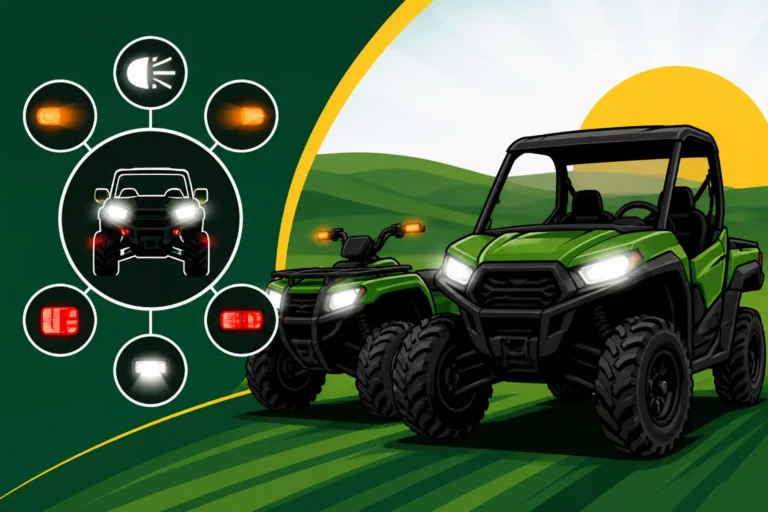
Some riders invest in goggles with interchangeable lenses, allowing for a quick swap without needing a whole second pair. Another option is a helmet with a dual-visor system – an internal tinted drop-down visor for day, and a clear external shield for all conditions. Remember that even on your machine, proper [Saskatchewan Lighting Requirements on a Machine] are crucial after dark. Having a reliable headlight and taillight isn't just a courtesy; it's a legal requirement and a safety necessity for being seen and seeing what's ahead.
Beyond eye protection, consider other items like a good headlamp. If you need to stop and make adjustments to your machine, or consult a map, a headlamp frees up your hands and provides ample light. Layered clothing is also smart for Saskatchewan's unpredictable weather, keeping you comfortable as temperatures drop with the setting sun.
Choosing the Right Accessories for Your ATV/UTV
Your machine itself can play a big role in adapting to different light conditions. Investing in certain accessories can enhance safety and comfort, particularly when dealing with variable light:
- Windshields and Full Cabs: For UTV riders, a clear windshield can offer significant protection from wind, dust, and debris, which often means less reliance on goggles in some situations. Brands like SuperATV offer a range of windshields, from full to half, and even flip-up options, allowing you to tailor protection to the conditions. A full cab enclosure, while a larger investment, provides a controlled environment, making temperature and light management easier, especially for night rides or in inclement weather. Just ensure your windshield is always clean and free of scratches that could impair vision, particularly at night.
- Auxiliary Lighting: While your stock headlights are mandatory, adding auxiliary LED light bars or spot lamps can dramatically improve your visibility range at night. This extra illumination can help you spot hazards much further down the trail or across open terrain, compensating for the natural limitations of riding in the dark.
- Mirrors: Side mirrors and a rearview mirror (if applicable) are critical for situational awareness, especially when riding in groups or on shared trails. At night, clear mirrors help you keep track of other riders and potential traffic, complementing your forward lighting.
Think of these accessories not just as upgrades, but as integral parts of a comprehensive safety system designed to make your ride safer and more enjoyable, regardless of when you’re out.
Riding Habits for Safe Night Operations
Even with the best gear and accessories, safe night riding ultimately comes down to good habits and a heightened sense of awareness. Riding after dark demands a different mindset than daytime cruising.
- Slow Down: This is perhaps the most critical rule. Your reaction time is inherently slower at night due to reduced visibility. Lowering your speed gives you more time to react to unexpected obstacles or changes in terrain.
- Increase Following Distance: If riding in a group, allow significantly more space between machines. This reduces the risk of dust clouds obscuring your vision and gives you more time to react if the rider ahead encounters a problem.
- Scan Constantly: Don't just stare at the immediate path of your headlights. Actively scan the trail ahead, looking for shadows, reflections, and any anomalies that might indicate an obstacle or a change in surface. Pay attention to the edges of the trail for wildlife.
- Be Aware of Wildlife: Nighttime is when many animals are most active. Deer, moose, and other creatures can appear suddenly. Slowing down and scanning thoroughly helps you spot them sooner.
- Avoid Unknown Trails: Stick to familiar trails at night. Exploring new, unmapped, or highly technical terrain is best left for daylight hours when you can properly assess risks. [Saskatchewan Trail Difficulty Ratings] are based on daylight conditions; night riding automatically elevates the difficulty.
- Communicate Clearly: If riding with others, use hand signals or radios to communicate hazards or intentions. Your lights should also be functioning perfectly to ensure you are seen.
- Carry Essential Repair Gear: A flat tire or a mechanical issue is far more challenging to deal with in the dark. Ensure you have tools, a flashlight or headlamp, and a way to communicate for help.
Adopting these habits, alongside having the right compliant gear, ensures that your Saskatchewan ATV and UTV adventures can extend safely into the evening, allowing you to experience the unique beauty of the prairies under the stars.
Disclaimer
This article is for general informational purposes only and does not constitute professional advice. Laws, prices and regulations vary by location and change over time. Consult a qualified professional for guidance on your specific situation.