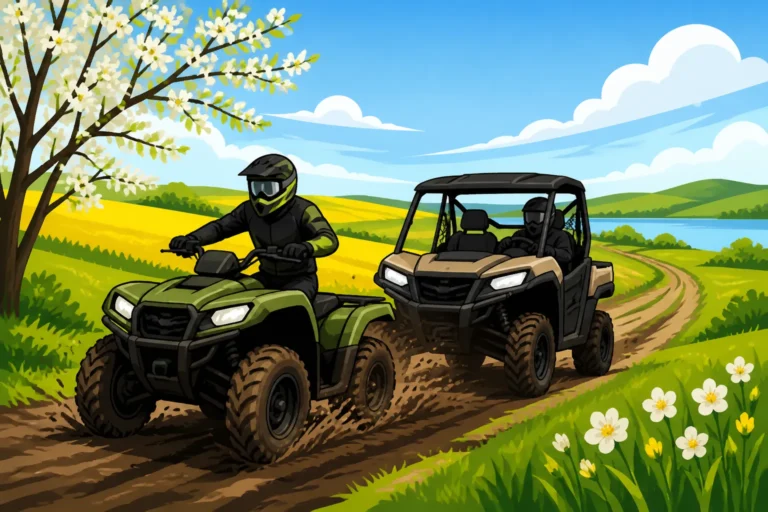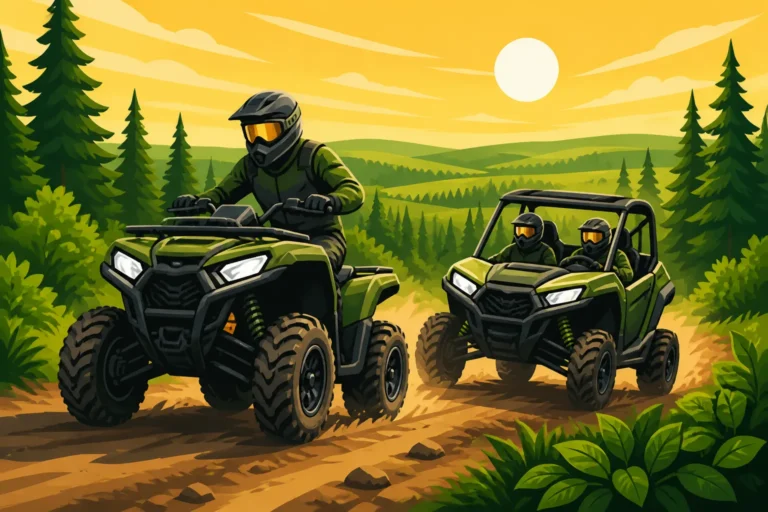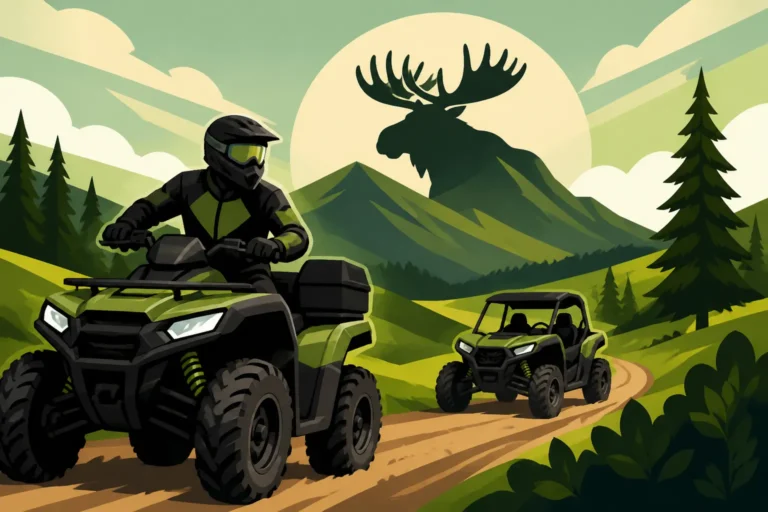
Saskatchewan Riding in Summer
Saskatchewan summer riding can mean dry prairie grids one weekend and shaded northern bush trails the next, but heat, dust, sudden storms, fire restrictions, and changing access rules can complicate the plan. This guide covers how to choose a riding area, prepare your machine and group, check local conditions, and ride responsibly through the summer season.
Plan a Saskatchewan summer ride around the area
Choose the kind of ride you want
Summer conditions vary widely across Saskatchewan, so it helps to choose a riding area based on the kind of day you want—not just how far it is from home. A group looking for a relaxed outing may prefer a familiar, clearly marked trail system. More experienced riders might enjoy longer bush routes, but those can demand stronger navigation skills, extra supplies, and a realistic turnaround plan.
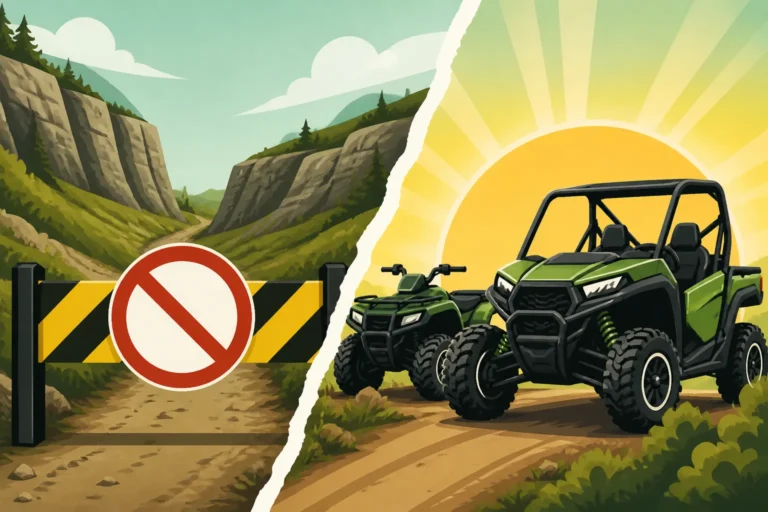
Provincial parks with designated machine trails, club-managed areas, and rural routes do not necessarily have the same access rules. A trail shown on a map is not automatically open to ATVs, and access can depend on the land, the municipality, the season, or a temporary closure. Read the local rules before unloading rather than relying on an old trip report.
For a first visit, look for practical details such as trail difficulty, trailer parking, fuel nearby, cell coverage, and places where your group can safely stop. If some riders are new, pick a route with room to regroup and an easy way to shorten the outing. The guides to [Best Saskatchewan ATV Trails for Beginners] and [Saskatchewan Trail Difficulty Ratings] can help you think through those choices.
Check access and conditions before you haul
A trailhead can be a long drive from home, especially if you are towing a trailer. Before leaving, check whether the area is open, whether a permit or acknowledgement form is required, and whether the trail is suitable for your machine. Park rules may restrict riding to designated routes, while club trails may have their own access arrangements. Start with [Saskatchewan ATV Trails: Crown Land and Ditches] for an overview of why access differs between riding areas.
Weather changes can alter trail conditions quickly. Recent rain may leave low spots muddy or vulnerable to damage, while a dry, windy stretch can raise dust and fire concerns. Check for closures, fire restrictions, and trail updates shortly before departure—not only when you first sketch out the trip. [Saskatchewan Trail Conditions Before You Haul] is a useful companion when you are deciding whether to make the drive.
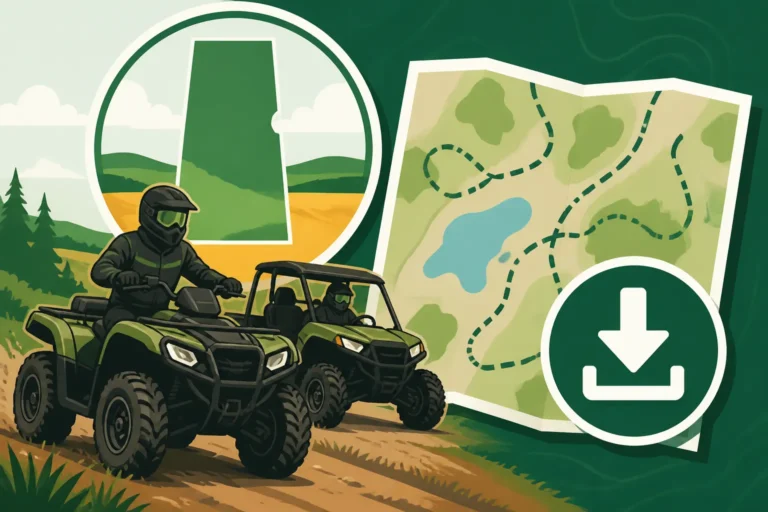
Digital mapping can make it easier to follow a route and keep the group oriented. Some riders use onX Offroad to plan and record routes, but treat any map as a navigation aid rather than proof that a trail is legally open. Confirm access through the relevant park, municipality, land manager, or trail organization. Download maps for offline use where possible, and bring a paper map or written directions for areas where reception may be unreliable.
Match your destination to the group
For a ride near the lake country, areas around Candle Lake can be appealing for people combining trail time with a broader camping or cabin trip. Plan the ride around the specific routes that are open to machines; nearby roads, shorelines, and recreation areas may have separate restrictions. Review [Saskatchewan Riding Near Candle Lake] and check the local rules before choosing where to unload.
Farther south, Moose Mountain offers a different setting from the northern forest. Narrow Hills and Great Blue Heron are other named riding destinations, but their routes, access requirements, and seasonal conditions are not interchangeable. Check the rules for the particular park or trail system you plan to visit, including permit requirements. For background on permits, see [Saskatchewan Park Trail Permits Are Free].
If you are planning a multi-day trip, avoid building the schedule around an optimistic mileage estimate. A group that stops for wildlife, helps a newer rider, or detours around a wet section may cover less ground than expected. Choose a reasonable route, agree on a turnaround time, and leave enough daylight to return without rushing.
| Planning question | What to check before leaving |
|---|---|
| Is the route open to ATVs or UTVs? | Confirm with the park, municipality, land manager, or trail organization |
| Is a permit or form required? | Review the destination’s instructions and display or carry documents as directed |
| What are conditions like? | Check recent updates, weather, fire restrictions, and closure notices |
| Will the group have reliable navigation? | Download offline maps, carry a backup, and identify meeting points |
| Is the route right for everyone? | Consider experience, machine capability, daylight, and options to shorten the ride |
Prepare for heat, dust, storms, and fire risk
Inspect the machine for summer riding
Before a ride, give your ATV or UTV a careful check rather than assuming it is ready because it ran well last time. Look over the tires, brakes, steering, lights, battery, and visible fasteners. Check fluid levels and follow the maintenance schedule in the owner’s manual. If the machine has been sitting through the winter, a short test ride close to home can reveal problems before you are far from the trailer.
Dusty conditions can make a routine outing harder on filters and cooling systems. Inspect and maintain the air filter as the manufacturer recommends, and pay attention to warning lights or unusual temperature readings. In brushy areas, stop to clear debris from places where it can collect, while avoiding hot components. A machine that begins to overheat or handle strangely is a reason to stop and assess—not to press on because the group is nearly at the next landmark.
Carry basic tools and supplies that fit the ride and your machine: a tire repair kit, a suitable pump, gloves, water, and items needed for minor trail-side problems. For longer or more remote routes, consider recovery equipment and know how to use it safely. Keep loads secured, especially in a side-by-side, where loose gear can shift during rough sections.
Manage heat and changing weather
Summer heat can creep up on riders who are focused on the trail. Drink water regularly rather than waiting until you feel thirsty, and plan breaks in shaded or otherwise safe stopping places. Wear protective clothing suited to riding, but avoid layering so heavily that you overheat. If someone becomes unusually tired, confused, nauseated, dizzy, or unsteady, stop riding and address the situation promptly.
Prairie weather can change quickly. A clear morning does not guarantee a clear afternoon, and storms can bring lightning, poor visibility, or slippery ground. Check the forecast for the riding area, not only the town where you live. If thunder or severe weather approaches, leave exposed areas and pause in a safer location. Do not treat a forecast as a promise that a route will remain comfortable or passable.
Dust can also affect the group, especially when riders follow closely on dry routes. Leave enough space to see and react, and use agreed signals for slowing or stopping. Keep dust in mind when choosing who rides first; putting a less experienced rider at the back of a fast-moving group can make it difficult for them to stay oriented.
Treat fire prevention as part of the ride
Fire restrictions can affect where and how you ride. Before setting out, check the applicable notices for the area and follow any closure or equipment requirements. Conditions can change during a trip, so check updates again when practical. The guide to [Saskatchewan Wildfire Season Rules for Riders] provides more context on fire-season responsibilities.
A machine can carry dry grass or other combustible debris, particularly after travelling through brush. Inspect it during the day and clear material away from hot areas when it is safe to do so. Avoid parking over dry vegetation where hot components could create a hazard. If you see smoke or fire, get to a safe location and report it using the appropriate emergency channel; do not ride toward it to investigate.
Fire-related closures are not a suggestion to find another route through nearby land. Respect signs and restrictions, and do not assume a familiar trail remains open just because it was open on your last visit. A quick check before leaving can save a wasted tow, but it can also help protect communities, wildlife habitat, and the riding access people depend on.
Ride responsibly on trails and rural routes
Keep access permissions clear
Saskatchewan riding areas can include provincial park trails, Crown land, municipal land, private property, and grazing leases. Each setting may have different rules. Permission to cross one piece of land does not automatically grant permission to ride the next section. If a route crosses private land or an occupied lease, make sure you have the required consent before entering, and respect gates, posted signs, and instructions from the landholder.
Do not assume that a ditch or grid road is an unrestricted trail. Rules can differ by municipality and by road segment, and a route that appears convenient on a map may not be open to your machine. Consult local bylaws and signs before riding. The guide to [Saskatchewan Bylaw Lookups Before You Ride] can help you build that check into your planning routine.
Mapping apps can help you stay on a planned route, but they do not replace permission or local rules. If you use onX Offroad or another navigation tool, compare the route with the information provided by the land manager and watch for signs on the ground. If access is unclear, stop and confirm rather than treating a mapped line as authorization.
Make group riding safer and more enjoyable
Agree on a pace that suits the least experienced rider, not just the fastest machine. Before setting off, choose a lead rider and a sweep rider, explain how the group will handle turns, and decide what to do if someone loses sight of the person ahead. A simple rule—stop at major junctions and wait until the group is together—can prevent a small gap from becoming a navigation problem.
Keep a safe following distance, particularly in dust or on uneven ground. Avoid sudden stops where another rider cannot see them, and signal hazards clearly. On narrow trails, slow down when meeting other users and give them room. Yielding courteously and keeping noise under control helps reduce conflict and protects continued access for riders.
Passengers should ride only on machines designed to carry them, and everyone should use appropriate protective equipment. Before the trip, check that each rider understands the route, knows the group’s stop signals, and has a way to contact the others if separated. The advice in [Saskatchewan Trail Etiquette Locals Expect] offers more ways to make shared routes work well.
Leave the trail in good shape
Stay on established routes and avoid widening muddy sections by riding around the edge. When a trail is too wet or damaged to cross without leaving deep ruts, turn around or choose another route. Spinning tires through a soft area may feel like a quick fix, but repeated damage can make the route harder to maintain and encourage closures.
Be considerate around homes, cabins, livestock, wildlife, and other recreation areas. Slow down near people and animals, avoid unnecessary revving, and pack out every item you brought in. If the area provides a wash station or cleaning instructions, follow them; moving mud and plant material between areas can spread invasive species.
A good summer ride is one the group can repeat without creating problems for landowners, trail volunteers, or other users. Respect closures, ask when permission is uncertain, and report hazards through the channel the local trail manager recommends. Small choices—such as stopping to secure loose gear or turning around at a washed-out section—often make the difference between a stressful trip and a safe one.
Build a practical summer ride checklist
Before leaving home
Start with the destination’s rules and current conditions. Confirm that the route is open to your type of machine, check for permits or required forms, and review weather and fire notices. Tell someone where you plan to ride and when you expect to return, especially if you will be travelling beyond reliable cell coverage.
Then check your machine and trailer. Make sure the load is secure, tires are in suitable condition, and the tie-downs are properly fitted. Bring drinking water, food, protective gear, a first-aid kit, navigation tools, and the supplies appropriate to the route. For remote riding, carry a backup plan for communication and be prepared to turn back if conditions are worse than expected.
Use onX Offroad or another mapping tool to organize waypoints and identify likely junctions, but save the relevant information before you lose reception. Note the unloading area, the intended route, and a safe turnaround point. Share that plan with your group so everyone knows where the ride begins and what to do if the group becomes separated.
At the trailhead and on the route
Take a few minutes at the trailhead to read posted information. Confirm that everyone has the necessary permit or documentation, understands local restrictions, and knows the plan. Check that helmets and other protective equipment fit properly, and make sure the machines are carrying only the passengers they are designed for.
During the ride, adjust the plan to the conditions. If the trail is unexpectedly wet, fire restrictions change, a machine develops a problem, or someone is struggling with the pace, stop and reassess. A map route is not a commitment to finish at all costs. Keep an eye on daylight and fuel, and leave enough margin to return without rushing.
Afterward, look over the machines for damage, debris, or signs of overheating. Secure them safely for the drive home, and follow any cleaning directions at the riding area. If you noticed a damaged trail or access issue, share it with the appropriate local manager rather than creating a new route around it.
Disclaimer
This article is for general informational purposes only and does not constitute professional advice. Laws, prices and regulations vary by location and change over time. Consult a qualified professional for guidance on your specific situation.