Saskatchewan Riding in Fall Hunting Season
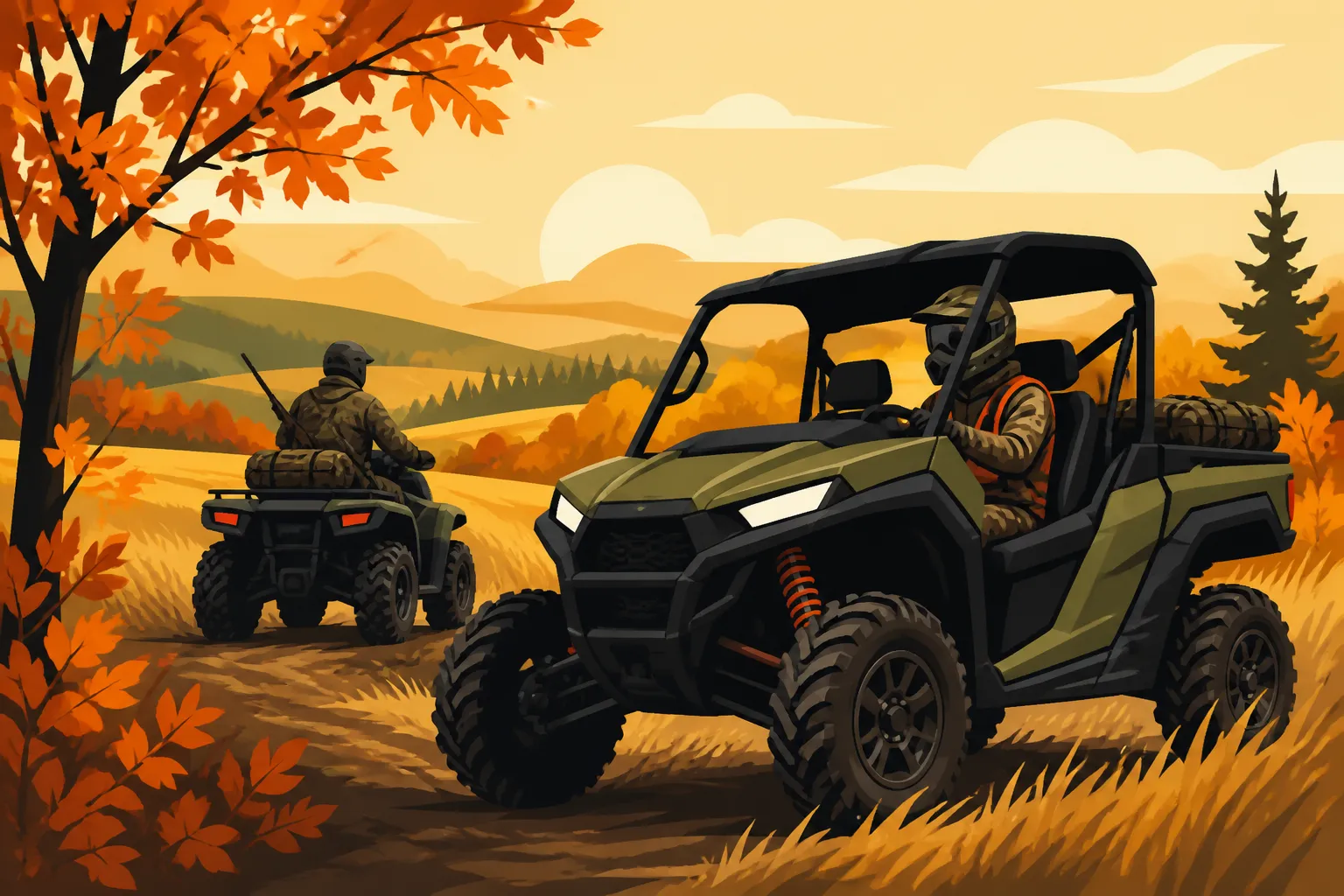
Fall riding in Saskatchewan can be a great way to reach a cabin, check a trail, or enjoy the last mild weekends—but hunting activity adds risks that are easy to underestimate. Routes may cross land with different access rules, visibility can drop quickly, and a familiar trail may be busy with hunters. This guide explains how to plan a respectful, safer ATV or UTV ride during hunting season.
Why fall hunting season changes the way you ride
Expect more people and less predictable trail use
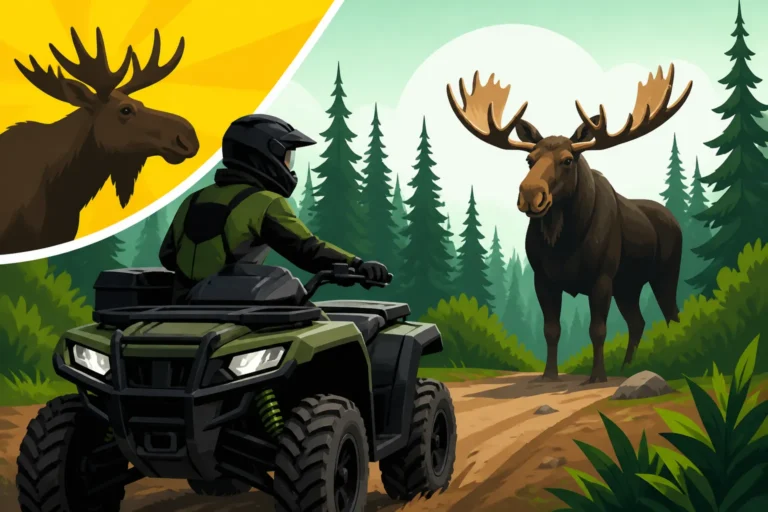
A trail that feels quiet in summer can be busy in fall. Hunters may be walking, waiting near a field edge, travelling between access points, or unloading equipment. They may be difficult to see among trees or brush, especially when leaves are down and light is fading. A group of riders can also arrive more quickly and noisily than someone on foot expects.
Treat every bend, trail junction, and approach to an open area as a place where someone might be nearby. Slow down before sightlines disappear, keep enough space between machines to react, and stop rather than squeeze past a person on foot. If you encounter a hunting party, give them room and ask whether your route will interfere with what they are doing. A few minutes of patience is easier than a tense encounter—or a collision.
Plan around the busiest parts of the day when you can. Early mornings and evenings may be important hunting periods, while weekends can bring more traffic to popular areas. That does not mean riding is automatically prohibited at those times; it means you should expect more activity and be prepared to change plans.
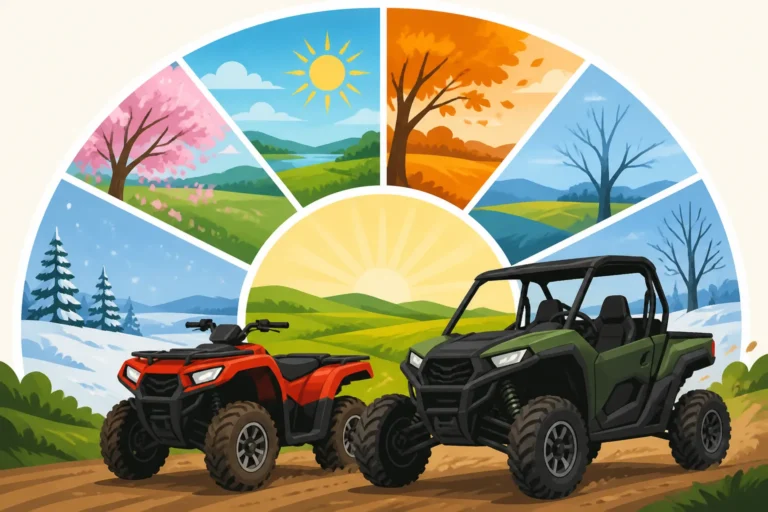
For a broader look at seasonal conditions, see [Saskatchewan Riding Season Month by Month] and [Saskatchewan Trail Etiquette Locals Expect].
Do not assume that hunting access gives you permission to ride
Access rules depend on the land. A hunter’s ability to enter an area does not automatically mean an ATV or UTV can travel there, and a track visible on a map is not proof that it is a public trail. Private land, Crown land, grazing leases, municipal roads, and provincial park trails can each have different requirements.
Before riding across private land, get permission from the landowner. On a grazing lease or occupied Crown land, confirm who controls access and what permission is needed. Gates, fences, signs, and established routes are not invitations to improvise a new path. Even when a road or trail appears open, local restrictions or a temporary closure may apply.
Use resources such as [Saskatchewan Private Land Permission], [Saskatchewan Grazing Lease Access Rules], and [Saskatchewan Crown Land Access Rules] to sort out the access questions before you unload. If a hunter or landholder asks you to avoid an area, take the practical option and reroute. A planned loop is never worth damaging a relationship or trespassing.
Plan a route that can change
Check rules, closures, and conditions close to your ride
A route that was open last month may not be suitable today. Hunting activity, fire restrictions, weather, road work, local bylaws, and landowner requests can all affect where you should ride. Check the rules for the specific area rather than relying on a general assumption that Saskatchewan riding rules apply identically everywhere.
Provincial parks are a particularly important example: machines may be limited to designated trails or roads, and a hunting-season outing does not create permission to ride beyond those routes. Read posted signs at the trailhead and pay attention to closures along the way. For Crown land, check for restrictions and any relevant orders before setting out. [Saskatchewan Wildfire Season Rules for Riders] and [Saskatchewan Park Regulations for Machines] are useful starting points.
A map can help you understand the shape of a route, locate junctions, and plan a turnaround point. Some riders use onX Offroad or another mapping tool to keep their route organized, but a map should not be treated as proof of legal access or current trail status. Confirm uncertain access with the landholder, municipality, park office, or relevant authority.
Build in a backup route and a clear turnaround point
Fall weather can change quickly. A dry trail may become slippery after rain, while low temperatures can make a long stop uncomfortable. Decide in advance how far you intend to travel, where you can turn around, and what conditions would make you shorten the ride. If the group has mixed experience or different machine capabilities, plan to the pace of the least experienced rider.
Before leaving, share the route and expected return time with someone who is not riding with you. Include the area where you expect to unload and the route you intend to take. If you change plans substantially, send an update when service allows. A paper map is a sensible backup in areas where phone coverage is unreliable; do not assume a screen will always load when you need it.
If you use onX Offroad to plan a route, save the information you will need before losing mobile coverage and check that the route makes sense against signs and local access rules. Bring an alternate route that avoids sensitive areas, private land without permission, and trails that appear unsafe. Navigation tools can help prevent missed turns, but they cannot make a closed or unauthorized route acceptable.
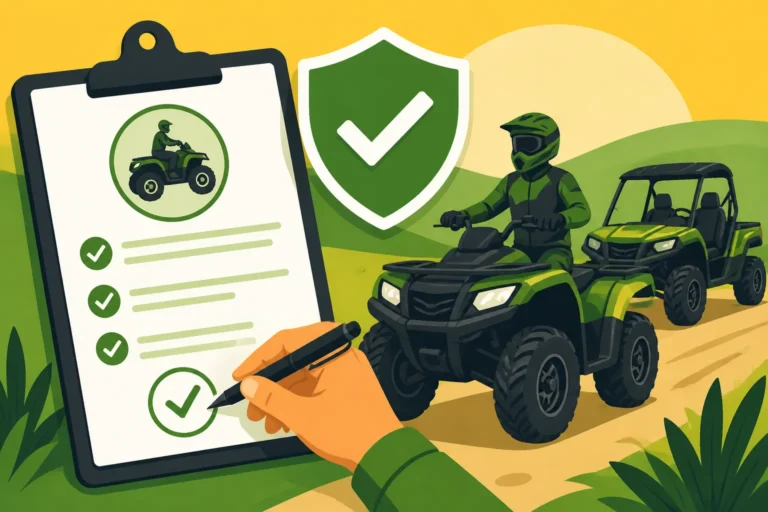
| Before the ride | What to confirm | Why it matters |
|---|---|---|
| Land access | Who controls the land and whether machine access is allowed | A visible trail is not necessarily an authorized route |
| Closures and restrictions | Posted signs, park rules, fire restrictions, and local bylaws | Conditions and permissions can change |
| Route plan | Main route, backup route, turnaround point, and expected return | Helps the group adapt without getting lost |
| Group readiness | Rider experience, machine condition, fuel, and communication plan | A small problem can become serious far from the trailhead |
Ride with visibility and space in mind
Make your machine and group easier to notice
Do not rely on other people seeing or hearing you in time. Wear high-visibility clothing suited to the conditions, keep required lights and equipment in working order, and avoid riding so close together that dust or brush hides the riders behind you. In low light, slow down and leave extra room to stop. A headlight helps, but it does not make a fast approach safe around a blind corner.
Keep the engine noise down where possible, especially near cabins, camps, residences, and areas where people may be hunting. Avoid sudden acceleration, unnecessary revving, and aggressive riding near other users. If someone is on foot, reduce speed well before reaching them and give them a wide berth. If visibility is poor, stop somewhere safe and let the other party pass.
Saskatchewan’s operating requirements still apply during hunting season. Check the rules for licensing, insurance, helmets, passengers, and the type of road or trail you plan to use. Useful references include [Saskatchewan ATV Road Rules Explained] and [Saskatchewan ATV Insurance Requirements]. A fall ride is not a reason to overlook basic compliance or assume a machine is allowed on every road.
Treat firearms, equipment, and roadside stops carefully
Hunting groups may be carrying firearms or handling other equipment. Give them room to load, unload, or organize their gear, and do not approach in a way that could startle someone who has not noticed you. If you need to speak with a group, stop at a respectful distance, make your presence known calmly, and wait for a response before moving closer.
Do not carry or handle a firearm casually while operating a machine. If your outing combines riding and hunting, check the applicable rules for the activity and make a deliberate plan for transporting and securing equipment. Keep bags, cases, and other cargo firmly attached so they cannot shift, fall into a wheel, or obstruct the driver’s controls or view.
When stopping, pull fully off the travelled route where it is safe and permitted to do so. Avoid blocking a gate, trail junction, field approach, or access point. If another group needs to pass, clear the route first rather than asking them to navigate around parked machines. On narrow trails, a little attention to where you stop can prevent a frustrating bottleneck.
Prepare for a colder, shorter riding day
Pack for changing weather and limited daylight
Fall daylight fades earlier than many riders expect, and temperature can drop quickly once the sun is low. Dress in layers that remain comfortable when you are moving and when you stop. Bring gloves, eye protection, water, a basic first-aid kit, and a way to add warmth if a machine breaks down or the group has to wait. Avoid planning a route that only works if every stop is brief and the weather stays perfect.
Start with a realistic fuel plan and leave a reserve for detours. Mud, rough terrain, cold starts, and slow travel can affect how much fuel a ride uses. Check tires, brakes, lights, battery, and controls before loading. If your machine has been sitting since summer, take a short test ride near home before committing to a remote loop.
Use onX Offroad or another navigation aid as one part of your preparation, not your only safety measure. Keep a paper map or written directions where practical, and make sure someone in the group knows how to use them. In a weak-signal area, having route details available offline can reduce confusion at a junction—but always follow current signs and access directions over a line on a screen.
Make the call to turn back early
Turning around is a good decision when the trail is busier than expected, weather deteriorates, the group is running late, or a route becomes difficult to follow. It is also the sensible choice if you find fresh signs of activity in a place where riding could disrupt people or wildlife. You do not need to finish the loop simply because it was the original plan.
For example, imagine a group heading toward a familiar trail after a rainy afternoon. The first stretch is manageable, but the next section is muddy, visibility is fading, and a hunting party is working nearby. The safest response may be to stop, give the hunters space, and use the pre-planned alternate route back to the trailer. That choice protects the group and avoids turning a recreational ride into a recovery problem.
After the ride, check the machines for mud, debris, damage, and anything that may need attention before the next outing. If you noticed a blocked trail, confusing sign, or unsafe condition, report it to the appropriate land manager or local organization rather than creating an unofficial detour. A considerate fall ride helps keep relationships with landholders, hunters, and other trail users in good shape for the next season.
Disclaimer
This article is for general informational purposes only and does not constitute professional advice. Laws, prices and regulations vary by location and change over time. Consult a qualified professional for guidance on your specific situation.