Saskatchewan Weekend Riding Itineraries
A Saskatchewan ATV weekend can go sideways before the first ride if a trail is closed, your route crosses land you cannot access, or the drive takes longer than expected. This guide lays out practical two-day itineraries around Moose Mountain, Narrow Hills and Great Blue Heron, with planning steps for permits, route checks, fuel, weather and the realities of riding in a large province.
Choose a Saskatchewan riding area for your weekend
Saskatchewan distances can make a “quick trip” feel much longer once you add a trailer, gravel roads and time to unload. Start by choosing a riding area that fits your group’s experience and the amount of driving you’re willing to do. Then build the weekend around the designated routes and access rules that apply there, rather than assuming every nearby road or open-looking track is available to ATVs.
If your group is new to trail riding, begin with [Best Saskatchewan ATV Trails for Beginners]. A manageable route and an early finish are usually better than trying to cover every trail in one weekend. Riders who want to compare park options can also review [Moose Mountain Provincial Park ATV Trails], [Narrow Hills Provincial Park ATV Trails] and [Great Blue Heron Provincial Park ATV Trails].
Moose Mountain for a structured two-day ride
Moose Mountain is a natural choice for riders who want a park-based weekend rather than a route assembled from scattered roads and trails. The park has 47 kilometres of ATV trail, which gives a group something concrete to plan around without requiring an all-day ride just to reach the starting point. Use the first day to get familiar with the trail layout, settle into a comfortable pace and identify any junctions or sections you want to revisit.
For a two-day itinerary, arrive with enough daylight to unload, check the machines and sort out permits before riding. Keep the first ride modest. After a long drive from Regina or another part of southern Saskatchewan, even experienced riders may be tired, and a late start can turn a relaxed outing into a race against sunset. On the second day, choose a longer loop or repeat a favourite section, depending on conditions and the group’s energy.
The park’s trail mileage is not a promise that every kilometre will suit every rider on every day. Weather, maintenance, posted closures and individual riding ability all matter. Before you leave home, check [Saskatchewan Trail Conditions Before You Haul] and confirm the park’s current access instructions. Treat trail maps as planning tools, not permission to use roads, hiking routes or other areas that are not designated for machines.
Narrow Hills or Great Blue Heron for a northern weekend
Narrow Hills offers a larger trail network than Great Blue Heron, with 50 kilometres of ATV trails identified in the park information. That can make it a good fit for a group that wants more time exploring and is comfortable staying attentive to junctions, surface changes and changing conditions. Plan a conservative first day, especially if your group is unfamiliar with the area or is hauling in from a long distance.
Great Blue Heron has 10 kilometres of ATV trails, so it may suit a shorter ride, a newer rider or a weekend where riding is only one part of the plan. Smaller mileage does not necessarily mean a trip is effortless: travel time, unloading, weather and local rules still shape the day. Decide in advance whether your group wants a short ride with plenty of breaks or a longer outing that includes other activities in the region.
For either park, avoid building a route from a screenshot or an old track alone. Confirm which trails are designated for ATVs and whether access is open for your planned dates. Park trails and nearby Crown land, private land or club trails may have different rules. [Saskatchewan ATV Trails: Crown Land and Ditches] is useful background when you are trying to understand why one route may be open while another nearby route is not.
Three practical weekend itineraries
These sample plans are starting points, not fixed schedules. A group towing a trailer from Saskatoon, Regina or another distant community may need to make the first day lighter than a group staying nearby. Set a turnaround time, keep the pace comfortable and let trail and weather conditions decide how much ground you cover.
| Weekend plan | Best suited to | Day one | Day two |
|---|---|---|---|
| Moose Mountain base weekend | Riders who want a park-focused trip | Arrive, unload, complete checks and take a shorter orientation ride | Ride a longer section or revisit a favourite trail |
| Narrow Hills exploration weekend | Groups comfortable with route planning | Start with a moderate ride and note junctions and conditions | Choose a longer outing based on the previous day |
| Great Blue Heron short-ride weekend | Newer riders or mixed-activity groups | Take a relaxed ride on designated trails | Ride again if conditions suit, or keep the day flexible |
A Moose Mountain itinerary with room to adjust
On Friday evening or early Saturday, focus on getting to your accommodation or campsite, unloading safely and handling any park requirements. If your group arrives late, do not squeeze in a hurried ride just because the machines are ready. Check tire condition, fuel, lights, brakes and communication plans while there is still enough daylight to spot problems.
On Saturday, choose a short or moderate ride that leaves time for breaks and navigation. Agree on who leads, who rides at the back and what the group will do if someone stops or falls behind. On Sunday, use what you learned the day before to choose a route that fits the group’s energy. If a trail section is muddy, rougher than expected or posted closed, turn around rather than letting the itinerary pressure you into continuing.
A Narrow Hills itinerary built around changing conditions
For Narrow Hills, make your first day a route-finding day. Start with a manageable loop, check how the machines and riders handle the terrain, and pay attention to trail markers and intersections. If the group is splitting into different ability levels, agree on a regrouping point before leaving the staging area. Do not rely on a phone signal being available everywhere.
On the second day, extend the ride only if the first day went smoothly and the trails remain suitable. A paper map is a useful backup in remote areas, even if you use a phone app such as onX Offroad to review routes before you leave. Download or save the information you need ahead of time, and do not treat an app’s displayed track as proof that a route is open or authorized. The park’s posted information and instructions take priority.
A Great Blue Heron itinerary for a less mileage-focused trip
Great Blue Heron can work well when the group prefers a shorter trail outing rather than trying to spend every daylight hour on machines. Plan to ride at a pace that allows for stops, photos and a proper lunch break. This can be especially helpful when experienced adults are riding with newer riders who need more time to get comfortable with braking, turns and trail etiquette.
Keep the second day flexible. If everyone wants another ride and the route is open, go out again with a clear turnaround time. If weather or trail conditions are poor, a smaller trail network makes it easier to change plans without feeling that you have wasted the weekend. Check the park’s specific machine rules and access information in advance; a trail’s proximity to a campground, boat launch or hiking area does not mean ATVs are allowed there.
Plan access, permits and navigation before you haul
One of the most frustrating trip-planning surprises is arriving at a trailhead and discovering that a permit, acknowledgement form or access check still needs to be completed. Handle those details before loading the machines where possible. Park rules can differ, so do not assume a permit or procedure for one park automatically applies at another.
Confirm the rules for the exact place you will ride
Use official park information to confirm the current trail designation, access requirements, permit process and any restrictions for your planned dates. [Saskatchewan Park Trail Permits Are Free] explains the general permit context, but “free” does not mean a rider can skip required steps. Some parks may have an information session, acknowledgement form or instructions about where to display a permit. Check the relevant park’s requirements rather than relying on what a friend did elsewhere.
Also distinguish a park trail from nearby land. Crown land, private land, a grazing lease and a municipal road can each have separate access rules. If a route leaves the designated trail network, pause and verify that you are allowed to continue. A visible tire track is not the same thing as permission, and a route shown on a map may not reflect a closure or a landowner’s current instructions.
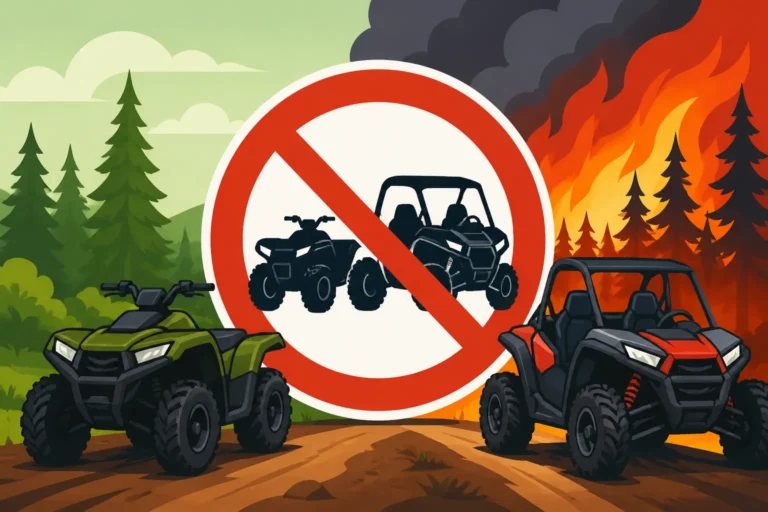
Fire conditions can change a weekend plan quickly. Check [Saskatchewan Wildfire Closures and Riding] before departing and again near the trailhead if conditions are dry or smoky. A closure can affect access across a wider area, not just the section where a fire is visible. If a closure applies, choose another legal riding area or postpone the ride; do not try to bypass a barricade or posted restriction.
Use digital maps as a planning aid, not an authority
onX Offroad can help riders review routes and prepare navigation, particularly when a group wants to discuss a plan before reaching an unfamiliar trailhead. The useful part is the preparation: identify likely junctions, save relevant map information for offline use and make sure everyone understands the intended route. A screen should support good decisions, not replace local signs, posted notices or park instructions.
Before travelling, check whether your planned route is actually designated for ATV use. A line on a digital map can reflect a road, an old track, a private route or information that does not match present access conditions. If anything is unclear, stop at the appropriate office or trailhead and ask. Do not assume that a route is legal because a navigation app can display it.
Bring a paper map or written directions as a backup, especially for northern or remote riding. Keep your phone protected from dust, water and vibration, and carry a charging option that works with your setup. If you use onX Offroad, test the saved map before leaving service coverage; discovering that the map did not download when you are already at a junction is a stressful way to begin a ride.
Build a weather and closure check into the schedule
Trail conditions can change after rain, wind or wildfire activity. Before hauling, review [Saskatchewan Trail Conditions Before You Haul] and check the park or local trail source again close to departure. If roads are muddy, a trail is closed or access information has changed, adjust the weekend rather than treating the original plan as fixed.
Pack for a change in temperature and wind, even if the forecast looks comfortable at home. A cool morning, wet trail or long stop can make a rider uncomfortable well before the group reaches its planned turnaround point. Keep the group together, leave enough daylight for the return and identify a simple plan for a mechanical problem or injury.
Pack and ride for a smoother weekend
A good itinerary leaves room for the ordinary things that take time: unloading, checking machines, finding the trail entrance, stopping for food and helping a rider who is still learning. Riders often remember a weekend more fondly when they have time to enjoy it than when they try to maximize distance.
Make a pre-departure checklist
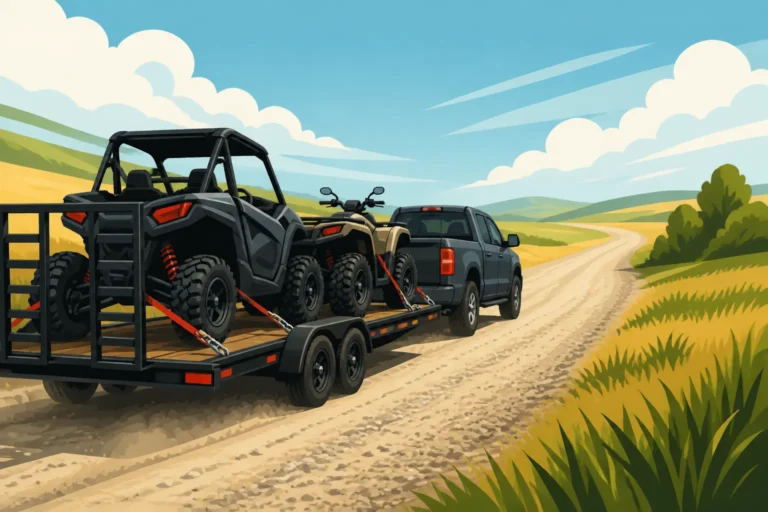
A day or two before leaving, check the machines and trailer rather than waiting until the trailhead. Inspect tires, brakes, lights, controls, belts or chains as appropriate, and look for loose cargo. Confirm that the trailer is suitable for the machines and that tie-downs are in good condition. A small issue found in the driveway is much easier to handle than one found after a long haul.
Pack the essentials in a way that keeps them accessible. Include water, food, weather-appropriate clothing, a first-aid kit, basic tools, a tire repair option, a tow strap and a way to communicate when riders are separated. The exact kit depends on the machine, route and group, but everyone should know where key items are stored. If the ride is remote, tell someone outside the group where you are going and when you expect to return.
Before departure, confirm accommodations, fuel stops and unloading arrangements. Do not assume a nearby business will be open when you arrive or that a service station is directly beside the trailhead. If the group is travelling through smaller communities, identify practical stops along the drive and avoid relying on a last-minute fuel plan.
Keep the group comfortable and predictable
Agree on a few simple riding habits before starting: maintain a safe gap, signal when stopping, wait at junctions and do not leave a rider behind. Discuss what “slow down” means for your group and choose a pace that accommodates its least experienced rider. A mixed group is more enjoyable when the confident riders understand that helping others feel secure is part of the outing.
Respect other trail users and local land. [Saskatchewan Trail Etiquette Locals Expect] is a useful reminder to ride considerately, keep noise in mind and leave the area as you found it. Stay on designated trails, avoid cutting corners around muddy sections and do not widen a route to get around an obstacle. Those shortcuts can damage the trail and create problems for everyone who uses it afterward.
Finally, keep the itinerary flexible. If a rider is tired, a machine needs attention or conditions deteriorate, shorten the ride. If the trail is in good shape and the group is comfortable, you can make a measured adjustment without chasing a mileage target. The best Saskatchewan weekend plan is one that gets everyone back safely, with enough energy left to want to ride again.
Disclaimer
This article is for general informational purposes only and does not constitute professional advice. Laws, prices and regulations vary by location and change over time. Consult a qualified professional for guidance on your specific situation.