Boat Launches Closed to Machines
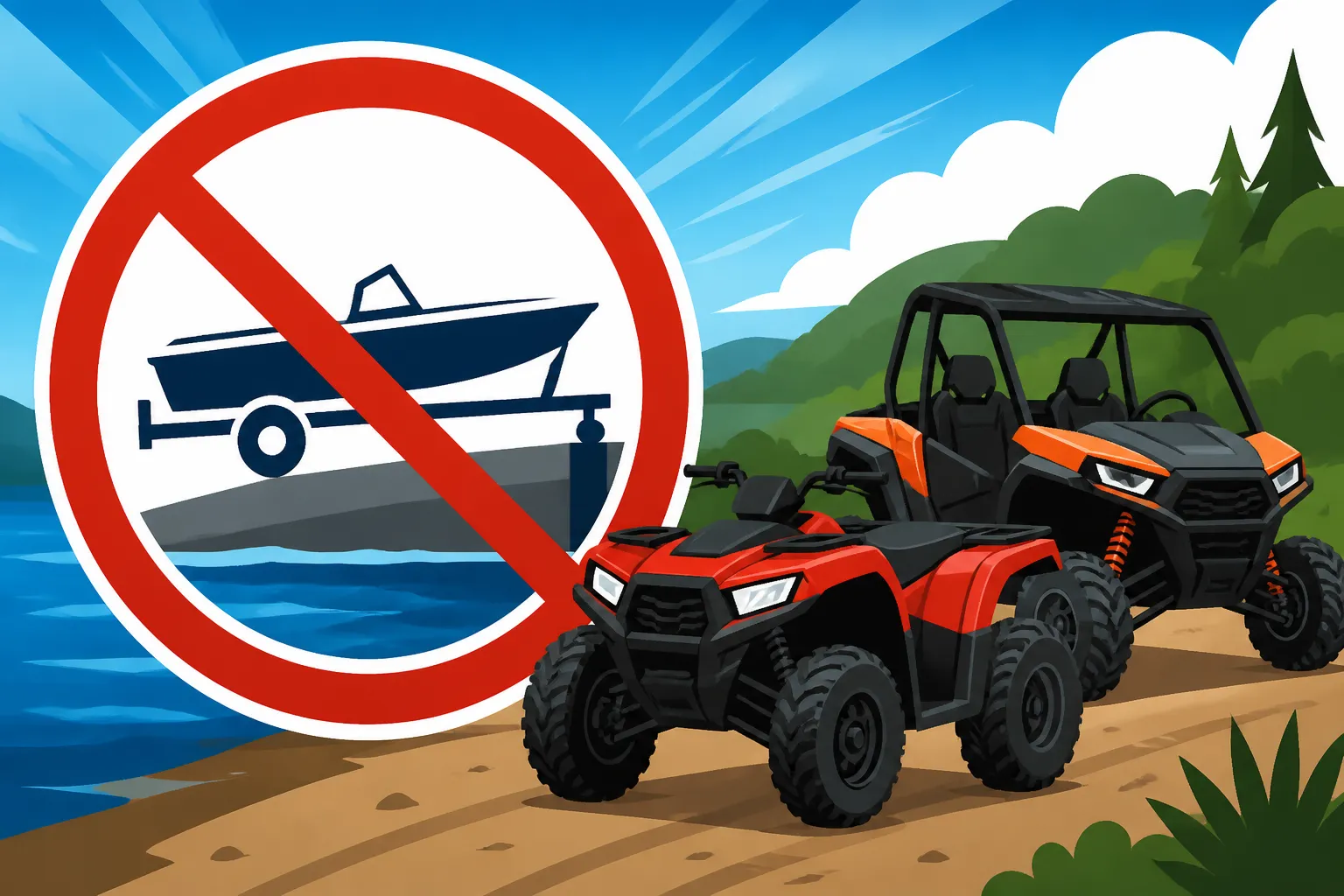
A boat launch can look like an easy way to reach the shore, but it is not automatically an ATV or UTV route. In Saskatchewan parks, machines may be limited to designated trails, and launch ramps serve a separate purpose. This guide explains how to treat boat launch areas, check the rules before unloading, and avoid an unnecessary conflict with park staff or other visitors.
Why boat launches are closed to ATVs and UTVs
A launch ramp is not an off-road trail
Boat launches are built for getting boats into and out of the water. The ramp, approach lane, and nearby staging space may be busy with vehicles towing trailers, people handling boats, and visitors walking between the parking area and shore. An ATV or side-by-side riding through that space can create safety problems even when the area looks quiet.
The key distinction is between a place where you can launch a boat and a route where you are allowed to ride a machine. Those uses do not automatically overlap. A ramp beside a trail does not make the ramp part of the trail, and seeing other vehicles nearby is not proof that riding an ATV there is allowed.
This is especially easy to misread when you arrive at a lake with a boat on a trailer. You may be thinking about how to get your quad closer to the water, while the posted rules are addressing where off-road machines may travel. Unless signs or park staff clearly authorize machine access, treat the launch area as off limits for riding.
Park access is controlled by designated routes
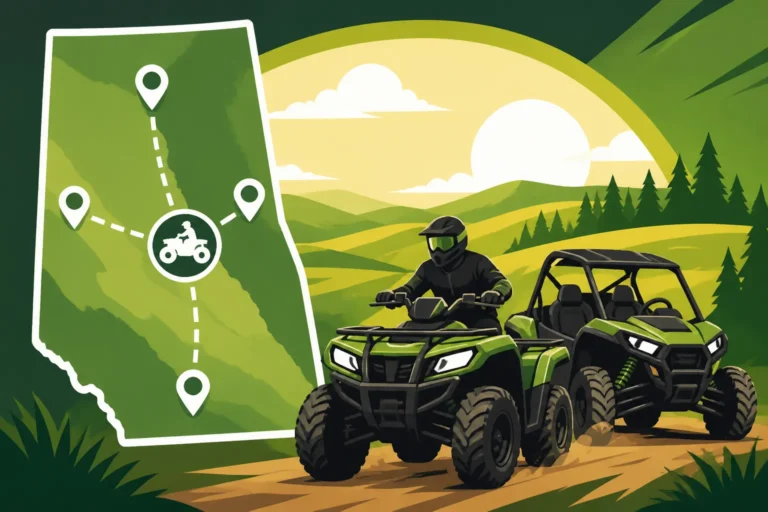
Saskatchewan park rules can restrict machine use to designated trails and other specifically permitted areas. The fact that an ATV can physically fit down a road or access lane does not mean it is legally open to ATVs. Rules can also differ between parks and between individual areas within a park, so a route that is open in one location may be closed in another.
Before planning your ride, review [Saskatchewan Park Regulations for Machines] and [Saskatchewan Parks With Designated Trails Only]. These topics help clarify why access is tied to the routes and areas identified for machine use, rather than to every road, shoreline, parking lot, or facility you can reach.
A useful rule of thumb is to separate your trip into two activities: riding your machine on an approved route, and using the boat launch for a watercraft. If you need to move between the two, do not assume the shortest path is permitted. Ask park staff which route, if any, connects the approved unloading area and your intended destination.
Boat traffic and machine traffic create different risks
A launch area can be difficult to navigate even at low speed. A driver backing a trailer may have a limited view, someone may be walking behind the vehicle, and a boat may swing or roll while being moved. A machine passing through the same space can be hard for others to anticipate, particularly if the operator is focused on loading or unloading.
There is also a practical concern: ramps and shore approaches may be slick, steep, or uneven. A heavy UTV or ATV can lose traction, damage the surface, or become an obstacle for someone trying to launch or retrieve a boat. Staying off the ramp unless specifically permitted helps protect both people and park infrastructure.
How to check the rules before you ride
Read signs at the entrance and at the launch
Check signs as you enter the park, at trailheads, and near the boat launch itself. A single sign at the park entrance may not explain every restriction deeper inside, while a sign beside the ramp may specify that machines are prohibited in that particular area. Pay attention to symbols, wording, barriers, and route markers rather than relying on what another visitor appears to be doing.
If you see a “designated trails only” notice, understand it as a route restriction—not a general invitation to ride anywhere that is not physically blocked. A closed gate, marked access road, or nearby parking lot should not be treated as an alternate trail. For more on this distinction, see [Roads Closed to Machines Inside a Park] and [Saskatchewan Trails Closed Inside Parks].
When signage is missing, unclear, or difficult to interpret, pause and ask park staff before continuing. This is much easier than explaining later why you thought an access lane was open. You can also review [What a Park Officer Checks at a Trailhead] to understand why operators should be ready to show that they are riding in an authorized area and meeting applicable requirements.
Confirm permits and use conditions for that location
Some park riding areas have specific permit or acknowledgement steps. A permit does not necessarily give you permission to ride every road or facility in the park; it applies within the conditions set for the permitted use. Read the instructions carefully, including any limits on routes, machine types, or where the permit must be displayed.
For background on the process, read [Saskatchewan Park Use Acknowledgement Forms] and [Saskatchewan Park Trail Permits Are Free]. The important point is not simply whether a permit is free or available. It is whether the riding area you plan to use is open to machines and whether you have completed the required steps for that location.
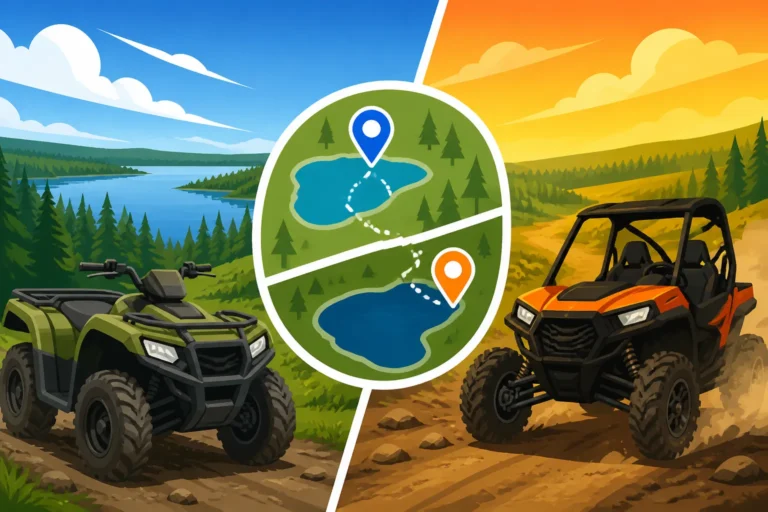
If you are carrying a downloaded map or using an app such as onX Offroad to plan a route, treat it as a planning aid—not as authorization. A map may help you understand where you are and organize a trip, but posted park signs, official park information, and staff instructions should guide your decision about whether a route is open.
Check closures and local instructions on the day
A route that was open during a previous visit may be temporarily closed for maintenance, safety, weather, wildfire concerns, or another park management reason. Do not rely on a saved route or last season’s trip notes as confirmation that access remains available. Before unloading, check current park information and look for notices at the entrance and trailhead.
A sensible pre-ride check can be as simple as confirming the park, the trail or riding area, the access point, and any restrictions that apply to the route. If a planned loop passes close to a boat launch, identify an alternative route that stays on permitted trails. That way, a closure or unclear sign does not leave you improvising beside a busy ramp.
onX Offroad can be useful for organizing a route and keeping track of where you intend to ride, but do not use any third-party map as a substitute for park rules. If an app route appears to cross a launch approach, parking area, or closed road, stop and verify the route before riding it. The safest answer is the one supported by the park’s own signs or staff.
What to do when your route reaches a boat launch
Stop before entering the launch area
If your planned route leads toward a boat launch, stop before the ramp, staging lane, or posted restricted area. Do not ride onto the ramp to see whether it continues on the other side, and do not follow a vehicle through a barrier just because it appears to be accessing the water. Turn around or wait at a safe location while you confirm the permitted route.
If you are travelling with a group, make the decision before the first rider enters the area. A single person turning around is manageable; a group of machines blocking a trailer lane or ramp can quickly create congestion. Keep machines out of pedestrian paths and boat staging areas while you discuss the route.
When a trail seems to end at the launch, it may simply end there. Do not assume the trail continues across the ramp or along the shoreline unless the route is clearly marked and permitted. Use the designated trail network and follow any instructions from park staff.
Keep unloading and riding separate
Plan where you will unload before towing into the park. Use an authorized unloading area, park the trailer where permitted, and ride from there only on approved routes. [Trailering to an Unloading Area] offers a useful reminder that the right starting point matters as much as the route itself.
If your group is also launching a boat, arrange the parking and loading so that the boat activity does not depend on riding an ATV across a restricted area. For example, one person can handle the boat and tow vehicle while others keep the machines at the authorized staging location. If you need help moving equipment between areas, ask park staff what is allowed rather than treating the ATV as a shuttle.
This separation can prevent a surprisingly common misunderstanding: someone sees a vehicle towing a boat to the water and assumes a recreational machine can use the same access. A tow vehicle may be using a designated launch facility for its intended purpose. That does not establish a general right for ATVs or UTVs to ride there.
Do not bypass a closure by using the shoreline
If a launch or road is closed to machines, riding along the shoreline to get around it may create a separate problem. Shorelines can be environmentally sensitive, privately restricted, or subject to additional park rules. Wet ground and vegetation can also be damaged by tires, even when the route looks passable.
A closure should be treated as a boundary, not a suggestion to find a nearby detour. Do not cut through a campground, beach, parking lot, or boat access area to rejoin a trail. Turn back and use an authorized route, or ask staff whether another connection is available.
If you are uncertain about what counts as the closed area, stop before crossing its boundary and ask. This is particularly important when signs are placed near a junction or when the marked trail appears to approach a facility. A short question can prevent a long, frustrating conversation after the fact.
Quick planning checklist and common mistakes
Check these details before unloading
Use this checklist before you start a ride near a lake, campground, or boat launch:
- Confirm that the park or riding area allows ATV or UTV use.
- Identify the designated trail or authorized route you plan to follow.
- Check the entrance, trailhead, and launch-area signs for closures or restrictions.
- Confirm any permit, acknowledgement, or display requirements.
- Choose an authorized unloading and parking location.
- Plan a route that does not cross a boat ramp, staging lane, or closed access road.
- Ask park staff if a sign or map leaves the route unclear.
This preparation is useful even if you have visited the park before. Conditions and instructions may vary by location, and a familiar shoreline can look very different when boat traffic is active. For a broader overview of where machine access is allowed, see [Saskatchewan Park Regulations for Machines].
| Situation | Safer response |
|---|---|
| A trail appears to end at a boat launch | Stop and confirm whether the trail continues or ends there |
| A map shows a route across a launch area | Verify it against posted park information before riding |
| The launch is quiet and no one is using it | Do not assume the ramp is open to machines |
| A vehicle is towing a boat onto the ramp | Do not treat that as permission for ATV or UTV access |
| Signs conflict with a saved route | Follow the signs and ask park staff for clarification |
| You cannot confirm whether a road is open | Turn around until you can verify the permitted route |
Mistakes that can turn a simple ride into a problem
One common mistake is assuming “public access” means “open to off-road machines.” A park may welcome visitors and provide boat access while still limiting ATVs and UTVs to designated routes. Another is treating a parking lot or ramp as a convenient connector between trails. Facilities for vehicles, boats, and pedestrians are not automatically part of the ATV trail network.
Relying on another rider’s behaviour can also lead you astray. Someone may have permission for a specific purpose, may be using the area improperly, or may be following a route that does not apply to your machine. Ask for confirmation rather than copying what you see.
Finally, avoid trying to settle a confusing rule while blocking the ramp or access lane. Move to a safe place, keep the route clear, and contact staff or consult official park information. For general guidance about park trail access and permits, [Saskatchewan Park Trail Permits Are Free] is a helpful related topic, but always check the conditions for the specific riding area you plan to visit.
Keep your ride flexible
A good plan includes an alternate route. If a trail is closed, a launch area is restricted, or a connection is unclear, you should be able to turn around without feeling that the whole day is ruined. Save a shorter loop, identify a second approved trail, and leave enough time to confirm local instructions before the group heads out.
That flexibility matters most when you are travelling with children, visitors, or a large group. Riders may have different experience levels, and it is easier to make a safe call when everyone knows the plan and understands that a boat launch is not a shortcut. Clear expectations reduce pressure to keep going simply because the group has already hauled the machines to the park.
The practical takeaway is straightforward: use the boat launch for its intended watercraft access, ride only where machines are permitted, and verify any route that appears to pass through a launch area. When the signs or map leave room for doubt, ask before you ride.
Disclaimer
This article is for general informational purposes only and does not constitute professional advice. Laws, prices and regulations vary by location and change over time. Consult a qualified professional for guidance on your specific situation.