Leaving a Northern Trailhead the Way You Found It
A northern Saskatchewan ride can leave more behind than tire tracks if a group spills fuel, blocks an access road, cuts a fence, or carries mud into another riding area. These practical steps help ATV and UTV riders leave trailheads, staging spots, and nearby land in good shape—so the next group, local residents, and land managers can use them too.
Before You Unload at a Northern Saskatchewan Trailhead
A good ride starts before the machines come off the trailer. Northern routes can be remote, cell service can be unreliable, and access rules may differ between a park, club trail, Crown land area, or private property. A few minutes of preparation can prevent a frustrating turnaround—or an avoidable mess at the trailhead.
Check access, conditions, and parking
Confirm that the route you plan to ride is open and that your group is allowed to use it. A trail shown on a map may cross land with separate access requirements, and a route that was open on your last visit may now be affected by a closure, fire restriction, storm damage, or seasonal change. Check the applicable park, municipality, club, or land manager’s information before you head out. For a broader look at local access, start with Saskatchewan Riding in the North and Saskatchewan Wildfire Closures and Riding.
Look closely at where trailers and tow vehicles are supposed to go. Use a marked staging or parking area where one is provided, and avoid blocking gates, roadways, turnaround space, or room needed by emergency and maintenance vehicles. If there is no obvious place to park, don’t assume a wide shoulder or empty-looking clearing is available for your group. Ask the local office or trail contact rather than creating a new parking area by driving over vegetation.
A map app can help you understand the route, but it cannot tell you that a trailhead is full, a road is closed, or a landowner’s permission has changed. Some riders use onX Offroad to review mapped routes and organize a ride, then compare that information with local signs and current access guidance. Downloading information before you leave can be useful where reception is poor, but a digital map should not replace posted directions or permission.
Make a simple group plan
Before anyone unloads, agree on where the group will park, where machines will be staged, and when everyone expects to return. If riders arrive in separate vehicles, make sure each person knows the agreed meeting point. In a large or mixed-experience group, a short conversation about spacing, speed, and regrouping can prevent machines from crowding the trail entrance.
Northern Saskatchewan can have long stretches where phone reception is limited or absent. Tell someone who is not riding where you plan to go and when you expect to be back. Carry an offline map or other navigation backup, and don’t assume every rider’s phone will have a signal. Cell Dead Zones in Northern Saskatchewan and Carrying a Paper Map Into Northern Bush cover useful planning considerations for remote rides.
Do a quick walk-around before unloading. Look for signs about parking, trail direction, closures, fires, or restricted areas. Check that your trailer is secure and your tow vehicle is not leaking fluids. If the ground is soft or rutted, move to a more suitable area rather than churning up the surface just to find a convenient spot.
Leave the Staging Area Clean and Undamaged
The easiest way to leave a trailhead in good condition is to avoid making a mess in the first place. Small scraps and drips can be easy to overlook when everyone is focused on getting out for the day, but they can be difficult for someone else to clean up—especially at a remote access point.
Pack out everything you bring
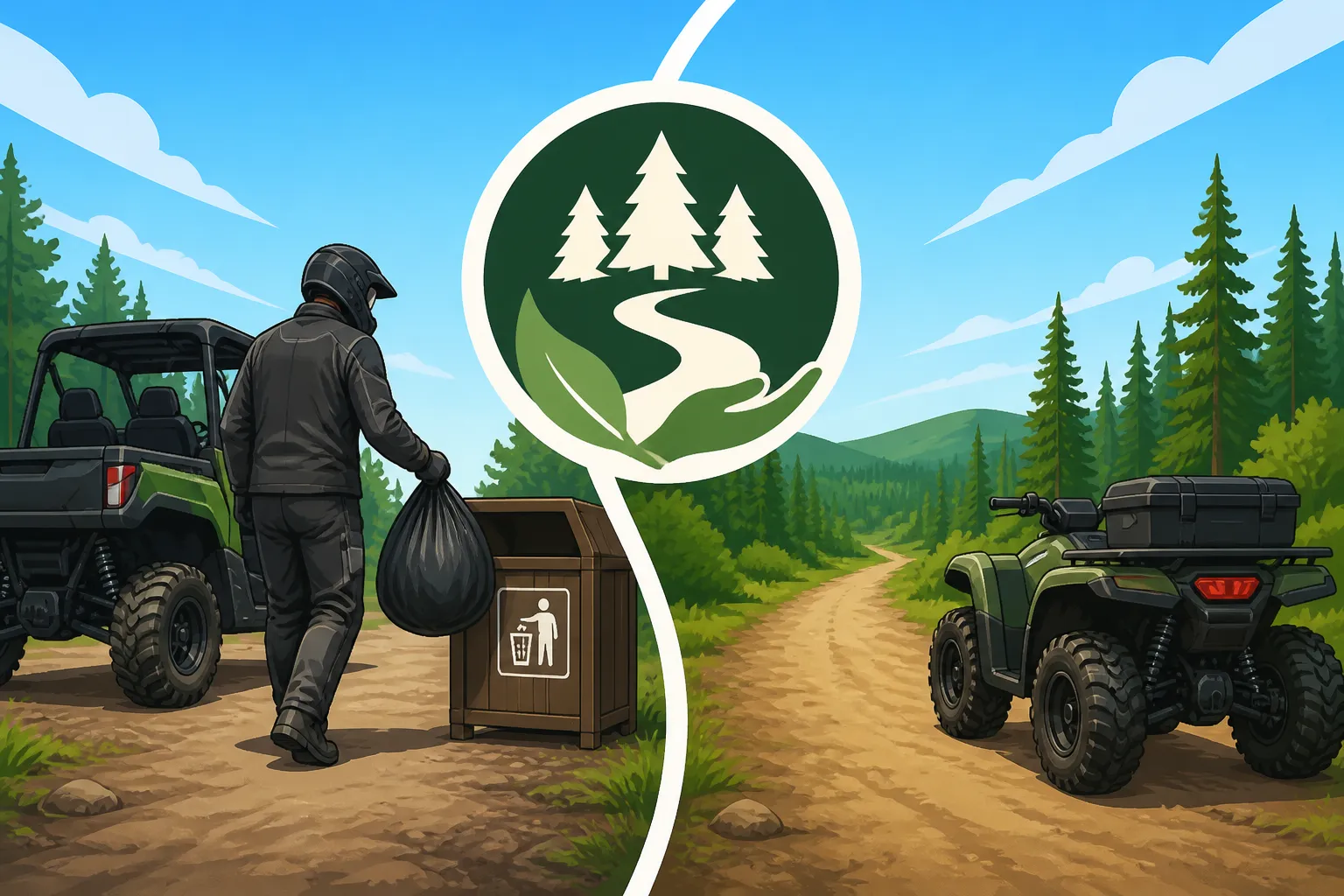
Take all rubbish home, including food wrappers, drink containers, zip ties, broken straps, and small pieces of packaging. A scrap that blows out of a trailer can end up in the bush or along a waterway. Don’t leave waste beside a full bin, either. If there is no suitable receptacle, pack it out and dispose of it later.
Bring a bag or small lidded container specifically for rubbish so it doesn’t get loose in the trailer or cargo area. It helps to check the parking area before you pull away: look beneath the trailer, around the unloading spot, and wherever the group gathered to gear up. That last quick sweep often catches items that were dropped while people were putting on gloves or fastening helmets.
Waste facilities and services may not be available at remote trailheads. Plan for that instead of expecting someone else to handle your group’s rubbish. The same principle applies to food scraps. Even biodegradable scraps can attract wildlife or leave an unpleasant mess, so pack them out with the rest of your waste.
Prevent fuel, oil, and mud problems
Fuel and oil can leak during transport or while riders are refuelling. Check machines and fuel containers before unloading, use containers designed for fuel, and refuel carefully in a suitable place away from water and vegetation. Keep absorbent material in the tow vehicle or recovery kit so a small spill can be contained promptly. If a spill is larger than your group can safely manage, follow local reporting instructions rather than leaving it for the next visitor.
Mud deserves attention, too. Soil and plant material stuck to tires, tracks, or undercarriages can be carried from one area to another. Clean machines where appropriate before visiting a different trail system, and follow any park or local washing instructions. Some parks require specific cleaning or inspection steps. Saskatchewan Machines Washed Before a Park Ride explains why this matters, and Washing Mud Off a Quad Before the Next Park offers practical context for preventing the spread of unwanted material.
Don’t wash a machine at a trailhead unless a designated facility and local instructions allow it. Washing mud into a ditch, wetland, or waterway simply moves the problem. If you need to clean the machine, use an appropriate wash area and follow the rules for that location.
Respect vegetation, signs, and nearby property
Keep vehicles within the designated parking and riding areas. Cutting across grass, brush, or soft ground to make room can widen a clearing and leave ruts that persist after the group has gone. Avoid driving around a barrier, moving a sign, or creating a shortcut past a muddy section. If a route is blocked or damaged, turn back or use an approved alternative rather than making a new line.
A closed gate is not an invitation to find another way through. Follow signs and access instructions, and don’t remove, loosen, or damage barriers. Where a route crosses private or occupied land, confirm that you have permission and follow any conditions the owner or land manager has set. For more on responsible trail behaviour, see Saskatchewan Trail Etiquette Locals Expect and Saskatchewan Crown Land Access Rules.
Ride Considerately and Protect the Trail
Leaving a trailhead as you found it also means behaving in a way that does not make the place harder to share. Noise, crowding, and avoidable trail damage can affect other riders, nearby residents, wildlife, and the people who maintain local routes.
Keep noise and congestion down
Start machines in the staging area only when you are ready to leave, and avoid unnecessary revving. Give other groups room to load, unload, and turn around. If several trailers arrive together, keep the entrance clear and avoid spreading into areas that appear to be undeveloped parking but may be vegetation or private land.
At the end of the ride, take a moment to let the group collect itself before everyone heads off in different directions. That helps prevent riders from wandering around the parking area looking for one another or making repeated passes while trying to regroup. If a trailhead is busy, keep stops short and move conversations away from the access lane.
Noise can also travel farther than expected in quiet northern areas. Respect posted limits and local rules, and be especially thoughtful near cabins, campgrounds, homes, and other recreation areas. A considerate departure matters as much as a considerate arrival.
Stay on approved routes and avoid trail damage
Use routes that are open to your machine and stay on the established trail. Riding around a wet or rough section can widen the trail and damage surrounding ground. If conditions are poor, turn back, take an approved alternate route, or wait for conditions to improve rather than forcing a passage that leaves deep ruts.
Route planning tools can help a group follow a planned ride, but they should be used carefully. onX Offroad can be one way to review route information before departure; riders should still confirm that the route is open, permitted, and appropriate for their machine. A line on a screen is not proof of access. Pay attention to signs on the ground and to any instructions provided by a club or land manager.
Trail systems can have different rules, even when they are close together. For example, riding access, permits, and designated routes may differ between a park area near Narrow Hills and a club-maintained route elsewhere. Check the instructions for the specific place you are visiting rather than assuming that permission or a permit in one location applies to another.
Give other users and wildlife space
Slow down and leave room when meeting hikers, cyclists, horseback riders, other machines, or people working on the trail. Follow signs about right of way, and avoid sudden movements that could startle animals or create a hazard. If you encounter wildlife, don’t chase it or crowd it for a closer look. Give it a clear path to move away.
Keep dogs under control and prevent them from roaming through the staging area or approaching other groups. If you bring a pet, check local rules before the trip and plan how you’ll manage it safely around machines and wildlife.
A group’s conduct becomes part of the reputation of the riding area. If a route is maintained by volunteers or a local club, stay clear of maintenance equipment and follow any temporary instructions. Saskatchewan Club Trails on Crown Land and Saskatchewan Trail Volunteer Days can help riders understand the community effort that keeps some routes usable.
A Practical Leave-No-Trace Check Before You Go
A quick final check can catch the things that are easiest to miss when everyone is tired and ready to drive home. Make it part of the ride routine rather than something the group remembers only after pulling onto the highway.
Use this end-of-ride checklist
Before leaving, walk around the trailer and unloading area. Look for rubbish, dropped gear, fuel drips, and anything that may have fallen from a cargo box. Check that no one has left a strap, tool, container, or piece of riding equipment behind.
| Check before departure | What to look for | What to do |
|---|---|---|
| Rubbish and food | Wrappers, containers, scraps, or loose packaging | Pack it out, including small items that could blow away |
| Spills | Fuel or oil around machines and vehicles | Contain what you can safely manage and follow local reporting instructions for a larger spill |
| Parking area | Blocked access, new ruts, or vehicles outside the designated area | Move vehicles if needed and avoid creating new tracks |
| Trail access | Gates, signs, or barriers left changed or damaged | Leave them as found and report damage to the appropriate contact |
| Equipment | Straps, tools, gloves, or items dropped during loading | Collect everything before the group pulls out |
| Route and access notes | Closures or hazards noticed during the ride | Share useful information through the relevant local contact |
If you find litter or damage left by someone else, you can pick up a small, safe item if you’re able, but don’t put yourself at risk or enter a restricted area. For larger concerns, contact the relevant park office, municipality, club, or land manager. If you notice a closure or hazard, share clear details—such as the trail name or nearby landmark—so the right people can locate it.
Leave useful information for the next group
If a trail has a fresh washout, fallen tree, damaged sign, or other issue, report it through the channel responsible for that route. Avoid posting sensitive location details publicly if doing so could encourage unauthorized access or crowding. When using onX Offroad or another mapping tool to plan, treat any personal notes as helpful reminders, not a substitute for official updates or permission.
Before heading home, check that your group has followed all local requirements for permits, equipment, and parking. A final glance at the staging area should show the same basic condition it had when you arrived: no extra rubbish, no new damage, and no barrier or sign left out of place. That small habit helps keep northern Saskatchewan riding areas welcoming and usable.
Disclaimer
This article is for general informational purposes only and does not constitute professional advice. Laws, prices and regulations vary by location and change over time. Consult a qualified professional for guidance on your specific situation.