Everyone Off the Machine to Cross
It’s a scenario every ATV and UTV rider in Saskatchewan knows all too well: you’re out enjoying a fantastic ride on a grid road or a trail, and suddenly, a busy highway or even a moderately trafficked paved road looms ahead. The law for crossing these stretches of pavement isn't just a suggestion; it’s a critical safety measure that many riders either misunderstand or, let's be honest, sometimes ignore in the heat of the moment. This guide is all about breaking down exactly why and how you need to handle these crossings safely, making sure you, your passengers, and your machine stay out of harm's way.
The Core Rule: Everyone Off the Machine to Cross
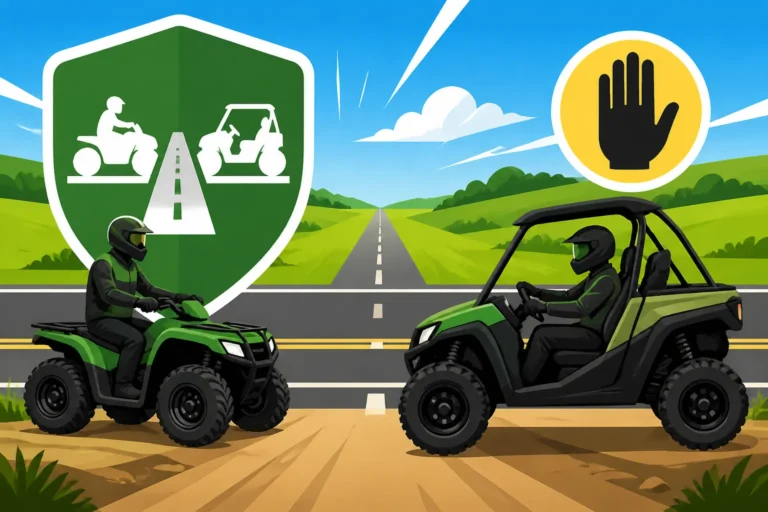
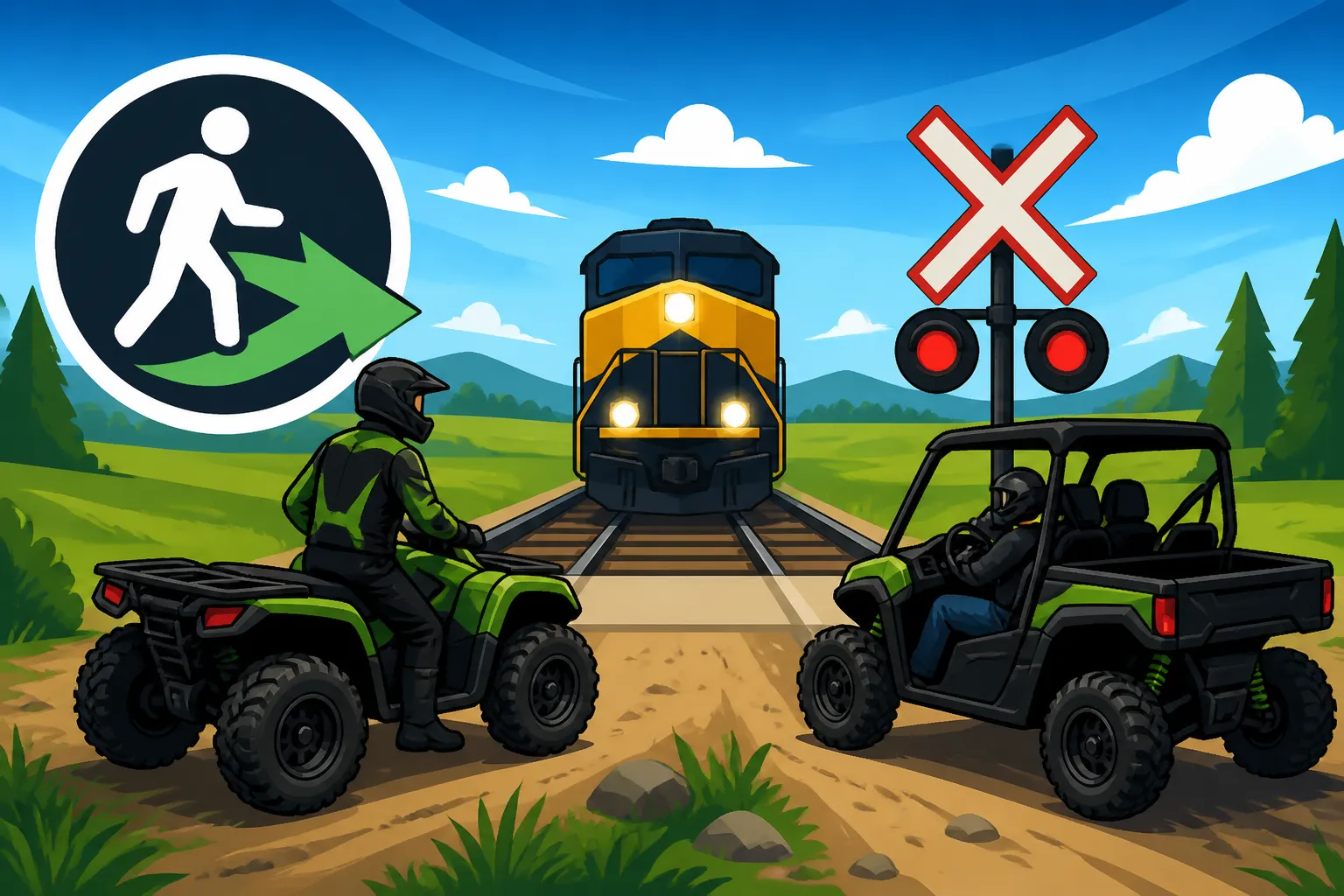
Imagine this: you're cruising along a dirt path, enjoying the vast Saskatchewan sky, when you see a provincial highway approaching. Your natural instinct might be to just punch the throttle and dart across. But the All Terrain Vehicles Act has a very specific, non-negotiable rule for this situation: when crossing a public road or highway, everyone must dismount from the ATV or UTV. That means no quick dashes, no passengers clinging on, no exceptions for a "barely used" road. It’s a moment to pause, assess, and proceed with extreme caution.
Why This Rule Exists: Safety First, Always
We get it. It can feel like a bit of a hassle to stop, dismount, and walk your machine across. You're thinking, "It's just a quick road, what's the big deal?" But the "big deal" is your safety, and the safety of everyone else on the road. ATVs and UTVs are simply not built for highway speeds or for the intense, often unpredictable traffic of paved roads. They have a higher centre of gravity, making them less stable on hard surfaces, and their acceleration and braking capabilities are vastly different from a typical passenger vehicle.
Think about it from a driver's perspective. A truck or car hurtling down a highway at 100 km/h or more might not see your ATV, which is much smaller and lower to the ground, until it's too late. The brief moment it takes to dismount and walk across significantly reduces the time your machine is vulnerable in the direct path of traffic. It forces you to slow down, look, listen, and truly understand the situation before putting yourself in potential danger. This isn't about inconveniencing you; it's about preventing serious accidents that could change lives forever.
What "Crossing" Really Means
So, what exactly does the Act mean by "crossing"? It's not just about a four-lane divided highway; it applies to any public road or highway that you need to traverse to continue your journey. This includes paved provincial highways, grid roads that might be gravel but are still public thoroughfares, and even municipal streets within town limits, depending on local bylaws. The key is that you are moving from one side of the road to the other, not riding along it.
The law also stipulates that when you cross, you must do so by the shortest route available, and at as near to a right angle as is practical. You can’t meander down the road for a bit before turning across. The goal is to minimize your time and presence in the flow of traffic. For more details, remember to check out [Saskatchewan Crossings by the Shortest Route] to ensure you're always taking the most direct path. This rule underscores the principle of getting across as quickly and safely as possible, without becoming a prolonged obstacle.
The Practical Steps of a Safe Crossing
Let's walk through this. It's not rocket science, but it does require discipline.
- Approach with Caution: As you near the road, slow your machine down. Scan both directions for traffic well in advance.
- Come to a Complete Stop: Stop your ATV or UTV completely at the edge of the road, giving yourself a clear line of sight in both directions. Never just roll into a crossing.
- Dismount: This is the big one. Everyone, including the operator and any passengers, must get off the machine. This allows you to stand, giving you a better view, and ensures that no one is caught on the machine if something goes wrong.
- Look, Listen, and Wait: Take your time. Don't rush. Look left, then right, then left again. Listen for approaching vehicles. Wait for a clear, safe gap in traffic that allows you ample time to cross without hurrying. If you're in a group, the lead rider should signal clearly when it's safe to proceed.
- Walk Your Machine Across: With the engine off or idling very slowly, walk your ATV or UTV directly across the road at a right angle. Do not ride it. Keep a firm grip and be ready to stop if traffic appears unexpectedly.
- Remount Safely: Once you are fully off the public road and on the shoulder or trail on the other side, you and your passengers can remount and continue your ride.
This might sound like a lot, but it’s a quick process that adds crucial seconds of safety to your journey. Think of it as a brief, mandatory safety drill every time you encounter a crossing.
Who Needs to Dismount? Understanding "Everyone"
The word "everyone" in the rule "everyone off the machine to cross" is really important. It leaves no room for interpretation or exceptions. This isn't just about the person holding the handlebars; it's about every single individual associated with the ATV or UTV during that critical crossing maneuver. This rule is designed to safeguard all occupants and to ensure the most cautious approach possible.
The Operator's Responsibility
As the operator of the ATV or UTV, you bear the primary responsibility for the safe operation of your machine, and that includes adhering to all road crossing rules. This means you must be the one to dismount and guide your machine across. This isn't just a legal requirement; it's a practical safety measure. By dismounting, you gain a clearer perspective of oncoming traffic, you're more stable on your own feet, and you can react more nimbly to sudden changes in the road environment.
If you're leading a group, your actions set the example. If you ride across, others might follow, potentially putting everyone at risk. Being the operator means being the leader when it comes to safety, and that includes making sure everyone adheres to this rule. Don't forget that [Saskatchewan Owner Liability Rules] can apply if an incident occurs, emphasizing the seriousness of your role. Leading by example ensures everyone's safety, and keeps you within the bounds of the law.
Passengers and Their Role
Passengers, regardless of age, must also dismount. This might seem redundant if the operator is already walking the machine, but it’s an added layer of safety. A passenger remaining on a machine, even one being walked, introduces several risks. They could lose balance, obstruct the operator's view, or simply not be able to react quickly if the machine needs to be stopped or steered suddenly.
Furthermore, it reinforces the idea that an ATV or UTV, even when stationary or moving slowly across a road, is not a safe place to be for a passenger. The Act is clear that passengers are only permitted on machines specifically designed for multiple riders. Even then, that design doesn't extend to riding across a highway. Always ensure your machine is rated for passengers if you carry them at all, and review [Saskatchewan Passengers Only on Designed Machines] to understand the specific requirements for carrying additional riders. When it comes to crossing a road, no passenger should ever be on board.
Children and Youth Riders
When children or youth are involved, the stakes are even higher. If a child is a passenger, they must dismount with everyone else. If a child or youth (12 years or older, with proper supervision or certification) is operating their own ATV and needs to cross a road, they too must follow the "everyone off" rule. This is a critical lesson in responsible riding and road safety that needs to be instilled from a young age.
Supervisors of youth riders have an even greater responsibility to ensure compliance. Not only are they responsible for the youth's adherence to all safety regulations, but they also model correct behaviour. A supervisor, who typically needs to have held a valid driver's licence for at least 365 days, is legally accountable for the actions of the youth under their care. For more information on these important rules, particularly regarding the responsibilities of those guiding younger riders, make sure to check out [Saskatchewan's 365-Day Supervisor Rule]. This rule is in place to protect our youngest riders and instill good habits.
Common Misconceptions and Risky Habits
Let's be honest, we've all seen it, or maybe even been tempted to do it ourselves: the quick dash across the road, ignoring the rules. It's easy to develop risky habits when you feel like you know the area, or when convenience takes precedence over caution. But these shortcuts are precisely where accidents happen. Understanding why these habits are dangerous is the first step to breaking them.
"Just a Quick Dash" Mentality
The "just a quick dash" mentality is perhaps the most prevalent and dangerous misconception. It goes something like this: "The road's clear, I'll just zip across, it'll be faster than getting off." We've all felt the urge to save a few seconds, especially when you're in a hurry or the weather isn't ideal. However, those few saved seconds are simply not worth the immense risk. What appears clear in one moment can change in the blink of an eye. A vehicle could emerge from a dip in the road, over a crest, or from a hidden side road faster than you anticipate.
The problem with a "quick dash" is that it relies entirely on perfect timing and assumes complete predictability of the road and other drivers. In reality, both are inherently unpredictable. A small mistake in judgment, a momentary lapse in attention, or an unexpected action from another driver can turn a "quick dash" into a catastrophic event. It removes the safety buffer that dismounting provides, leaving you and your machine exposed and vulnerable on a stretch of pavement where you truly don't belong.
Ditching the Rule for Convenience
Let's face it, getting off your machine, walking it across, and then getting back on is less convenient than simply riding across. This is especially true if you're pulling a small trailer, or if the ground on the other side is uneven, making remounting a bit trickier. It's a natural human tendency to seek the path of least resistance. However, this rule wasn't put in place for convenience; it was put in place for safety.
The minor inconvenience pales in comparison to the potential consequences of ignoring the rule. Beyond the risk of an accident, you could face legal penalties. Officers patrol these roads, and they are fully aware of the regulations. Getting caught riding across a public road without dismounting can result in significant fines. While the exact amount can vary, remember that [Saskatchewan Fines Capped at $1,000] under the Act for such offences. Is saving a few seconds really worth a hefty fine, or worse, an injury that could put you out of commission for months, or even permanently? The answer is a resounding no.
Misinterpreting "No Traffic"
Many riders will justify riding across a highway by saying, "There was no traffic, I checked." While it's great that you checked, relying solely on your perception of "no traffic" can be incredibly deceptive, especially in wide-open prairie landscapes where things can appear closer or further away than they actually are. Factors like visibility, the speed of oncoming vehicles, and the terrain itself can all trick your eyes.
Even in rural areas that seem deserted, a vehicle can appear seemingly out of nowhere, often travelling at high speeds. The difference in mass and speed between a car or truck and an ATV means that an impact is almost always devastating for the ATV rider. Your small machine is simply not as visible as you might think, particularly at dusk, dawn, or in adverse weather conditions. Always assume that traffic could appear, and use the dismount rule as your absolute safeguard against misjudgment. It's better to be overly cautious than to regret a moment of assumed safety.
Equipment and Preparedness for Road Crossings
While the "everyone off the machine to cross" rule is paramount, there are additional steps you can take to make road crossings as safe as possible. Preparedness and the right equipment can significantly reduce risks and increase your visibility to other road users, transforming a potentially hazardous moment into a controlled maneuver.
Enhancing Visibility
Being seen is half the battle when you're anywhere near active road traffic. Our ATVs and UTVs are relatively small, and often blend into the environment, especially if they’re dark green or camouflage. This makes it crucial to enhance your machine's visibility, particularly when approaching or crossing a public road.
Consider equipping your ATV or UTV with bright, reflective flagging. High-mounted whip flags, especially in neon colours or with LED illumination, can significantly increase your profile for oncoming drivers. Aftermarket accessories like high-visibility whip lights or flags from a company like SuperATV can make a huge difference, especially if you're riding a utility quad that tends to blend into the background. Additionally, wearing brightly coloured or reflective riding gear can make you, the operator, much more noticeable. Ensure your machine's lights are always functional, and if you're riding at dawn, dusk, or night, utilize your headlights and taillights fully, as outlined in [Saskatchewan Lighting Rules at Night]. The more visible you are, the more time other drivers have to react to your presence.
Communication is Key
When riding in a group, effective communication becomes absolutely vital for safe road crossings. A haphazard approach can lead to confusion, delays, and increased risk for everyone. Before you even get to a major crossing, have a plan. Designate a lead rider who will assess traffic and signal when it's safe to proceed. The lead rider should be the first to dismount and cross, creating a clear path for the rest of the group.
Use clear, established hand signals to communicate "stop," "clear," or "wait." If you're riding with radios, even better, but never rely solely on technology. Ensure everyone in the group understands the "everyone off the machine to cross" rule and is committed to following it. A quick pre-ride briefing about road crossing protocols can save a lot of headaches and keep everyone safe. Everyone needs to be on the same page and act as a cohesive unit during these critical moments.
Understanding Local Bylaws
While the provincial All Terrain Vehicles Act sets the core rules for crossing highways, it's also important to remember that local municipalities and even villages can have their own specific bylaws regarding ATV and UTV operation, particularly concerning road use within their boundaries. While these bylaws generally won't contradict the provincial crossing rule, they might dictate where you can and cannot ride on municipal roads, ditches, or shoulders leading up to a crossing.
Some municipalities might have areas where ATV use is strictly prohibited, even on road allowances, or they might have specific times of day when riding is not permitted. Before planning a route that takes you through various communities, it's always a good idea to do your homework. Checking [Saskatchewan Municipal Bylaws on Roads] and specifically performing [Saskatchewan Bylaw Lookups Before You Ride] can prevent unexpected issues. Knowing these local rules not only helps you avoid fines but also ensures you're a respectful and responsible rider in every community you pass through.
Here's a quick summary of crossing procedures:
| Step | Action Required | Why It's Important |
|---|---|---|
| 1. Approach | Slow down, scan for traffic well in advance. | Provides time to react and assess the situation safely. |
| 2. Stop | Come to a complete stop at the road's edge. | Establishes a clear boundary and prevents accidental rolling into traffic. |
| 3. Dismount | Operator and all passengers get off. | Ensures maximum visibility and stability for assessing traffic and walking the machine. |
| 4. Observe | Look left, right, left again; listen intently. | Crucial for confirming a clear, safe gap in traffic from all directions. |
| 5. Cross | Walk machine across by the shortest, safest route. | Minimizes time in traffic; prevents rider from being on machine if unexpected issues arise. |
| 6. Remount | Once clear of the road, remount safely. | Ensures you're not obstructing traffic or vulnerable on the paved surface. |
Disclaimer
This article is for general informational purposes only and does not constitute professional advice. Laws, prices and regulations vary by location and change over time. Consult a qualified professional for guidance on your specific situation.