Proof Shown to a Peace Officer
Riding your ATV or UTV across Saskatchewan's vast landscapes can be an incredible experience, but it also comes with the responsibility of knowing the rules. Many riders worry about what happens if a peace officer pulls them over, especially since there isn't a provincial registration system for ATVs like there is for snowmobiles. This can lead to a lot of confusion about what documents you actually need to carry. This guide will cut through that uncertainty, clearly outlining exactly what proof a peace officer in Saskatchewan can ask for and what you should always have on hand to ensure a smooth interaction and a legal ride.
What a Peace Officer Looks For During an ATV Stop
It's a common scenario: you're enjoying a ride on a grid road or an approved trail, and suddenly you see the lights of a peace officer. Your heart might do a little flutter, wondering what they're even looking for, especially when you know there's no provincial plate on your quad. The good news is, a peace officer isn't looking for a registration because [Saskatchewan Does Not Register ATVs]. Instead, their focus will be squarely on rider compliance, proper machine operation, and confirming the machine's legitimate status.
Common Checks During a Stop
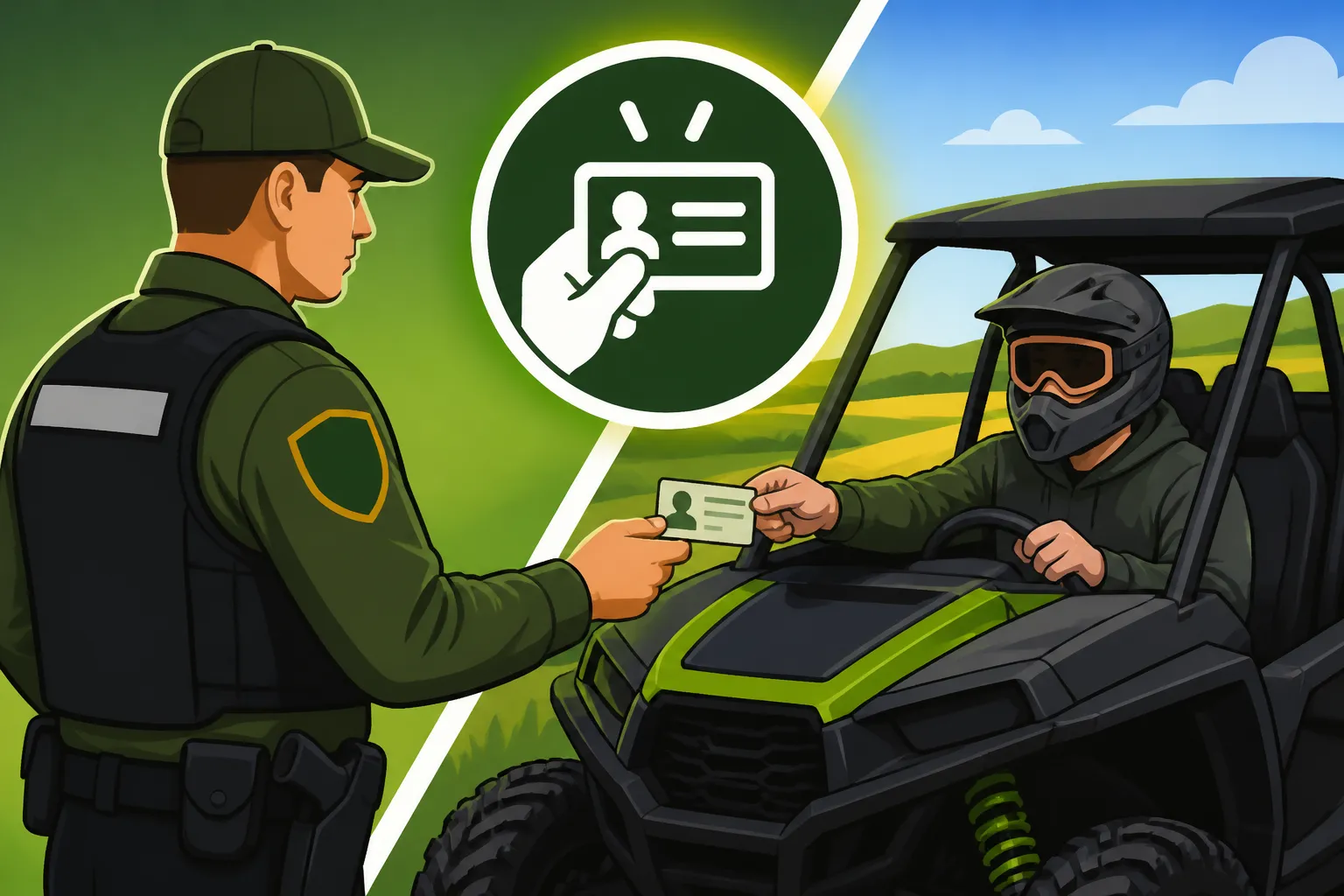
When a peace officer stops an ATV or UTV operator, their primary goal is to ensure safety and adherence to the provincial All Terrain Vehicles Act and any relevant local bylaws. They're typically checking for a few key things: first, that the operator is legally permitted to be riding, which includes age and licensing requirements. Second, they'll want to see proof that the machine is insured, a non-negotiable aspect of responsible riding. Third, they'll often do a quick visual check of the machine itself—are the lights working if it's dark? Does it appear to be in safe operating condition? Finally, they might ask questions about the machine's ownership, especially if there are any red flags. This isn't about proving registration, but rather confirming the machine isn't stolen or unlawfully obtained.
Imagine you're out near Prince Albert, navigating some of the bush trails. An officer might be patrolling to ensure riders are staying on designated paths or to check for compliance with local regulations. They're not going to ask for a plate number that doesn't exist, but they will want to know that you, the rider, are qualified and that your machine is properly insured and maintained. This proactive approach helps keep everyone safe on shared lands and public access points.
Your Driver's Licence and Age Requirements
One of the first things a peace officer will likely ask for is your driver's licence. In Saskatchewan, if you're operating an ATV or UTV, you absolutely need to hold a valid driver's licence. [Saskatchewan Requires a Driver's Licence] for anyone operating these machines, with very specific exceptions for youth. This means your regular Class 5 driver's licence is what you'll need to present. It's not about driving a car; it's about proving you have the basic competency and legal authorization to operate a motorized vehicle.
For younger riders, the rules are a bit more nuanced. If you're 12 years of age or older but under 16, you can operate an ATV, but only under direct supervision. This isn't just a friendly suggestion; it's a legal requirement. The supervisor themselves must be at least 16 years old, hold a valid driver's licence, and importantly, have held that licence for at least 365 days. This is known as [Saskatchewan's 365-Day Supervisor Rule]. So, if you're riding with a younger family member, be prepared to show both your licence and theirs (if they have a learner's permit or other ID), and explain your supervisory role. An officer needs to confirm that everyone on the machine, or operating one, meets the age and licensing criteria to be there.
Proving Ownership: What to Carry When There's No Plate
This is where Saskatchewan's unique ATV situation often causes the most head-scratching. Without a provincial registry or plate, how on earth do you prove that the quad you're riding actually belongs to you? It's a valid concern, especially if you've purchased your machine privately. The answer lies in reliable, physical documentation that establishes a clear chain of ownership, similar to how other personal property is verified.
The Mighty Bill of Sale
In Saskatchewan, your bill of sale is effectively the equivalent of a title document for your ATV or UTV. It is the absolute cornerstone of proving ownership. When a peace officer asks about the machine's ownership, presenting a clear, detailed bill of sale will answer their questions effectively. [Saskatchewan Bills of Sale Do the Work] of establishing who legally owns the machine. This document should ideally include:
- The full names and addresses of both the buyer and the seller.
- The date of the transaction.
- The purchase price.
- A clear description of the ATV or UTV, including its make, model, year, and crucially, its Vehicle Identification Number (VIN) or serial number.
- The signatures of both parties.
Think of it this way: if you can't produce a bill of sale, or if the one you have is incomplete, it can raise legitimate questions about how you acquired the machine. This could lead to further investigation, which nobody wants when they're trying to enjoy a day out.
Serial Number Verification
Beyond the bill of sale itself, you need to be able to physically show the machine's serial number or VIN. This number is unique to your ATV or UTV and acts as its fingerprint. A peace officer will often compare the VIN on your machine to the one listed on your bill of sale to ensure they match. It's a critical step in verifying ownership and confirming the machine isn't reported as stolen.
Make sure you know exactly where the VIN is located on your specific model. It's usually stamped into the frame, often near the front wheels, engine, or under the seat. If you've added aftermarket accessories, like a heavy-duty bumper or a skid plate from SuperATV, make sure it doesn't obscure the VIN. Keeping the VIN easily accessible and readable can save you a lot of time and hassle during a stop. If the numbers don't match, or if the VIN appears tampered with, it could lead to serious legal consequences, including seizure of the machine, as outlined in [Saskatchewan Seizure and Impoundment Rules].
Digital Versus Physical Copies of Documents
In today's digital world, it's tempting to rely solely on having photos of your documents on your phone. While digital copies can be better than nothing, it's always recommended to carry physical copies of your essential documents, especially your bill of sale and insurance. Why? Because cell service can be spotty or non-existent in many of Saskatchewan's riding areas. If you're deep in the bush north of Nipawin or exploring trails near Moose Mountain, your phone might be little more than a paperweight.
A physical copy is always accessible, regardless of battery life or signal strength. If you must rely on digital copies, consider saving them as PDFs directly on your device rather than relying on cloud access. Better yet, create a small, waterproof pouch for your wallet that contains printed copies of your licence, bill of sale, and insurance, and keep it on your person or securely attached to your machine. This preparedness demonstrates responsibility and will streamline any interaction with a peace officer.
Insurance: Your Non-Negotiable Safety Net
Even without a provincial registration, one thing is absolutely clear: you cannot legally operate an ATV or UTV in Saskatchewan without proper insurance. This isn't just a suggestion; it's a legal requirement designed to protect everyone on the trails and roads, including you. Failing to have insurance can result in significant fines and other penalties.
Mandatory Minimum Coverage
The All Terrain Vehicles Act mandates that every ATV or UTV operated in Saskatchewan must have a minimum amount of liability insurance. This [Saskatchewan's Minimum Insurance Requirement] is set at $200,000 for third-party liability. This coverage is crucial because it protects you financially if you're found responsible for an accident that causes injury to another person or damage to their property. Without it, you could be personally liable for huge sums, potentially losing everything you own.
It's a common misunderstanding that because ATVs don't have plates, insurance isn't as important. Nothing could be further from the truth. An accident involving an ATV, especially one with a side-by-side that can carry multiple passengers and has substantial weight, can cause serious harm and extensive damage. The $200,000 minimum is there for a reason, providing a baseline of protection for unforeseen circumstances. It's always a good idea to discuss options with your insurance broker about potentially increasing this coverage for greater peace of mind.
Acceptable Proof of Insurance
Just like with your driver's licence and bill of sale, you need to be able to produce proof of insurance when requested by a peace officer. [Proof of Insurance Is What Saskatchewan Officers Ask For] when they stop you. Typically, this comes in the form of an insurance card or a policy declaration page provided by your insurance company. This document should clearly state:
- The policy number.
- The name of the insured.
- The effective dates of the coverage.
- A description of the insured ATV or UTV, including its VIN/serial number.
- The liability limits.
As with your bill of sale, a physical copy is preferred, but a clear digital copy on your phone can sometimes suffice if it's easily accessible and readable. Some insurance providers offer digital insurance cards through their apps, which can be convenient. However, always consider the possibility of being in an area without cell service or a dead phone battery, and plan accordingly with a physical backup.
Borrowed Machines and Lending Your Own
The issue of insurance becomes particularly important when you're riding a machine that isn't yours, or if you've lent your ATV or UTV to a friend or family member. If you're borrowing a machine, always confirm with the owner that it is properly insured, and ask for a copy of their insurance certificate to carry with you. If the owner's insurance doesn't cover operators other than themselves, you could find yourself in a very precarious position if an accident occurs.
Conversely, if you lend your machine, understand the implications. Your insurance policy typically follows the machine, not necessarily the operator. However, there can be clauses or circumstances where your policy might not cover another driver, or where a claim could negatively impact your own premiums. It's vital to clarify these details with your insurance provider. You don't want to be in a situation where you're asking [Who Pays When a Borrower Crashes Your Saskatchewan Quad?] after the fact because you didn't check the coverage beforehand. Always ensure everyone involved is clear on who is covered and how, to avoid costly surprises.
Safety Gear and Machine Compliance: Beyond Paperwork
While documents are crucial, a peace officer's stop often extends to verifying that you and your machine comply with the safety regulations outlined in the All Terrain Vehicles Act. This isn't just about avoiding a fine; it's about your own safety and the safety of others on the trail.
Helmet and Eye Protection Rules
Saskatchewan has very clear rules regarding personal protective equipment for ATV and UTV operators and passengers. [Saskatchewan Helmet and Eye Protection Rules] state that everyone riding an ATV must wear an approved helmet that is securely fastened. This isn't just any helmet; it must be one designed for motorized vehicles, meeting specific safety standards. Look for a DOT, Snell, or ECE certification label inside the helmet. A bicycle helmet, for example, won't cut it.
In addition to a helmet, you must wear suitable eye protection. This could be a face shield attached to your helmet or separate goggles. The key is that it must be shatterproof and provide adequate protection from debris, dust, and insects. Riding without proper eye protection can lead to serious injury from flying objects or impaired visibility, especially when you're kicking up dust or encountering debris. Quality gear, whether it's the helmet itself or a robust windshield from a brand like SuperATV on your UTV, makes a significant difference in both compliance and comfort.
Machine Equipment Checks
Peace officers also have the authority to check your machine for basic safety equipment and compliance. If you're riding after dark, your ATV or UTV must have operational headlamps and taillamps as per [Saskatchewan Lighting Rules at Night]. These lights are essential for visibility, both for you to see where you're going and for others to see you. Machines should also be equipped with a muffler and a spark arrestor to prevent excessive noise and reduce the risk of wildfires, especially during dry seasons.
An officer might also conduct a quick check to see if your machine has any obvious defects that would make it unsafe to operate. This could include checking tire condition, brake functionality, or ensuring that no modifications have been made that compromise safety. For instance, if you've added an aftermarket lift kit or suspension components, ensure they're installed correctly and don't negatively impact the machine's handling or stability. It's your responsibility as the operator to ensure your machine is in good working order before you head out.
Summary of What to Carry
To make things easier, here's a quick rundown of what you should always have with you when riding your ATV or UTV in Saskatchewan:
| Document/Item | Purpose | Recommended Format | Notes |
|---|---|---|---|
| Valid Driver's Licence | Proof of legal operating authority | Physical | Required for all operators (or supervisor for youth) |
| Proof of ATV Ownership | Establishes legitimate acquisition | Physical Bill of Sale | Must include VIN/Serial Number, buyer/seller details, date, price, signatures |
| Proof of Insurance | Verification of mandatory liability coverage | Physical Card/Policy | Must meet $200,000 minimum liability coverage |
| Approved Helmet | Rider safety | Worn | Must be certified (DOT, Snell, ECE) and securely fastened |
| Eye Protection | Rider safety | Worn | Shatterproof goggles or face shield |
| Optional but Recommended | |||
| Digital Copies of Documents | Backup access | Saved to device (PDF) | Useful where cell service is available, but not a primary substitute |
| Supervisor's Licence (for youth) | Legal requirement for youth riders | Physical | Supervisor must have held licence for 365+ days |
| Fire Extinguisher/Shovel | Wildfire prevention (especially in dry season) | Mounted on machine | Good practice, especially on Crown land |
Being prepared with these items not only keeps you compliant with Saskatchewan law but also makes any interaction with a peace officer quick and straightforward, allowing you to get back to enjoying your ride.
Disclaimer
This article is for general informational purposes only and does not constitute professional advice. Laws, prices and regulations vary by location and change over time. Consult a qualified professional for guidance on your specific situation.