How to Store a Quad Over a Long Winter
Oh, Saskatchewan winters! They’re beautiful, no doubt, with their crisp air and endless white landscapes, but they can be absolutely brutal on your beloved ATV or UTV if you don't prepare it properly. You've worked hard for that machine, and the last thing you want is to haul it out in spring, full of anticipation for that first ride, only to find it sluggish, corroded, or worse, completely seized up. This guide is here to walk you through exactly how to put your quad into a deep, protective slumber, ensuring it wakes up just as eager to hit the trails as you are, without any nasty surprises.
Why Bother Winterizing Your Quad in Saskatchewan?
I get it. After a long season of riding, the thought of spending another afternoon tinkering with your quad when the snow is flying might not be the most appealing. But trust me on this, skipping proper winterization in Saskatchewan is like leaving your garden hose out all winter – you know it’s going to burst. Our prairie winters are notorious for extreme cold, fluctuating temperatures, and plenty of moisture, all of which conspire against your off-road machine.
The Harsh Realities of a Prairie Winter on Your Machine
When we talk about "harsh realities," we're not exaggerating. Saskatchewan’s climate throws everything it has at your quad. The dry, cold air, combined with periods of snowfall and melting, creates a perfect storm for certain types of damage if you're not careful.
First off, there’s the corrosion factor. Moisture, whether from snow, ice, or even just condensation from temperature swings, loves to find its way into every nook and cranny of your machine. This can lead to rust on metal components like the frame, suspension parts, and even within the engine's internal workings if not properly protected. Think about the bolts and linkages that seize up, making maintenance a nightmare, or the electrical connections that develop green fuzz, causing intermittent starting issues or accessory failures. These aren't just cosmetic problems; they can compromise the structural integrity and reliability of your quad.
Then there’s the plastic and rubber degradation. Extreme cold can make plastics brittle, leading to cracks in fenders, fairings, and even the airbox. Rubber components, like hoses, seals, and tires, can dry out, stiffen, and crack, losing their flexibility and protective qualities. Imagine discovering a cracked fuel line or a leaking fork seal in the spring, all because the rubber couldn't handle the deep freeze. It’s a real frustration that can easily be avoided.
Finally, UV exposure, even in winter, can slowly fade and degrade exposed surfaces if your machine isn't covered. While not as immediate a concern as rust or cracks, it contributes to the overall wear and tear, making your quad look older than its years. Protecting your investment means considering all these factors, not just the most obvious ones.
Avoiding Costly Repairs and Headaches Next Spring
The most compelling reason to properly winterize your quad is to save yourself money, time, and stress come spring. I’ve seen it time and again: riders who neglect winter prep end up with a laundry list of issues that suddenly need fixing, right when they're itching to ride.
A dead or damaged battery is one of the most common issues. Leaving a battery exposed to extreme cold without proper maintenance can permanently reduce its capacity, making it unable to hold a charge. Replacing an ATV or UTV battery can be a surprising expense, not to mention the hassle of sourcing one. Without a proper provincial registry, you won't have a record of your quad's details in a central system, so having all your receipts and maintenance records, including battery purchases, becomes even more important. [Why Saskatchewan Never Built a Quad Registry] means that paper trail is your best friend.
Fuel system problems are another massive headache. Modern fuels, especially those with ethanol, can break down over time, forming gummy deposits that clog carburetors and fuel injectors. This leads to rough idling, stalling, and poor performance. Cleaning or replacing these components can be a labour-intensive and costly repair, sometimes requiring specialized tools or a trip to the dealer. This is particularly true if you skip stabilizer.
Rodent damage is also a silent destroyer during winter. Mice and other critters love to nest in warm, sheltered spaces, and your quad's airbox, exhaust, or even wiring harnesses are prime real estate. They’ll chew through wires, build nests with insulation, and leave a mess that can be incredibly destructive and time-consuming to fix. Imagine trying to diagnose an electrical short caused by a chewed wire, or the smell of a mouse nest burning when you first start your engine. These aren't fun surprises.
Taking the time now means you avoid these frustrations and can actually enjoy your machine in the warmer months. It's an investment in future enjoyment and lower [Saskatchewan Maintenance Costs Per Year].
The Comprehensive Winterization Checklist for Your ATV/UTV
Alright, let's get down to brass tacks. Winterizing your quad isn't a single magical step; it's a series of careful actions designed to protect every vulnerable part of your machine. Think of it as putting your quad into a safe, comfortable hibernation.
| Component Group | Action Item | Why It's Important |
|---|---|---|
| Fuel System | Add fuel stabilizer | Prevents fuel degradation, varnish, and gumming. |
| Run engine briefly | Circulates stabilized fuel throughout the system. | |
| Drain carburetor (if applicable) | Removes residual fuel that could turn stale. | |
| Battery | Remove and clean terminals | Prevents corrosion and power loss. |
| Store in a warm, dry place | Protects from extreme cold, maintains charge. | |
| Use a trickle charger | Keeps battery topped up, prevents deep discharge. | |
| Engine | Change oil and filter | Removes contaminants, prevents sludge. |
| Fog engine cylinders | Protects internal components from rust and corrosion. | |
| Plug exhaust pipe | Prevents moisture and pests from entering. | |
| Tires/Suspension | Inflate tires to recommended pressure | Prevents flat spots during long storage. |
| Lift machine off ground (if possible) | Reduces pressure on tires and suspension. | |
| Lubricate suspension points | Prevents seizing and corrosion. | |
| Exterior | Wash and wax thoroughly | Removes dirt, protects paint/plastics. |
| Apply protectant to plastics/rubber | Prevents drying, cracking, and UV damage. | |
| Cover machine | Protects from dust, moisture, and pests. |
This table provides a quick overview, but each step deserves a deeper dive to ensure you do it right.
Fuel System: Battling the Stale Fuel Monster
This is arguably one of the most critical steps, especially with modern fuels. Leaving untreated fuel in your tank and fuel lines over several months can lead to serious performance issues or even component damage.
First, add a fuel stabilizer to your gas tank. This isn't just for topping off; it's designed to prevent fuel oxidation and breakdown. Read the instructions carefully for the correct ratio based on your tank size. Brands like Sta-Bil are popular and readily available. Once you've added the stabilizer, run the engine for about 10-15 minutes. This is absolutely crucial, as it ensures the stabilized fuel circulates through the entire fuel system – from the tank to the fuel lines, fuel pump, injectors or carburetor, and back. You want to make sure every drop of fuel that will be sitting in your machine over winter has that stabilizer protecting it.
For quads with carburetors, there's an extra step: drain the carburetor float bowl. Most carburetors have a small drain screw at the bottom of the float bowl. Place a container underneath and loosen the screw to let the fuel drain out. Once drained, tighten the screw. This prevents any residual, non-stabilized fuel (or even stabilized fuel that might still degrade in the small volume of the bowl) from sitting and forming varnish or gum in these delicate passages. If your quad is fuel-injected, you typically don't need to do this, as the system is sealed. Just ensuring the stabilized fuel has circulated is usually enough. Finally, if your quad has a fuel shut-off valve, turn it to the "off" position. This prevents any minor leaks and further isolates the fuel system.
Battery and Electrical: Keeping the Spark Alive
A dead battery is a common winter woe. The extreme cold significantly reduces a battery's capacity and can lead to irreversible damage if it discharges completely.
The best practice is to remove the battery from your quad. Before you do, make sure you know which terminal is positive (+) and which is negative (-) – usually red for positive and black for negative. Disconnect the negative terminal first, then the positive. This prevents accidental shorts. Once removed, clean the battery terminals thoroughly with a wire brush and a battery terminal cleaner solution, or a baking soda and water paste, to remove any corrosion. Rinse well and dry completely.
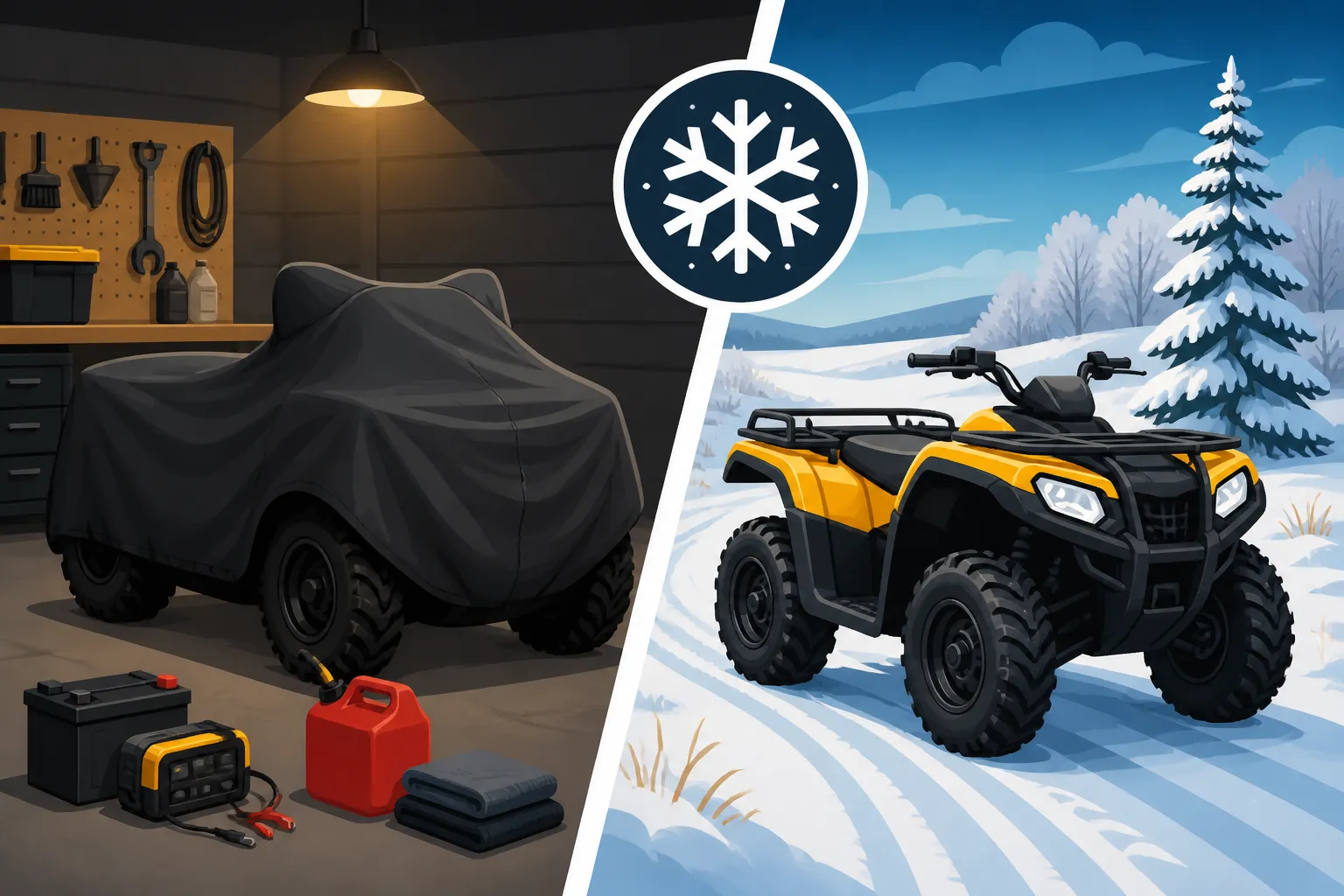
Now, for storage: store the battery in a warm, dry place, ideally above freezing temperatures. A basement, utility room, or heated garage is perfect. Never store it on a concrete floor directly, as this can sometimes contribute to self-discharge, though modern batteries are less susceptible to this old wives' tale. Place it on a piece of wood or a shelf. The most important step here is to connect it to a smart trickle charger or battery maintainer. These chargers are designed to slowly charge the battery and then automatically switch to a maintenance mode, preventing overcharging while keeping the battery at its optimal voltage. This ensures your battery will be fully charged and ready to go in the spring. [Saskatchewan Machines Stored Over Winter] benefit immensely from this step.
Engine and Drivetrain: Internal Protection for Long Slumber
Protecting the heart of your machine – the engine – is paramount. This involves preparing it internally and sealing it off from the outside world.
Start with an oil and filter change. Used oil contains contaminants and acids that, if left sitting for months, can cause corrosion to internal engine components. Fresh oil and a new filter ensure that the engine's internals are bathed in clean, protective lubricant. This is a small investment that pays huge dividends in engine longevity. Remember, even though Saskatchewan doesn't have a provincial registration for ATVs, keeping a good record of your maintenance helps prove ownership and care. [How to Prove You Own an ATV in Saskatchewan] often comes down to your paperwork, including maintenance logs.
Next, consider fogging the engine cylinders. This is particularly important for two-stroke engines but can benefit four-strokes too. Engine fogging oil creates a protective layer on the cylinder walls, piston rings, and valve seats, preventing rust and corrosion caused by condensation. To do this, remove the spark plug(s) and spray the fogging oil directly into the cylinder for a few seconds. Replace the spark plug(s) without fully tightening them, or gently turn the engine over a few times (without starting it) to distribute the oil.
Finally, plug the exhaust pipe. A simple rag, plastic bag, or even a dedicated exhaust plug will do the trick. This serves two purposes: it keeps moisture out of the exhaust system, preventing internal rust, and it acts as a deterrent for rodents looking for a cozy winter home. You'd be amazed how often mice find their way into an open exhaust pipe.
Tires, Suspension, and Exterior: Preventing Wear and Tear
These components often get overlooked, but they contribute significantly to your quad's ride quality and overall condition.
For your tires, inflate them to the manufacturer's recommended pressure, or even a little higher (e.g., 5-10 psi extra), but be careful not to overinflate beyond what the tire's sidewall rating allows. This helps prevent flat spots from developing where the tire rests on the ground for an extended period. If possible, and if you have the equipment, lift the quad off the ground using jack stands or a lift. This completely removes pressure from the tires and also takes the load off the suspension components, helping to preserve springs and shocks. If you can't lift it, rotate the tires every few weeks during storage if you access the machine regularly.
Next, give your suspension components some love. Lubricate all grease points (if your quad has them) and spray a silicone-based lubricant or a rust inhibitor on exposed metal parts like shock shafts, A-arms, and other suspension linkages. This prevents corrosion and keeps everything moving freely, making your first spring ride smooth and responsive.
Before you put a cover on, give your quad a thorough wash and wax. Remove all dirt, mud, and grime, paying special attention to hard-to-reach areas. A clean machine is less likely to harbor rust-causing moisture. Once clean and dry, apply a good quality UV protectant to all plastic and rubber components. This helps prevent them from drying out, fading, and cracking over the winter months. Brands like 303 Aerospace Protectant are excellent for this.
Choosing the Best Winter Home for Your Off-Road Machine
Where you store your quad during the long Saskatchewan winter can be just as important as how you prepare it. The ideal environment will protect it from the elements, pests, and theft.
Indoor vs. Outdoor: Weighing Your Storage Options
The choice between indoor and outdoor storage largely comes down to what resources you have available and your budget. Both have their pros and cons.
Indoor Storage: This is always the preferred option, hands down. A garage, shed, or dedicated storage unit provides the best protection from the harsh elements.
- Heated Garage: The absolute gold standard. A heated space eliminates concerns about extreme cold, condensation, and keeps all components at a stable, comfortable temperature. This is ideal for batteries, rubber, and plastics.
- Unheated Garage or Shed: A very good option. While it will get cold, it offers excellent protection from snow, ice, wind, and direct moisture. Temperature fluctuations will still occur, but they’ll be less extreme than outdoors. Just ensure it's well-ventilated to prevent excessive condensation.
- Self-Storage Unit: A viable option if you lack space at home. Look for units that are dry, secure, and offer decent access. Some even have climate-controlled options, which are fantastic but usually come at a higher price.
Outdoor Storage: This should be considered a last resort, but if it's your only option, you need to be extra diligent with your winterization steps.
- Under a Tarp or Cover: The minimum requirement for outdoor storage. You'll need a durable, waterproof cover that fits snugly and won't fly off in a prairie wind storm. Ensure the cover is breathable to allow moisture to escape and prevent mildew. Raising parts of the tarp to create an air gap can help with this. Place blocks under the tires to keep them off the cold ground, and consider a barrier around the base to deter rodents. The biggest challenge with outdoor storage is the constant exposure to freezing and thawing cycles, which are detrimental to all parts of the machine.
Security and Pest Control: Protecting Your Investment
Regardless of where you store your quad, security and pest control are non-negotiable.
Deterring Thieves: Unfortunately, ATVs are attractive targets for thieves, and because [Saskatchewan Does Not Register ATVs] provincially, recovery can be more challenging.
- Locks, Chains, and Anchors: Even in a locked shed or garage, adding extra layers of security is smart. Chain your quad to an immovable object (like a floor anchor or heavy beam) using a thick, hardened chain and a quality padlock. Consider a disc lock on a brake rotor or a steering column lock.
- Tracking Devices: For higher-value machines, a GPS tracking device can be a wise investment, allowing you to locate your quad if it's stolen.
- Insurance: Make absolutely certain your ATV or UTV is covered by comprehensive insurance during the storage period. While [Saskatchewan Insurance Requirements for Riders] typically focus on liability for operation, coverage for theft and damage while stored is just as important. Discuss your specific storage arrangements with your insurance provider. You don't want to find yourself dealing with [Saskatchewan Insurance Claims Without a Plate] and discover you weren't fully covered.
- Documentation: Always have readily accessible copies of your bill of sale and any other proof of ownership. Services like LawDepot can provide customizable bill of sale templates that ensure all critical information is included, making your proof of ownership robust. This paperwork is vital, especially since [Saskatchewan Has No Title to Transfer].
Pest Control: Rodents, insects, and even larger animals can cause significant damage.
- Physical Barriers: As mentioned, plugging the exhaust pipe and air intake can prevent entry. Inspect your storage area for any gaps or holes that pests could use to get in. Seal them up!
- Repellents: Scent-based repellents like mothballs (in a container that prevents direct contact with the machine), dryer sheets, or commercially available rodent repellents can deter pests. Place them strategically around and inside the quad (e.g., in the storage compartments, under the seat, near the engine).
- Traps: If you have a known rodent problem, set traps in the storage area well before you put your quad away for the winter. Check them regularly.
- Cleanliness: A clean machine is less attractive to pests. Ensure there are no food crumbs, spills, or anything that might draw them in.
- Vigilance: Periodically check on your machine throughout the winter, if possible, to ensure no pests have taken up residence.
The Spring Thaw: Getting Your Quad Ready for Adventure Again
Spring in Saskatchewan is glorious, and nothing beats that first ride of the season. But just like you meticulously put your quad to sleep, you need to wake it up carefully to ensure a smooth transition back to the trails.
Reversing the Winterization Process, Step-by-Step
Bringing your quad out of hibernation is largely a reversal of the winterization steps, with a few extra checks thrown in.
- Remove Covers and Plugs: Take off any covers and remove the exhaust plug, air intake blockages, and any pest deterrents you might have placed.
- Reinstall and Charge Battery: If you removed your battery, bring it back to the quad. If it's been on a trickle charger, it should be fully charged. Clean the terminals again if needed, and connect the positive terminal first, then the negative. Double-check that all connections are snug.
- Check Tires and Fluids: Inspect your tires for any signs of cracking or damage. Adjust the tire pressure back to the manufacturer's recommended riding pressure. Check all fluid levels: engine oil (even if you changed it, verify the level), coolant, and brake fluid. Top them off if necessary.
- Inspect Belts and Hoses: Look for any cracks, fraying, or loose connections on drive belts, radiator hoses, and fuel lines. Pay close attention to any signs of rodent damage here.
- Fuel System Check: If you drained the carburetor, close the drain screw. Turn your fuel tap to the "on" position. If you used fuel stabilizer, the fuel should be good to go. If your fuel is particularly old (say, over 6-8 months even with stabilizer), consider draining it and adding fresh fuel.
- Start and Warm Up: Before hitting the trails, start your quad and let it idle for several minutes to reach operating temperature. Listen for any unusual noises, check for leaks, and ensure all lights and indicators are working correctly. Gently test the brakes.
- Test Ride: Take it for a gentle test ride on a safe, familiar surface before embarking on a long adventure. Pay attention to how it handles, accelerates, and brakes. This gives you a chance to identify any lingering issues before you're far from home.
Remember, consistent [Saskatchewan Annual Maintenance Costs] are a part of quad ownership, and this spring check-up is a critical one.
Essential Paperwork: Ready for the Road (or Trail!)
While Saskatchewan doesn't have a provincial ATV registry, there's still essential paperwork you need to have ready before you head out, whether you're riding on private land, designated trails, or even briefly crossing a grid road.
First and foremost, you need proof of insurance. Even though quads aren't registered like snowmobiles, liability insurance is a legal requirement for riding in many situations, especially if you plan to access Crown land or municipal trails. An officer can ask to see [Saskatchewan Insurance Proof on the Trail], so having your insurance card or policy details readily accessible is a must. If you’re riding on land you don’t own, you must be able to prove you're covered for liability.
Secondly, always carry proof of ownership. This might seem less critical without a formal registry, but if your quad is ever questioned by law enforcement, or heaven forbid, stolen and recovered, your bill of sale is your primary document. [Saskatchewan Bills of Sale Do the Work] of establishing ownership. A well-crafted bill of sale, perhaps from a reliable template provider like LawDepot, ensures all necessary details are recorded, including VIN, make, model, year, buyer and seller information, and sale price. This also helps establish the value for insurance claims or if you ever need to sell the machine.
Even if you’re just puttering around your own acreage, having this paperwork sorted gives you peace of mind. Taking these final steps ensures that when the snow melts and the trails beckon, you're not just ready to ride, but you're also riding legally and responsibly, protecting both yourself and your valuable investment.
Disclaimer
This article is for general informational purposes only and does not constitute professional advice. Laws, prices and regulations vary by location and change over time. Consult a qualified professional for guidance on your specific situation.