Landowner Permission That Lapses Off Season
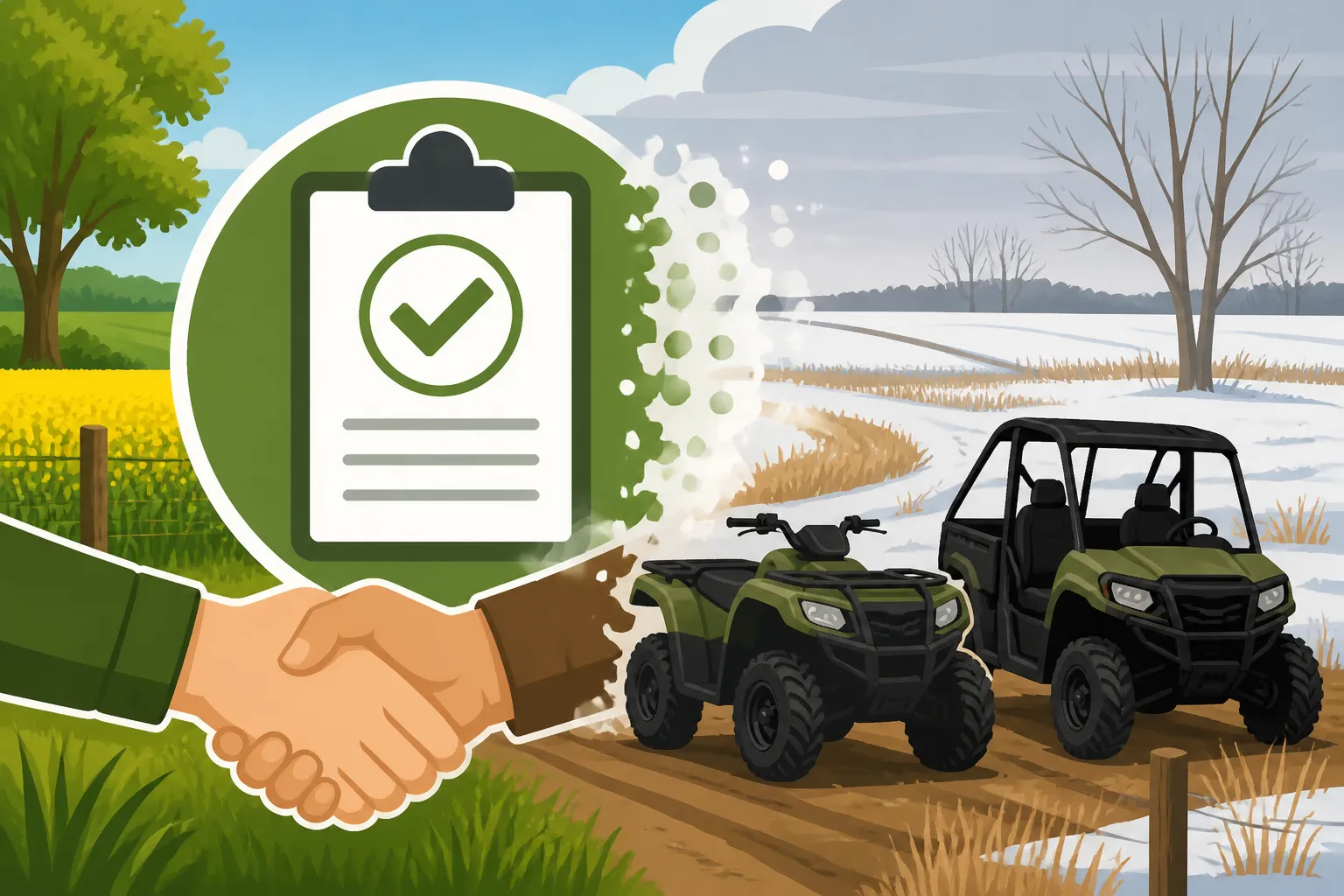
A gate that was open last summer may be locked this spring, even if a landowner once told you that you could ride there. In Saskatchewan, permission can be limited by dates, routes, and conditions, and it does not automatically renew when a season changes. This guide explains how to confirm access before unloading your ATV or UTV.
Why landowner permission can lapse
Permission is not automatically permanent
A casual “sure, you can ride here” is not necessarily an open-ended invitation. The owner may have meant permission for one afternoon, one season, a particular route, or a specific group. If you return months later, circumstances may have changed: livestock could be grazing, crops may be planted, a road may be soft, or the owner may have withdrawn access.
That’s why it’s worth treating permission as something to confirm for each planned ride, particularly after winter or during a busy farming season. Even a friendly relationship with a landowner doesn’t tell you whether the same route is available today. Ask directly rather than relying on last year’s understanding. For practical pointers on what to confirm, see [Saskatchewan Private Land Permission] and Getting Written Permission From a Farm Landowner.
Permission may also come with conditions. A landowner might allow you to cross a field but not ride around it, permit access only when the ground is dry, or ask you to avoid a yard, shelterbelt, dugout, or livestock area. If you bring friends, don’t assume your permission covers them too. Ask whether the invitation applies to your whole group and whether anyone else needs to contact the owner.
A simple written message can prevent a lot of awkwardness. It need not be complicated: identify the land, the dates, the people or machines covered, and any route or conduct conditions. If you’re given permission by phone or in person, send a brief message afterward confirming what you understood. That gives both sides a chance to correct a misunderstanding before anyone rides.
Seasonal agreements and trail access are different
Permission to cross private land is not the same as general access to a trail network. A club route may rely on agreements with several landowners, and those agreements can apply only to specific dates or purposes. One section may be closed while another remains available. A trail shown on an old map, a social post, or a riding app does not prove that the route is currently open.
This matters especially where a route crosses a patchwork of private land, Crown land, and other managed areas. Permission from one owner does not grant permission to cross the next parcel. Before heading out, verify each relevant part of the route and look for current notices from the landowner, club, park, or responsible authority.
If your ride includes a grazing lease, don’t assume that a public-looking road or open pasture means unrestricted access. Permission and access conditions can be specific to the lease area and the person responsible for it. Review Saskatchewan Grazing Lease Permission and Saskatchewan Crown Land Access Rules before planning a route that crosses those lands.
How to confirm access before you ride
Ask a clear question with dates and boundaries
A useful permission check is specific enough that the landowner can give a clear answer. Instead of asking, “Can we ride out there sometime?” explain when you want to go, how many people and machines are involved, and where you plan to enter and exit. If you have a map, describe the route or send a screenshot, then ask whether that route is allowed.
You can also ask what would make the owner change or cancel the permission. For example, they may want riders to stay off the land after heavy rain, avoid a particular field during planting, keep away from cattle, or call before each visit. If the owner says to check again on the day, do that. A previous yes doesn’t replace a requested day-of confirmation.
Keep your approach considerate. Contact the owner at a reasonable time, identify yourself, and make it easy to say no. If you’re told access is closed, don’t argue that you were allowed through before. Thank the person and change your plan. Good relationships with local landowners are built through respect for their property and their decisions.
If permission is granted, make sure you understand the limits. Ask whether you may bring guests, whether a side-by-side is included, whether parking or unloading is allowed, and whether you should use a particular gate. Confirm whether the permission ends on a specific date or depends on changing conditions. The more precise the agreement, the less room there is for the kind of confusion that can turn a pleasant ride into a dispute.
Check what maps can and cannot tell you
Mapping tools can help you understand where you intend to go, but they cannot grant access. A route line or land boundary on a screen is a planning aid—not proof that you have the owner’s permission or that the trail is open. If you use onX Offroad, compare the route with current landowner or club information and confirm access directly where needed. Treat the app as one part of your planning, not as the final word.
Before leaving home, save or note the route and the contact details you may need. Cell service can be unreliable in some rural and northern riding areas, so don’t count on being able to resolve an access question from the trail. A paper map or downloaded map can help with navigation, but it still does not replace permission. For a broader route-planning checklist, see Saskatchewan Trail Conditions Before You Haul.
When you arrive, stop and read posted signs before unloading or passing through a gate. A sign may indicate a closure or a restriction that wasn’t obvious on your map. If the sign conflicts with what you were told earlier, pause and confirm with the landowner or relevant contact rather than assuming the older permission takes priority. Reading Posted Land Signs Before You Unload is a useful reminder to make that check part of your arrival routine.
| Before the ride | What to confirm |
|---|---|
| Permission | Who gave it, which land it covers, and whether it is still valid |
| Dates | The day or season allowed, and whether you must check again before each visit |
| Route | Where you may ride, enter, exit, park, and unload |
| Group | Whether guests, passengers, ATVs, and UTVs are included |
| Conditions | Rules about crops, livestock, gates, noise, weather, and trail surfaces |
| Current notices | Signs, club updates, closures, or restrictions that may have changed |
Seasonal restrictions and other rules still apply
A landowner’s yes does not override a closure
Permission from a landowner answers one question: whether you may access that person’s land under the conditions they set. It doesn’t automatically make every route legal or open. You still need to check the rules that apply to the land, trail, machine, and type of riding. A closure, posted restriction, municipal bylaw, or other applicable rule may affect your trip even when you have an invitation.
This is particularly important on routes associated with snowmobile trails. Some trails may be open to quads during an allowed season, while access outside that period may be closed or subject to different terms. Don’t assume that permission from a landowner extends the operating season for a designated route. Check the current rules and trail information, including Snowmobile Trails Open to Quads April 16 to November 30 and December to April Closed to Quads.
The reverse is also worth remembering: a trail being open for a particular season doesn’t mean you have permission to cross every private parcel along it. Seasonal trail access and landowner approval are separate checks. Confirm both, especially if you’re joining a route midway, using an informal connector, or following a track shared by another rider.
Before you ride, also check for other conditions that could affect access, such as wildfire restrictions, park rules, or local road bylaws. If your planned route crosses different types of land, identify who manages each section and look for the appropriate current information. Saskatchewan Club Trails on Crown Land can help explain why a club route and the land access behind it should not be treated as a blanket, year-round invitation.
Respect the land when plans change
Conditions can change after you receive permission. A rainstorm can leave a field or trail vulnerable to damage, livestock can be moved into an area, and seasonal work can make a route unsafe or disruptive. If you arrive and notice a new gate, fresh signs, active farm work, or a visibly damaged trail, don’t push ahead simply because you have travelled a long way. Stop, contact the owner if possible, and be prepared to turn around.
Gates deserve particular care. Follow the landowner’s instructions about whether to open or close them, and never leave one in a different position from the way you found it unless you were specifically asked to. Keep a safe distance from livestock, avoid cutting across planted ground, and stay on the agreed route. These are basic courtesies, but they also show landowners that granting access is not creating extra work or risk for them.
If permission is refused or has expired, choose another route rather than treating the old invitation as a reason to proceed. Update saved maps and group messages so other riders don’t follow an outdated track. If a club or landowner announces a closure, share that information with your riding group. A few minutes spent rerouting is far better than damaging property or losing access for future riders.
A practical routine for repeat rides
Keep a simple permission record
For a place you visit regularly, keep a note with the owner’s preferred contact method, the area covered, any conditions, and when you need to ask again. Add the date you last confirmed permission. That small record can prevent a common mix-up: remembering that the owner once said yes, but forgetting that the yes applied only to a particular weekend or route.
Don’t treat a saved text message as an everlasting permit. Use it to understand the original agreement, then check whether it still applies to your next ride. If the owner has asked you to confirm each time, make that part of your planning checklist. If the land has changed hands or you’re unsure who now manages it, seek fresh confirmation rather than relying on an old contact.
For group rides, have one person take responsibility for confirming access and communicating the conditions to everyone. Make sure guests know where they can ride, where they must not go, and what to do if they become separated. Sharing the route and access limits before departure is much easier than trying to explain them at a gate.
Recheck on the day and be ready to change plans
Before you leave, check for current trail or land notices and contact the owner if the agreement calls for a day-of check. When you arrive, look for signs and confirm that the entrance and route match what you were told. If the situation has changed, don’t assume that a quiet property or an open gate means you can proceed.
A good backup plan makes this easier. Identify another confirmed route or riding area before setting out, and let your group know that the first choice depends on current access. Tools such as onX Offroad can help you compare routes and keep your navigation organized, but verify any access concerns with the relevant landowner or authority. An app can help you avoid getting lost; it cannot make an expired permission current.
Think of permission as a conversation that may need renewing, not a permanent feature of the landscape. When you confirm dates, boundaries, group size, and conditions—and respect a no or a closure—you protect your ride and help preserve good relationships with the people who make access possible.
Disclaimer
This article is for general informational purposes only and does not constitute professional advice. Laws, prices and regulations vary by location and change over time. Consult a qualified professional for guidance on your specific situation.