Saskatchewan ATV Definitions Explained
Oh, the joy and confusion of owning an ATV or UTV in Saskatchewan! It’s a common frustration many riders face: you've got this incredible machine, ready to tackle the vast landscapes, but understanding what the province actually calls your quad can feel like trying to hit a moving target. This guide is here to untangle the often-baffling legal definitions surrounding All Terrain Vehicles in Saskatchewan, helping you understand where your machine fits in and what rules apply.
Why Definitions Matter for Saskatchewan Riders
It might sound like a nitpicky detail, but knowing precisely how your machine is defined under provincial law is absolutely crucial for any ATV or UTV owner in Saskatchewan. We don't have a provincial registration system for ATVs like many other provinces do, which often lulls people into a false sense of simplicity. However, that lack of a central registry doesn't mean there aren't rules. In fact, it makes understanding the definitions even more important, as these are what dictate everything from where you can ride to what safety gear you need, and even what responsibilities fall on you as an owner.
Navigating the All Terrain Vehicles Act
The core framework for ATV operation in Saskatchewan is [Saskatchewan's All Terrain Vehicles Act]. This piece of legislation, along with its associated regulations, lays out what an ATV is and, just as importantly, what it isn't. Without a clear grasp of these definitions, you could inadvertently be operating a machine in a way that falls outside the legal boundaries. For example, some side-by-sides might technically be classified differently depending on their specifications, which could change the rules you need to follow. It's not about being a legal scholar; it's about being a responsible rider and owner in a province that offers incredible off-road opportunities.
Every section of the Act, from age restrictions to required safety equipment, hinges on how the machine itself is defined. Imagine you think your smaller utility vehicle is just a "quad" in the general sense, but the Act classifies it in a way that requires a different minimum age for operation or a specific type of insurance. Missing these nuances can lead to real headaches, which is the last thing you want when you're just trying to enjoy some time out on the trails or tending to your farm.
Avoiding Fines and Misunderstandings
Let's be blunt: nobody wants a ticket. And in Saskatchewan, ignorance of the law is definitely not an excuse. Peace officers, including those from the RCMP, local municipal police, and conservation officers, are well-versed in the [Saskatchewan Regulations Numbered A-18.02] and will apply them based on the specific type of machine you are operating. What you call your "quad" at the coffee shop might not be what the law calls it, and that distinction can cost you money.
For instance, if your machine is technically considered something other than a standard ATV under the Act, certain operational requirements might kick in that you're unaware of. This could relate to speed limits, permissible riding areas, or even passenger restrictions. Understanding the definitions helps you ensure that when you pull up to a trail or cross a grid road, you're doing so legally and safely. It’s about more than just avoiding a fine; it’s about maintaining good standing with the law and being a respected member of the riding community.
Impact on Insurance and Liability
This is a big one. Your insurance policy is your safety net, and it's built on specific definitions. If your "ATV" isn't technically an ATV in the eyes of the law or your insurance provider, you could find yourself in a very difficult situation after an accident. Insurance companies rely on precise classifications to determine coverage, premiums, and payouts. A mismatch between your understanding of your machine and the official definition could lead to a claim being denied or significantly reduced.
Beyond your own insurance, understanding definitions impacts liability. If you lend your machine to someone, or if it's used by a minor, the legal definition of that machine can dictate who is held responsible in the event of an incident. [Saskatchewan Owner Liability Rules] are a serious consideration, and they are directly tied to the type of vehicle being operated. Knowing the official definitions helps you ensure you have appropriate coverage and understand the potential risks, protecting both yourself and anyone who might ride your machine.
Unpacking the Core ATV Definition in Saskatchewan
So, what exactly is an All Terrain Vehicle in Saskatchewan? The definition isn't overly complicated, but it's important to break it down to ensure your machine fits the description. The core idea revolves around a motorized vehicle designed for off-road use, built with specific characteristics that differentiate it from, say, a car, a dirt bike, or even some larger utility vehicles. It’s about the purpose, the construction, and the intended use.
What the Act Actually Says
The [Saskatchewan's All Terrain Vehicles Act] defines an "all terrain vehicle" quite clearly. It generally refers to a motorized vehicle that's designed to travel on unpaved surfaces, has a minimum of three tires, and can be steered by handlebars. Crucially, it's also designed for recreational use or utility purposes on various types of terrain. This definition is broad enough to encompass most of what we commonly refer to as "quads" or "four-wheelers" and even some three-wheeled ATVs that might still be found around the province.
It's important to note that the Act focuses on the design and purpose. If a vehicle is primarily built for off-road travel and fits the basic physical description, it's likely an ATV under the Act. This means that even if you primarily use your machine for chores around the farm, if its fundamental design is that of an ATV, it will still be subject to the ATV Act's regulations when you take it off your private land.
Beyond Four Wheels: Other Configurations
While most people immediately picture a four-wheeled quad when they hear "ATV," the Saskatchewan Act's definition is more inclusive. As mentioned, it explicitly states "a minimum of three tires." This means that older, three-wheeled ATVs, though less common today, still fall under the umbrella of the Act. This is a crucial point, as the safety considerations and handling characteristics of three-wheeled machines are quite different from four-wheelers.
It's less common to see modern, purpose-built two-wheeled off-road vehicles (like dirt bikes) included in the specific ATV definition, as they are typically covered by other regulations or explicitly excluded if they meet certain criteria for "restricted use motorcycles" or "mini-bikes." The key takeaway here is to always refer to the number of tires and the steering mechanism. If it has handlebars and three or more tires, it's very likely an ATV in Saskatchewan.
The Role of Weight and Width
Interestingly, unlike some jurisdictions, the Saskatchewan All Terrain Vehicles Act doesn't typically get bogged down in specific weight or width restrictions for its core ATV definition. The focus remains on the design and number of wheels. This is where the distinction between a traditional ATV and a larger UTV (Utility Terrain Vehicle) or side-by-side can sometimes blur, as UTVs have grown significantly in size and capability.
While the primary ATV definition doesn't hinge on these measurements, certain exclusions from the Act do consider factors like weight and width, especially when classifying machines as "agricultural implements" or "vehicles registered under the Traffic Safety Act." So, while your standard quad won't typically be measured by a peace officer to confirm its ATV status, if you're operating a larger or more specialized machine, these dimensions might become relevant when determining if it falls under an exception to the Act. This is a good example of why understanding not just what an ATV is, but also what the Act excludes, is so vital.
Distinguishing ATVs from UTVs and Side-by-Sides
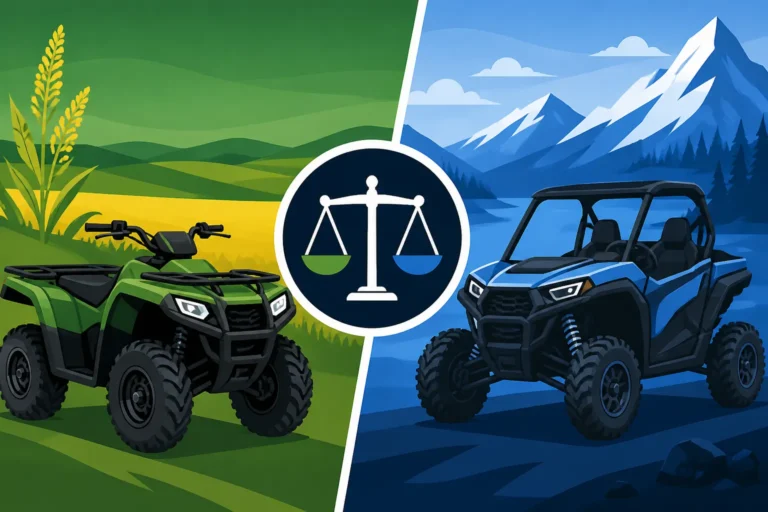
Here's where many riders get confused. The lines between what's colloquially called an "ATV," a "UTV," and a "Side-by-Side" (SxS) have become increasingly blurred in casual conversation. However, legally speaking in Saskatchewan, these distinctions can be significant. While most UTVs and SxSs will, by their very nature and design, fall under the general definition of an "All Terrain Vehicle" within the Act, there are specific characteristics that define them and can influence how they are regulated, particularly concerning passengers and seating.
When a UTV Becomes an ATV Under the Act
For the most part, a UTV (Utility Terrain Vehicle) or a side-by-side is considered an All Terrain Vehicle under Saskatchewan ATV Definitions Explained. The Act's definition of an "all terrain vehicle" is broad enough to encompass these machines, given their multiple tires, off-road design, and steering mechanisms. They are, after all, designed for all-terrain use, whether for work or recreation. The critical point of differentiation often comes down to seating and controls rather than the mere fact of being a UTV.
Unlike traditional ATVs with straddle seating and handlebars, UTVs typically feature bench or bucket seating and a steering wheel, much like a small car. Despite these differences, the core intent of the legislation is to regulate vehicles designed for off-road travel. So, if your side-by-side has four wheels and is built for rugged terrain, it will be treated as an ATV for the purposes of the Act's rules on age limits, helmet use, and general operation.
Seating Arrangements and Passenger Rules
This is perhaps the most significant operational difference when comparing traditional ATVs to UTVs/side-by-sides within the Act's framework. The Act specifies that [Saskatchewan Passengers Only on Designed Machines]. For conventional ATVs, this means passengers are only allowed if the machine is specifically designed by the manufacturer to carry more than one person, typically indicated by a longer seat or designated passenger handholds/footrests. Many single-rider ATVs are simply not equipped for a second person.
UTVs and side-by-sides, however, are designed with multiple seats, often side-by-side (hence the name). This design inherently allows for passengers. The Act's intent is to ensure that passengers are carried safely in a manner consistent with the vehicle's design. Therefore, while a traditional quad might have strict passenger limitations, a UTV or SxS, with its factory-installed multi-person seating, generally permits more than one occupant, provided they are seated as designed and are appropriately restrained. Always refer to your machine's manufacturer specifications to understand its passenger capacity and adhere strictly to those guidelines.
Practical Differences for Riders
From a rider's perspective, the practical differences between a traditional ATV and a UTV or side-by-side, while often feeling like night and day in terms of handling and comfort, largely converge under the umbrella of the All Terrain Vehicles Act. Things like [Saskatchewan Helmet and Eye Protection Rules] still apply to all operators and passengers, regardless of the machine type. [Saskatchewan Minimum Insurance Requirement] also remains consistent across the board.
However, the differences in controls (handlebars vs. steering wheel) and seating (straddle vs. bench/bucket) can influence how you interact with specific rules. For example, the experience of operating a UTV on a designated trail might feel more akin to driving a small off-road car than riding a traditional quad. Nevertheless, the legal requirements for safety courses (for youth), impairment laws, and accident reporting remain the same. The key is to remember that while the feel of the ride changes, the foundational legal obligations under the Act generally do not, as both are largely considered ATVs.
| Feature | Traditional ATV (Quad) | UTV / Side-by-Side (SxS) |
|---|---|---|
| Seating | Straddle seat | Bench or Bucket Seats |
| Steering | Handlebars | Steering Wheel |
| Passenger Design | Often single-rider, sometimes two-up | Designed for multiple passengers |
| Controls | Thumb throttle, hand brakes | Foot pedals (accelerator, brake) |
| Primary Purpose | Recreation, light utility | Recreation, heavier utility, touring |
| Act Classification | All Terrain Vehicle | All Terrain Vehicle (generally) |
| Insurance Req. | Yes, minimum liability | Yes, minimum liability |
| Helmet Req. | Yes, for operator and passengers | Yes, for operator and passengers |
The Elusive "Mini-Bike" and Other Smaller Machines
Beyond the full-sized ATVs and UTVs, Saskatchewan's Act also touches upon smaller motorized vehicles, including what it specifically calls "mini-bikes." These smaller machines often raise questions, particularly for families with younger riders, about where they can be operated and what rules apply. It’s not always obvious where the line is drawn, and making assumptions can lead to issues.
How Saskatchewan Defines a Mini-Bike
The term "mini-bike" might evoke images of small, rudimentary motorized cycles, and in Saskatchewan, the [Saskatchewan Mini-Bike Definitions] section of the Act clarifies its legal standing. A mini-bike is typically described as a two-wheeled motorized vehicle with a wheel rim diameter of 25.4 centimetres (10 inches) or less. This specific measurement is critical for distinguishing it from other types of motorcycles or even children's dirt bikes that might be larger.
The Act specifically mentions mini-bikes to ensure they are not confused with full-sized motorcycles and to apply specific rules to their operation, which often mirrors those for ATVs due to their off-road nature. However, their smaller size and limited capabilities mean they might have different practical considerations for where they can be ridden, especially in terms of public access and safety. If you have a child's small dirt bike, it's worth measuring those wheel rims to see if it falls into this category.
Age Restrictions and Supervision for Smaller Quads
When it comes to youth and smaller ATVs or mini-bikes, Saskatchewan has clear regulations to ensure safety. The general rule for operating an ATV is that the operator must be at least 16 years old. However, there are exceptions for younger riders who are supervised or have completed approved safety courses. [Saskatchewan's Exception for Riders 12 and Over] allows a person at least 12 years of age to operate an ATV if they have a supervisor (who is at least 16 years old and has held a driver's license for at least 365 days) or have completed an approved ATV safety course. This also extends to those 10 years of age and over who have completed such a course.
For mini-bikes, similar age and supervision rules often apply, tying back to the overall intent of the Act to protect younger operators on off-road vehicles. It’s not just about the child's age, but also the machine's capabilities and the environment in which it's being operated. Parents and guardians need to be acutely aware of these age and supervision requirements, as [Saskatchewan Owner Liability Rules] can hold them responsible if a minor operates a machine improperly or unsafely. Always ensure your child is on an appropriately sized machine and that all legal requirements for supervision or training are met.
Where Do Electric ATVs Fit In?
The rise of electric ATVs and UTVs presents an interesting question regarding definitions. The Saskatchewan Act primarily focuses on "motorized vehicles," which generally includes electric motors. As long as an electric ATV meets the physical description (e.g., minimum three tires, handlebars, designed for off-road use), it will typically fall under the same "All Terrain Vehicle" definition as its gasoline-powered counterparts. The method of propulsion (gasoline, electric, or even hybrid) is usually secondary to the vehicle's design and intended use in these definitions.
Therefore, owners of electric quads or UTVs should assume that all the same rules and regulations of the All Terrain Vehicles Act apply to their machines. This includes helmet requirements, age restrictions, insurance mandates, and rules for where and how they can be operated. The quiet nature of electric machines might tempt some to think they fly under the radar, but legally, they are still ATVs and are subject to the same scrutiny by peace officers.
Machines Excluded from the ATV Act's Scope
Just as important as knowing what is an ATV is understanding what isn't. The [Saskatchewan Machines the Act Excludes] section is critical because these exclusions mean certain vehicles are governed by entirely different sets of laws, or perhaps very few at all, when operating in Saskatchewan. Mistaking an excluded machine for an ATV (or vice versa) can lead to applying the wrong rules, which can be just as problematic as not knowing any rules at all.
Agricultural Implements and Farm Quads
One of the most common and significant exclusions from the All Terrain Vehicles Act in Saskatchewan relates to machines used for agricultural purposes. The Act generally does not apply to "agricultural implements" or machines when used exclusively for farming, ranching, or other bona fide agricultural operations. This is a huge relief for farmers and ranchers across the province who rely heavily on ATVs and UTVs as essential tools for their livelihood. A quad or side-by-side used to check fences, herd cattle, or haul feed on private farmland is typically exempt from many of the Act's provisions.
However, there's a vital caveat: this exemption usually applies when the machine is used for agricultural purposes and often on private land. If that "farm quad" is taken off the farm for recreational riding on Crown land, or even used for a casual spin on a public ditch, it then becomes subject to the Act's regulations. It's the use and location that often determines the exemption, not just the ownership. [Saskatchewan Machines Used on a Farm] are tools, but like any tool, they have their designated workspaces and rules. Always be clear about the purpose of your ride when operating a machine that might otherwise be an agricultural implement.
Golf Carts and Low-Speed Vehicles
Another distinct category of excluded vehicles are golf carts. The Act specifically states that [Saskatchewan Golf Carts Are Excluded] from its definition of an all terrain vehicle. This is because golf carts are designed for a very specific, low-speed purpose, typically on golf courses or within gated communities, and they don't share the same robust off-road design or power of an ATV. They are generally not intended for traversing rough terrain or operating at speeds common for ATVs.
Similarly, other "low-speed vehicles" that might resemble a small utility vehicle but are severely limited in speed and power are usually not considered ATVs under the Act. These vehicles are often subject to their own specific municipal bylaws if they are allowed on public roads at all, and they wouldn't typically be used in the same contexts as a traditional ATV. The key here is their inherent design limitations and intended environments of operation.
Machines Registered Under the Traffic Safety Act
This is an important distinction: if a machine is registered under The Traffic Safety Act (which governs things like cars, trucks, and motorcycles for road use), then it is generally excluded from the All Terrain Vehicles Act. This prevents a situation where a vehicle might be simultaneously subject to two different sets of provincial laws. For example, a street-legal motorcycle, even if it has off-road capabilities, is governed by the Traffic Safety Act, not the ATV Act.
Sometimes, highly modified side-by-sides are made "street legal" in other jurisdictions, but this is a complex process and usually involves significant modifications and provincial approval to be registered for road use. In Saskatchewan, the vast majority of ATVs and UTVs are not registered under the Traffic Safety Act and therefore are subject to the All Terrain Vehicles Act. Always check your registration status. If your machine is registered for road use, then the Traffic Safety Act rules prevail; otherwise, assume the ATV Act applies. This clarification helps ensure that there's no confusion about which set of rules you need to follow for your specific type of vehicle. [Saskatchewan Vehicles Registered Under Traffic Safety] clearly fall under different legal frameworks.
The "Operate" Definition: More Than Just Driving
When we talk about "operating" an ATV, most people naturally think about actually being in the driver's seat, engine running, and moving the machine. And while that's certainly part of it, the legal definition of "operate" in Saskatchewan, particularly under the All Terrain Vehicles Act, can be much broader. Understanding this expanded definition is crucial for owners, as it extends responsibilities beyond just the person actively driving the machine at any given moment.
What Constitutes Operating an ATV
Under the Saskatchewan All Terrain Vehicles Act, "operate" isn't just about driving. It generally includes having care or control of the ATV, even if it's not actually moving. This is similar to impaired driving laws for cars, where you can be charged if you're in the driver's seat with the keys, even if the engine isn't running. For ATVs, this means that merely being in a position to control the vehicle, perhaps sitting on it with the engine off but the keys in the ignition, could be considered "operating" in the eyes of the law.
This broad definition is designed to ensure accountability. It prevents someone from claiming they "weren't operating" the machine just because it was temporarily stopped. If you're out on the trails or a grid road, and you're the one responsible for the machine, you are likely considered to be "operating" it in a legal sense, whether you're moving or simply paused for a break. This broad interpretation ensures that the rules around licenses, impairment, and safety always apply when you're in control of the machine.
Owner's Responsibilities and Permitting Operation
This expanded definition of "operate" ties directly into the owner's responsibilities. As the owner of an ATV, you have a legal duty to ensure that your machine is operated safely and lawfully, even when you're not the one in the driver's seat. The Act explicitly places responsibilities on the owner for ensuring that any person operating their ATV complies with all regulations. This includes ensuring the operator meets age requirements, has the necessary supervision or training (if a minor), and is not impaired. [Saskatchewan Owner Liability Rules] mean that an owner can be held accountable for infractions committed by someone they permitted to operate their machine.
If you lend your quad to a friend, or if your child rides it, you, as the owner, have a responsibility to make sure they understand and follow the rules. It's not enough to simply hand over the keys. You should confirm they are legally able to operate the machine, that they have the required safety gear, and that they know where they can and cannot ride. This level of oversight is a significant part of what it means to "permit" someone to operate your ATV in Saskatchewan.
When You're Not Actually "Operating"
While the definition of "operate" is broad, there are situations where you wouldn't be considered to be operating an ATV. For example, if your ATV is securely loaded onto a trailer and you are transporting it with a truck, you are operating the truck, not the ATV. The ATV is simply cargo. Similarly, if your machine is parked at your cabin for the winter, with the keys removed and secured, you wouldn't be "operating" it.
The key distinction lies in the concept of "care or control." If you are merely a passenger on a multi-person ATV or UTV, and someone else is at the controls, you are not operating the machine. However, if you're the designated driver, even if you've pulled over to the side of the trail to consult a map, the Act will likely consider you to be in operation. This distinction helps clarify when specific regulations, such as those related to a driver's license or impairment, are actively applicable to you.
How Definitions Impact Your Paperwork and Ownership
Since Saskatchewan doesn't have a provincial registration system for ATVs, the definitions and classifications of your machine become even more crucial when it comes to proving ownership and handling sales. Without a government-issued "title" or registration document, your paperwork for an ATV relies heavily on accurately describing the machine. This puts the onus on buyers and sellers to be meticulous.
The Bill of Sale and Machine Description
In Saskatchewan, [Your Bill of Sale Stands In for a Registration]. Because there's no provincial registry, your bill of sale is the primary legal document proving you own your ATV. This makes the accuracy and detail of the machine's description on that bill of sale absolutely paramount. The bill of sale needs to clearly state that what you are buying is indeed an "All Terrain Vehicle" (or UTV/SxS, if that's what it is), and it needs to include specific identifiers.
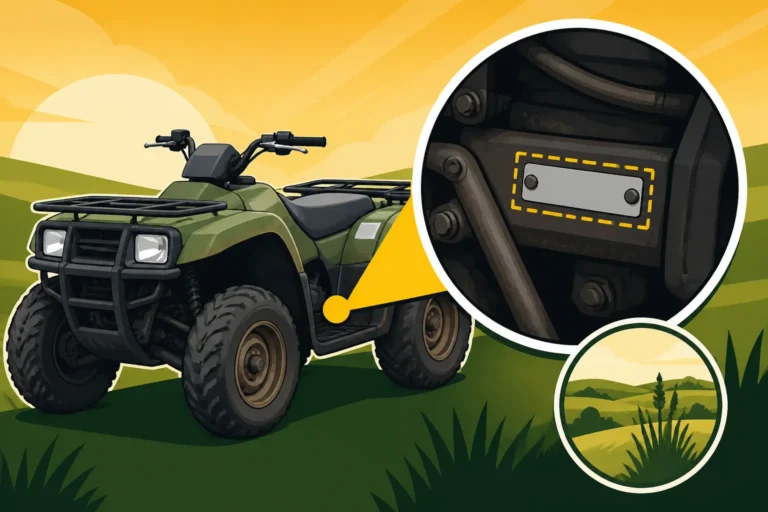
This typically means including the make, model, year, and most importantly, the Vehicle Identification Number (VIN) or serial number. Any discrepancies in these details can cause significant headaches down the road, especially if you ever need to prove ownership for insurance purposes or in the event of theft. [What Your Bill of Sale Needs to Cover] goes beyond just the price; it's a legal description of the asset changing hands. You can use platforms like LawDepot to create a robust bill of sale that includes all necessary details and legal protections, giving you peace of mind whether you're buying or selling.
Proving Ownership Without a Registration
The absence of a provincial ATV registry means that [Saskatchewan Proof of Ownership Without a Registry] falls squarely on the owner. Your bill of sale is your golden ticket. It's not just a receipt; it's the legal document that links you to the specific machine. If you ever have your ATV stolen, or if there's a dispute over ownership, this document is what you'll need to present to law enforcement or in court.
Beyond the initial bill of sale, it's wise to keep a file of any other related documents, such as insurance policies, past maintenance records that list the VIN, and even photographs of the machine. These can all contribute to building a strong case for ownership. When buying, ensure the bill of sale explicitly details the machine and includes the seller's information, and make sure to physically verify the VIN on the machine matches the paperwork.
Dealing with Dealers and Private Sales
The impact of definitions on paperwork differs slightly depending on whether you're buying from a licensed dealer or a private seller. When you purchase an ATV or UTV from a reputable dealer in Saskatchewan, they are typically well-versed in the requirements. They will usually provide a comprehensive bill of sale that accurately describes the machine and includes all necessary identifiers. They also handle the collection of [Saskatchewan PST at Purchase] and [Saskatchewan GST at Purchase] for new machines, simplifying that process for you. [Saskatchewan Dealer Paperwork at Delivery] often includes this detailed documentation.
However, when you buy from a private seller, the responsibility for creating an accurate and legally sound bill of sale often falls on both parties. This is where using a service like LawDepot can be invaluable. You can generate a professional bill of sale template that ensures all critical information, including a precise description of the ATV based on its legal definition and identifiers, is captured. This protects both the buyer and the seller. A vague or incomplete bill of sale in a private sale is an open invitation for future disputes or difficulties in proving your ownership, especially for a machine that lacks a central registration. Always double-check that VIN and description when buying privately. [Buying From a Private Seller in Saskatchewan] requires diligence.
Staying Informed: Resources for Understanding the Act
Navigating the nuances of ATV definitions and regulations in Saskatchewan can feel like a maze, but you don't have to go it alone. There are resources available to help you stay informed and ensure you're always operating your machine legally and safely. Being proactive in seeking out information is the best defense against misunderstandings and potential fines.
Consulting the Official Legislation
The most authoritative source for understanding ATV definitions and rules in Saskatchewan is the legislation itself. The [Saskatchewan's All Terrain Vehicles Act] and its associated regulations, such as [Saskatchewan Regulations Numbered A-18.02], are publicly available online through the Saskatchewan King's Printer. While reading legal text can sometimes be dry and dense, it provides the exact wording that peace officers and courts will refer to.
I highly recommend at least familiarizing yourself with the key sections, particularly those defining "all terrain vehicle," "mini-bike," "operate," and any relevant exclusions. Knowing where to find the official text means you can always verify information and avoid relying on hearsay or outdated advice. It’s your ultimate reference guide to ensuring your machine is understood and used correctly.
Engaging with Your Rural Municipality
While provincial legislation sets the baseline, many specific rules for ATV operation, especially concerning road access and designated riding areas, are determined at the local level. Rural Municipalities (RMs) and villages often have their own bylaws that either permit or prohibit ATV use on certain roads, ditches, or within municipal boundaries. These local rules often hinge on the provincial definitions. [Saskatchewan Municipal Bylaws on Roads] are a prime example of where local rules build upon provincial definitions.
It's a really smart idea to reach out to your local RM office or the municipality where you plan to ride. Ask about any specific bylaws they have regarding ATV definitions, permissible routes, or any local permit schemes (like those found in places like Candle Lake or the District of Lakeland). They can provide invaluable local knowledge and often have maps or guides that outline designated riding areas. [Questions Worth Asking a Rural Municipality] can save you a lot of grief.
Connecting with Rider Associations
Finally, don't underestimate the power of community. Saskatchewan has a passionate ATV and UTV riding community, and connecting with local rider associations can be a fantastic way to stay informed. Groups like the Saskatchewan All Terrain Vehicle Association (SATVA) often work closely with the provincial government and municipalities, advocating for riders and helping to interpret legislation. They are often among the first to know about changes in rules or new definitions being considered.
These associations are also a great place to find information on [Saskatchewan ATV Trails: Crown Land and Ditches], upcoming events, safety training, and general riding etiquette. They often have members who are very knowledgeable about specific machine types and how they are classified. Becoming a member or simply following their updates can provide a practical, real-world perspective on how these definitions impact your riding experience, connecting you with others who share your passion and your questions.
Disclaimer
This article is for general informational purposes only and does not constitute professional advice. Laws, prices and regulations vary by location and change over time. Consult a qualified professional for guidance on your specific situation.