Saskatchewan’s All Terrain Vehicles Act
It’s a common scenario for ATV and UTV riders in Saskatchewan: you're trying to figure out the rules, perhaps after a new purchase or a move to the province, and you hit a wall. Most jurisdictions across Canada have some form of provincial registration and licensing for off-road vehicles, leading many to assume Saskatchewan must have something similar. But when you start digging, you find… nothing. This guide will cut through that confusion, explaining the core legislation that actually governs ATVs and UTVs in Saskatchewan: The All Terrain Vehicles Act. We'll break down its key provisions, clarify what it means for you as a rider, and help you understand your responsibilities on the trails, ditches, and farmland across our beautiful province.
Understanding the Foundation: What is Saskatchewan's All Terrain Vehicles Act?
For many new or even seasoned riders in Saskatchewan, the mention of The All Terrain Vehicles Act might draw a blank stare. It's not a document that most people pore over, but it's the fundamental piece of provincial legislation that dictates how you can operate your ATV or UTV in Saskatchewan. Unlike many other provinces where you might register your machine with a provincial body, pay annual fees, and receive a licence plate or sticker, Saskatchewan takes a different approach. Our Act focuses less on administrative registration and more on the rules of operation, emphasizing safety, responsibility, and where you can legally ride.
The Act's Purpose and Scope
At its heart, The All Terrain Vehicles Act exists to regulate the safe operation of ATVs and UTVs, primarily for the protection of riders, other citizens, and the environment. Passed back in 1988, [Saskatchewan's Act From 1988] predates the widespread popularity of many modern side-by-sides, but its principles still apply broadly to these machines. It outlines who can ride, where they can ride, and the equipment they need to have. The Act also defines penalties for non-compliance, ensuring there are consequences for dangerous or illegal operation. It's essentially the province's rulebook for off-highway vehicles that aren't snowmobiles or other specific exclusions.
Think of it this way: instead of focusing on if your machine is documented, it focuses on how you use it. This often leads to confusion, because riders from provinces like Alberta or Manitoba are used to a centralized registry. Here, the emphasis shifts to understanding the operational rules thoroughly, as there's no official provincial registration document to serve as a constant reminder of your legal standing. Riders often find themselves asking, [Do You Need to Register an ATV in Saskatchewan?], and the answer is a resounding no, at least not provincially.
Key Definitions Within the Act
To understand the Act, it's crucial to grasp some of the core definitions it uses. For instance, what exactly constitutes an "all terrain vehicle" under the law? The Act defines it quite broadly as a motorized vehicle, other than a snowmobile, that is designed for off-road use and has three or more wheels. This definition includes your typical quad bikes but also extends to utility terrain vehicles (UTVs) or side-by-sides, despite them often having four or more wheels and a different seating configuration. The important part is the "designed for off-road use" element.
Other key definitions include "operator," "owner," and "highway." Understanding that a "highway" in legal terms often includes the ditches and shoulders, not just the paved road, is vital for knowing where you can legally ride. The Act also differentiates between areas like "Crown land" and private property, which carry different sets of operational rules. These precise definitions are the legal framework that police officers and conservation officers refer to when enforcing the rules, so familiarity with [Saskatchewan ATV Definitions Explained] can save you a lot of grief.
Why the Act Matters to Every Rider
Even though there's no registration, this Act is still incredibly important. It's the law that dictates things like the minimum age for riders, the mandatory helmet and eye protection requirements, and the necessity for liability insurance. Ignoring these rules isn't just a suggestion; it can lead to significant fines, vehicle seizure, and even charges if you're involved in an accident. Furthermore, ignorance of the law is never a valid defence. Every time you climb onto your quad or side-by-side, you are implicitly agreeing to abide by the provisions of this Act.
For instance, if a young rider, under the legal age, is caught operating an ATV without proper supervision, both the youth and the supervising adult could face penalties. This illustrates how the Act's provisions extend beyond just the machine itself to the conduct of the operator and even the responsibility of the owner. It’s about creating a safe riding environment for everyone. Understanding Saskatchewan's All Terrain Vehicles Act isn't just about avoiding tickets; it's about contributing to safer trails and responsible off-road enjoyment across the province.
The Big Misconception: No Provincial Registration for ATVs
Perhaps the most common point of confusion for ATV and UTV enthusiasts in Saskatchewan is the persistent belief that these machines must be registered with the provincial government. Riders move here from other provinces, or even just hear anecdotal stories, and assume there's a central registry to visit. This simply isn't the case. Saskatchewan stands out in Canada for not having a province-wide registration or titling system for ATVs and UTVs. This unique approach impacts everything from how you prove ownership to how you might finance a purchase.
Why Saskatchewan Doesn't Register ATVs
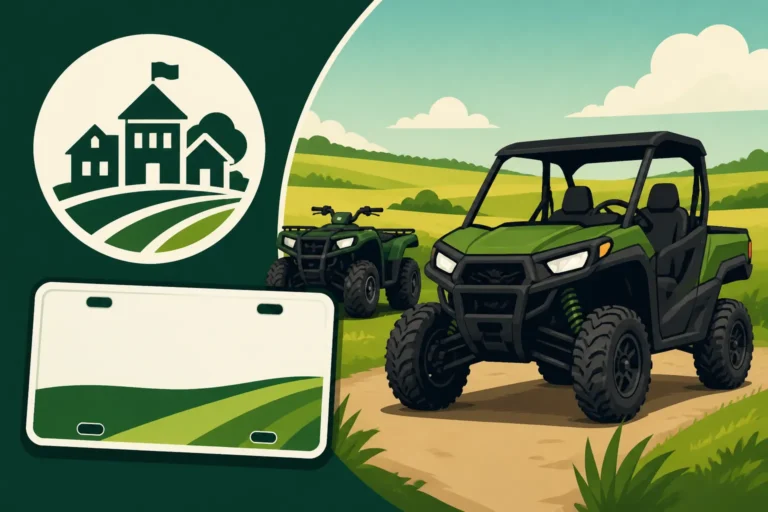
Historically, Saskatchewan made a deliberate choice not to implement a provincial registration system for ATVs. [Why Saskatchewan Never Built a Quad Registry] is a question many ask, and the reasons are complex, rooted in the province's vast rural landscape and the prevalent use of ATVs for utility and agricultural purposes long before they became popular recreational vehicles. The Act primarily focuses on operation, safety, and liability, rather than a tracking system. This means there's [Saskatchewan Has No ATV Plate or Decal] to obtain from the province, nor is there a central database to record ownership transfers.
This absence of a registry doesn't mean ATVs are unregulated; it just means the regulation happens through The All Terrain Vehicles Act itself, focusing on how and where machines are operated, rather than tracking their ownership. This distinction is crucial. While a snowmobile requires provincial registration, complete with a plate and annual fees, ATVs do not. This often surprises riders who are used to a more uniform system for off-road vehicles.
The Difference from Snowmobiles
It’s important to highlight that while ATVs are not provincially registered, [Saskatchewan Registers Snowmobiles, Not ATVs]. This is a key difference that often trips up riders. Snowmobiles fall under The Snowmobile Act, a separate piece of legislation that does require provincial registration, an annual fee, and a visible decal. This disparity can be a source of confusion, as riders might assume if one off-road vehicle type requires registration, the other does too.
The reasons for this historical divergence are varied, often relating to trail infrastructure, funding mechanisms for snowmobile clubs, and differing views on recreational versus utility use when the respective Acts were first developed. For snowmobilers, the registration fee often contributes to grooming and maintaining the extensive network of snowmobile trails across the province, something that doesn't have a direct parallel for ATVs at the provincial level. So, while you'll need to know about [Saskatchewan Snowmobile Registration Compared] if you also ride sleds, remember it's a completely different ballgame for your quad.
What "Proof of Ownership" Means Instead
Without a provincial registration or title system, the question of proving ownership becomes paramount, especially when buying or selling an ATV or UTV. In Saskatchewan, your primary proof of ownership is a well-documented bill of sale. [Saskatchewan Bills of Sale Do the Work] of establishing a clear chain of custody for the machine. This document should detail the buyer, seller, date of sale, purchase price, and most importantly, the vehicle identification number (VIN) or serial number of the ATV.
For private sales, a robust bill of sale is your best friend. You can find templates online, including through services like LawDepot, which offer customizable legal documents for situations exactly like this. Using a clear, comprehensive bill of sale helps protect both the buyer and the seller. If you're wondering [How to Prove You Own an ATV in Saskatchewan?], the answer lies in that crucial piece of paper. Keep it safe, as it’s your legal record. In the absence of a provincial registry, this document becomes the cornerstone of your ownership claim and is vital for things like insurance claims or even proving rightful possession if your machine is ever stolen and recovered.
Core Regulations: Safe Operation and Rider Responsibilities
Even without a provincial registration process, operating an ATV or UTV in Saskatchewan is far from a free-for-all. The All Terrain Vehicles Act lays out clear and enforceable rules governing safe operation and rider responsibilities. These rules are designed to prevent accidents, minimize harm, and ensure that off-road vehicle use is conducted responsibly across the province. Ignoring these core regulations can lead to serious consequences, including fines, injuries, and even legal liability.
Age Restrictions and Supervision Rules
One of the most critical aspects of the Act concerns rider age. In Saskatchewan, [Saskatchewan Bans Riders Under 16] from operating an ATV or UTV on public land, ditches, or roads, unless specific conditions are met. The general rule is that you must be at least 16 years of age to operate an ATV. However, there is a significant exception for youth between the ages of 12 and 16. [Saskatchewan's Exception for Riders 12 and Over] allows them to operate an ATV if they are under the direct supervision of an adult who is at least 18 years old and has held a valid driver's licence for at least 365 days.
This [Saskatchewan's 365-Day Supervisor Rule] is not just a suggestion; it's a legal requirement. The supervising adult is held responsible for the actions of the youth operator, making their role incredibly important. Furthermore, if the youth has successfully completed an approved ATV safety course, the requirement for direct adult supervision may be relaxed in certain contexts. This reflects a commitment to safety and proper training for younger riders, acknowledging that while they may have the physical capability, they need the judgment and guidance of an experienced adult.
Helmet and Eye Protection Requirements
When it comes to safety gear, the Act is very clear: helmets are mandatory. [Saskatchewan Helmet and Eye Protection Rules] state that every operator and passenger on an ATV or UTV must wear a helmet that meets specific safety standards (e.g., DOT, Snell, ECE). This isn't just for extreme trail riding; it applies anytime you're operating the machine, whether you're just moving it across the yard or tearing up a remote trail. The helmet must be properly fastened under the chin and in good repair.
In addition to helmets, appropriate eye protection is also required. This means wearing goggles or a face shield that protects your eyes from dust, debris, and potential impacts. Tinted eyewear is permitted during the day but must not be used after sunset or in conditions of poor visibility, ensuring that the operator's vision is never compromised. These rules are in place for your protection; a head injury or an eye injury can have lifelong consequences, and these simple pieces of gear dramatically reduce that risk.
Minimum Insurance Coverage Mandate
This is another crucial point where the absence of provincial registration often leads to misunderstanding. While the province doesn't register your ATV, it absolutely does require you to carry liability insurance. [Saskatchewan's Minimum Insurance Requirement] states that every operator must have at least $200,000 in third-party liability coverage. This insurance protects you financially if you're involved in an accident that causes injury or damage to another person or their property.
Many riders mistakenly believe that because there's no registration, there's no insurance requirement. This is a dangerous assumption. Without this coverage, you could be personally responsible for hundreds of thousands of dollars in damages if you cause an accident. Proof of insurance must be carried on the machine and produced if requested by a peace officer. This is not negotiable. [Saskatchewan Insurance Requirements for Riders] are a cornerstone of responsible ATV operation, ensuring that individuals are held accountable for potential harms caused by their machines. You can usually obtain this insurance through your existing auto or home insurance provider, or a specialized off-road vehicle insurer.
Where You Can and Cannot Ride: Land Use Under the Act
One of the most frequent questions from ATV and UTV riders in Saskatchewan revolves around where they can legally operate their machines. The province is vast, with diverse landscapes, and understanding the specific rules for different types of land – from highways to Crown land to private property – is critical. The All Terrain Vehicles Act provides the framework, but local bylaws and landowner permissions also play a significant role. Navigating these rules incorrectly can lead to fines, trespassing charges, or even vehicle seizure.
Rules for Riding on Public Highways and Ditches
Generally, ATVs and UTVs are not permitted on the travelled portion of public highways in Saskatchewan. The Act considers a "highway" to include the shoulders and ditches alongside the main roadway. However, there are very specific circumstances under which you can operate an ATV or UTV on a highway or in a ditch. For instance, you can use the ditch adjacent to a provincial highway or municipal road for travel, but only when you are [Saskatchewan Ditch Riding and the 2-Metre Rule] away from the travelled portion. There's also an 80 km/h speed limit for these machines.
Crucially, you must cross highways at a right angle, by the shortest route possible, and ensure all passengers dismount before crossing. [Saskatchewan Crossings Require Passengers to Dismount]. Riding directly on the paved or gravelled surface of a highway is strictly prohibited unless a specific municipal bylaw allows it, or you are crossing for a very limited purpose, such as accessing private property. These rules are in place to reduce the risk of collisions between ATVs and other motor vehicles. Peace officers are vigilant about these violations, especially near populated areas.
Navigating Crown Land Access
Saskatchewan has extensive Crown land, and many riders are eager to explore it. Generally, ATVs and UTVs are permitted on Crown land, but this access is not unlimited and comes with specific responsibilities. Riders must always respect environmental regulations, avoid disturbing wildlife, and adhere to any posted signage or administrator orders. For example, [Saskatchewan Crown Land Prohibition Regulations] can be put in place to close certain areas to ATV traffic, particularly during wildfire season or for ecological protection.
It’s also important to understand that some areas of Crown land, such as provincial parks, have their own specific regulations. Many provincial parks prohibit ATVs entirely, or only allow them on designated trails with a special permit. [Saskatchewan Rules for Riding Crown Land] are often layered, and it's always best to check with the Ministry of Environment or the specific park office before planning a ride. Remember, just because land is publicly owned doesn't mean it's open season for ATV riding everywhere.
Private Land and Permission
When it comes to private property, the rules are straightforward: you need permission from the landowner or occupier. This includes everything from agricultural fields and pastures to treed lots and cabin properties. Riding on private land without explicit permission constitutes trespassing, which can lead to legal action and fines. This applies even if the land appears un-used or un-posted. [Saskatchewan Trespass Law for Riders] means you can't just assume access.
It’s always best to get permission in writing, or at the very least, have a clear verbal agreement. This is especially true if you plan to ride repeatedly on someone’s land. Landowners have the right to restrict access to their property for any reason. Building relationships with landowners in areas where you like to ride is key to responsible and sustainable ATV use. For instance, accessing a grazing lease requires consent from the leaseholder, not just the provincial government, as the leaseholder has management responsibilities for the land and livestock. [Saskatchewan Grazing Lease Permission] is a must.
Enforcement and Penalties: What Happens When Rules Are Broken
Even with Saskatchewan’s unique approach to ATV regulation – or rather, lack thereof regarding registration – the rules of The All Terrain Vehicles Act are taken seriously. Peace officers, which include RCMP, municipal police, and conservation officers, have the authority to enforce these regulations. Breaking the rules can lead to a range of penalties, from fines to machine seizure, and can have significant legal and financial repercussions for operators and owners alike. Understanding these consequences is just as important as knowing the rules themselves.
Peace Officer Authority and Machine Seizure
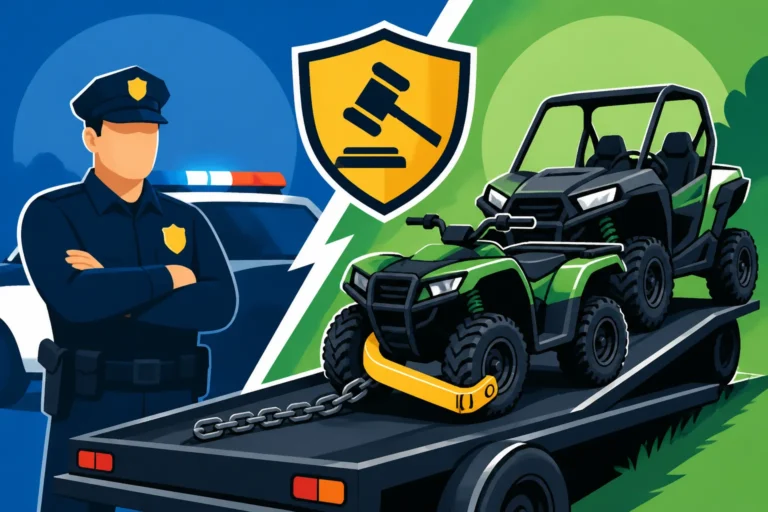
When a peace officer believes an ATV or UTV is being operated in violation of the Act, they have considerable authority. This includes the power to stop and question operators, demand proof of insurance, and even inspect the machine for compliance with safety equipment requirements. If a serious violation occurs, such as operating without insurance, underage, or under the influence, the officer can seize the ATV. [Saskatchewan Seizure and Impoundment Rules] are in place to deter unsafe and illegal operation.
Once seized, retrieving your machine can be a complicated and costly process. It often involves paying towing and storage fees, resolving the underlying charges, and sometimes even appearing before a board or committee to secure its release. [Saskatchewan Release of a Seized Machine] typically isn't immediate and can be a major inconvenience and financial burden. This demonstrates that while there’s no registration, the province has firm methods to enforce responsible use.
Fines and Legal Consequences
The most common penalty for violating The All Terrain Vehicles Act is a monetary fine. These fines can vary depending on the severity and nature of the offence. For example, riding without a helmet, operating underage, or not having the required insurance can all result in tickets. While the maximum fine under the Act is generally capped at $1,000, cumulative violations can add up quickly. [Saskatchewan Fines Capped at $1,000] might seem low, but they can be accompanied by court costs and surcharges, making the total amount significantly higher.
Beyond monetary fines, more serious infractions can lead to other legal consequences. Operating an ATV while impaired, for instance, can result in charges similar to those for impaired driving of a motor vehicle, including licence suspension and criminal record implications. Furthermore, if you are disqualified from holding a driver's licence and are caught operating an ATV, [Saskatchewan Disqualified Driver Offences] can be applied, leading to severe penalties. These actions underscore the province's commitment to road safety, even on trails and ditches.
Owner Liability and Accident Reporting
The Act also addresses owner liability. If an ATV is operated in violation of the Act, and the owner permitted or was aware of the operation, the owner can be held liable for the operator's actions. This "reverse onus" principle means that the owner often has to prove they took reasonable steps to prevent the unlawful operation. [Saskatchewan Owner Liability Rules] are designed to ensure that owners are responsible stewards of their machines, not just operators. This is particularly relevant when lending your quad to someone else or allowing a minor to operate it.
In the unfortunate event of an accident involving an ATV that results in injury or significant property damage, there are specific reporting duties. [Saskatchewan Accident Reporting Duties] require the operator to stop, render assistance if necessary, and exchange information. If the accident involves injury or property damage above a certain threshold, it must be reported to a peace officer. Failing to report an accident can lead to additional charges and complications, especially when it comes to insurance claims. Having proper documentation, perhaps even a basic accident report template from a service like LawDepot, can be invaluable in these stressful situations.
Exemptions and Exclusions: When the Act Doesn't Fully Apply
While The All Terrain Vehicles Act is broad in its scope, it's not a one-size-fits-all piece of legislation. There are specific situations and types of vehicles that either fall outside its purview entirely or are subject to certain exemptions. Understanding these nuances is important because it clarifies when and where the standard rules might not apply, or when other regulations take precedence. These exclusions often reflect the practical realities of life and work in rural Saskatchewan.
Farm, Ranch, and Utility Use Exemptions
One of the most significant areas of exemption relates to the use of ATVs and UTVs for agricultural and utility purposes. In Saskatchewan, many farmers and ranchers rely on these machines as essential tools for daily operations, not just for recreation. The Act acknowledges this by providing specific exemptions when ATVs are being used for farm work, ranching, or other bona fide utility purposes on land owned or occupied by the operator. [Saskatchewan Machines Used on a Farm] or for similar work often have relaxed rules regarding things like road crossings or even limited travel on certain highways for the purpose of moving between fields.
However, these exemptions are not carte blanche. The machine must genuinely be used for work, not leisure, and the operator must still exercise due care and attention. If a farmer is using their quad to check fences, they might be exempt from certain road-use restrictions. But if that same farmer takes the quad on a recreational ride with friends, the full provisions of the Act apply. It's about the purpose of the ride at that moment.
Land Owner/Occupier Privileges
Another key exemption revolves around where the ATV is being operated. The Act's rules, particularly those pertaining to age, helmets, and insurance, generally apply when operating on public lands, highways, or private land where the operator does not have an ownership or occupancy interest. However, if you are operating your ATV on land that you own or are the rightful occupier of (e.g., your own farm, yard, or lease), some of the Act's provisions may not apply.
For instance, [Saskatchewan Owner-Occupied Land Exemptions] often mean that a child can ride an ATV on their family's private farm property under direct supervision, even if they wouldn't meet the age or supervision requirements for public land. Similarly, adults on their own property might not be subject to the helmet rule for brief movements. This exemption acknowledges the control and responsibility a landowner has over their own domain. However, this does not extend to impaired operation or other dangerous activities; core safety principles should always be followed, regardless of location.
Specific Vehicle Exclusions (e.g., Golf Carts, Mini-Bikes)
The definition of an "all terrain vehicle" itself excludes certain types of machines that some might mistakenly categorize as ATVs. For example, [Saskatchewan Golf Carts Are Excluded] from The All Terrain Vehicles Act because they are primarily designed for use on golf courses and typically operate under different sets of rules, if any. Similarly, large agricultural implements and construction equipment that might have off-road capabilities are generally covered by other legislation, such as The Traffic Safety Act, due to their primary function.
Even smaller recreational vehicles, like electric mini-bikes or certain types of off-road motorcycles, can fall into a grey area. The Act provides specific criteria for [Saskatchewan Mini-Bike Definitions] which might exclude them from being classified as an "all terrain vehicle," meaning they are not subject to this particular Act's rules. This doesn't mean they are unregulated; rather, they might be subject to other municipal bylaws or simply not be permitted on public land at all. It's always best to understand the specific legal classification of your machine to ensure you're following the correct regulations.
Municipal Bylaws: The Local Layer of Regulation
While The All Terrain Vehicles Act provides the provincial framework for ATV and UTV operation in Saskatchewan, it's not the only rulebook. Many municipalities across the province have taken matters into their own hands, implementing local bylaws that further regulate the use of these machines within their specific jurisdictions. This creates an important, albeit sometimes confusing, additional layer of rules that riders must be aware of, especially when travelling between different towns, villages, or rural municipalities.
How Municipalities Add to Provincial Rules
Municipalities often create bylaws to address specific local concerns, such as noise complaints, safety in residential areas, or the protection of local infrastructure. These bylaws can either supplement or, in some cases, be more restrictive than the provincial Act. For example, while the provincial Act generally permits ditch riding, a specific municipal bylaw might [Saskatchewan Bylaws That Prohibit Riding] in certain ditches within its boundaries, or restrict hours of operation.
These local rules are especially prevalent in resort areas, villages, and towns where recreational ATV use is common, but residents also value peace and quiet. A bylaw might designate specific routes for ATVs, prohibit them entirely on certain streets, or impose stricter speed limits than the provincial 80 km/h rule for ditches. [Saskatchewan Municipal Bylaws on Roads] can vary wildly, so checking with the local municipal office or website before you ride is always a good practice.
Understanding Local Plate Schemes (Candle Lake, Lakeland)
One of the most unique aspects of municipal regulation in Saskatchewan is the existence of local plate or permit schemes. Because there's no provincial registration, some municipalities have opted to create their own. Places like Candle Lake and the District of Lakeland are prime examples. These municipalities issue their own permits or "plates" that allow ATVs and UTVs to be operated on designated municipal roads or trails within their specific boundaries. [Saskatchewan Municipal Plate Schemes] are local solutions to local needs.
For instance, [Saskatchewan Candle Lake Permit Fees] are charged to riders who wish to legally operate their ATVs on certain streets and designated trails within the village. These fees often go towards maintaining local infrastructure or developing ATV-friendly amenities. It's crucial to understand that a plate from Candle Lake will not be valid in the District of Lakeland, and vice versa. These are hyper-local permits, not provincial documents. If you're riding in a municipality with such a scheme, obtaining the local permit is mandatory for legal operation within its jurisdiction.
Navigating Different Local Regulations
The patchwork of municipal bylaws means that riders often need to do their homework before venturing into new areas. What's legal in one rural municipality might be prohibited just across the road in a neighbouring village. This can be frustrating for riders who simply want to enjoy the vastness of Saskatchewan's landscape. Unfortunately, there's no central provincial database for all municipal ATV bylaws.
To navigate this, a good approach is to contact the local municipal office or visit their website for their specific bylaws. If you're unsure about a particular area, err on the side of caution and assume that general provincial rules apply, but be prepared for more restrictive local regulations. Many ATV clubs are also excellent resources for information on local riding areas and their associated rules, as they often work directly with municipalities. Remember that [Saskatchewan Rural Municipality Rules] can have a significant impact on your riding experience.
Practical Implications for Buyers and Sellers
The absence of a provincial registration and titling system for ATVs and UTVs in Saskatchewan has significant practical implications, particularly for those looking to buy or sell a machine. Without a government-issued document to transfer ownership, processes that might seem straightforward in other jurisdictions require a different approach here. Understanding these nuances is key to a smooth transaction and to establishing clear proof of ownership.
Importance of a Bill of Sale
In Saskatchewan, the bill of sale isn't just a receipt; it's the critical legal document that establishes and transfers ownership of an ATV or UTV. When you're buying a machine, this document is your single most important piece of paperwork, standing in for what a title or registration might be in other places. A well-drafted bill of sale should include:
- The full names and contact information of both the buyer and seller.
- The date of the sale.
- A clear description of the ATV/UTV, including make, model, year, and crucially, the Vehicle Identification Number (VIN) or serial number.
- The purchase price.
- A declaration that the seller has the right to sell the machine and that it is free of liens or encumbrances (if applicable).
- Signatures of both parties.
For private sales, it's wise to use a template to ensure all necessary information is captured. Services like LawDepot can provide customizable bill of sale forms, which are invaluable for ensuring your transaction is legally sound. [Saskatchewan Bills of Sale for a Quad] are what protect you as a buyer and give you concrete proof of ownership, which is essential for insurance purposes or if the machine is ever stolen. Always ensure the VIN on the bill of sale matches the VIN on the machine itself.
Financing Unregistered Machines
Financing an ATV or UTV in Saskatchewan can sometimes present a unique challenge because the machine itself isn't registered with the province. For lenders, the lack of a government-issued title can make securing the loan against the asset slightly more complex than with, say, a car or truck. However, it's certainly not impossible. Dealers often have established relationships with financial institutions that are familiar with financing these types of unregistered recreational vehicles.
When financing through a bank or credit union for a private sale, they will still require a comprehensive bill of sale and will typically register a lien against the VIN of the machine. This lien acts as their security, much like they would for a registered vehicle. It's important for buyers to ensure that any previous liens on a used machine are cleared before purchase, as these can follow the VIN regardless of ownership changes. Asking the seller for a lien search is a prudent step. [Financing an Unregistered Machine in Saskatchewan] is common, but it requires careful attention to the paperwork.
What to do When Moving In or Out of Province
If you're moving to Saskatchewan with an ATV or UTV, you'll be happy to learn that there's no provincial registration process you need to go through. Your bill of sale from your previous province of residence will serve as your proof of ownership here. Just make sure you understand all of [Saskatchewan ATV Road Rules Explained] and insurance requirements before you ride. You won't need to get a new plate or decal from the province.
Conversely, if you're selling a Saskatchewan ATV to an out-of-province buyer, they will likely expect a bill of sale as proof of ownership for their own jurisdiction's registration process. Be prepared to provide a clear, comprehensive document. Some provinces require specific information on bills of sale for off-road vehicles, so it might be helpful for the buyer to confirm any unique requirements with their local registration authority. For buyers from jurisdictions that do require titles or registration, the concept of a bill of sale being the sole proof of ownership can take some getting used to. For both scenarios, a well-prepared bill of sale, perhaps from a tool like LawDepot, smooths the transition.
Comparative Table: ATVs vs. Snowmobiles in Saskatchewan
To help clarify some of the unique aspects of The All Terrain Vehicles Act compared to other common off-road vehicles, here's a table comparing key regulatory differences between ATVs/UTVs and snowmobiles in Saskatchewan.
| Feature | All Terrain Vehicles (ATVs/UTVs) | Snowmobiles |
|---|---|---|
| Provincial Registration | No provincial registration, plates, or decals required. | Yes, required under The Snowmobile Act. |
| Proof of Ownership | Bill of Sale is primary proof. | Bill of Sale + Provincial Registration Certificate. |
| Provincial Plate/Decal | None. | Yes, provincial decal/plate required annually. |
| Minimum Age to Operate | Generally 16; 12-16 with specific adult supervision. | 16 years, or 12-15 with a safety certificate AND supervision. |
| Mandatory Helmet | Yes, for all operators and passengers. | Yes, for all operators and passengers. |
| Mandatory Eye Protection | Yes, for all operators and passengers. | Yes, for all operators and passengers. |
| Minimum Liability Insurance | Yes, $200,000 third-party liability required. | Yes, $200,000 third-party liability required. |
| Governing Legislation | The All Terrain Vehicles Act. | The Snowmobile Act. |
| Municipal Plates/Permits | Some municipalities have their own local permit schemes. | Generally not applicable, provincial registration suffices. |
| Primary Use Focus | Recreational, utility, agricultural. | Recreational, trail riding. |
Disclaimer
This article is for general informational purposes only and does not constitute professional advice. Laws, prices and regulations vary by location and change over time. Consult a qualified professional for guidance on your specific situation.