Saskatchewan Golf Carts Are Excluded
It can be incredibly confusing trying to figure out what rules apply to your recreational vehicle here in Saskatchewan. You might own a golf cart, perhaps for puttering around the acreage, making quick trips to the lake, or even just for yard work, and wonder if it falls under the same umbrella as an ATV or UTV. Many folks assume all these machines are lumped together, but The All Terrain Vehicles Act in Saskatchewan has very specific definitions, and understanding them is crucial to staying on the right side of the law. This guide will clarify why golf carts are explicitly excluded from the provincial ATV regulations, explaining the distinctions and what it means for you as an owner.
Understanding Saskatchewan's All Terrain Vehicles Act
Navigating the world of off-road vehicles in Saskatchewan often feels like trying to read tea leaves. Unlike some other provinces, our approach to regulating ATVs is, shall we say, unique. It’s not just about what you can or can't ride, but about what is and isn't even considered an ATV in the first place. The core of all these discussions lies squarely within [Saskatchewan's All Terrain Vehicles Act]. This isn't just some dusty old document; it's the foundation for everything we know about operating these machines across our beautiful province.
The Legislative Framework for ATVs
The Act itself, enacted way back in 1988, was designed to address a growing concern around the safe operation of what were then relatively new and increasingly popular machines. It defines what an "all terrain vehicle" is, sets out rules for age limits, helmet use, insurance, and where you can actually ride. What it doesn't do, importantly, is create a provincial registration system for ATVs, which is often a point of major confusion for new residents or those buying their first quad. This legislative framework is quite specific, outlining the characteristics that make a vehicle subject to its rules, and just as importantly, those that exempt a vehicle entirely. It's a precise legal instrument, and every word in its definitions carries weight when determining how a particular machine is categorized.
When you're dealing with anything related to vehicle ownership, especially in a province without a central registry for certain types of machines, having clear documentation is vital. Whether you're selling a quad or just want to prove you own your golf cart, a solid bill of sale is your best friend. Many people find tools from services like LawDepot incredibly helpful for generating legally sound documents that stand up to scrutiny, ensuring you have the proper paperwork in place even when the province isn't issuing a title.
Why Definitions Matter for Riders
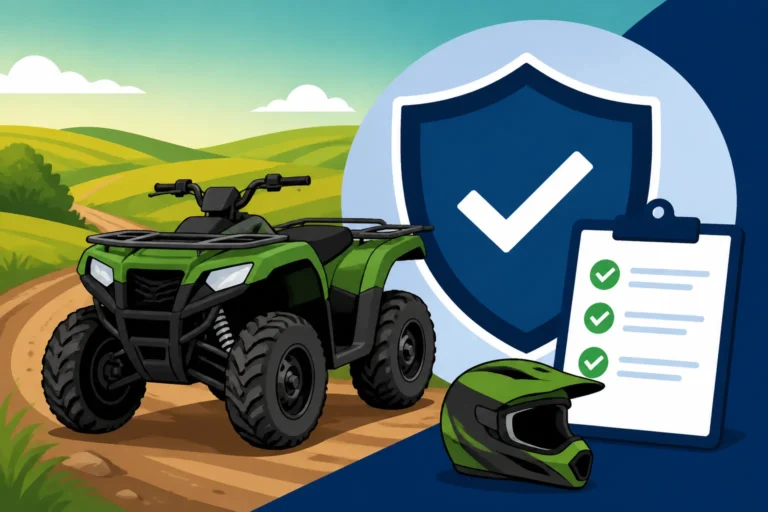
You might think, "Why get so hung up on definitions?" But trust me, it matters a great deal. The legal definition of an ATV directly dictates whether you need specific insurance coverage, if there are age restrictions for operators, what kind of safety gear is mandatory, and even where you're allowed to operate the machine. If a vehicle doesn't fit the Act's definition of an ATV, it simply isn't governed by those rules. This means a golf cart, for instance, isn't subject to the same age restrictions or helmet laws that apply to a quad. Understanding these nuances can save you from a hefty fine, an insurance headache, or even more serious legal trouble.
It’s easy to assume that because a vehicle has four wheels and goes off-road, it’s automatically an ATV. However, the Act is quite precise, looking at things like design, weight, and intended use. Misunderstanding these distinctions can lead to frustration or accidental non-compliance. For example, if you mistakenly believe your golf cart is an ATV, you might unnecessarily restrict its use or purchase insurance coverage that isn't required, while if you wrongly assume your mini-bike is exempt from certain rules, you could be in for a surprise. This is why digging into [Saskatchewan ATV Definitions Explained] is so crucial for every rider and owner in the province.
The Core Definition of an ATV in Saskatchewan
To truly grasp why golf carts don't fall under the provincial ATV Act, we need to understand what the Act does define as an ATV. It's not a blanket term for anything with an engine and off-road capability. The legislation zeroes in on specific physical and operational characteristics to draw its lines, creating clear boundaries that determine what's regulated and what isn't.
Key Characteristics That Qualify a Machine as an ATV
At its heart, the Act defines an all terrain vehicle as a motorized vehicle designed to travel on land, on at least three wheels, and having a width of 1.5 metres or less. It's built for off-road use, typically with handlebars for steering, an open seating position straddled by the operator, and a weight under 680 kilograms. Think about a typical quad or a sport ATV – they fit this description perfectly. They’re rugged, designed to tackle varied terrain, and built for a specific kind of recreational or utility riding.
This definition focuses on several key aspects: the number of wheels, the width, the steering mechanism, and the general purpose. A vehicle that deviates significantly from these characteristics is unlikely to be classified as an ATV under the provincial Act. This detailed approach is what allows for distinctions between different types of off-road machines and ensures that the regulations are applied to the vehicles they were truly intended for.
How the Act Measures Size and Weight
The 1.5-metre width and 680-kilogram weight limits are particularly important. These aren't arbitrary numbers; they reflect the typical dimensions of what the legislature considered a traditional ATV at the time the Act was written. Most side-by-sides (UTVs), for example, exceed the 1.5-metre width, which means they often aren't technically classified as ATVs under this Act, though they might fall under other rules or municipal bylaws. This distinction means that while many people colloquially refer to all off-road vehicles as "ATVs," the law itself is much more precise.
The weight limit also plays a role. A machine that is significantly heavier than 680 kilograms might be considered something else entirely, even if it shares some characteristics with an ATV. This rigorous adherence to physical specifications is a cornerstone of how the Act operates. It leaves little room for ambiguity when it comes to classifying a vehicle, which ultimately helps riders and enforcement officers understand their respective responsibilities.
Why Golf Carts Don't Fit the ATV Mold
So, with those ATV definitions in mind, let's look at why your golf cart comfortably sits outside the provincial ATV regulations. It's not about being 'better' or 'worse' than an ATV; it's simply about fundamental differences in design and purpose that the Act recognizes.
Design and Intended Use Differences
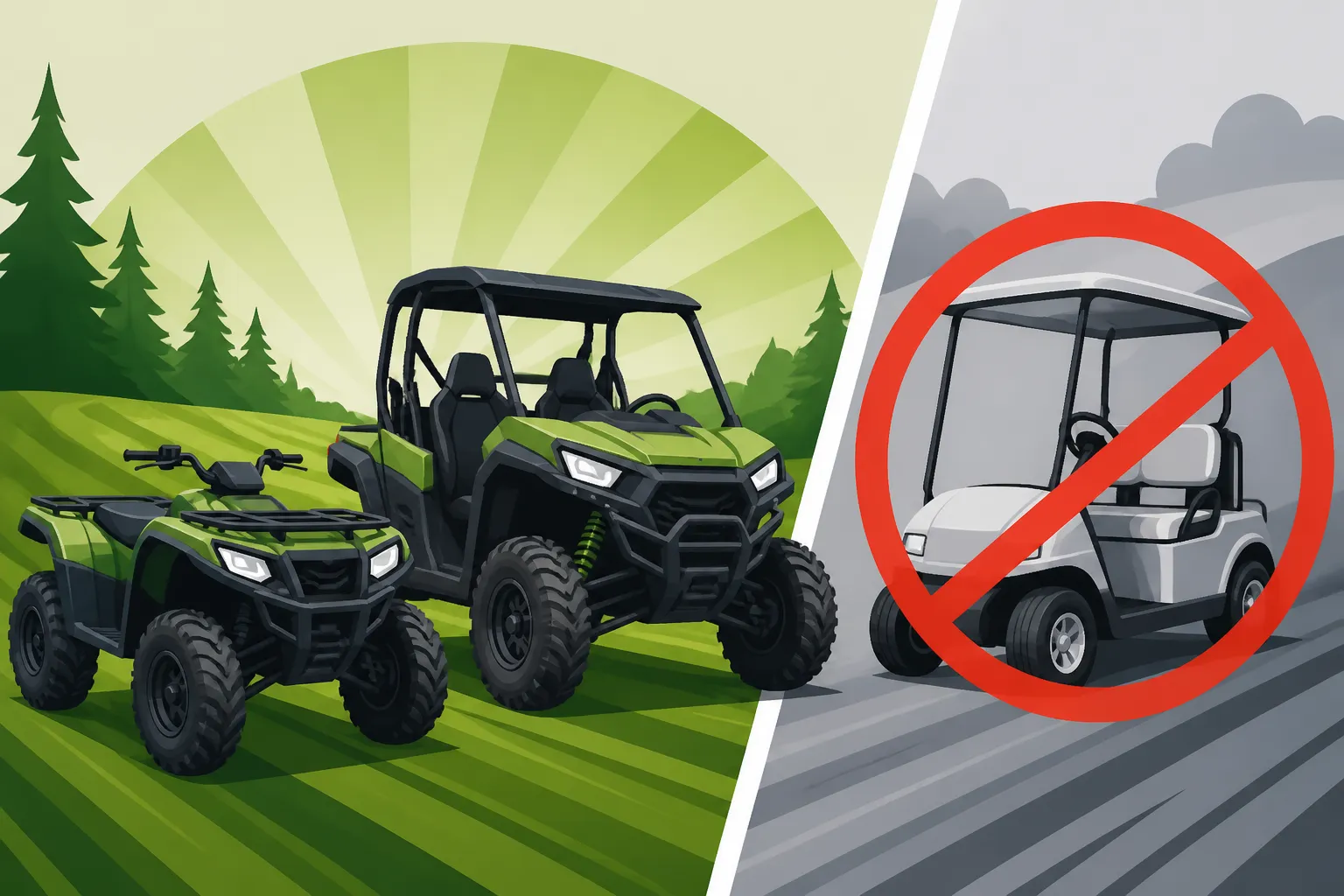
The most obvious difference lies in a golf cart's design and its intended use. Golf carts are, as their name suggests, primarily designed for use on golf courses to transport golfers and their equipment. They typically have bench seating, a steering wheel, and are built for relatively flat, manicured surfaces. Their top speeds are usually much lower than an ATV's, and their suspension systems are not designed for rugged off-road terrain. Compare this to an ATV, which often features handlebars, a saddle-style seat, and aggressive tires, built specifically to tackle mud, rocks, and uneven trails. The fundamental engineering and ergonomic choices for a golf cart simply don't align with the characteristics laid out in [Saskatchewan ATV Definitions Explained].
Think about the physical interaction a rider has with each machine. On an ATV, you straddle the seat, using your body weight to help navigate and absorb bumps. On a golf cart, you sit upright in a more car-like position, operating it with a steering wheel and pedals. These differences are significant enough that the legislature clearly didn't intend for golf carts to be regulated in the same way as ATVs.
Specific Exclusions in the Legislation
While the Act doesn't explicitly name "golf carts" and say "these are not ATVs," the definition implicitly excludes them by requiring specific characteristics that golf carts lack. For instance, the requirement for handlebars for steering and the straddled seating position are immediate disqualifiers for most golf carts. Additionally, the Act’s general emphasis on machines "designed to travel on land" specifically refers to machines intended for off-road recreation or utility use that align with the ATV description, not slow-moving utility vehicles designed for a specific purpose like a golf course or gated community.
It’s also worth noting that the Act includes a list of machines that are specifically excluded from its scope, even if they might share some superficial similarities with an ATV. Golf carts fall into the spirit of these exclusions because they simply don't meet the positive definition of an ATV. This means that if you're ever questioned about your golf cart's classification, you can confidently refer to the legislative definitions that simply don't encompass your machine. You can find more details on these specific exclusions in [Saskatchewan Machines the Act Excludes].
Practical Implications for Golf Cart Owners
What this all boils down to for you, the golf cart owner, is that you aren't subject to the provincial age restrictions, helmet requirements, or mandatory provincial insurance rules that apply to ATVs. This doesn't mean you can operate it recklessly or without any rules at all, but it frees you from a very specific set of provincial regulations. Instead, golf cart operation is more likely to be governed by local municipal bylaws, private property rules, or general traffic laws if you're operating near or on public roads.
However, just because the ATV Act doesn't apply doesn't mean you're off the hook for all liability. Owners still have a general duty to operate any vehicle safely, and if an accident occurs, [Saskatchewan Owner Liability Rules] could still come into play. It's always a good idea to ensure you have adequate liability insurance for any motorized vehicle you operate, regardless of its provincial classification. When you're dealing with insurance or even potential claims, having a clear record of ownership is paramount, even for non-registered vehicles. A thorough bill of sale, perhaps drafted using a resource like LawDepot, can serve as critical proof.
Other Machines Excluded from the ATV Act
The exclusion of golf carts isn't an isolated incident; the Saskatchewan All Terrain Vehicles Act is quite particular about what it covers and what it leaves out. Beyond golf carts, several other types of vehicles are also specifically or implicitly excluded from its scope, each for distinct reasons related to their design, purpose, or existing regulatory framework. Understanding these broader exclusions further clarifies the narrow focus of the ATV Act.
Agricultural Implements and Their Exemptions
Saskatchewan is, of course, a predominantly agricultural province, and many types of equipment are used on farms. The Act recognizes this and makes specific exemptions for what it calls "agricultural implements." These are vehicles primarily designed and used for farming operations, such as tractors, combines, or even some utility vehicles outfitted specifically for farm tasks. These machines, while often capable of off-road travel and sometimes resembling larger utility terrain vehicles (UTVs), are critical to the agricultural industry and are typically governed by different sets of rules, if any, when operating on private land.
The rationale here is clear: agricultural machinery serves a vital commercial purpose and often operates within the confines of private farm property, or between fields on public roads under specific conditions. Imposing ATV regulations, such as age limits or helmet requirements designed for recreational use, would be impractical and burdensome for farmers. Therefore, the Act wisely keeps these essential tools outside its purview. You can learn more about how specific machines are excluded in [Saskatchewan Agricultural Implements Are Excluded].
Vehicles Registered Under Traffic Safety Legislation
Another significant category of excluded vehicles are those already registered and regulated under the province's Traffic Safety Act. This includes your everyday cars, trucks, motorcycles, and even some types of mopeds. The provincial government avoids duplicating regulatory efforts; if a vehicle already has a comprehensive set of rules governing its operation on public roads, there's no need for the ATV Act to also apply to it.
This is a crucial distinction. When a vehicle is designed and intended for public road use and carries a provincial plate, it follows the rules of the road. An ATV, by contrast, is primarily an off-road vehicle, and while it might be permitted to cross public roads or ride in ditches under specific conditions, its primary domain isn't the highway. This division ensures that each type of vehicle is governed by the most appropriate and comprehensive set of safety regulations. For a clearer picture, check out [Saskatchewan Vehicles Registered Under Traffic Safety].
Mini-Bikes and Restricted Use Motorcycles
The Act also specifically addresses mini-bikes and restricted use motorcycles, outlining how these smaller, often less powerful machines are treated. A "mini-bike" is generally defined by its smaller engine displacement, wheel size, and maximum speed. These vehicles, while potentially used off-road, are typically not built with the same characteristics or power as a full-sized ATV. Similar to golf carts, their design and capabilities position them outside the core definition of an all terrain vehicle as outlined in the Act.
The intent here is to differentiate between serious off-road machines and smaller, lighter, or less powerful recreational vehicles that pose a different level of risk or require different considerations. The Act has specific details on how these machines are classified, ensuring that regulations are proportional to the vehicle's capabilities and intended use. Understanding [How the Act Measures a Mini-Bike] can be quite enlightening if you own one of these smaller machines and are trying to figure out where it fits in the provincial regulatory landscape.
What This Means for Golf Cart Operation in Saskatchewan
Since provincial ATV regulations don't apply to golf carts, how can you operate them legally in Saskatchewan? This is where the landscape shifts from provincial statutes to local rules and private agreements.
Operating Golf Carts on Private Property
For the vast majority of golf cart owners, operation will be confined to private property – a golf course, a farm, a large acreage, or within a private resort community. On private land, the owner or occupier of the land generally sets the rules. This means if you're on your own property, you have a lot more leeway. However, you still have a responsibility to operate the vehicle safely and to ensure anyone else using it does the same. Common sense, caution, and good judgment are your best guides here.
Even on private property, it’s always wise to consider safety. Ensure anyone driving the golf cart is capable and understands its limitations. While no provincial helmet law applies, wearing one for your own safety, especially if minors are operating the vehicle, is never a bad idea. And remember, private land doesn't mean liability disappears. If someone is injured on your property due to negligent operation of a golf cart, you could still be held responsible. This is where general liability insurance for your property or operations becomes crucial.
Municipal Bylaws and Golf Cart Use
While the provincial ATV Act doesn't govern golf carts, local municipalities can and do create their own bylaws to regulate their use, especially if they're used on public roads or municipal property. Some towns and villages might have specific rules allowing golf carts on certain streets, perhaps at low speeds or during daylight hours, while others might ban them entirely from public thoroughfares. These bylaws are designed to ensure public safety and manage traffic flow within their specific communities.
Before taking your golf cart off your private land and onto any municipal road or property, it is absolutely essential to check with the local municipal office. Ignoring local bylaws could result in fines or impoundment. Communities like the District of Lakeland and the Village of Candle Lake, for instance, have their own specific rules for various off-road vehicles, and it's a good example of how local regulations can fill the gap where provincial acts don't apply. So, understanding [Saskatchewan Municipal Bylaws on Roads] is critical. It's not uncommon for these bylaws to address speed limits, times of operation, and even specific streets where golf carts are permitted or prohibited.
| Feature | ATV (Under SK Act) | Golf Cart (Not Under SK Act) |
|---|---|---|
| Primary Design | Off-road recreation/utility | Transport on golf courses/private estates |
| Steering | Handlebars | Steering wheel |
| Seating | Straddled saddle-style | Bench seat |
| Wheel Count | At least 3 wheels | Typically 4 wheels |
| Width Limit | 1.5 metres or less | Varies, often wider than 1.5m, or narrower |
| Weight Limit | 680 kilograms or less | Varies, often lighter |
| Engine Size | Varies, often powerful | Typically smaller, less powerful |
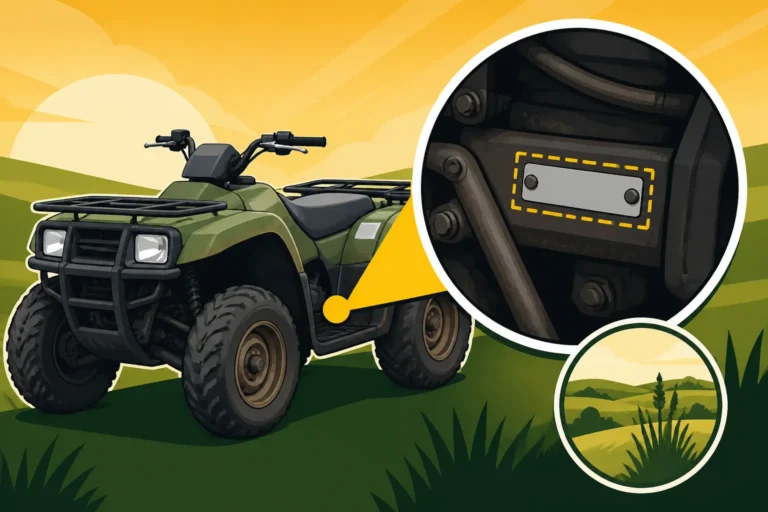
| Registration | No provincial registration | No provincial registration |
| Provincial Rules | Age, helmet, insurance, operation rules apply | No provincial age, helmet, insurance rules apply |
| Local Bylaws | May apply to road crossings/ditches | May apply to public road/property use |
| Proof of Ownership | Bill of sale crucial | Bill of sale crucial |
Insurance Considerations for Golf Carts
Since golf carts aren't covered by the provincial ATV Act, they also aren't subject to its specific mandatory insurance requirements. However, this doesn't mean you don't need insurance at all. If you operate your golf cart, especially anywhere beyond your fully fenced private property, you should absolutely ensure you have adequate liability coverage. This might be covered under your existing homeowner's policy, farm insurance, or you might need a separate recreational vehicle policy.
Imagine a scenario where your golf cart causes damage to someone else's property or, worse, injures a person while you're driving it. Without proper insurance, you could be personally responsible for significant financial costs. Always check with your insurance provider to understand your coverage. They can advise you on whether your current policy extends to golf cart use or if a standalone policy is necessary for your peace of mind. While the province doesn't mandate it for golf carts, being a responsible owner means protecting yourself and others.
Navigating Ownership and Sales Without a Provincial Registry
One of the biggest head-scratchers for anyone dealing with ATVs, UTVs, or even golf carts in Saskatchewan is the complete lack of a provincial registration or titling system for these machines. This creates a unique environment for buying, selling, and proving ownership that differs significantly from how cars or snowmobiles are handled.
Proof of Ownership for Non-Registered Vehicles
In Saskatchewan, if you own an ATV, UTV, or a golf cart, there's no official provincial document like a "title" or "registration card" that proves you're the rightful owner. This can feel a bit unsettling, especially if you're used to the clear-cut systems for other vehicles. So, how do you prove ownership? It all comes down to paperwork, specifically your bill of sale and any past purchase receipts. These documents are your legal proof that the machine legitimately belongs to you.
It's absolutely critical to keep these documents safe and accessible. If you're ever in a dispute, need to make an insurance claim, or want to sell the machine, your paper trail is your best friend. Without it, proving ownership can become a real headache. This is why when you buy a quad or a golf cart, you need to ensure the seller provides you with a comprehensive and accurate bill of sale, and that you keep it. More on this can be found in [Saskatchewan Proof of Ownership Without a Registry].
The Role of a Bill of Sale in Saskatchewan
Given the absence of a provincial registry, the bill of sale takes on an elevated importance for ATVs, UTVs, and even golf carts. It's not just a receipt; it's a legal contract that transfers ownership from one party to another. A good bill of sale should include:
- The full names and contact information of both the buyer and the seller.
- A clear description of the machine, including make, model, year, and crucially, the Vehicle Identification Number (VIN) or serial number.
- The purchase price and date of sale.
- A statement that the seller is the legal owner and that the machine is free of liens or encumbrances.
- Signatures of both parties, and ideally, a witness.
Using a standardized bill of sale form can help ensure all necessary information is captured. Resources like LawDepot offer templates for bills of sale that are designed to be legally sound, which can provide a lot of peace of mind for both buyers and sellers in a province where there's no official provincial title. Always make sure to get a physical copy and keep it filed away securely. If you want to know exactly [What Your Bill of Sale Needs to Cover], check out our detailed guide.
Implications for Buying and Selling Golf Carts
When buying or selling a golf cart in Saskatchewan, the process will mimic that of an ATV or UTV due to the lack of provincial registration. As a buyer, your due diligence is paramount. Always ask for a bill of sale from the previous owner, and if possible, try to trace the ownership history. Check the serial number against any paperwork to ensure it matches. Be wary of sellers who can't provide any proof of ownership, as this could indicate a stolen machine or future headaches for you.
For sellers, providing a clear and comprehensive bill of sale protects you as well, by documenting the transfer of ownership and the condition of the machine at the time of sale. This helps prevent future disputes. While there's no provincial registration fee or transfer process, properly executed paperwork is your safeguard. Remember, unlike snowmobiles, there's no provincial [Saskatchewan Has No ATV Registration to Buy], so your bill of sale truly does all the heavy lifting when it comes to proving you're the new owner. So, be sure your [Saskatchewan Bills of Sale Do the Work].
Disclaimer
This article is for general informational purposes only and does not constitute professional advice. Laws, prices and regulations vary by location and change over time. Consult a qualified professional for guidance on your specific situation.