Saskatchewan Grazing Lease Permission
A grazing lease may look like open prairie, bush, or a familiar cutline, but that does not mean you can ride across it. For ATV and UTV riders in Saskatchewan, the key is to identify who controls access, get clear permission for the route and activity, and follow any conditions that come with it. This guide explains how to do that before you unload.
Why grazing lease permission matters
A grazing lease is land held by the Crown and leased for grazing. It is not automatically open riding territory just because it is not fenced like a private yard or marked with a prominent “No Trespassing” sign. A leaseholder may be responsible for livestock, range condition, fences, gates, and other day-to-day uses of the land. An ATV or UTV can interfere with those responsibilities even when a rider intends no harm.
The practical rule is straightforward: do not assume you may ride on a grazing lease. Identify the person or authority responsible for the land and get permission before entering, unless you have confirmed that a specific access rule or arrangement clearly allows your intended use. When in doubt, wait for a clear answer rather than treating silence, an old trail, or an open gate as consent.
This is about access, not just vehicle rules. Saskatchewan’s ATV operating requirements apply to riding, but they do not, by themselves, grant you permission to use a particular piece of land. A rider may comply with equipment, insurance, age, and operating rules and still be somewhere they do not have permission to be. It helps to keep the two questions separate:
- May I operate this machine in this way? Check the applicable ATV rules, bylaws, and any area-specific restrictions.
- May I enter and ride on this land? Confirm access with the landowner, leaseholder, or other party with authority over the land.
The difference matters on a grazing lease because the Crown’s role as landowner and the leaseholder’s role in managing the grazing use are not necessarily the same thing. A leaseholder may have conditions or responsibilities that affect whether and how recreational riders can enter. Do not treat a general statement about public access to Crown land as automatic permission to ride every lease road, pasture, or cutline. For background on the access issue, see Occupied Crown Land and Permission and Getting Consent From a Grazing Lease Holder.
Permission should cover the actual activity you plan to do. Approval to walk across a parcel, retrieve a farm item, or reach a destination by a specific route is not automatically approval for a recreational loop with several machines. A request to cross a lease to get somewhere else is also different from a request to ride around on the lease itself.
That distinction can protect both you and the leaseholder. Livestock can be stressed or scattered by unfamiliar machines. A vehicle can damage wet ground, break a fence, catch on a gate, or create ruts that affect grazing. A rider may also encounter other users, including workers moving cattle or maintaining the land. Even a brief trip can cause trouble if the route, timing, or number of machines does not match what the leaseholder agreed to.
A good starting point is [Saskatchewan Grazing Lease Access Rules]. If you are unable to establish who manages a particular area, or if the route crosses more than one parcel, do not guess based on the appearance of the land. Ask the relevant land-management office or local authority how to identify the responsible contact. Access arrangements can differ, and a permission that applies to one lease or one route does not necessarily apply to a neighbouring parcel.
Identify the land and the person who can authorize access
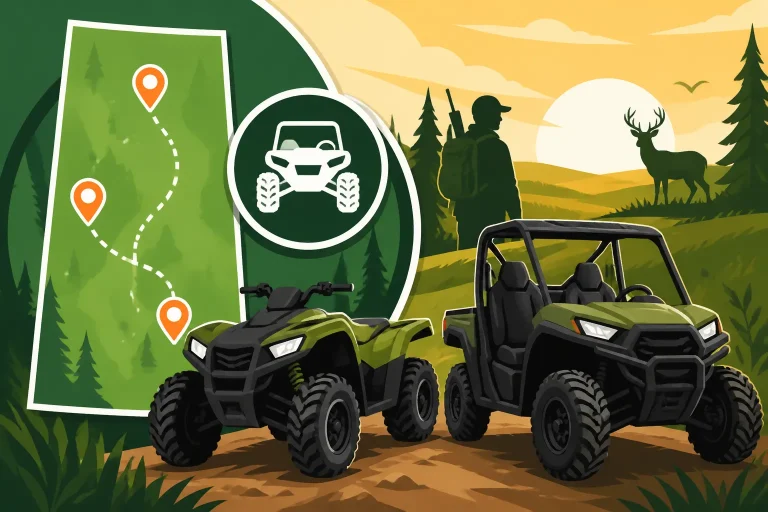
Before contacting anyone, work out where you want to ride. “The trail behind the pasture” is rarely enough information for a leaseholder to make a useful decision. Start with a map and mark your proposed entry point, route, destination, and exit point. If possible, note road names, nearby landmarks, parcel boundaries, gates, and the direction you intend to travel.
Land boundaries can be difficult to read on the ground. A two-track may look continuous while crossing several different parcels or land uses. A route may start on a municipal road, pass through leased Crown land, and continue onto privately owned land. An old trail on a map may no longer be maintained or may have been closed because of livestock, erosion, fire conditions, or a change in land use. Do not assume one person’s permission covers the entire route.
Confirm what kind of land you are dealing with
Use reliable mapping and official land information where available, but treat a map as a planning tool rather than permission. A recreational map may show a trail without telling you who controls access today. A phone map may show a road or cutline without identifying whether motorized use is allowed. Signs and gates can provide useful information, but the absence of a sign does not mean the land is open.
If your route appears to cross a grazing lease, identify the leaseholder or the appropriate contact through official channels. If you cannot confirm the contact, ask the provincial office responsible for the land how to proceed. A local municipality may help you understand a road or bylaw issue, but it may not be the party that can authorize entry on a lease.
Ask who has authority to approve the specific activity. A person who works on the lease may be able to tell you whom to contact, but may not be authorized to grant access. Similarly, a neighbour, previous land user, or former leaseholder cannot necessarily give current permission. Be polite about this: confirming authority is not an accusation; it helps everyone avoid misunderstandings.
If part of the route is privately owned, permission from the grazing leaseholder does not replace permission from that private landowner. If the route passes through a protected area or a place with special restrictions, those rules also need to be checked. The route is only as accessible as its most restrictive segment.
Ask about the whole route, not just the destination
A common planning mistake is to focus on the spot where you intend to stop and overlook the land you must cross to get there. Describe every segment that may involve the lease. If you are unsure whether a trail follows the lease boundary or crosses it, say so and ask for clarification.
A clear route description can include:
- Where the group will enter and leave
- Which road, trail, or cutline you plan to use
- Whether you intend to cross the lease or ride within it
- The approximate date and time
- How many machines and riders are involved
- Whether you expect to stop, unload, camp, hunt, or retrieve something
- Whether you may return by the same route or use an alternate exit
You do not need a surveyor’s map for an ordinary access request, but a marked map or screenshot can prevent confusion. If using a phone screenshot, make sure the boundary and route are legible. Keep the original official map or contact information available in case the leaseholder wants to check a detail.
If you use a paper map or printout, a waterproof case can help keep it readable in dust or rain. Some riders buy a basic map sleeve through Amazon, while others use a clear document pouch they already own. The important point is that the route should be easy to understand and usable without relying on a weak cell signal.
Request permission in a way that gets a useful answer
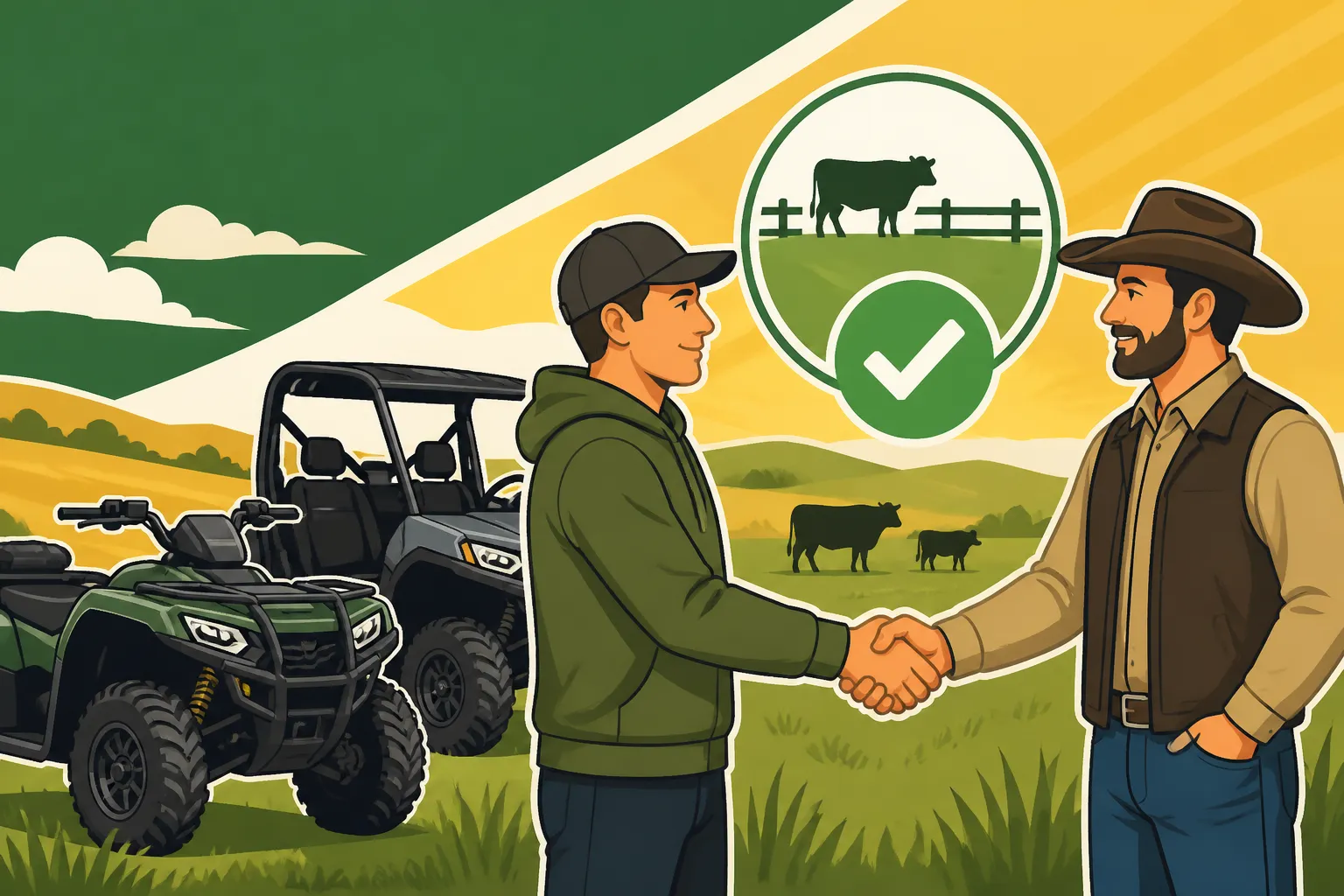
A short, specific request is easier to answer than a vague message asking whether “the area is open.” Introduce yourself, explain what you want to do, and make it clear that you are willing to follow conditions or change your plan. Ask early enough that the leaseholder can respond. A last-minute request at a gate puts pressure on the other person and may leave you with no safe alternative.
You can ask by phone, email, or another method the leaseholder prefers. If you speak in person or by phone, write down the details afterward and send a brief confirmation if appropriate. Written permission is useful because it reduces the chance that each person remembers the conversation differently. It also gives you a record of the conditions you agreed to follow.
A practical request might say:
I’m planning to ride from the public road at the north entrance to the marked cutline and back on Saturday. There will be two machines and three riders, and we expect to be through in about an hour. We will not leave the route, approach livestock, or open gates without instructions. Is this route and timing acceptable, and are there any conditions we should follow?
Adjust the wording to match your plan. If you intend to do more than pass through, say so. For example, disclose if you plan to ride a loop, stop for lunch, hunt, retrieve an animal, take photographs, or bring a group. If you are not sure whether an activity counts as part of the request, include it rather than assuming it is covered.
Ask about conditions before accepting permission
Permission may be limited by time, route, weather, livestock movements, fire risk, or the number of machines. Ask about the details that could change how you ride:
- Which entrance and exit should you use?
- Is there a specific road or trail to stay on?
- Are any areas off limits?
- Are there cattle or other livestock on the route?
- Should you avoid a particular time of day or period?
- What is the instruction for gates?
- Is stopping or unloading allowed?
- Does permission cover everyone in your group?
- Should you contact the leaseholder again before the ride?
- What should you do if you encounter a worker or a gate that differs from what you expected?
Do not turn permission into a negotiation after the leaseholder has set a clear boundary. If the route, timing, or group size is not acceptable, thank them and make another plan. A refusal does not need to be debated at the roadside.
Permission is also not a permanent pass unless the person granting it clearly says so and has authority to do so. A one-day approval may not apply next weekend. A route that was acceptable before cattle were moved may no longer be suitable. If circumstances change, contact the leaseholder again.
For more on contacting the person responsible for a lease, see Reaching a Rancher Before You Cross Their Lease. If you plan to cross rather than ride within the area, explain that clearly; the leaseholder may approve a direct crossing while declining recreational use of the rest of the land.
Ride to the conditions you were given
Once permission is granted, treat it as a set of limits, not an invitation to explore. Stay on the approved route, respect the time window, and keep the group within the number of machines agreed to. If you find a more attractive trail or notice tracks branching off, do not follow them unless that route was also approved.
Keep livestock and working areas in mind
Livestock may react unpredictably to engine noise, sudden movement, or a group of machines. Slow down well before approaching animals. Avoid revving, honking, chasing, circling, or separating them. If animals block the route, stop at a safe distance and give them room. If they do not move calmly, contact the leaseholder for instructions rather than trying to push through.
Do not drive between a cow and calf or split a herd to get past. Do not ride close to water, feed, mineral, or handling areas unless the leaseholder has specifically directed you there. These places may be important to the animals and may be where workers expect to move equipment.
Keep dust and noise down where possible. This is not only a courtesy. Dust can affect animals, and a machine that surprises someone working in a field or pasture can create a dangerous situation. If you see a person, livestock truck, tractor, or other equipment ahead, slow down and give them room. If you cannot pass safely, stop and wait.
Leave fences, gates, and property as you found them
Follow the leaseholder’s gate instructions exactly. If you have permission to pass through a gate, find out whether it should be left open or closed. Do not assume the answer. A gate may be positioned to contain livestock, divide a pasture, or allow animals to reach water.
If you are authorized to open a gate, make sure it is secure after you pass. If it is damaged, difficult to latch, or blocked, do not leave it in a condition that could release animals. Contact the leaseholder and follow their direction. Never cut a fence, move a barrier, or make a new route around an obstacle.
Stay off wet or fragile ground unless the approved route specifically allows it. A track that seems firm from a vehicle may still leave ruts, disturb soil, or damage vegetation. Do not use a creek bank, wetland edge, or soft pasture as a shortcut. If your machine becomes stuck, avoid widening the damage by repeatedly spinning the tires. Use a controlled recovery approach and let the leaseholder know if you caused a rut or other damage.
Do not collect firewood, build a fire, camp, leave trash, or use a lease road as a staging area unless those activities are separately permitted. Approval to ride does not automatically include approval to do these things.
Keep the group predictable
Before leaving, tell everyone the route and conditions. A group leader should be able to explain where the riders are supposed to go and what to do if someone falls behind. Keep the group together, avoid racing, and do not let a rider take an unapproved side route. A passenger or borrowed machine does not change the permission you received; the activity still needs to stay within its limits.
If the leaseholder gave permission to named riders or a particular group, do not invite additional people without checking first. A small group may be acceptable where a larger ride is not. This matters especially for organized rides, clubs, and groups that may create more noise or traffic than a single family outing.
Carry current contact details for the leaseholder or designated contact if you have them. A simple waterproof card or document pouch can keep a written permission note and phone number together. Some riders use an inexpensive pouch from Amazon for papers they want to keep dry, but a sealed bag works too. Check that you can reach the contact without cell service if the area is remote; agree in advance on what to do if communication is unavailable.
Special situations that need extra care
Not every request to use a grazing lease is for an ordinary recreational loop. The purpose of the trip can affect who needs to approve it and what conditions apply. Explain the real purpose rather than describing everything as “just passing through.”
Crossing to reach another destination
A direct crossing is different from riding around on the lease. Ask for permission to use the specific crossing and stick to it. Do not turn the crossing into a loop, stop at a scenic spot, or follow a side trail unless that was included in the approval.
If the proposed crossing follows a public road or an established route, confirm that the route is in fact open to your type of vehicle. A road visible on a map does not necessarily mean the ATV may use it. You may need to check municipal rules, signs, and any restrictions imposed for the area. See Saskatchewan Crown Land Access Rules for the broader land-access context, and Asking Your Rural Municipality About a Grid Road if the route involves municipal roads.
If you are unable to get permission, choose another route. Do not treat a locked gate, closed sign, or direct refusal as a challenge to find a different way through the same property.
Hunting and game retrieval
Hunting access and ATV access are separate questions. A hunting permission, licence, or right to be in an area does not automatically authorize ATV use across a lease. Ask specifically whether the machine may be used, where it may travel, and whether the permission covers reaching a hunting location or retrieving game.
If you are carrying a firearm, follow the applicable firearm transport and use rules as well as the leaseholder’s access conditions. Do not assume that a vehicle route suitable for ordinary riding is acceptable during a hunt or game-retrieval trip. For more context, see Saskatchewan Hunting Access by Machine and Saskatchewan Game Retrieval by Machine.
Farm, ranch, or maintenance work
A person doing work for a leaseholder may have access that recreational riders do not. If you are helping a land manager, make sure the person who assigned the job has authorized your route and machine use. A casual request from someone at the site may not cover the full task or all the land you would cross.
Workers should also confirm whether they are permitted to bring passengers, use a personal machine, or travel beyond the assigned area. If you are a contractor or volunteer, keep the relevant instructions available and avoid describing work authorization as general public access.
Events, clubs, and commercial trips
A larger organized ride can affect more land and livestock than a private outing. Before advertising a route or setting a date, get permission for the event itself, not just for one representative to inspect the trail. Confirm group size, staging location, parking, timing, cleanup, insurance expectations, and what happens if conditions change.
Commercial guiding or a paid ride may involve additional rules and approvals beyond a leaseholder’s consent. Ask the appropriate land authority what permits or permissions apply before booking customers. A landholder’s approval should not be treated as a substitute for any required event or business authorization.
Keep a clear record and know what permission does not prove
A written note or message can help show what the leaseholder agreed to, but it is not a government permit, vehicle registration, insurance document, or proof that every law has been met. Think of it as one piece of trip paperwork. Keep it separate from your insurance information and any vehicle records.
A useful permission record should identify:
- The leaseholder or authorized contact
- The date permission was given
- The approved date or period of access
- The route or area covered
- The activity that was approved
- The number of machines or riders, if limited
- Any conditions, such as gate instructions or livestock precautions
- Any contact method for changes or emergencies
Do not edit a message or present a partial conversation in a way that changes its meaning. If the leaseholder changes the conditions, keep the updated message too. If you received verbal approval, write down the details while they are fresh and confirm them with the person if practical.
Permission does not necessarily establish that the machine belongs to you. Saskatchewan does not issue provincial ATV registration in the way some riders may expect, so ownership records and access permission serve different purposes. A bill of sale or other ownership paperwork does not grant access to the lease, and the leaseholder’s permission does not prove ownership of the machine. For ownership records, see Saskatchewan Proof of Ownership Without a Registry and Saskatchewan Proof of Ownership on the Trail.
Insurance is another separate issue. Do not assume a leaseholder’s permission provides liability coverage for you, your passengers, or damage involving the machine. Check your policy and carry the proof required for the place where you plan to ride. If you are riding in a park or municipality, additional local requirements may apply.
Likewise, permission does not override a closure, fire restriction, posted prohibition, or other applicable rule. Before leaving, check for current restrictions affecting the route. Conditions can change after you receive permission, especially during wildfire risk, wet periods, livestock moves, or maintenance work. If a closure conflicts with the access arrangement, follow the closure and ask the relevant authority or leaseholder what alternatives are available.
A paper copy can be useful if your phone battery dies or you lose service. Keep a photo of the permission message as a backup, but do not rely on a phone screenshot as a substitute for knowing the conditions. If you store the note with your map, a simple waterproof pouch from Amazon can keep both together in the machine. The goal is easy access, not a particular product.
Common mistakes and a pre-ride checklist
Most access problems begin with an assumption: “It is Crown land, so it must be open,” “The gate was open,” or “My friend rode here last year.” Those statements do not confirm that your particular route and activity are allowed today.
Mistakes to avoid
- Treating an old trail as permission. A visible trail may be private, restricted, closed, or used for a different purpose.
- Assuming permission travels with the machine. Permission is usually about a person, activity, route, date, or group. Do not assume it automatically transfers to a new owner or a different ride.
- Using one leaseholder’s approval for a longer route. A route can cross multiple parcels with different access conditions.
- Confusing a road with a public ATV route. A road or cutline on a map does not prove that motorized recreation is allowed.
- Taking silence as consent. If you do not receive a clear response, plan as though you do not have permission.
- Expanding the trip after approval. A direct crossing is not a recreational loop, and approval for one group may not cover extra riders.
- Assuming a gate’s position is an instruction. Ask whether it should be left open or closed.
- Pressuring someone at the entrance. A leaseholder should be able to say no without being argued with.
- Ignoring changing conditions. A route may become unsuitable when livestock move, ground softens, or a fire restriction takes effect.
- Treating permission as a substitute for safety and legal checks. Access approval does not settle insurance, vehicle operation, road use, or other requirements.
If a person tells you to leave, do so calmly and take the route they direct if it is safe and lawful. Do not turn a disagreement into a confrontation. If you believe the person may not be the appropriate contact, leave the area and clarify authority through official channels later. Do not remain on the land while trying to settle the issue at the gate.
Before you unload
Use this checklist for any ride that may enter a grazing lease:
- Map the full route. Mark entry, exit, and every segment where the route might cross leased or private land.
- Identify the responsible contact. Confirm who can authorize access rather than relying on a neighbour, former leaseholder, or old riding custom.
- Ask for permission before the trip. Describe the route, purpose, timing, group size, and machine use.
- Get the conditions clearly. Confirm gates, livestock, stopping, parking, and any areas to avoid.
- Check other rules. Look for road restrictions, local bylaws, closures, fire conditions, and any separate permit requirements.
- Tell the group. Make sure every rider understands the route and the limits of the permission.
- Carry the record and contact details. Keep the permission and relevant insurance proof accessible.
- Reconfirm if plans change. A different day, larger group, new route, or different purpose may need fresh approval.
- Ride carefully and leave no trace. Stay on the agreed route, protect fences and livestock, and report damage or problems promptly.
When permission is uncertain, the safest choice is to stop and ask. A few minutes spent contacting the right person can prevent a damaged fence, disturbed herd, trespass complaint, or a ride that has to turn around. It also helps maintain good relationships between riders and the people responsible for managing the land.
Disclaimer
This article is for general informational purposes only and does not constitute professional advice. Laws, prices and regulations vary by location and change over time. Consult a qualified professional for guidance on your specific situation.