Saskatchewan Owner-Occupied Land Exemptions
It's incredibly common to feel a bit lost when it comes to ATV regulations in Saskatchewan, especially if you're a landowner. You've got a quad for work or pleasure on your property, and you naturally wonder if you need to jump through hoops for registration or permits. The good news is, for many of us who simply use our machines on our own land, there are specific exemptions that can simplify things considerably. This guide is going to peel back the layers of Saskatchewan's unique approach to ATVs, clarifying exactly what these owner-occupied land exemptions mean for you and how to navigate them with confidence.
Understanding the Foundation: Saskatchewan's Unique ATV Approach
Let's start by tackling one of the biggest misconceptions out there: the idea that every ATV in Saskatchewan needs to be registered with the province. This belief often stems from how other vehicles, or even other recreational machines, are handled. But when it comes to quads and side-by-sides, Saskatchewan really does march to the beat of its own drum.
The Myth of Provincial Registration
For many people, the concept of owning a vehicle without a provincial registration is almost alien. We're so used to cars, trucks, and even snowmobiles having a specific registration number, a decal, and a paper trail that confirms its provincial record. This isn't the case for ATVs in Saskatchewan. It often catches new riders, or even long-time residents who haven't delved into the specifics, completely off guard. You won't find a provincial database where your quad's VIN is recorded alongside an owner's name, nor will you receive an annual renewal notice in the mail. This absence can be both a relief and a source of confusion, leaving riders wondering how proof of ownership works or what rules apply without a formal registry. This is why understanding [Saskatchewan Does Not Register ATVs] is foundational to grasping all other rules.
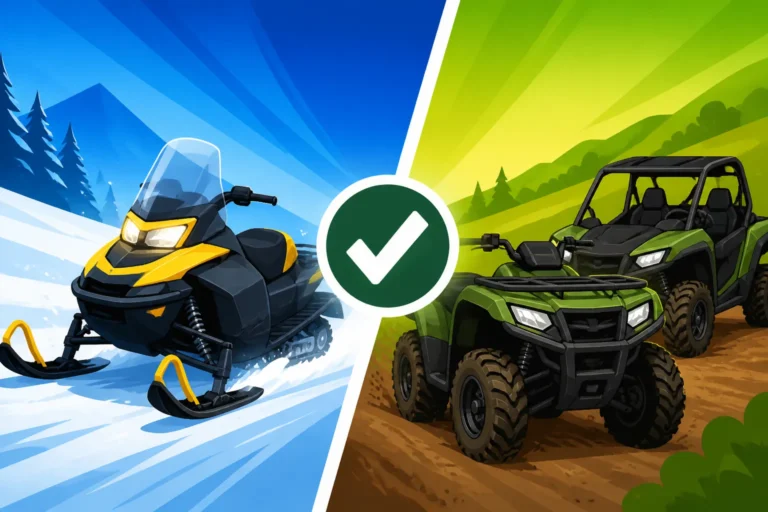
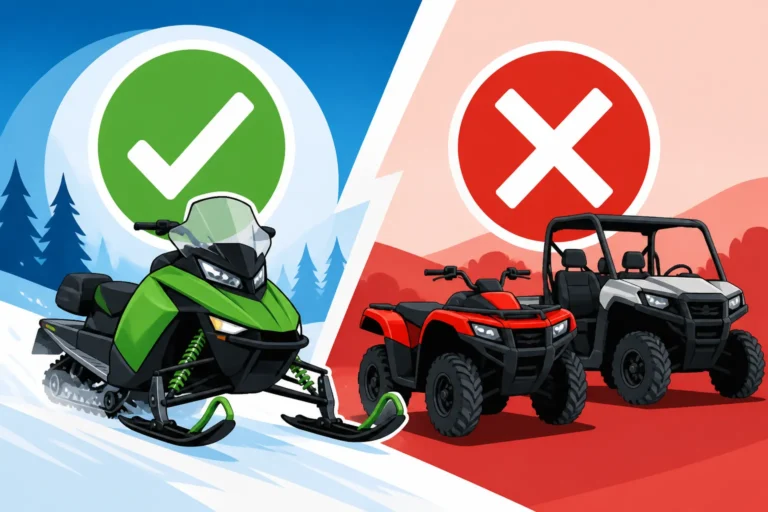
The difference becomes stark when you compare it to our cold-weather cousins. Snowmobiles, for example, absolutely require provincial registration, complete with annual fees and proof of insurance. It creates a very clear and easily understood system. Because ATVs don't have this, it places a greater emphasis on other aspects of ownership and operation, such as proper documentation and insurance, which we'll get into later. For now, just know that if you're looking for a provincial ATV plate or decal, you're looking for something that simply doesn't exist. There is no provincial quad sticker to buy, and [Saskatchewan Has No ATV Plate or Decal].
What the All Terrain Vehicles Act Says (and Doesn't Say)
So, if there's no provincial registration, what governs ATVs in Saskatchewan? The answer lies primarily in The All Terrain Vehicles Act, along with its associated regulations. This piece of legislation, which has been around since 1988, isn't about tracking ownership or collecting registration fees. Instead, its core purpose is to regulate the operation of ATVs to ensure safety and responsible use, particularly when machines are used on public lands, ditches, or roads. It sets out rules for who can ride, where they can ride, what safety gear they need, and other operational standards. You can think of it as a set of guidelines for behaviour rather than a property registry. [Saskatchewan's All Terrain Vehicles Act] runs 36 sections and is where most of these rules are found.
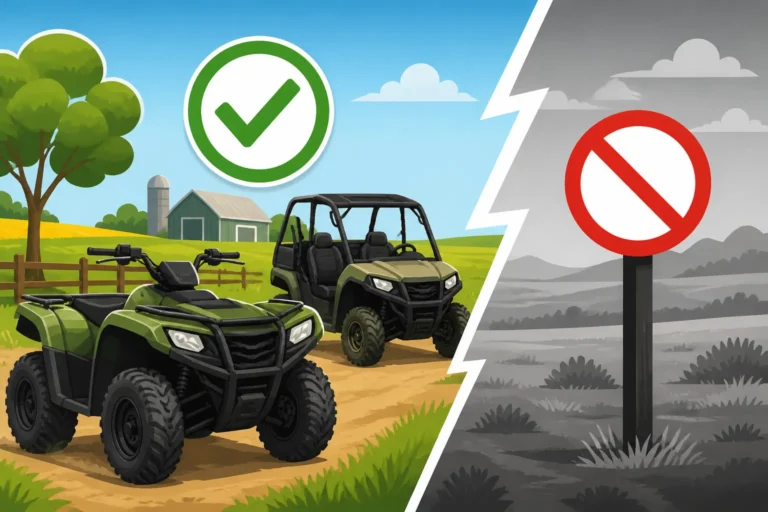
Because the Act focuses on operation, it naturally includes provisions for where these rules apply and, just as importantly, where they don't. This is precisely where the concept of owner-occupied land exemptions comes into play. The Act recognizes that using an ATV on your own private property, away from public thoroughfares and shared spaces, is fundamentally different from riding down a grid road or through a provincial park. Therefore, it carves out specific situations where certain sections of the Act simply don't apply, granting landowners more autonomy over how they use their machines on their own turf. This distinction is crucial for understanding why your riding experience on your acreage might be different from a club trail.
The Core of the Exemption: Owner-Occupied Land
This is where the rubber meets the road (or, more accurately, where the tire meets your private field). The concept of "owner-occupied land" is central to understanding many ATV rules, or lack thereof, in Saskatchewan. It’s designed to allow landowners to manage their own property and activities without excessive provincial oversight.
Defining "Owner-Occupied Land" in Practice
When we talk about "owner-occupied land," we're generally referring to any private property that you own and personally use or reside on. This isn't some abstract legal term; it's very much rooted in the reality of rural and semi-rural life in Saskatchewan. Think of your farmyard, your sprawling acreage outside a small town, your cabin lot by the lake, or even a large residential property where you keep a quad for yard work. If you're the registered owner of the land and you're actively using it, that's typically what falls under this umbrella. [Saskatchewan Machines Used Only on Family Land] also often fall under these rules.
It's important to differentiate this from other types of land. Crown land, for instance, is provincially owned, and any riding on it is subject to specific regulations and potential prohibitions, like those outlined in [Saskatchewan Crown Land Prohibition Regulations]. Similarly, land you might lease from someone else, like a grazing lease or a rental property, might not always qualify as "owner-occupied" for these specific exemptions, depending on the nature of the lease and the intent of the Act. The key takeaway is personal ownership and direct use of the property. This exemption is primarily designed to give you freedom on your property, where you have ultimate control and responsibility.
How the Exemption Works for You
So, what does this exemption actually do? Essentially, it means that many of the operational rules found in The All Terrain Vehicles Act — rules that dictate things like driver age, helmet use, and speed limits when on public land — generally do not apply when you are operating your ATV exclusively on your own owner-occupied land. This is a significant relief for farmers, ranchers, and rural residents who rely on ATVs for daily tasks. Imagine needing to wear a helmet every time you hopped on your quad to check cattle in the back forty, or being fined because your 14-year-old was helping out with chores on your own property. The exemption avoids these kinds of practical headaches.
This freedom covers a wide range of activities: agricultural work, property maintenance (like clearing brush or hauling firewood), hunting exclusively on your land, or simply enjoying some recreational riding on your own trails. It acknowledges that you, as the landowner, are responsible for safety on your property and have the right to set your own rules for yourself and anyone you permit to ride there. This particular exemption is a cornerstone of why many Saskatchewan residents find ATV ownership so practical and less burdened by bureaucracy compared to other provinces. [Riding on Family Land Falls Outside the Act] for many of these specific rules.
Practical Scenarios: When the Exemption Applies (and When It Doesn't)
Understanding the "owner-occupied land" exemption is one thing, but knowing how it plays out in real-life situations is quite another. The boundaries can sometimes feel a bit blurry, so let's walk through some common scenarios to clarify.
Riding on Your Own Farm or Acreage
For many Saskatchewan residents, ATVs are indispensable tools on farms and acreages. Whether you're moving hay bales, checking fence lines, scouting crops, or simply zipping across your fields to get from one outbuilding to another, the owner-occupied land exemption provides immense flexibility. On your own land, you generally aren't bound by provincial age restrictions for operators, specific helmet laws, or speed limits imposed by The All Terrain Vehicles Act. This means your teenager, under your supervision, can learn to operate the quad safely while helping with chores, without running afoul of the Act's provisions for public land use. This is why [Saskatchewan Machines Used on a Farm] are often exempt.
However, it's vital to remember that "on your own land" means precisely that. If your farm is bisected by a public grid road, for example, the moment you put a tire on that public road or its ditch, you typically fall under the provincial Act's operational rules. You'd then need to adhere to rules regarding licences, helmets, and other safety requirements, even if you're just crossing to another part of your property. Similarly, while hunting on your own land using your ATV might be covered by the exemption for the ATV's operation, you still need to follow all provincial hunting regulations. Also, while not strictly required by law on your own land, it's always a good idea to have your bill of sale or other proof of ownership handy. An officer may have reason to inquire about a machine if they see it operating near a public road or if there's any question about its origin, and having your paperwork provides immediate clarity. [How to Prove You Own an ATV in Saskatchewan] details why this document is so important.
Using Your ATV at the Cabin or Recreational Property
Many families in Saskatchewan own cabins or recreational properties, especially in popular spots around lakes or in forested areas. An ATV is often a perfect companion for these retreats, whether it's for hauling supplies, clearing brush, or simply enjoying the natural surroundings. When you're riding solely within the boundaries of your owned cabin lot, the owner-occupied land exemption generally applies. This means that if you're just puttering around your own property, cutting firewood, or letting the kids ride in a designated safe area, you usually don't need to worry about provincial operating rules like helmet laws or age restrictions imposed by the Act. This is a huge benefit for families looking to enjoy their private space freely. You can read more about [Saskatchewan Machines Used at a Cabin] and their specific rules.
The challenge arises when your cabin isn't completely isolated. What if you want to ride from your cabin to a nearby trail? Or perhaps your property abuts Crown land, and you want to venture into the bush? As soon as you leave the confines of your privately owned lot and enter public land, communal trails, or even a short public access road leading to these areas, you are no longer covered by the owner-occupied land exemption. At that point, all the provincial rules of The All Terrain Vehicles Act kick back in. This means proper helmet use, age restrictions, and insurance requirements suddenly become mandatory. It's a common mistake for cabin owners to assume that because they're "at the cabin," all rules are relaxed, but the crucial distinction is whose land you're actually riding on.
The Grey Areas: Crossing Public Roads or Neighbouring Property
This is often where riders encounter trouble or confusion. Let's say your large parcel of land is split down the middle by a municipal grid road. To get from your house to your back pasture, you must cross that road. While you are on your own land, the exemption applies. But the moment you enter the right-of-way of that public road – even for a short distance to cross it – you are technically no longer on solely owner-occupied land.
The Act has specific rules for crossing highways (which include grid roads), such as stopping before crossing and crossing by the shortest, most direct route. It also requires that the operator meet all the Act's requirements, including being of legal age and wearing a helmet. [Saskatchewan Crossings by the Shortest Route] covers the process. Similarly, if your neighbour has given you verbal permission to ride across their land to access your own, while this might protect you from trespass charges, the ATV operational rules of the provincial Act might still apply while you are on their land, as it's not your owner-occupied land. Unless their land also meets the definition of owner-occupied land for them and they are permitting you to ride under their exemption (which can get complicated), you typically need to follow the general rules. This is why obtaining written permission and clarifying expectations with neighbours is always best practice, especially regarding [Saskatchewan Trespass Law for Riders].
Beyond the Exemption: Other Important Considerations for Landowners
While the owner-occupied land exemption offers considerable freedom for riding on your own property, it doesn't mean you're entirely off the hook for all responsibilities. There are critical aspects of ATV ownership that remain universally important, regardless of where you ride.
Insurance: Your Non-Negotiable Protection
Even if you exclusively use your ATV on your own private land, where provincial registration isn't required and some operating rules are relaxed, liability insurance is not something to overlook. In fact, it's arguably even more critical because the consequences of an accident, even on your own property, can be devastating without it. What if a guest or a family member, while riding your ATV on your land, accidentally causes an injury to themselves or someone else? What if they damage property? Without adequate liability coverage, you could be personally responsible for medical costs, property repairs, or even legal fees, which can quickly add up to hundreds of thousands of dollars.
Many standard homeowner's policies might offer some limited coverage for recreational vehicles on your property, but it's crucial to confirm this with your insurance broker and understand any limitations. Often, a dedicated ATV insurance policy or an endorsement to your existing policy provides much more robust protection. This type of policy can cover not only liability but also potentially damage to your own machine, theft, and other perils. Even if The All Terrain Vehicles Act doesn't explicitly require it for your specific private land use, common sense and financial prudence absolutely demand it. It’s about protecting your assets and your peace of mind. Check with your insurance provider about [Saskatchewan ATV Insurance Requirements] and what is needed for your specific circumstances.
Proving Ownership: The Bill of Sale is Key
Because Saskatchewan does not have a provincial registration or titling system for ATVs, the traditional methods of proving ownership (like a vehicle title or registration certificate) simply don't exist. This can be a source of anxiety for buyers and sellers alike, especially for those accustomed to other provinces or vehicles where this paperwork is standard. So, how do you prove your quad belongs to you? The answer is straightforward: your bill of sale.
A well-drafted bill of sale is your single most important document. It serves as your legal proof of purchase and, by extension, your proof of ownership. This document should clearly identify the buyer and seller, the date of the sale, the purchase price, and most importantly, a detailed description of the ATV, including its make, model, year, and its unique Vehicle Identification Number (VIN). The VIN is paramount, as it's the only identifier that links the machine specifically to your purchase. If you're buying privately, ensure you inspect the VIN on the machine itself and verify it against the bill of sale. Resources like LawDepot offer templates for bills of sale that can help ensure you're including all the necessary details. Having this document readily available, even when you're just using the machine on your own land, is crucial for things like insurance claims, future sales, or simply dispelling any questions about the machine's origin if ever asked by authorities. This document is so vital that [Saskatchewan Bills of Sale Do the Work] where a title would in other places.
Age and Safety Rules Still Apply
It's easy to assume that because you're on your own land, all rules go out the window, especially regarding who can operate the machine. However, while the owner-occupied land exemption does relax some provincial operating rules, it's a critical misunderstanding to think it negates all safety considerations or the spirit of the law. For instance, the general provincial age requirements, as outlined in [Saskatchewan ATV Age Requirements], state that a person under the age of 16 cannot operate an ATV. There are exceptions for youth aged 12 and over if supervised by an adult with a full license for 365 days, or if they have completed an approved safety course. While the exemption might allow a younger child to ride on your private land under your direct supervision without provincial legal repercussions, it doesn't diminish the inherent risks or your moral responsibility as a parent or landowner.
Similarly, while the Act might not mandate helmet use on your own private land under the exemption, it is always, always, always recommended. Head injuries are a leading cause of serious injury and fatality in ATV accidents. Wearing a properly fitted, approved helmet, along with appropriate eye protection and other protective gear, is simply smart practice, regardless of where you're riding. Accidents can happen anywhere, and personal injury costs and suffering far outweigh the minor inconvenience of wearing a helmet. Think of the exemption as regulatory relief, not an invitation to ignore safety fundamentals. For more details on what is required when outside of private land, review [Saskatchewan ATV Helmet Law].
The Bigger Picture: Municipal Plates and Future Thoughts
While the province doesn't register ATVs, some local governments in Saskatchewan have stepped in to create their own systems for managing ATV use within their boundaries. This is where municipal plates come into play, adding another layer to the conversation for landowners who might also want to venture beyond their property.
When a Municipal Plate Becomes Relevant
If your primary use for your ATV is solely on your owner-occupied land, a municipal plate is generally not a concern for you. You don't need one to ride on your own property. However, if you live within the boundaries of certain towns, villages, or rural municipalities (RMs) that have enacted specific bylaws for ATV operation, and you intend to ride your ATV off your private land within those municipal limits, then a municipal plate becomes highly relevant. These plates are not provincial registrations; rather, they are local permits required by specific municipal bylaws to allow ATVs on designated municipal roads, ditches, or trails. [Saskatchewan Municipal Plate Schemes] provides a good overview of how these work.
For example, communities like Candle Lake or the District of Lakeland have bylaws that permit ATV use on certain roads and ditches, provided the machine displays a municipal permit or plate and adheres to local speed limits and other rules. These permits often come with a fee, which helps the municipality manage and maintain local infrastructure, including trails. So, if you live in or visit such a community and wish to ride on their sanctioned routes outside your property, you'll need to acquire one of these local plates. It's crucial to check with your specific municipality or the municipality you plan to visit to understand their local bylaws and requirements. [Candle Lake Charges $25 for an ATV Permit] as one example of this local regulation.
Navigating Property Rights and Local Bylaws
Even on your own property, it’s worth being aware of broader community standards and, in some cases, specific local bylaws that might indirectly affect your ATV use. While The All Terrain Vehicles Act exempts you from many operational rules on your own land, some municipalities might have noise bylaws or specific restrictions around environmentally sensitive areas, even if they're on private property. For example, if your property is near a residential area, operating a loud machine late at night might lead to neighbour complaints, even if you're technically on your own land.
The intersection of private property rights and local governance can be complex. If you have any agreements with neighbours regarding shared access or property lines, it's always a good idea to have these clearly documented. Resources like LawDepot can also provide templates for formal agreements or easements that help clarify property rights and usage, potentially preventing disputes. Ultimately, while the owner-occupied land exemption offers great freedom, being a responsible ATV owner means not only knowing the provincial rules (or lack thereof) but also being a good neighbour and respecting local community guidelines. This proactive approach helps ensure everyone can enjoy the outdoors without unnecessary conflict.
Here's a quick summary table of common riding scenarios and how the owner-occupied land exemption typically applies:
| Scenario | Exemption Applies? | Provincial Act Rules Apply? | Municipal Bylaws Apply? (if any) | Key Considerations |
|---|---|---|---|---|
| Riding exclusively on your own farm/acreage | Yes | Generally No | No | Safety still paramount; prove ownership via bill of sale. |
| Riding exclusively on your own cabin lot | Yes | Generally No | No | Similar to farm use; be mindful of noise. |
| Crossing a public grid road on your land | No (while on road) | Yes | Yes | Stop, shortest route; driver age/helmet apply while crossing. |
| Riding on neighbour's land (with permission) | No | Yes | Yes | Get written permission; provincial rules typically apply. |
| Riding on designated municipal trails | No | Yes | Yes (for permit/plate, speed) | Need municipal plate/permit; provincial operating rules apply. |
| Riding on Crown Land | No | Yes | Yes (if applicable to area) | Strict rules apply, often prohibited; check regulations. |
Disclaimer
This article is for general informational purposes only and does not constitute professional advice. Laws, prices and regulations vary by location and change over time. Consult a qualified professional for guidance on your specific situation.