Saskatchewan Immediate Family Exemptions
Many families across Saskatchewan rely on ATVs and UTVs for everything from essential farm work to weekend adventures at the cabin. However, when it comes to sharing these machines among family members, or even transferring ownership, things can get a little hazy. With no provincial registration system for ATVs, people often wonder what paperwork is needed, who can ride, and what rules apply when a quad stays within the immediate family. This guide is here to untangle those specific immediate family exemptions and help you navigate the unique landscape of ATV and UTV ownership and use in Saskatchewan.
What "Immediate Family" Means for Your Saskatchewan ATV
Understanding who qualifies as "immediate family" isn't just a matter of social convention; it has legal implications under Saskatchewan's All Terrain Vehicles Act. While the Act doesn't provide an exhaustive list that directly translates to every possible family connection for all exemptions, it uses the concept in specific contexts, particularly concerning the land on which an ATV is operated. For other purposes, like proving ownership, the relationship simply dictates the nature of the transaction.
Defining "Immediate Family" in the Context of the Act
When the All Terrain Vehicles Act references "immediate family" or "owner-occupied land," it's generally thinking about close familial connections that live on or are directly tied to the property where the ATV is being used. While the Act doesn't strictly define "immediate family" in every single section, common interpretations and the spirit of the law typically include:
- Spouses: Legally married or common-law partners.
- Children: Biological, adopted, or step-children.
- Parents: Biological, adopted, or step-parents.
- Siblings: Brothers and sisters.
This is critical because certain operational exemptions hinge on the relationship between the rider and the landowner. For instance, if you're riding on land owned and occupied by your parents, you might fall under exemptions that wouldn't apply if you were riding on a friend's land, even if that friend feels like family. These exemptions aren't about avoiding all rules, but rather recognizing the practical realities of how families use these machines on their private property.
Why the Distinction Matters for ATV Use and Ownership
The "immediate family" distinction is important for two main reasons: operational exemptions and the practicalities of transferring ownership. Operationally, it impacts who can ride an ATV and under what supervision on specific types of land. For example, some age and supervision requirements are relaxed when a younger family member is riding on land owned and occupied by their immediate family. This isn't a free pass, but a recognition of a supervised environment.
From an ownership perspective, while Saskatchewan doesn't have a formal ATV registration system, the way a machine changes hands within a family can still impact documentation and potential tax liabilities. Gifting an ATV to a child or selling it to a sibling might not involve the same kind of arms-length transaction as selling to a stranger, but proper paperwork is still crucial. A clear record of who owns the machine can prevent disputes down the line, regardless of how close the family ties are. Even for zero-dollar transfers, a bill of sale can be an invaluable document.
The Core Exemptions for Immediate Family Members
One of the most common questions from families revolves around who can ride an ATV, especially younger family members. Saskatchewan's ATV Act provides specific allowances that acknowledge the unique environment of family-owned and occupied land.
Exemption from Age and Supervision Rules on Private Land
This is arguably the biggest and most impactful exemption for immediate family. Normally, the All Terrain Vehicles Act sets age limits and supervision requirements for operating an ATV. However, a significant exception exists:
- When operating an ATV on land owned and occupied by a parent or guardian of the operator, or by the operator himself or herself, certain age and supervision rules can be relaxed.
This means that a younger family member, who might otherwise be too young to operate an ATV or would require a supervisor who has held a driver's licence for at least 365 days, can ride on their family's land under specific conditions. This isn't about letting a toddler operate a utility quad; it's designed for situations where a parent is teaching their 12 or 14-year-old child to ride safely on their own property, such as the family farm or a large acreage. The spirit of this rule is to allow for practical training and supervised use in a controlled environment. However, it's absolutely critical to remember that this exemption applies only to the specific land mentioned. The moment that ATV leaves the family's owner-occupied property and ventures onto public roads, Crown land, or even a neighbour's field without permission, all standard rules, including age limits and supervisor requirements, immediately snap back into place. For more details on where these exemptions apply, you can look into [Saskatchewan Owner-Occupied Land Exemptions].
Transferring Ownership within the Family Without Formal Registration
Many people get hung up on how to "register" an ATV when transferring it to a family member, only to discover that [Saskatchewan Does Not Register ATVs] at the provincial level. This unique situation means that proof of ownership isn't tied to a provincial database or a plate. Instead, it relies on foundational legal documents.
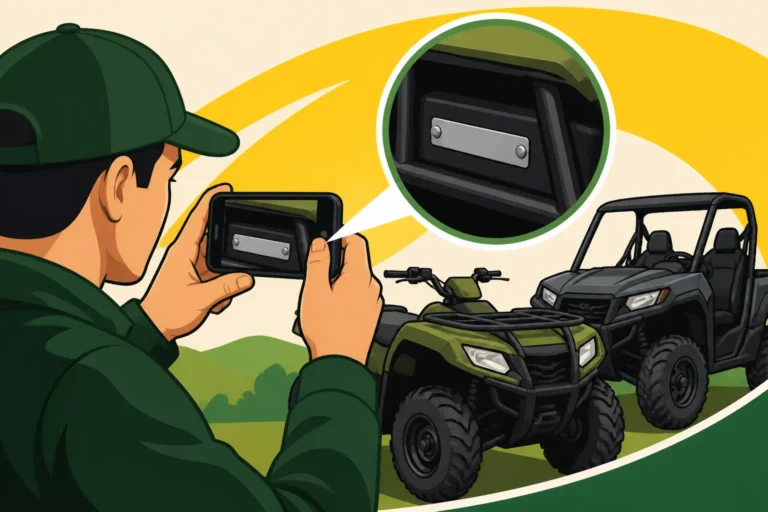
Because there's no central registry, transferring an ATV within the family is primarily a matter of documenting the change of ownership through a clear and comprehensive bill of sale. Whether it's a gift or a sale, the bill of sale acts as the definitive record. This document should clearly state the buyer and seller (even if both are family members), the date of the transaction, a detailed description of the ATV (including make, model, year, and crucially, the Vehicle Identification Number or VIN), and the purchase price (or state "gift" or "no monetary value" if applicable). For anyone needing a solid template, platforms like LawDepot offer excellent, legally sound bill of sale forms that can be easily adapted for family transfers. These forms can save a lot of headaches later on if questions about ownership ever arise, such as during an insurance claim or a future sale outside the family. You can find more information about this in [Saskatchewan Bills of Sale Do the Work].
Practical Scenarios for Family ATV Use in Saskatchewan
Life on the Prairies often involves ATVs and UTVs as indispensable tools and sources of recreation, especially within families. Understanding how the "immediate family" rules apply in common situations can prevent confusion and ensure compliance.
Sharing a Quad on the Family Farm or Ranch
It's a classic Saskatchewan scene: a single utility quad being used by multiple generations on a farm or ranch. Dad uses it for checking fences, Grandma might use it to get to the garden, and the kids learn to ride it around the yard and fields. In these scenarios, the "owner-occupied land" exemption is particularly relevant. When the ATV is being operated solely on the property owned and occupied by the operator's immediate family, certain aspects of the Act related to age and supervision are less stringent. This means that a 12-year-old, for instance, can gain valuable experience operating the ATV under direct supervision on their family's private land, even if they wouldn't be permitted to do so on a public trail or highway ditch.
However, this doesn't mean a free-for-all. Best practices still dictate responsible use, proper safety gear, and vigilant adult supervision. The moment that ATV leaves the confines of the family farm and enters a public grid road or Crown land, the standard rules of the All Terrain Vehicles Act immediately apply, including age restrictions, helmet laws, and insurance requirements. Many families make a habit of always wearing helmets and appropriate gear, regardless of where they are riding, fostering a culture of safety. The general principle is that [Riding on Family Land Falls Outside the Act] for many operational restrictions, but only when truly confined to that private, owner-occupied space.
Gifting or Selling an ATV to a Family Member
Transferring an ATV to a family member, whether as a gift or a sale, needs clear documentation, even without a provincial registry. Since [Saskatchewan Has No Title to Transfer], the bill of sale is the cornerstone of proving ownership. For a gift, the bill of sale should clearly state that the item is being transferred as a gift, with "zero" or "no monetary value" as the consideration. This is crucial for both parties, as it provides a clear record of the transfer date and machine details. Platforms like LawDepot can provide a straightforward template for creating a gift bill of sale, ensuring all necessary information is captured.
When selling an ATV to a family member, even at a reduced price, a detailed bill of sale is equally vital. It should include the agreed-upon price, the date of sale, and comprehensive details of the ATV, including the VIN. This not only protects both parties but also serves as proof for future sales or insurance purposes. It's important to remember that provincial sales tax (PST) generally applies to private sales of recreational vehicles, even between family members, unless specific exemptions apply (such as for agricultural implements or certain gifted items under strict conditions). For example, if you're gifting a machine, you might still need to consider [Saskatchewan Tax on a Gifted Machine], as provincial rules on this can be nuanced.
Handling an ATV After a Family Member Passes Away
The passing of a family member is a difficult time, and dealing with their assets, including ATVs, can add an extra layer of complexity. Since Saskatchewan doesn't register ATVs, there's no central provincial record to update. Instead, ownership of the ATV will transfer through the deceased's estate. The estate's executor or administrator will be responsible for managing the asset according to the will or intestacy laws.
To transfer ownership of the ATV from the estate to a new family owner, the executor will need to provide documentation showing their authority (e.g., a Grant of Probate or Letters of Administration) and then execute a new bill of sale transferring the ATV to the beneficiary. This bill of sale should clearly identify the seller as "The Estate of [Deceased's Name]" and be signed by the executor. Keeping meticulous records of the deceased's original proof of ownership, such as their bill of sale, along with the estate documents and the new bill of sale, is paramount. This ensures a clear chain of ownership and provides the new owner with the necessary documentation should they ever need to prove ownership for insurance or a future sale. For more on this, consider reading [Saskatchewan Paperwork After the Owner Dies].
Documentation and Best Practices for Family ATV Situations
Even though Saskatchewan doesn't have a provincial ATV registry, proper documentation and clear communication are absolutely essential when ATVs are shared or transferred within a family. This isn't just about legal compliance; it's about preventing misunderstandings and protecting everyone involved.
The Critical Role of a Bill of Sale (Even for Family)
Without a province-wide registration or titling system, the bill of sale is your absolute best friend in Saskatchewan when it comes to ATVs. This document is the primary proof of ownership, whether you're buying from a dealer, a private seller, or even receiving a quad as a gift from a grandparent. For family transfers, it might seem overly formal to write up a bill of sale, but it's a step you absolutely shouldn't skip. Think of it as an insurance policy against future headaches.
A well-crafted bill of sale should include:
- Date of Transaction: When did the ownership transfer?
- Seller's Information: Full legal name, address, and contact details of the person transferring the ATV.
- Buyer's Information: Full legal name, address, and contact details of the person receiving the ATV.
- ATV Description: Make, model, year, colour, and most importantly, the Vehicle Identification Number (VIN). Double-check the VIN to ensure it matches the machine exactly.
- Purchase Price/Consideration: Clearly state the amount paid, or if it's a gift, state "Gift – $0.00."
- Signatures: Both seller and buyer should sign, and it's always a good idea to have a witness, especially for significant transfers.
Platforms like LawDepot offer excellent, customizable bill of sale templates that can be completed in minutes. Having a formal document like this is crucial for [Saskatchewan Proof of Ownership Without a Registry], for insurance purposes if the machine is ever stolen or damaged, and for demonstrating a clear chain of title if the ATV is ever sold outside the family. Don't rely on a handshake; put it in writing.
Maintaining Clear Records for Shared Machines
When an ATV is truly shared among family members, perhaps under joint ownership, or used interchangeably on a family property, clear internal records become incredibly important. While a single bill of sale might list one owner, the reality of family dynamics can be much more complex.
Consider creating a simple internal agreement, even if informal, that outlines:
- Primary User: Who is generally responsible for maintenance and storage?
- Usage Guidelines: Are there any family rules about who can use it, where, and when?
- Maintenance Schedule: Who pays for repairs or routine servicing?
- Insurance: Who is listed on the insurance policy, and who pays the premiums?
For situations where two or more family members formally co-own a machine, it's wise to ensure both names are on the bill of sale. This explicitly states joint ownership. While [Saskatchewan Paperwork With Two Owners] isn't a complex process without a registry, it's about ensuring all owners have legal standing. Clear communication and written understanding can prevent disputes, especially if the machine is ever damaged, lost, or needs to be sold. It's about being proactive and transparent, even with those closest to you.
Summary of Key Family ATV Scenarios and Documentation
Here's a quick overview of how immediate family situations often play out and the key documentation involved:
| Scenario | Key Documentation Needed | Important Considerations |
|---|---|---|
| Sharing on Family Land | Original Bill of Sale, Insurance | Exemption from age/supervision rules applies ONLY to owner-occupied land. Standard rules apply off property. Ensure adequate insurance coverage. |
| Gifting an ATV | Bill of Sale (as a gift) | Clearly state "gift" or "no monetary value." Ensure VIN is accurate. Understand potential [Saskatchewan Tax on a Gifted Machine] implications. LawDepot templates are useful. |
| Selling an ATV | Bill of Sale (as a sale) | Clearly state price, VIN, and both parties' details. Provincial sales tax (PST) generally applies. Keep copies. |
| Inheriting an ATV | Executor's Authority, New Bill of Sale | Requires legal estate documents (e.g., Grant of Probate). Executor signs new bill of sale transferring ownership from the estate to the beneficiary. Important for [Saskatchewan Paperwork After the Owner Dies]. |
| Co-owning an ATV | Bill of Sale (both names), Shared Use Agreement | Both owners' names on bill of sale. Informal agreement on use, maintenance, and costs. Crucial for [Saskatchewan Paperwork With Two Owners]. |
Avoiding Pitfalls and Common Mistakes
While immediate family exemptions offer flexibility, it's easy to make assumptions that can lead to legal troubles or safety hazards. Being aware of the limitations and responsibilities is key.
Assuming Exemptions Extend to All Land or All Family Members
This is perhaps the most dangerous misconception. The "immediate family" exemptions for operating ATVs in Saskatchewan are very specific and narrow. They primarily apply to land that is owned and occupied by a parent, guardian, or the operator themselves. This is not a blanket exemption that allows younger family members to ride anywhere.
For example, if a 14-year-old is permitted to ride an ATV on their family's farm under parental supervision, that exemption does not extend to:
- Public Roads or Highways: Riding in ditches or crossing roads still requires compliance with all sections of the All Terrain Vehicles Act, including age limits, driver's licence requirements for supervisors, helmet use, and insurance.
- Crown Land: Provincial parks, forests, and other Crown lands are subject to their own specific regulations and administrator orders, which typically do not have these family-based exemptions.
- Neighbour's Property (even with permission): Unless the operator themselves owns and occupies that land, or it falls under another specific exemption (like being a designated trail), the immediate family rules for owner-occupied land generally don't apply.
The rule regarding [Saskatchewan Owner-Occupied Land Exemptions] is very particular. Stepping off that owner-occupied land can quickly put a family member, and potentially the owner, in violation of the Act. Always assume standard rules apply unless you are absolutely certain of a specific, narrow exemption. Ignorance of the law is not a defence, and tickets can be costly.
Overlooking Insurance Requirements
Another critical oversight is assuming that because an ATV is used within the family, or because it's not provincially registered, insurance is optional or less important. This couldn't be further from the truth. In Saskatchewan, any ATV operated off private property must carry liability insurance. This is a non-negotiable requirement of the All Terrain Vehicles Act.
Even if a child is operating an ATV under an immediate family exemption on owner-occupied land, the liability risks are still very real. What if the child accidentally drives off the property and causes damage to a neighbour's fence or injures someone? What if the ATV is being trailered and gets into an accident? Your home insurance policy might offer some limited coverage for ATVs used on your property, but it is rarely sufficient for broader use. Dedicated ATV insurance provides crucial liability coverage, which protects you financially if your ATV causes injury or damage to others. It can also cover collision, comprehensive, and theft, depending on the policy you choose. Always ensure your ATV is adequately insured, even if it's primarily used by family members. An officer performing an equipment check on a grid road or a trail can ask for proof of insurance, and not having it can lead to significant fines.
How These Rules Compare to Other Jurisdictions
Saskatchewan's approach to ATVs, particularly the lack of a provincial registration system, can feel quite different from what riders might experience in other provinces or states. This unique framework shapes how immediate family exemptions are applied and understood.
Saskatchewan's Unique Approach to ATVs
The most striking feature of Saskatchewan's ATV landscape is that the province does not register ATVs at a provincial level. This immediately sets it apart from many other jurisdictions. While snowmobiles in Saskatchewan require registration and carry a provincial plate, ATVs do not. This means there's no central database tracking ownership, no annual renewal fees for a plate, and no "title" in the traditional sense to transfer.
This lack of provincial registration is precisely why documents like the bill of sale become so incredibly vital for proving ownership, especially within family transfers. It also explains why specific exemptions, like those for owner-occupied land, are so prominently featured in the Act—because there isn't a provincial oversight mechanism like registration to track every machine's use. While this system offers a certain degree of freedom, it places a greater onus on individual owners to maintain clear records and understand their responsibilities under the Act. To understand the contrast, you might look at [Saskatchewan Snowmobile Registration Compared] to see how another recreational vehicle type is handled very differently here.
Implications for Visitors or Out-of-Province Family
When family members visit Saskatchewan from another province or country and bring their ATVs or UTVs, they might be surprised by the local rules. The general principle for visitors is often reciprocity: if their machine is legally registered (if required) and insured in their home jurisdiction, it is usually considered valid for temporary use in Saskatchewan.
However, visitors still must adhere to Saskatchewan's operational rules. This means that:
- Age and Supervision Rules: A visiting rider, or their accompanying child, must follow Saskatchewan's age limits and supervision requirements when riding on public land, ditches, or roads. The immediate family exemptions for owner-occupied land only apply if the visiting family can demonstrate they own and occupy the land they are riding on here in Saskatchewan.
- Helmet and Eye Protection: Saskatchewan's helmet and eye protection laws apply to everyone, including visitors.
- Insurance: Visitors must carry proof of valid liability insurance from their home province or country.
For example, a family member visiting from Alberta might be used to different registration or road access rules. While their Alberta registration might not be relevant here (since Saskatchewan doesn't register quads), their Alberta driver's licence and insurance are critical. They must still respect all Saskatchewan operational laws, such as speed limits, ditch riding rules, and prohibition from riding in certain areas. It's always best for visiting riders to familiarize themselves with [Saskatchewan Rules for a Visiting Alberta Rider] or [Saskatchewan Rules for a Visiting Manitoba Rider] to ensure their trip is safe and legal.
Disclaimer
This article is for general informational purposes only and does not constitute professional advice. Laws, prices and regulations vary by location and change over time. Consult a qualified professional for guidance on your specific situation.