Saskatchewan Poker Runs and Club Rides
A Saskatchewan poker run can look simple on the calendar, but the route may cross private land, Crown land, municipal roads, or designated park trails with different rules. That uncertainty is frustrating when you have already loaded the trailer and gathered your riding group. This guide explains how to find a club ride, check the route, prepare your machine, and take part responsibly.
Finding a poker run or club ride
Where to look for Saskatchewan events
Start with ATV clubs and riding groups connected to the area you want to explore. Their social pages, websites, newsletters, and community noticeboards may share event dates, registration instructions, meeting points, and machine requirements. A local club can also help you understand whether a ride is open to visitors, members only, or limited by group size.
Events can differ considerably. A poker run often has a defined route with stops where participants collect playing cards or other markers, then compare hands or scores at the end. A club ride may be a guided group outing without a card game, with the focus on spending the day on the trail. In either case, ask what the event includes rather than assuming every ride follows the same format.
If you are new to the province or new to organized riding, browse [Saskatchewan ATV Clubs Worth Joining] and [Saskatchewan Group Ride Planning]. A club may be able to answer practical questions that an event poster leaves out: whether a side-by-side is welcome, how much riding experience is expected, whether fuel is available nearby, or whether there is room to park a truck and trailer at the staging area.
Questions to ask before you register
Before signing up, get clear answers about the route and what your registration covers. A ride may use club-maintained trails, approved sections of Crown land, local roads, or a combination. The fact that an event is organized does not automatically mean every nearby trail or road is open to ATVs. Ask who has arranged access and whether riders must follow a specific route.
It is also worth confirming the pace and riding style. Some groups stop frequently and are comfortable with beginners; others cover more ground or travel over rougher terrain. Ask whether the event is suitable for your machine and skill level, what protective equipment is expected, and whether riders should arrive with a full tank. If the ride is family-oriented, ask about age rules, supervision, and whether children can participate as operators or passengers.
| Question to ask | Why it matters |
|---|---|
| Is the ride open to non-members? | Some events are limited to club members or registered participants. |
| What machines are allowed? | Trail width, terrain, and event rules may affect which ATVs and UTVs fit. |
| Where is the route, and who has arranged access? | Land access and riding rules vary by location. |
| What is the expected pace and distance? | Helps you judge whether the ride matches your experience, fuel range, and stamina. |
| What should I bring? | Organizers may specify insurance proof, safety gear, supplies, or event paperwork. |
| What happens if the weather or fire conditions change? | Routes can be altered or cancelled when conditions make riding unsafe or prohibited. |
A courteous message to the organizer can prevent an awkward morning at the staging area. For example: “I’m bringing a stock side-by-side and haven’t ridden with this group before. Is the route suitable, and should I bring anything beyond my regular safety gear and insurance documents?” That gives the organizer enough detail to offer a useful answer.
Checking the route and access
Confirm land permission and trail status
A route shared by a friend or found on a map is not proof that you have permission to ride it. Saskatchewan rides may involve different kinds of land, and the rules can change from one section to the next. Private land requires appropriate permission. Access to occupied Crown land can also require consent, while park trails and club routes may have their own restrictions, designated sections, or seasonal conditions.
Ask the event organizer which routes are authorized and whether participants need a permit or must complete a park form. For a ride involving Crown land, review [Saskatchewan Crown Land Access Rules] and [Saskatchewan Club Trails on Crown Land]. For provincial park routes, check [Saskatchewan Park Regulations for Machines]. These details matter even when you are following a group: every rider is responsible for understanding where they are allowed to operate.
A GPS app such as onX Offroad can help you review a planned route and keep track of your position, but a line on a map does not establish legal access. Treat mapping tools as navigation aids, not permission documents. Before the event, compare the route information from the organizer with the applicable land, road, and park rules. If something does not look clear, ask before riding rather than trying to sort it out at a gate or trail junction.
Prepare for changing conditions
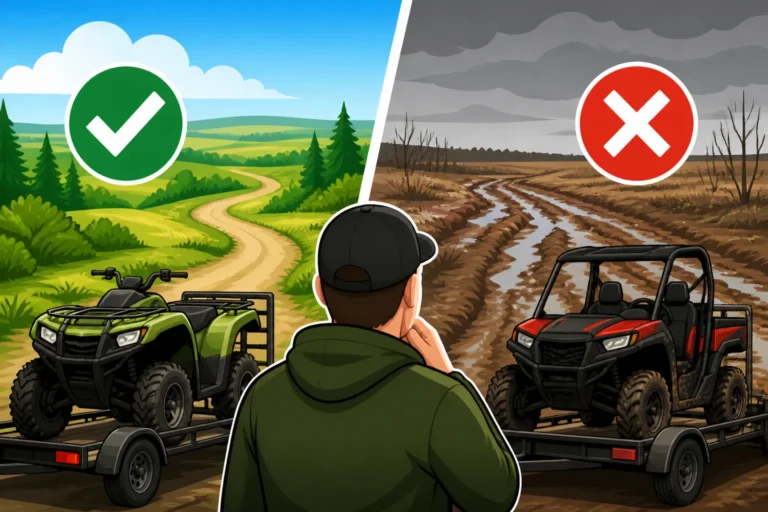
Trail conditions can shift after rain, wind, snowmelt, or heavy use. A section that was manageable last weekend may now be muddy, rutted, or blocked. Ask the organizer whether the route has been checked recently and where updates will be posted. You can also review [Saskatchewan Trail Conditions Before You Haul] before committing to a long drive.
Fire conditions deserve special attention during the riding season. Closures or restrictions can affect access even if an event was planned well in advance. Check official updates for the area and ask the organizer how cancellations or route changes will be communicated. [Saskatchewan Wildfire Closures and Riding] offers more background on why a route that was open when you registered might not remain available on event day.
If you use onX Offroad or another navigation app, download or save the relevant map information before leaving an area with reliable service, and carry a backup plan such as a paper map or written route notes. Do not assume your phone will have reception throughout a ride. Keep the organizer’s contact details and the group’s meeting instructions somewhere you can access without depending on a signal.
Getting your machine and yourself ready
Do a practical pre-ride check
A poker run involves more than driving from one stop to the next. Your ATV or UTV may spend hours operating over uneven ground, and a small problem can slow the whole group. Before leaving home, check tire condition and pressure, brakes, steering, lights, fuel level, and visible fluid leaks. Make sure the machine is in sound working order and that any required safety equipment is present.
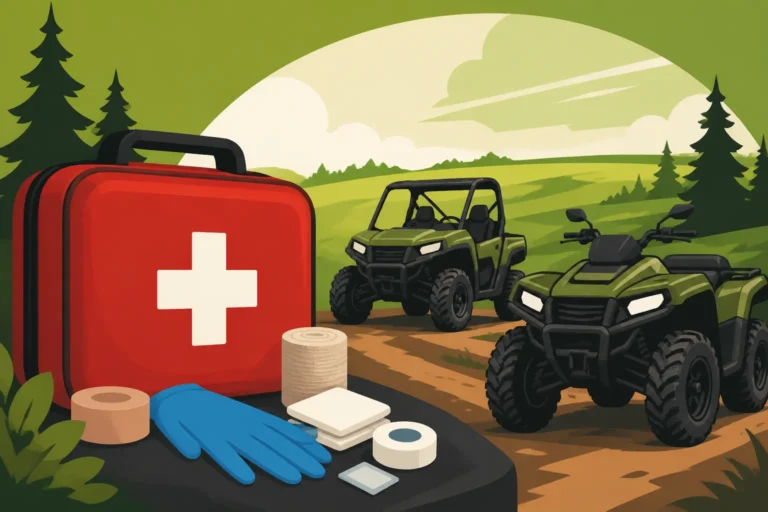
Bring basic supplies suited to the route and season. A sensible kit may include drinking water, food, weather-appropriate layers, a first-aid kit, a phone, a charging option, and the tools or recovery gear you know how to use. For a longer or more remote ride, ask the organizer what recovery equipment is appropriate and whether the group has a sweep rider or a plan for handling a breakdown. Avoid carrying equipment you cannot use confidently; a winch, for example, is only helpful when operated safely.
Check your insurance and carry proof as required. Riders should understand the coverage that applies to their machine and the event, rather than assuming the organizer’s policy covers individual participants. Review [Saskatchewan ATV Insurance Requirements], and contact your insurer if you are unsure whether your planned use is covered. If the ride includes a park or another managed area, ask what documentation an officer or park staff may request.
Ride as part of a group
At the rider meeting, listen carefully to the route briefing, hand signals, regrouping points, and instructions for road crossings. Keep enough space between machines to react to dust, sudden stops, and obstacles. Do not pass a rider unless the group’s rules allow it and there is a safe place to do so. If you lose sight of the person ahead, slow down and follow the agreed regrouping procedure instead of speeding up to catch the group.
A group ride also calls for considerate trail behaviour. Stay on the designated route, avoid cutting corners around muddy sections, and give other trail users room. Keep noise and speed under control near homes, campsites, animals, and shared access points. For more guidance, see [Saskatchewan Trail Etiquette Locals Expect]. Small choices matter: a single rider leaving the trail to bypass a puddle can widen damage and make a route harder for everyone to use.
Use navigation as a backup, not as a reason to leave the group or explore an unconfirmed spur. If you check your position on onX Offroad, stop somewhere safe first rather than handling your phone while moving. If the route appears to diverge from the organizer’s briefing, pause at a safe location and confirm the instructions. On a club ride, staying together and communicating clearly is more useful than trying to solve uncertainty at speed.
Making event day easier
Arrive ready and follow the organizer’s plan
Read the event instructions the night before and pack in a way that keeps essentials easy to reach. Leave enough time to unload, complete check-in, and attend the briefing without feeling rushed. Confirm whether there is a designated parking area, whether trailers must be moved after unloading, and whether the start point is suitable for your vehicle and trailer combination.
At check-in, be ready to provide the information the organizer requested. Keep your emergency contact details accessible, and tell the ride leader about any limitation that could affect the group, such as a machine with a short fuel range or a rider who may need extra breaks. That is not an inconvenience; it lets the organizer plan realistic regrouping points and avoid surprises later.
Poker-run stops are often part of the event’s social side, but they are still places where machines and people gather in a small area. Park where directed, keep access routes clear, and watch for riders pulling in or leaving. Follow the event’s rules for collecting cards or markers, and do not pressure other participants to ride faster than they are comfortable with. The point is to finish safely, not to turn a community outing into a race.
Be prepared for a change of plan
Weather, trail damage, access concerns, or fire restrictions may force the organizer to shorten or reroute a ride. Treat that decision as part of responsible event management. If a route is closed, do not continue down it independently because you already travelled to the area. A closure can reflect a safety issue or a legal access restriction that is not obvious from the trailhead.
If you need to leave early, tell the ride leader or another designated contact before separating from the group. Do not assume someone will notice that you are missing. If your machine has a problem, stop in a safe location, notify the group, and follow the event’s plan for assistance. An organizer who knows where the group is—and who is no longer with it—can respond much more effectively.
After the ride, consider thanking the organizers and sharing useful feedback. Mention unclear directions, a difficult staging area, or a section that may need checking, without posting sensitive route details that could create access problems. Clubs depend on volunteers, landowner relationships, and responsible participants. Good conduct at one event helps make it easier for local groups to organize future rides.
Whether you are joining a poker run for the card stops or a club ride for a full day on the trail, the best preparation is straightforward: confirm access, check conditions, arrive with a reliable machine, and follow the group plan. A little communication before the event can spare you a long drive to the wrong staging area—and help keep Saskatchewan riding opportunities open for everyone.
Disclaimer
This article is for general informational purposes only and does not constitute professional advice. Laws, prices and regulations vary by location and change over time. Consult a qualified professional for guidance on your specific situation.