Saskatchewan Municipal Plate Schemes
It’s a common frustration for ATV and UTV riders across Saskatchewan: you want to operate your machine legally, perhaps take it into town for fuel, or access trails, but figuring out the rules for plates and registration can feel like navigating a maze. Unlike snowmobiles, which have a clear provincial registration system, All-Terrain Vehicles in Saskatchewan don't have a province-wide plate or registration. This guide will walk you through the unique world of municipal plate schemes, explaining what they are, how they work, and what you need to know to ride confidently within participating communities.
The Unique Landscape of ATV Regulation in Saskatchewan
For years, one of the biggest head-scratchers for ATV and UTV owners in Saskatchewan has been the glaring absence of a provincial registration system. It creates a lot of confusion and often leaves riders feeling like they're operating in a legal grey area, especially when they just want to understand the rules.
The Absence of a Provincial Registry
Let's be clear from the get-go: [Saskatchewan Does Not Register ATVs] at the provincial level. This isn't just a minor detail; it's a foundational difference that shapes how every quad owner in the province experiences their machine. When you buy an ATV, new or used, there's no trip to a provincial registry office to get a plate or decal, and no official "title" document like you'd find for a car or even a snowmobile. This situation often puzzles new riders, especially those moving from other provinces or jurisdictions where a registration is standard practice for off-highway vehicles.
This lack of provincial oversight isn't an accident; it's a historical reality that dates back to when the [Saskatchewan's All Terrain Vehicles Act] was first put into place. The legislation focused more on rules of operation and safety than on creating a revenue-generating registry. In a province with vast rural areas and a strong agricultural sector, ATVs were often seen as tools for work on farms and ranches, rather than purely recreational vehicles needing formal provincial tracking. While this approach might have made sense decades ago, it has led to significant challenges in managing recreational riding, identifying owners, and funding trail infrastructure in more recent times. Without a central database, proving [Saskatchewan Proof of Ownership Without a Registry] becomes paramount, often relying solely on a detailed bill of sale.
The impact of this missing provincial registry is far-reaching. It means that law enforcement can't easily identify a machine or its owner through a provincial plate, which can complicate matters in cases of theft or accidents. For riders, it means you don't have a universally recognized form of identification for your machine that's valid everywhere. This can make simple acts, like moving your quad from your cabin to a nearby trail, a bureaucratic headache if you're not aware of the local rules. The system relies heavily on individual responsibility and local regulations to fill the void, which brings us to the next point.
The Gap Left for Local Solutions
With the province taking a hands-off approach to ATV registration, a significant gap was left in how these machines are managed, especially in areas where recreational riding is popular or where ATVs interact with public infrastructure. Think about resort villages, smaller towns, or even rural municipalities (RMs) that experience a high volume of ATV traffic, whether it's for lake access, local amenities, or just cruising the grid roads. These communities often faced concerns from residents about noise, safety, dust, and the proper use of public spaces.
Without a provincial mechanism to address these issues, many local governments realized they had to step up and create their own solutions. This led to the emergence of what we now call "municipal plate schemes" or local permitting systems. These schemes aren't about replicating a provincial registry; rather, they're about allowing individual communities to assert some control over ATV operation within their specific boundaries. They provide a framework for local bylaw officers and law enforcement to manage ATV traffic, address community concerns, and sometimes even generate a small amount of revenue.
The burden on these municipalities is real. They're tasked with balancing the desires of ATV enthusiasts with the needs and safety of all their residents. This often involves developing detailed bylaws that specify where ATVs can and cannot be ridden, what speed limits apply, and what equipment is required. The ability to issue a local plate or permit allows them to identify machines operating within their jurisdiction and provides a visible sign that the operator is at least attempting to comply with local rules. It’s a decentralized approach, born out of necessity, that aims to bring some order to a situation that could otherwise be quite chaotic.
Understanding Saskatchewan's Municipal Plate Schemes
Given the provincial void, municipalities have stepped up to create their own systems. These local initiatives are a crucial part of the puzzle for many riders.
What is a Municipal Plate?
When we talk about a "municipal plate" for an ATV in Saskatchewan, we're not talking about anything issued by the provincial government, nor is it a substitute for vehicle registration that you'd get for a car or truck. Instead, it's a specific permit or physical plate issued by an individual city, town, village, or rural municipality. Think of it as a local pass or badge of compliance, valid only within that specific community's boundaries. It’s a very different animal from [Saskatchewan Snowmobile Registration Compared], which is a province-wide system with consistent rules and fees.
The primary purpose of these municipal plates is multifaceted, but it boils down to local control and funding. Firstly, it allows the municipality to have a record of ATVs operating on its local roads, ditches, or designated trails. This aids in enforcement of local bylaws, helping peace officers identify machines and operators who might be causing issues or not adhering to the rules. Secondly, the fees collected from these plates often go directly back into local initiatives. This could include funding for maintaining trails, putting up appropriate signage, or even covering administrative costs associated with managing the program. It's a way for the community to ensure that those who use its infrastructure contribute to its upkeep.
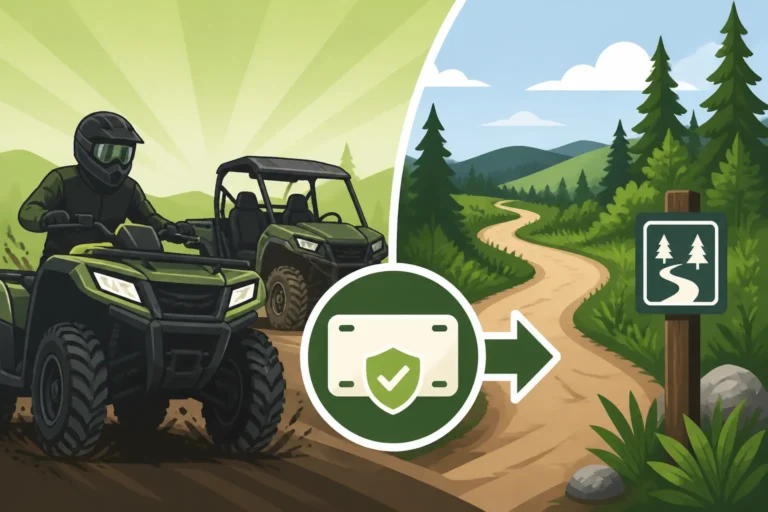
A municipal plate will typically feature the name of the issuing municipality, a unique identifier number, and often an expiry date. It’s designed to be clearly visible on your machine, so local authorities can easily confirm that you’re permitted to operate within their jurisdiction. Without this local plate, even if your ATV is perfectly legal everywhere else in the province (meaning no provincial registration needed), you could be subject to fines or penalties for operating it on roads or public lands within a municipality that requires one. It’s absolutely critical to understand that this is a local requirement, not a provincial one, and its validity stops at the municipal boundary.
Which Municipalities Participate?
Not every community in Saskatchewan has a municipal plate scheme, and this is where the patchwork nature of the system can get a bit confusing. Generally, you’ll find these types of bylaws and permitting systems in areas that are popular destinations for recreational riding, resort communities, or rural areas where ATVs are frequently used both for work and leisure. These are the places where the impact of ATV traffic on local infrastructure and residents is most keenly felt.
For example, the Resort Village of Candle Lake is a well-known location that has its own system. They require an ATV permit for operation within their boundaries. Similarly, the District of Lakeland No. 521, a large rural municipality encompassing numerous lakes and recreational areas, also has a comprehensive plate system. These communities recognize that ATVs are an integral part of their local economy and lifestyle, but they also need to manage their use responsibly to ensure safety and minimize disruption. You might also find smaller towns or even other rural municipalities, particularly in popular cabin country, that have adopted similar bylaws.
So, how do you know if your destination requires a municipal plate? The best way is always to check directly with the specific town, village, or rural municipality you plan to visit or ride in. A quick search of their official website, or a phone call to their municipal office, can save you a lot of hassle. Don't assume that just because you've ridden your quad in one municipality without a plate that the rules will be the same just down the road. Some communities might not have a plate scheme but will have specific bylaws regarding where you can and cannot ride, while others might have a full-blown permitting system with associated fees and fines. It pays to do your homework before you load up the trailer.
The Practicalities of Obtaining a Municipal Plate
Once you've identified a municipality that requires a plate, the next step is actually getting one. While the process is local, there are some common elements you can expect.
Required Documentation and Process
Before you head to the municipal office, you'll need to gather a few key documents. The most important piece of paper, especially in Saskatchewan where there's no provincial registration, is your [Saskatchewan Bills of Sale Do the Work]. This document is your primary proof of ownership. It needs to clearly state who sold the machine to you, who bought it, the date of sale, the price, and, crucially, the Vehicle Identification Number (VIN) or serial number of the ATV. Without a clear bill of sale, the municipality may be hesitant to issue a plate, as they want to ensure you are the rightful owner. Many find services like LawDepot helpful for generating a professional and legally sound [Saskatchewan Bills of Sale for a Quad] if they are buying from a private seller, ensuring all necessary details are included.
Beyond proof of ownership, you'll almost certainly need to show [Saskatchewan's Minimum Insurance Requirement]. Liability insurance is mandatory for operating an ATV in Saskatchewan, whether you're on public land, roads, or within a municipality. The municipality will want to see proof that your machine is adequately insured, often requiring at least the provincial minimum coverage. You might also need to provide personal identification, such as a driver's license, to confirm your identity and residency. Some municipalities may have a simple application form to fill out, asking for details about your machine and how you intend to use it within their boundaries.
The process itself is generally straightforward. You'll visit the municipal office during business hours. A clerk will guide you through the application, verify your documents, and process the payment. It's often a quick over-the-counter transaction. Some communities, like the District of Lakeland, might even offer online options or e-transfer payments for convenience. Be prepared to answer any questions they might have about your ATV or your riding plans. It’s all part of their effort to manage local use responsibly.
Where to Apply and What to Expect
Applying for your municipal plate typically means a visit to the local administrative hub: the village office, town hall, or rural municipality office. These are the places where all local permits, bylaws, and administrative tasks are handled. It's not a service you'll find at a provincial government branch or a large motor vehicle registry. This local approach emphasizes the community-specific nature of these plates.
When you arrive, expect a friendly but formal process. You'll likely interact with administrative staff who are well-versed in their local bylaws. They'll hand you any necessary forms, which might be short and simple or slightly more detailed depending on the municipality. For instance, some forms might require you to acknowledge specific local regulations, like speed limits on certain roads or designated riding zones. They might ask for your signature to confirm you understand these rules. Remember, it's not just about getting a piece of plastic or a sticker; it's about acknowledging and agreeing to abide by the community's expectations for ATV use. Planning a [Planning a Village Office Visit Before You Drive] can save you a lot of time and ensure you have everything you need.
Once your application is complete and your documents are verified, you'll pay the required fee. This is often when you'll receive your physical plate or sticker. It's crucial that you then affix this plate or sticker to your ATV in a clearly visible location as specified by the municipality. This makes it easy for local bylaw officers or peace officers to see that your machine is compliant. They aren't trying to make your life difficult; they're just trying to keep everyone safe and ensure order within their community. Remember, these plates are a visual cue that you've done your due diligence and are riding responsibly within their jurisdiction.
Costs, Fees, and Renewal Cycles
Understanding the financial aspect of municipal plates is crucial for budgeting your ATV adventures. These aren't just one-time costs; they're often part of an annual commitment.
Initial Purchase Costs
The cost of a municipal ATV plate in Saskatchewan can vary, but generally, it's quite affordable compared to a provincial vehicle registration. For instance, [Candle Lake Charges $25 for an ATV Permit], which is a fairly typical amount. Other municipalities might have similar or slightly different fees. These charges are typically set by local bylaws and are designed to cover the administrative costs of running the program and, often, to contribute to local amenities or trail maintenance. It’s not intended to be a major revenue generator, but rather a sustainable way to manage ATV use within the community.
It’s important to understand that this fee is distinct from any provincial sales tax (PST) or goods and services tax (GST) you might have paid when purchasing your ATV. The municipal plate fee is a local service charge, not a tax on the machine itself. Therefore, you won't see an 11% tax added to your $25 permit. It’s a straightforward transaction. The money collected goes directly to the municipality, allowing them to invest in things like improved signage, designated riding areas, or enhanced enforcement efforts. For example, [Why Plate Revenue Funds Local Trails] is a common reason communities implement these schemes.
When considering the overall cost of owning and operating an ATV in Saskatchewan, these municipal plate fees are just one small piece of the puzzle. You'll also have insurance costs, fuel, maintenance, and potentially club memberships. However, the relatively low cost of a municipal plate often makes it a worthwhile investment for riders who frequently visit or reside in communities that require them, as it provides legal access and peace of mind.
Renewal Processes and Expiry Dates
Just like a driver's license or an insurance policy, municipal ATV plates are not usually a one-and-done deal; they typically need to be renewed periodically, most often annually. Many municipalities synchronize their expiry dates to simplify administration. For example, in the District of Lakeland and other resort areas, it’s common for [Every Lakeland Plate Expires on April 30]. This fixed date helps both the municipality and riders remember when it's time to renew. You might receive a reminder from the municipality, but ultimately, it's your responsibility as the ATV owner to ensure your plate is current.
The renewal process is generally simpler than the initial application. Often, if your information hasn't changed, it might just involve a quick visit to the municipal office or an online payment. [Renewing a Lakeland Quad Plate Before April 30] usually means just paying the fee again and receiving a new sticker or permit to update your machine. The cost for renewal is usually the same as the initial purchase fee. If you’re caught riding with an expired municipal plate, you could face fines or other penalties, much like operating a car with expired registration. [Riding Unplated on Municipal Land Costs $300] in some areas, highlighting the importance of staying current.
The fixed expiry date also helps municipalities manage their records and plan for the upcoming riding season. It ensures that the database of compliant machines is regularly updated. While it might seem like a minor administrative detail, keeping track of these renewal dates is a critical part of being a responsible ATV rider in Saskatchewan, especially in communities where these plates are required. It demonstrates your commitment to safe and legal operation, and it avoids unnecessary fines or confrontations with local authorities.
Riding Rules and Limitations with a Municipal Plate
Having a municipal plate is great, but it doesn't grant you carte blanche to ride anywhere. Understanding the boundaries and specific rules is paramount.
Geographic and Operational Restrictions
This is perhaps the most crucial point to grasp about municipal plates: they are geographically restricted. Your municipal plate from Candle Lake, for example, is valid for operation only within the boundaries of Candle Lake. It does not magically extend its authority to the next village over, or to Crown land outside that municipality, or even to a neighbouring rural municipality that might have its own plate scheme. This can be a source of confusion for riders who are used to a province-wide registration system for other vehicles. It means that while you might be legally operating within one community, the moment you cross an invisible municipal line, those local privileges cease.
Within the issuing municipality, the plate signifies that you're operating in accordance with their specific bylaws. These bylaws can be quite detailed and are designed to address local concerns. You might encounter [Saskatchewan Municipal Speed Limits for Quads] that are lower than provincial standards for highways, specific [Saskatchewan Municipal Prohibited Areas] like beaches, schoolyards, or certain residential streets, and even regulations about how far you must stay from the lakeshore. For communities looking to draft clear regulations, or individuals trying to understand legal forms, resources like LawDepot can offer templates and guidance. Some bylaws may even stipulate [Saskatchewan Beach and Lakeshore Rules] to protect sensitive environments and ensure public enjoyment. It's not uncommon for municipalities to designate specific roads or trails where ATVs are permitted, and others where they are strictly forbidden, often indicated by [Prohibition Signs Must Be 60 Centimetres Square] that are [White With Black Lettering].
The operational restrictions extend beyond just location. Many municipal bylaws will echo or expand upon provincial safety rules, requiring helmets, adequate lighting for night use, and proper insurance. Some might even specify operating hours. The key takeaway is that your municipal plate is a local permit to operate under a specific set of rules, in a specific place. You need to be intimately familiar with that municipality's bylaws before you ride there, because ignorance of the law is rarely an excuse.
What Happens Outside the Issuing Municipality?
This is where the concept of a patchwork system truly comes into play and can often lead to frustration or misunderstanding for riders. If you have a municipal plate from, say, the District of Lakeland, and you then trailer your ATV to an area outside of Lakeland's boundaries – whether that's another rural municipality, a provincial park (which has its own distinct rules), or just open Crown land – that Lakeland plate essentially becomes just a piece of identification, but it holds no legal authority for ATV operation in that new jurisdiction. It doesn't grant you any special rights or exemptions from provincial laws or the bylaws of the new area you've entered.
Outside of a specific municipal plate scheme, you revert to provincial regulations as outlined in [Saskatchewan's All Terrain Vehicles Act] and its associated regulations. This means rules about operating on or near highways, ditch riding, age restrictions, helmet requirements, and insurance are still in full effect. Your local municipal plate doesn't change these overarching provincial rules. For example, if you're riding on a grid road ditch outside a municipality that issues plates, you're governed by provincial laws regarding things like the [Saskatchewan Ditch Riding and the 2-Metre Rule] and [Saskatchewan's 80 km/h Speed Limit], not by the bylaws of a specific town.
Navigating this can be tricky, especially for riders who traverse multiple jurisdictions in a single day or weekend. Imagine you're riding near Christopher Lake, which might have its own rules or be adjacent to a municipality with specific bylaws. You must be prepared to switch mental gears and adhere to whichever set of rules applies to your current location. If you plan to visit another municipality that also has a plate scheme, you would theoretically need to obtain a plate from that municipality as well, if you intend to ride there. This highlights one of the biggest challenges of the current system: the lack of uniformity and the potential for riders to inadvertently break rules simply by crossing an invisible boundary.
Benefits and Drawbacks of Municipal Plate Schemes
These local solutions bring both advantages and disadvantages to the table for riders and communities alike.
Advantages for Local Riders and Communities
For residents and frequent visitors to communities with municipal plate schemes, there are definite upsides. First and foremost, these schemes often provide a formalized and legal avenue for ATV access to local roads, ditches, and sometimes designated trails that might otherwise be entirely off-limits. Without a local bylaw specifically permitting ATV use, many municipalities would likely default to prohibiting them entirely on public roads for safety and liability reasons. The plate offers a pathway for regulated access, allowing riders to get to amenities like gas stations, convenience stores, or even connect to other riding areas responsibly.
Secondly, the revenue generated from these plates, while often modest, is a tangible benefit for the community. This money typically stays local and is invested back into aspects that directly affect ATV users or general community infrastructure. This could mean funding for signage, maintenance of public access points, or even contributing to the development of [Saskatchewan Club Trails on Crown Land] or improved safety measures. It's a way for the ATV community to directly contribute to the areas they enjoy, fostering a sense of shared responsibility.
Finally, these schemes provide a degree of local control and accountability. They allow communities to tailor rules that suit their specific geography, population density, and recreational needs. By issuing plates, the municipality has a clearer picture of who is operating ATVs within their boundaries, which can aid in fostering responsible riding habits and addressing community concerns. It creates a clearer framework for both riders and enforcement, leading to better outcomes for everyone involved.
Challenges and Inconsistencies
Despite the benefits, the fragmented nature of municipal plate schemes in Saskatchewan presents several significant challenges and inconsistencies that riders frequently lament. The most obvious drawback is the [Why No Province-Wide Quad Plate Is Issued] means a genuine patchwork of rules across the province. A rider in the District of Lakeland might be perfectly legal with their plate, but if they drive five minutes into a neighbouring RM that has no such scheme, or different bylaws, the rules change entirely. This creates immense confusion and makes it incredibly difficult for riders to know definitively what's allowed where, leading to unintentional non-compliance.
This inconsistency also impacts enforcement. Peace officers or RCMP often have to be familiar with a myriad of local bylaws, which can be a complex task, especially in areas bordering multiple jurisdictions. It makes it harder to apply a consistent standard across the board, and what's permissible in one town might lead to a fine in another just a few kilometres away. For the average rider, planning a long-distance tour across different municipalities becomes a research project, requiring them to consult various municipal websites or make numerous phone calls, rather than simply checking one provincial resource.
Furthermore, the lack of a unified system means that efforts to develop and fund a cohesive provincial trail network are hampered. Without a common revenue stream or a centralized database of riders, it's difficult to implement large-scale initiatives that would benefit all ATV enthusiasts in Saskatchewan. While groups like [Why SARM Wants the Province to Issue Plates] have advocated for a provincial system, the current decentralized approach means that significant, coordinated progress on province-wide issues remains an uphill battle. The responsibility falls heavily on individual municipalities to manage their local situations, often in isolation.
What Visitors and Out-of-Province Riders Need to Know
If you're visiting Saskatchewan with your ATV, or coming from another province, the municipal plate system can be particularly bewildering. Here's what to keep in mind.
Visiting Saskatchewan with an ATV
For visitors bringing their ATV or UTV into Saskatchewan from another province or even from the United States, the good news is that there's [A Visitor Has Nothing to Register in Saskatchewan] at the provincial level. Just like residents, out-of-province machines are not subject to a province-wide registration or plate requirement. This can be a relief for riders who might be used to complex reciprocity agreements or temporary permit requirements in their home jurisdictions. [Saskatchewan Rules for an Out-of-Province Machine] are fairly straightforward in this regard: if your machine is legal in your home province or state, it's generally considered legal to operate in Saskatchewan, provided you adhere to all provincial and local rules of operation.
However, the lack of provincial registration does not mean a free-for-all. The most critical requirement for any visitor is to have adequate [Saskatchewan Insurance Requirements for Riders]. You must carry proof of at least $200,000 in third-party liability insurance, and this proof should be readily available for inspection by a peace officer. This is non-negotiable and applies to everyone, regardless of where your machine is from. If you're visiting from Alberta, Manitoba, or Montana, [Saskatchewan Rules for a Visiting Alberta Rider] and other provincial visitors emphasize this insurance requirement above all else. Without proper insurance, you could face significant fines and potential seizure of your machine.
Beyond insurance, visitors still need to be acutely aware of where they are riding. The provincial rules for operating ATVs on ditches, grid roads, Crown land, and age restrictions still apply universally. Crucially, if you plan to ride within a municipality that has its own plate scheme, you are subject to their bylaws. This means you may still need to obtain a temporary permit or a municipal plate from that specific community. Do your homework before you head out, especially if you're targeting popular resort areas or towns where ATV traffic is common.
Navigating Municipal Bylaws as a Tourist
As a tourist or out-of-province rider, navigating the various municipal bylaws can feel like playing a game of legislative bingo. The first and most important step is proactive research. Before you even load your ATV onto the trailer, identify exactly which town, village, or rural municipality you plan to ride in, and then go directly to their official website. Look for sections on "bylaws," "ATVs," "recreational vehicles," or "permits." Many communities, especially those with significant tourism, will have dedicated pages explaining their rules for visitors, sometimes even offering [Saskatchewan Visitors and Municipal Plates] information directly.
If you can't find the information online, don't hesitate to make a phone call to the municipal office. A quick conversation with administrative staff can clarify any questions you have about plate requirements, permissible riding areas, speed limits, or restricted zones. It's far better to spend a few minutes on the phone beforehand than to face a fine or a difficult conversation with a bylaw officer during your trip. These local officials are usually happy to help ensure you have a safe and compliant visit.
Being a good guest is also paramount. Even if a particular municipality doesn't have a formal plate scheme, they will undoubtedly have general bylaws regarding noise, property damage, and respecting private land. Always assume that private land is off-limits unless you have explicit permission from the landowner. Obey posted signs, stay on designated trails or permitted areas, and be courteous to other users of public spaces. Your positive behaviour as a rider can help foster good relations between the ATV community and local residents, which is essential for preserving riding opportunities in the long run.
The Broader Context and Future Outlook
The municipal plate schemes are a response to a current reality, but there's always discussion about what the future might hold for ATV regulation in Saskatchewan.
Advocacy for a Provincial System
For many years, various groups, including ATV enthusiast organizations like SATVA (Saskatchewan All-Terrain Vehicle Association) and municipal bodies like SARM (Saskatchewan Association of Rural Municipalities), have been actively advocating for the implementation of a province-wide ATV registration system. The arguments for such a system are compelling and often revolve around consistency, safety, and funding. A unified provincial registry would eliminate the confusing patchwork of municipal bylaws, making it much clearer for riders to understand where and how they can operate their machines. This consistency would undoubtedly lead to greater compliance and reduce inadvertent violations.
From a safety perspective, a provincial registry could significantly aid law enforcement. With a central database, identifying owners in cases of accidents, theft, or illegal operation would become much more efficient. Currently, [Saskatchewan Stolen Machine Reports] are much harder to track and recover without a registered owner and machine identifier. [Why Police Say They Cannot Identify a Helmeted Rider] becomes a less impactful issue if the machine itself is registered and traceable. Perhaps most importantly, a provincial registration fee could generate a dedicated revenue stream that could be used to fund vital ATV infrastructure, such as developing and maintaining a network of designated trails across the province, improving signage, and supporting safety education initiatives. This is a key reason [Why SARM Wants the Province to Issue Plates].
However, the move to a provincial system isn't without its detractors or challenges. Some argue that the cost of implementing and administering such a system might be prohibitive, or that it would place an undue burden on rural and agricultural users who rely on ATVs for work. There are also concerns about what impact a provincial system would have on the autonomy of municipalities that have successfully implemented their own schemes. Despite these debates, the conversation continues, and the potential benefits of a more unified approach remain a significant topic of discussion within the ATV community and government circles.
The Enduring Role of Local Regulation
Even if Saskatchewan were to eventually move towards some form of provincial ATV registration, it's highly probable that local bylaws and municipal plate schemes would continue to play a crucial, albeit perhaps refined, role. The unique needs of individual communities are simply too diverse to be entirely managed by a single provincial framework. A provincial system might establish baseline requirements, such as mandatory registration and insurance, but communities would still need the flexibility to address local nuances.
Consider the example of a busy resort village versus a sparsely populated rural municipality. A resort village might need very specific bylaws regarding speed limits on main streets, restrictions near beaches, or designated routes to manage high volumes of recreational traffic. These hyper-local regulations are best developed and enforced at the municipal level, where local officials understand the specific challenges and dynamics of their area. A provincial system might provide a broader framework, but it's unlikely to dictate granular details like [The 10-Metre Setback From Four Named Lakes] or which specific streets are [Streets Named in a Bylaw] as prohibited.
Therefore, regardless of any future provincial developments, riders will likely always need to be mindful of local regulations wherever they choose to operate their ATVs. The ability of municipalities to manage local access and safety through bylaws is a powerful tool. Being a responsible rider will continue to mean staying informed about both provincial guidelines and the specific rules of the community you're riding in. It's a testament to the diverse landscape of Saskatchewan and the varied ways in which ATVs are integrated into the lives and livelihoods of its residents.
Disclaimer
This article is for general informational purposes only and does not constitute professional advice. Laws, prices and regulations vary by location and change over time. Consult a qualified professional for guidance on your specific situation.