Saskatchewan Riding Compared to Manitoba
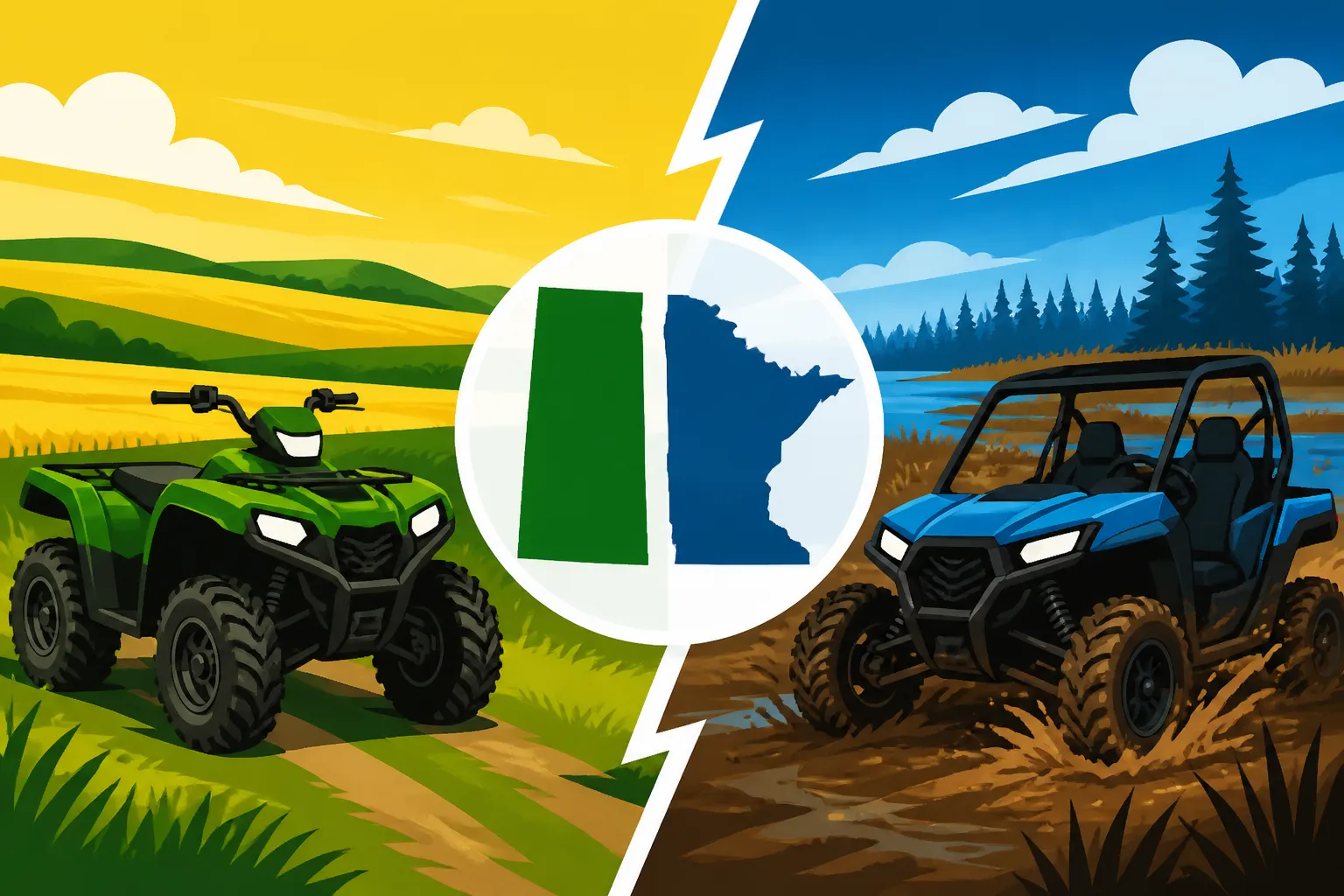
If you’re planning a ride across the Saskatchewan-Manitoba border, the confusing part is that the two provinces don’t treat access, paperwork, and trail networks the same way. Saskatchewan offers designated park routes and riding opportunities on some Crown land, while Manitoba’s rules and trail access can hinge on registration and local permissions. This guide explains what to compare before you load the machines.
How ATV and UTV access differs between Saskatchewan and Manitoba
Saskatchewan access depends on the land and local rules
In Saskatchewan, there isn’t one province-wide ATV trail pass that makes every route available. Where you can ride depends on the land’s status, any posted restrictions, and rules set by the park, municipality, or landholder. A route that looks open on a map may cross private land, a grazing lease, a closed area, or a road where riding is restricted.
Designated routes in provincial parks are a different situation from general Crown land access. Parks can require riders to use specific trails, complete park requirements, or follow seasonal closures. In other areas, permission may be needed before crossing occupied Crown land or a grazing lease. Start with [Saskatchewan ATV Trails: Crown Land and Ditches] and [Saskatchewan Crown Land Riding Explained] when you’re sorting out what kind of land a route crosses.
For example, a rider leaving the Regina area for a weekend near Moose Mountain should check the park’s designated riding information rather than assume that any nearby forest road is open to ATVs. The same goes for northern destinations near Narrow Hills or Great Blue Heron: confirm which routes are intended for machines, whether there are current closures, and what permits or forms apply.
Manitoba access often centers on designated routes and local trail systems
Manitoba riding also requires more than spotting a forest road or an open-looking trail. Access can depend on provincial rules, municipal bylaws, the land manager, and the local trail organization. Areas around Sandilands, Duck Mountain, or the Whiteshell region may sound promising when you’re browsing a map, but a place name alone doesn’t establish that a particular trail is open to ATVs or UTVs.
Before traveling, look for trail information from the relevant local club or land manager, then check for closures and restrictions that may apply to your machine. A route used by snowmobiles, hikers, or other off-road vehicles is not automatically an ATV route. Pay attention to seasonal notices, bridge or road restrictions, and whether the trail system is open to visitors.
The practical difference is that both provinces require careful route checking, but the permissions and paperwork you need may not carry across the border. If your plan involves a multi-day ride, identify the trail system for each day rather than treating the whole region as one continuous riding area.
A quick comparison before you plan
| Planning question | Saskatchewan | Manitoba |
|---|---|---|
| Is there one universal trail pass for every ATV route? | No. Park, municipal, landholder, and route rules can differ. | Don’t assume one pass or permission covers every route; check the local trail system and land manager. |
| Can you ride anywhere that appears to be Crown land or forest? | No. Closures, land status, leases, and access rules matter. | No. Confirm that the specific route is open to your vehicle and that access is permitted. |
| Does paperwork automatically transfer between provinces? | No. A visiting rider still needs to meet Saskatchewan requirements. | No. Check Manitoba’s requirements separately before riding there. |
| What should you check first? | Land access, designated trails, park requirements, municipal bylaws, and insurance. | Registration and insurance requirements, trail access, municipal rules, and local closures. |
Paperwork, insurance, and road rules across the border
Don’t assume a Saskatchewan machine needs the same plate in both provinces
Saskatchewan does not issue a general provincial ATV registration plate in the way riders sometimes expect. Some municipalities have their own plate or permit schemes, so requirements can change when you move from one community to another. That can be a surprise if you’ve bought a machine, insured it, and assumed the paperwork question was finished. See [Saskatchewan Municipal ATV Plates Explained] for the local-plate distinction.
Manitoba’s off-road vehicle requirements differ. Riders should confirm the current registration, identification, and insurance rules that apply to their vehicle and the places where they plan to ride. A plate or document issued in one province should not be treated as automatic proof that every requirement in the other province has been satisfied.
Make a small paperwork folder before you travel. Keep proof of ownership, insurance details, and any applicable registration or municipal permit information together. If you’re borrowing a machine, make sure you have the owner’s permission and know what documents the rider is expected to carry. For a Saskatchewan-bound visitor, [Saskatchewan Rules for a Visiting Manitoba Rider] is a useful starting point.
Insurance and legal road use need their own checks
Insurance deserves a separate check from registration. Verify that the policy applies to the type of machine you’re taking, the places you intend to ride, and the activities planned. Don’t assume that recreational coverage automatically permits road use or covers every passenger and accessory. Keep proof available on the ride, not tucked away at home.
Road riding is not a shortcut around trail access rules. Saskatchewan has specific restrictions on where an ATV can travel near a highway, and municipal bylaws may open or close particular roads and ditches. Manitoba also has rules governing where off-road vehicles can operate. A road that is permitted for one type of vehicle or in one municipality may be prohibited for an ATV.
Before crossing a road, entering a town, or riding along a ditch, check the local rule rather than relying on what worked on the last trip. Saskatchewan’s requirements are outlined in [Saskatchewan ATV Road Rules Explained]. For a visiting rider, the useful habit is to check the destination’s rules as carefully as the trail map.
Border travel adds a paperwork and transport check
A trip between provinces can involve more than the ride itself. If you’re hauling an ATV or UTV, check that the trailer, tie-downs, and load are ready for the drive, then make sure the machine’s ownership and insurance documents travel with it. Keep the serial number or vehicle identification number readable and record it before departure.
If the machine is borrowed, rented, or recently purchased, settle the permission and ownership questions before loading. A handwritten bill of sale or a photograph of the serial number may be useful for your records, but it does not replace any registration or insurance requirement that applies where you ride.
If the machine will be used in Saskatchewan after crossing from Manitoba, review [Saskatchewan Rules for an Out-of-Province Machine] and confirm any local plate requirements for the destination. If you’re doing the reverse, check Manitoba’s rules directly rather than assuming Saskatchewan’s approach applies there.
Trails, terrain, and choosing a destination
Saskatchewan riding can mean park routes, bush trails, or open-country planning
Saskatchewan’s riding experiences vary substantially by region. Around Moose Mountain, riders may be planning a park-focused outing with designated routes and park requirements. In the north, the ride may involve bush trails, wet ground, longer distances, and fewer convenient services. Near the south, an outing might be built around local access and a shorter day ride.
That variety is part of the appeal, but it changes what you should pack. A short, well-used route close to a community calls for a different plan than a long northern loop with limited cell service. Bring suitable recovery gear, water, basic repair items, and a navigation option that still works when your phone signal doesn’t.
When you compare destinations, look beyond advertised mileage. Ask whether the route suits your machine, whether the trails are open to side-by-sides, where you can park a trailer, and whether fuel or a place to stop is nearby. [Saskatchewan Trail Conditions Before You Haul] can help you build a pre-trip checklist.
Manitoba routes may be more club- and area-specific
In Manitoba, local trail groups and land managers can be especially important sources of practical route information. A club’s map or notice can clarify which sections are open, what machine types are welcome, and whether a route has changed because of weather, maintenance, or land-use restrictions. It’s worth checking those details shortly before leaving, even if you’ve ridden the area in a previous season.
Don’t use an old GPS track as proof of current access. A route can cross land with different rules, or its status can change. Treat a downloaded track as a navigation aid, not as permission to ride. If you’re using a mapping app such as onX Offroad to review a route, compare the map with current information from the club or land manager. A map can help you understand where you are, but it cannot grant access.
This is particularly helpful when a group includes riders who have different expectations. Someone used to broad rural routes may assume a connecting trail is open, while a local rider knows that it crosses a restricted area. Agree on the route, permissions, and backup plan before the convoy reaches the trailhead.
Use a map to plan, then verify on the ground
Digital maps are useful for estimating travel time, identifying access roads, and keeping a group oriented. onX Offroad can be part of that planning process, especially when you want to compare a proposed route with your staging point or see how a day’s ride might fit together. Still, no digital map should be treated as the final word on legal access or current trail conditions.
Download or save the information you need before leaving reliable service. Keep a paper map or written route notes for remote rides, and tell someone where you expect to be and when you plan to return. If the trailhead sign contradicts an old track, follow the posted restriction and reassess the route.
For a Saskatchewan trip, this matters when you’re connecting a staging area to park or Crown land routes. For Manitoba, it matters when separate local trail sections appear to join on a map. Check signage, ask local club contacts when available, and turn around if access is unclear.
A practical cross-border trip plan
Build the itinerary around confirmed access
Start with the destination, not the distance you hope to ride. Choose the specific trail system or park area, then confirm that ATVs or UTVs are allowed there, that the route is open, and that your machine fits any restrictions. Record the trailhead location and identify a backup option in case weather, closures, or access conditions change.
Next, check the rules for each jurisdiction on your itinerary. A Saskatchewan-based ride and a Manitoba-based ride may have different registration, insurance, road-use, and local-permit requirements. If your group crosses municipal boundaries, check those too. [Saskatchewan Bylaw Lookups Before You Ride] is a useful reminder that local rules deserve a spot on the planning list.
Use onX Offroad or another navigation tool to organize your route, but verify access with the relevant park, municipality, or trail organization. Save the route offline where possible, and share the plan with someone who isn’t riding with you.
Prepare the machine and the group for the terrain
A paved drive to the trailhead can make a destination feel close, but the ride itself may be remote. Check tires, brakes, lights, fuel, and recovery equipment before departure. Bring clothing for changing conditions, a first-aid kit, and enough water and food for a delay. In muddy or northern terrain, think through how you’ll recover a stuck machine without damaging the trail or putting anyone at risk.
Set expectations with the group before the first turn. Decide who leads and sweeps, agree on regroup points, and make sure every rider knows the intended route. Newer riders may need a shorter loop, while a mixed group with side-by-sides and smaller ATVs may need to choose routes that suit the least capable machine.
Good trail behavior also matters when you’re visiting a community. Stay on authorized routes, slow down near homes and other trail users, leave gates as you found them, and pack out what you bring in. [Saskatchewan Trail Etiquette Locals Expect] offers practical reminders for being a considerate guest.
Use a final checklist before the trailer leaves home
A short checklist catches the mistakes that are easy to make when everyone is excited to go. Confirm the destination’s access, the machine-specific rules, the insurance documents, and any local permit or registration requirement. Then check the forecast and trail notices, and make sure your route and return time are shared with someone.
For a trip from Saskatchewan into Manitoba, verify Manitoba requirements before the border crossing. For a Manitoba rider heading west, check Saskatchewan’s rules and the specific municipal or park requirements at the destination. Don’t assume the home-province plate, insurance card, or trail pass answers every question.
| Before departure | What to confirm |
|---|---|
| Route | The specific trail is open and permits your machine type. |
| Land access | Any private, leased, municipal, or protected land restrictions are understood. |
| Documents | Ownership, insurance, and applicable registration or local permit details are ready. |
| Machine | Tires, brakes, lights, fuel, and recovery equipment suit the route. |
| Navigation | Route information is saved offline, with a backup map or notes. |
| Group plan | Riders know the route, regroup points, and expected return time. |
Comparing Saskatchewan and Manitoba riding is less about declaring one province easier than the other and more about understanding the different checks each trip requires. Confirm access, verify local rules, and treat maps as planning tools rather than permission. That small amount of preparation can prevent a long haul to a closed trailhead—or an uncomfortable conversation about paperwork once you arrive.
Disclaimer
This article is for general informational purposes only and does not constitute professional advice. Laws, prices and regulations vary by location and change over time. Consult a qualified professional for guidance on your specific situation.