Boots for Muskeg Water
A Saskatchewan muskeg crossing can soak your boots in minutes, and cold, wet feet make a long ride miserable fast. The tricky part is choosing footwear that can handle splashes and mud without sacrificing ankle support or control of the foot pegs and pedals. This guide explains what to wear, what to pack, and when it is safer to stay out of the bog.
Why muskeg water changes your footwear choice
A wet boot is more than a comfort problem
Muskeg can be a mix of water, saturated soil, roots, and soft vegetation. Around northern Saskatchewan, a trail that looks firm from the seat may hide a muddy edge or a water-filled rut. Even if you do not plan to step into the wet ground, splashes, puddles, and an unexpected stop can soak your footwear.
Cold, wet feet can become numb and clumsy. That matters when you need to shift your weight, brake, or get off a machine carefully. A boot that is water-resistant but uncomfortable when damp may be adequate for a short, warm ride; it can be a poor choice for a remote loop where you may spend hours away from the truck.
There is another concern: a boot that feels fine while standing can be awkward on the machine. Bulky toes may catch on a shift lever, a loose shaft can interfere with controls, and a slick sole may feel unstable on a wet foot peg. Before heading out, sit on the machine with your riding gear on and check that you can move your feet freely.
Waterproof does not mean suitable for every crossing
Waterproof footwear helps with splashes and shallow puddles, but it is not a licence to walk into muskeg. Water can be deeper than it appears, and soft ground can hold a boot in place. A high waterproof boot may keep water out until it reaches the top; once water gets inside, it can be difficult to drain and uncomfortable to wear.
Stay on established routes and do not leave a trail to test the ground on foot. If a section looks flooded, badly rutted, or uncertain, stop somewhere stable and assess it from a safe distance. Check local access information and route conditions before you unload. Saskatchewan Muskeg and Machines explains why boggy ground can be hard on both riders and machines, while Winching a Stuck Quad Out of Northern Bush is useful preparation for the possibility that a machine gets bogged down.
How to choose boots for a Saskatchewan ride
Compare footwear by conditions, not by the waterproof label
There is no single boot that suits every Saskatchewan ride. A short summer trip on a maintained trail has different demands from a cold morning in northern bush, where wet ground and a long return to the staging area are possible. Think about expected temperature, the likelihood of splashes, how far you might need to walk, and whether the footwear works with your machine.
| Footwear type | Where it can work well | Main drawback to consider |
|---|---|---|
| Waterproof riding or outdoor boot | Mixed conditions where ankle support and splash protection matter | Water can enter over the top, and prolonged soaking may overwhelm the membrane |
| Insulated waterproof boot | Cold rides with a higher chance of standing around in wet conditions | Can feel bulky or too warm during active riding; check control clearance |
| Rubber or muck boot | Brief, muddy chores or short walks where flexibility is not critical | Often provides less ankle support and can feel loose or awkward on foot pegs |
| Waterproof hiking boot | Drier routes with occasional splashes and some walking | May not offer the durability or protection expected for regular ATV use |
| Ordinary work boot | Dry conditions if it fits securely and has a suitable sole | Many work boots are not waterproof and may be stiff or slick when wet |
Treat the table as a starting point, not a guarantee. Construction and fit vary widely. A boot advertised as waterproof may still leak through seams, wear, or the opening at the top, and insulation is not automatically useful if it makes your foot too cramped to move comfortably.
For a ride where you expect mud and occasional shallow water, a securely laced, supportive waterproof boot is often a more balanced option than a tall, loose rubber boot. If you choose a rubber boot for a particular job or short ride, check that it stays firmly on your foot and does not compromise your ability to operate the machine.
Check fit, soles, and control clearance at home
Try boots on with the socks you expect to wear. Your toes should have room to move, but your heel should not lift excessively when you walk. A boot that is tight with a thin sock may become painful with a warmer pair, while an overly loose boot can rub and feel unstable.
Look for a sole that grips reasonably well on wet surfaces without being so bulky that it blocks your feel for the foot controls. Deep tread can help when walking on muddy ground, but it can also collect mud. Check that the boot does not catch on the foot peg, shift lever, brake pedal, or UTV floor controls.
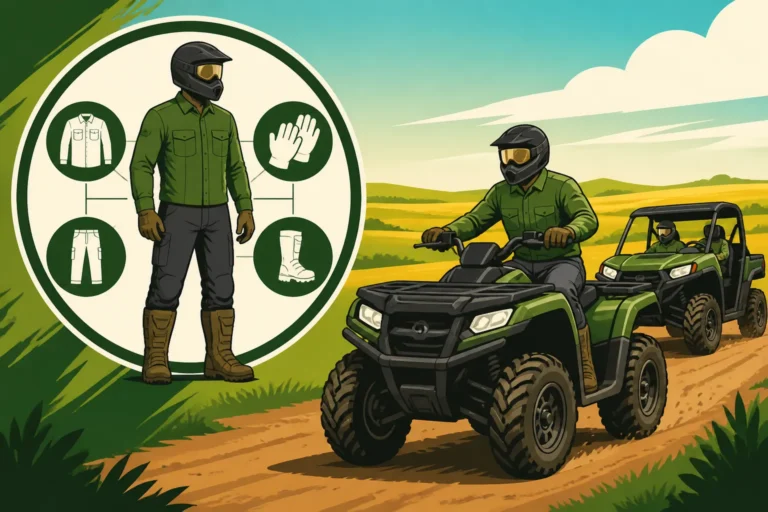
Make a short gear check before the ride: sit in your normal riding position, move between controls, and stand on the pegs if that is part of how you ride. Confirm that laces are tucked away and that no strap can snag. These small checks are easier to do in the driveway than beside a muddy trail.
Keep feet warmer and drier through the ride
Choose socks and layers that still work when damp
Socks matter, but piling on thick layers is not always the answer. A boot that compresses your toes can reduce comfort and leave less room for warmth. Try the full combination before leaving home, and make sure you can still move your toes and operate the controls normally.
Avoid cotton for a long, wet ride because it tends to stay damp against the skin. A wool or synthetic sock can be more comfortable when conditions turn wet, but the right choice depends on the boot’s fit and the temperature. If your feet are already cramped in the cab or on the foot pegs, adding another layer may make things worse.
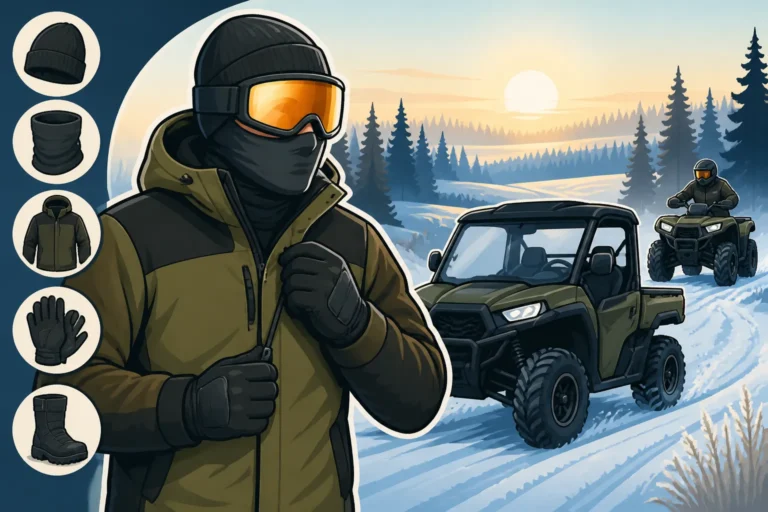
Carry a dry pair of socks in a sealed bag, even if the forecast looks promising. Keep them with other dry essentials rather than loose in a cargo area where a splash can soak them. If you expect a cold start or a full day in the bush, What to Wear on a Cold Northern Morning offers a broader gear-planning checklist.
Gaiters and boot care can help, with limits
Gaiters can reduce water, mud, and debris entering around the top of a boot. They are most useful when they fit securely and do not flap, snag, or interfere with your riding gear. They cannot make a low boot safe for deep water, and they will not keep water out if a crossing overtops them.
Before a ride, check the boot’s seams, laces, closures, and sole. A boot that was reliable last season may have a worn seam or damaged sole now. After the ride, remove mud and let the boots dry according to the maker’s care instructions. Avoid putting them directly beside intense heat, which can damage some materials or adhesives.
If your boots get wet, change into dry socks when you can and let the damp pair dry separately. A spare pair of footwear in the truck is useful for the drive home, but do not leave it where it can get soaked by muddy gear. If you are heading into a park or another managed riding area, follow the local cleaning requirements for machines and gear; Washing Mud Off a Quad Before the Next Park covers the machine-cleaning side of that preparation.
Plan around water instead of relying on boots
Check the route and conditions before unloading
Footwear is only one part of a muskeg plan. Recent rain, seasonal water levels, and trail maintenance can change what a route feels like under your tires. Read local notices, ask a club or park contact about conditions where possible, and be ready to turn around if the route is beyond your comfort level.
A mapping tool such as onX Offroad can help you review your planned route before setting out. Use it as one planning aid, not as proof that a trail is open, dry, or suitable for your machine. Confirm access and closures through the relevant local or land-management information, and do not treat a line on a map as permission to ride across land.
Keep a paper map or another backup navigation option for remote areas, and let someone know where you expect to ride and when you plan to return. Routes north of Prince Albert can involve stretches where changing conditions and limited connectivity make a simple plan especially valuable. Which Tires Handle Muskeg North of Prince Albert looks at the machine side of the same terrain challenge, and Saskatchewan Trail Conditions Before You Haul can help you think through a pre-trip check.
Know when to turn back or walk away
Do not ride into water simply because your boots are waterproof. If you cannot judge the depth or bottom, if the trail edge is collapsing, or if the machine is already sinking, stop and reassess rather than adding throttle. Spinning tires can dig the machine deeper and damage the trail.
If you need to get off, choose the firmest safe spot available and avoid stepping into unknown water or soft ground. Do not ask a passenger to walk ahead through a bog to test it. If the route requires a crossing you cannot assess safely, turn around and choose another way back.
For northern rides, pack for the possibility that a short stop becomes a longer one: dry socks, a warm layer, a first-aid kit, and a way to navigate if your phone has no service. onX Offroad may be useful for reviewing route options before departure, but save and carry whatever navigation backup is appropriate for your trip. First Aid Kit for a Long Northern Loop is a helpful companion when preparing for more time away from the trailhead.
A practical pre-ride footwear check
Before you load the machine, run through this quick checklist:
- Try on the boots with your riding socks and confirm there is toe room without excessive heel movement.
- Sit on the machine and test the brake, shift lever, foot pegs, or UTV pedals.
- Tuck in laces and secure any loose straps or gaiters.
- Pack dry socks in a sealed bag and keep them separate from wet gear.
- Check route access and local conditions; do not assume a familiar crossing is unchanged.
- Choose a turnaround point in advance if water or soft ground looks worse than expected.
A boot can make a wet day more manageable, but it cannot make uncertain muskeg safe. The best choice combines secure fit, useful support, a sole that works with your controls, and enough water protection for the conditions you actually expect. Pair that with sensible route planning, and be willing to skip a crossing when the ground is not clear.
Disclaimer
This article is for general informational purposes only and does not constitute professional advice. Laws, prices and regulations vary by location and change over time. Consult a qualified professional for guidance on your specific situation.