Saskatchewan Trail Volunteer Days
A trail volunteer day can be a satisfying way to give back, but it is hard to know where to start if you are new to Saskatchewan’s ATV community. This guide explains what volunteer days may involve, how to find an organized opportunity, what to bring, and how to help responsibly without damaging trails or riding where access is not allowed.
What Saskatchewan ATV trail volunteer days involve
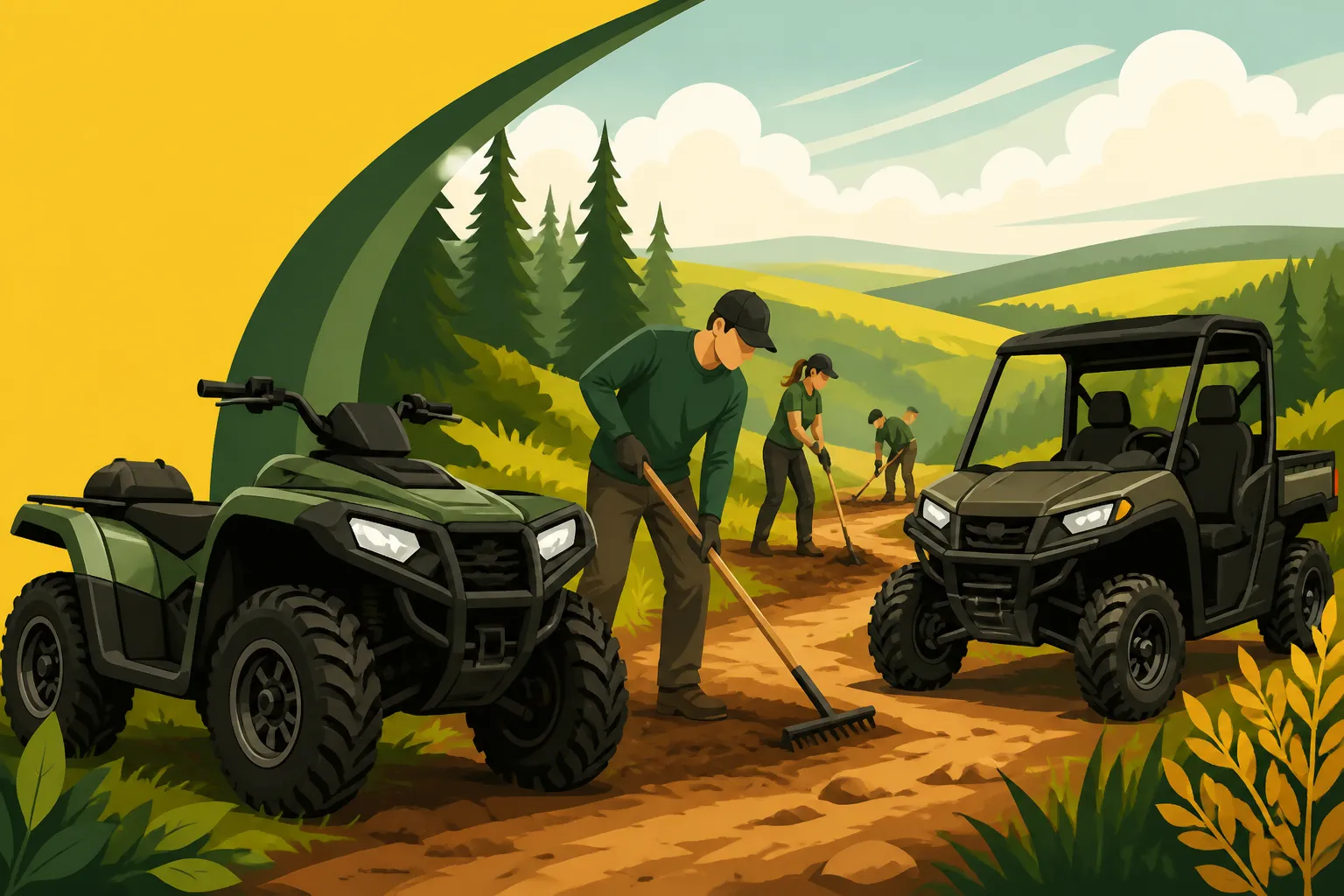
Volunteer work is not always a full day of riding with a quick cleanup at the end. Depending on the local club, land access, trail condition, and task list, it may involve walking or riding to a work site, clearing light brush, picking up litter, checking signs, or helping prepare a route for other riders. The organizer should explain the specific job and how the group will get there.
A club workday is also a chance to learn how a local trail network is maintained. Riders may discover that a route depends on permission, regular checks, clear markers, and volunteers who report problems before they become bigger hazards. To find clubs and groups in the province, start with [Saskatchewan ATV Clubs Worth Joining](Saskatchewan ATV Clubs Worth Joining). For a look at how some club routes relate to Crown land access, see [Saskatchewan Club Trails on Crown Land](Saskatchewan Club Trails on Crown Land).
Common tasks at a workday
Trail cleanup is one of the most familiar jobs. Volunteers may collect litter, remove small debris, or tidy an unloading area or trailhead. Take only the tasks assigned by the organizer: moving a large fallen tree, cutting branches, or handling discarded material can involve tools or hazards that require training and the right equipment.
Some days focus on brushing back vegetation or improving sightlines around a bend. Other work may include checking trail markers, replacing or straightening signs, or reporting a washed-out section. Trail work can be physically demanding even when the job sounds simple. A route that looks easy from a map may involve uneven ground, mud, insects, or a long walk from the staging point.
A volunteer event may also be more about observation than repair. Participants can help identify a damaged sign, a blocked section, or a place where riders are straying off the established route. Recording a problem and giving its location to the organizer can be more useful than attempting an unauthorized fix.
Why organized work matters
A route is not automatically open just because it appears on a map or has tire tracks. Access may depend on landowner permission, a club agreement, local rules, seasonal conditions, or restrictions that change when a fire risk or other hazard arises. Organized volunteers are more likely to know which sections they have permission to work on and what activities are appropriate there.
That distinction matters on Crown land and near private land, grazing leases, parks, and other managed areas. A volunteer should not assume that a trail-maintenance task gives permission to enter adjoining land or make changes to it. Ask the organizer where the work area begins and ends, and follow their directions. For broader access considerations, review [Saskatchewan Crown Land Riding Explained](Saskatchewan Crown Land Riding Explained) and [Saskatchewan Grazing Lease Permission](Saskatchewan Grazing Lease Permission).
Good maintenance also depends on riders behaving responsibly after the workday. Keeping to an established route, respecting signs, and not widening a muddy trail help preserve the work volunteers have done. [Saskatchewan Trail Etiquette Locals Expect](Saskatchewan Trail Etiquette Locals Expect) covers the kind of considerate riding habits that make shared routes more enjoyable.
How to find and prepare for a volunteer day
The most practical first step is to contact a local ATV club or trail group and ask whether it has an upcoming workday. If you do not know which club maintains a route near you, ask a nearby club, municipality, or local riding community whether they can point you toward the right organizer. Do not assume that a social media post or an old event listing reflects current access or plans; confirm the details directly before travelling.
Questions to ask before you go
A few clear questions can prevent a frustrating trip. Ask where and when the group is meeting, whether volunteers should bring their own machine, and whether the work involves walking, riding, tools, or physical lifting. Find out whether the organizer supplies equipment and protective gear, or whether participants need to bring specific items.
It is also worth asking whether registration is needed, whether youth can attend, and whether riders need to carry proof of insurance or other documents. Requirements can differ by location and activity, so do not rely on what was expected at a different event. If machines will be used, ask where they may be operated and what rules apply along the route.
Use a checklist before leaving:
- Confirm the meeting place, start time, and expected finish time with the organizer.
- Ask what the task involves and whether you need tools or protective equipment.
- Check the forecast and the organizer’s latest message for changes.
- Bring drinking water, snacks, suitable clothing, sturdy footwear, and any personal medication.
- Make sure your machine is in safe working condition if you have been asked to bring one.
- Tell someone where you are going and when you expect to return, especially if the event is in a remote area.
Do not pack equipment just because you own it. A chainsaw, cutting tool, or other powered equipment should only be used when the organizer has approved it and you are competent to operate it safely. If the job needs a tool you do not have, mention that beforehand rather than improvising at the site.
Planning the route and checking conditions
Get clear directions to the meeting point, including a backup plan if phone coverage is limited. Some trailheads are not obvious from a highway, and a mapping pin may not show whether a road is passable or whether you are allowed to use it. A map tool such as onX Offroad can help with route planning, but it should not be treated as proof that a trail is open or that you have permission to enter an area. Confirm access with the event organizer.
Before hauling a machine, check that the event is still going ahead and ask about road or trail conditions. Spring thaw, heavy rain, washouts, and fire-related restrictions can affect plans. The organizer may postpone a workday to avoid creating ruts or to keep people away from a closed area. For more planning advice, see [Saskatchewan Trail Conditions Before You Haul](Saskatchewan Trail Conditions Before You Haul).
If you use onX Offroad or another mapping app to get oriented, save or note the organizer’s meeting instructions separately. A digital map is a useful aid, not a replacement for directions, posted signs, or permission from the people managing the route. In areas with weak coverage, bringing a paper map or written directions can be a sensible backup.
Volunteer safely and leave the trail better
A volunteer day should be planned around the people doing the work, not just the trail itself. A small crew can be spread out quickly, particularly where visibility is limited or the route bends through bush. Stay within the organizer’s plan, keep track of your group, and do not move ahead to “help” on another section without checking in.
Protect yourself and other volunteers
Wear clothing suited to the conditions and task. Long sleeves and pants can help protect against brush, insects, and sun; sturdy footwear can make uneven or wet ground easier to manage. Bring water and take breaks before you are exhausted. If you have a health concern that could affect the work, consider discussing it privately with the organizer so the task can be adjusted.
When machines are part of the event, use them only where the organizer says they are needed. Keep speed low around people, stop when visibility is limited, and give workers plenty of space. Never assume that everyone in the work area can see or hear an approaching ATV or UTV. Follow applicable riding rules and any event-specific instructions.
Tool use deserves particular care. Ask who is responsible for each tool, how it should be used, and where it should be stored when not in use. Do not operate unfamiliar equipment or take on a task beyond your training. If you see a hazard, stop and tell the organizer rather than trying to solve it alone.
Avoid damage and respect access boundaries
A well-intentioned volunteer can still cause harm by riding around a blockage, cutting vegetation without approval, moving a sign, or widening a trail to get around mud. Those changes may create new access problems or damage sensitive ground. If a section seems unsafe or impassable, mark the location in a way the organizer approves and report it.
Stay on the route the group has been authorized to use. Do not cross a gate or enter a private area unless the organizer has confirmed permission. Be especially careful near water, wet ground, and soft shoulders; repeated passes can turn a minor soft spot into a larger rut. The best choice may be to leave the area untouched until conditions improve.
Check for fire-related instructions before travelling and again before the event if conditions are dry. Keep machines and work areas clear of combustible debris where required, and follow any posted restrictions or directions from the organizer. For a broader overview of seasonal preparation, see [Saskatchewan Wildfire Season Rules for Riders](Saskatchewan Wildfire Season Rules for Riders). Volunteers should never treat trail maintenance as permission to ignore a closure.
Choosing the right event and making your help count
Not every volunteer day suits every rider. Some are family-friendly cleanup events; others may involve long walks, brush work, or specialized tools. A new volunteer can make a valuable contribution by showing up on time, following directions, and taking on a manageable task. You do not need to be an experienced mechanic or trail builder to be useful.
| Type of volunteer work | What it may involve | A good question to ask |
|---|---|---|
| Litter cleanup | Collecting discarded items at a trailhead or along an approved route | Are bags or disposal arrangements provided? |
| Trail inspection | Looking for damaged signs, obstructions, or erosion | How should I record and report problems? |
| Light brushing | Clearing small vegetation under organizer direction | What tools and protective gear are needed? |
| Sign work | Checking, straightening, or replacing markers | Who approves sign placement and wording? |
| Staging-area cleanup | Tidying an unloading or meeting area | Where should collected material go? |
| Event support | Helping with check-in, directions, or group coordination | What time should volunteers arrive, and who is the contact? |
Match the task to your experience
If you are new, say so when you contact the organizer. You can ask for a simple assignment or volunteer alongside someone who knows the route. That is a sensible way to learn local practices without feeling pressure to operate tools or make decisions you are not ready to handle.
Experienced riders can contribute more than machine time. They may know how to recognize a developing trail problem, help newcomers understand local etiquette, or share useful information about a route’s condition. Still, local knowledge does not replace the organizer’s permission or the rules of the land manager. Check before making a change, even if you have ridden the area for years.
If you are unsure whether a workday is suitable for a young rider, ask directly about age expectations, supervision, and the nature of the tasks. A child might be able to help with a supervised cleanup near a staging area but not with equipment or remote work. Make the decision based on the event plan rather than assuming all volunteer activities are appropriate for every age.
Keep helping after the event
A volunteer’s contribution does not end when the tools are packed away. Follow the organizer’s instructions for reporting an issue you notice later, and avoid posting sensitive access details publicly if that could encourage unauthorized use. When you ride the route, respect signs and closures, and remind your group that a maintained trail depends on continued care.
You can also help by sharing accurate event information with other riders, encouraging new volunteers, and checking in with the club before planning a group visit. If you use onX Offroad to prepare for a ride, compare your planned route with organizer guidance and posted restrictions rather than relying on a mapped line alone. For more on local clubs and collective trail care, see [Saskatchewan Trail Volunteer Days](Saskatchewan Trail Volunteer Days).
If the event is postponed or a route is closed, treat that as part of responsible trail stewardship, not a wasted trip. Protecting soft ground, respecting a fire restriction, or waiting for permission can preserve access for everyone. Showing up prepared and leaving decisions about trail work to the people responsible for the route are two of the most useful ways a volunteer can help.
Disclaimer
This article is for general informational purposes only and does not constitute professional advice. Laws, prices and regulations vary by location and change over time. Consult a qualified professional for guidance on your specific situation.