Saskatchewan Rules for an Out-of-Province Machine
It's incredibly frustrating when you want to explore the vast, beautiful landscapes of Saskatchewan on your ATV or UTV, but you're not sure if the rules from your home province or state even apply here. Many riders from outside Saskatchewan worry about getting a ticket or having their machine impounded simply because they don't understand the unique local regulations for out-of-province machines. This guide is here to clear up that confusion, helping you understand exactly what you need to know, carry, and do to ride legally and safely in Saskatchewan, whether you're just visiting or making the Prairies your new home.
Understanding Saskatchewan's Foundational ATV Rules for Everyone
Before we dive into the specifics for out-of-province machines, it's crucial to grasp the bedrock of ATV and UTV regulations here in Saskatchewan. Unlike many other jurisdictions, Saskatchewan has a somewhat unique approach, especially concerning registration and plates. This often surprises visitors and can be a source of confusion.
First and foremost, you need to understand that [Saskatchewan Does Not Register ATVs] provincially. This is a huge departure from provinces like Alberta or Manitoba, and certainly from many states in the US. There's no provincial database, no central system to record your ATV's ownership with the government, and consequently, [Saskatchewan Has No ATV Plate or Decal] issued by the province. This means that if you're pulling your quad into Saskatchewan from, say, British Columbia, where it might have a plate or decal, that provincial plate or decal from your home jurisdiction is what you would continue to display, even though Saskatchewan itself wouldn't issue one for a local machine. It's a key distinction that shapes many of the other rules you'll encounter.
Despite the lack of provincial registration, the operation of ATVs and UTVs is still governed by [Saskatchewan's All Terrain Vehicles Act]. This piece of legislation outlines everything from age restrictions to helmet laws, and it applies to everyone riding an ATV or UTV within the province's borders, regardless of where their machine is from. So, while you might not need to register your out-of-province machine in Saskatchewan, you absolutely need to comply with the operational rules set forth in this Act. This includes requirements for lights, brakes, and spark arrestors, among others. Ignorance of these rules, unfortunately, isn't an excuse, and a peace officer can certainly issue a citation for non-compliance.
The lack of provincial registration doesn't mean a free-for-all when it comes to identifying your machine or proving ownership. In Saskatchewan, your bill of sale and the machine's Vehicle Identification Number (VIN) are paramount. For an out-of-province machine, you should always have your original registration documents from your home province or state, proof of ownership (like a bill of sale), and any other relevant paperwork readily available. This becomes especially important if you encounter an officer or if your machine is ever stolen. The VIN is the primary identifier for your machine, and it's what law enforcement will use to trace ownership, regardless of where your quad originated.
What an Out-of-Province Rider Needs to Know and Carry
When you're visiting Saskatchewan with your ATV or UTV, you're essentially bringing your home province's or state's machine into a new regulatory environment. The good news is that Saskatchewan generally extends a certain level of reciprocity to visitors, meaning you're not usually expected to suddenly comply with local registration rules that don't even exist for ATVs here. However, there are crucial operational requirements that do apply to you.
The most critical thing to understand is that while Saskatchewan doesn't register ATVs provincially, it does require all operators to meet certain standards. Firstly, [Saskatchewan Requires a Driver's Licence] for anyone operating an ATV or UTV on public land, ditches, or roads where allowed. This means your valid driver's licence from Alberta, Manitoba, Montana, North Dakota, or wherever you hail from, is absolutely necessary. Don't assume that because it's an off-road machine, a licence isn't needed – it is, especially if you're not strictly on private land. This is a common pitfall for riders used to more lenient rules in their home jurisdictions.
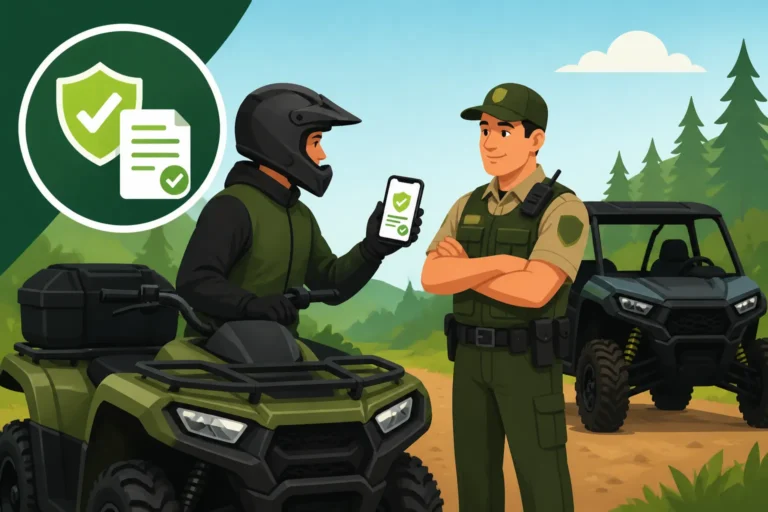
Secondly, [Saskatchewan Insurance Requirements for Riders] are non-negotiable. Every ATV or UTV operated in Saskatchewan, even if it's from out-of-province, must have at least $200,000 in third-party liability insurance. This insurance protects you financially if you cause an accident that injures someone or damages property. You need to be able to [Proof of Insurance Is What Saskatchewan Officers Ask For] if you're stopped. This means carrying your insurance card or policy document with you whenever you ride. If you're coming from a jurisdiction where ATV insurance isn't mandatory or where the minimum coverage is lower, you need to ensure your policy meets Saskatchewan's minimums before you head out on the trails or ditches. Many riders opt for robust aftermarket accessories from companies like SuperATV to enhance their machine's capabilities, but remember, no matter how many upgrades you have, liability insurance is your most crucial piece of safety gear.
Thirdly, safety gear is mandatory. [Saskatchewan Helmet and Eye Protection Rules] apply to everyone. This means you must wear an approved helmet that meets recognized safety standards (like DOT or Snell) and appropriate eye protection (goggles or a face shield). These aren't suggestions; they are legal requirements designed to protect you. Even if your home province has different rules, once you're on Saskatchewan soil, these rules apply. It's a small price to pay for potentially saving your life in an accident.
Here's a quick reference table for what to carry:
| Item | Description | Applies to Out-of-Province Riders? |
|---|---|---|
| Driver's Licence | Valid licence from your home jurisdiction. | Yes |
| Proof of Insurance | Document showing minimum $200,000 third-party liability coverage. | Yes |
| Proof of Ownership | Bill of sale, home province registration (if applicable), or title documents. | Yes |
| Machine Registration | Your home province/state's ATV/UTV registration (if applicable). Saskatchewan does not issue its own. | Yes (your home one) |
| Helmet | Approved safety helmet (DOT, Snell, ECE). | Yes |
| Eye Protection | Goggles or face shield. | Yes |
| Spark Arrestor | A functioning spark arrestor on your exhaust. | Yes |
Always keep these documents on your person or securely on your machine in a waterproof pouch. An officer can ask for them at any time.
Specific Considerations for Neighboring Jurisdictions and New Residents
While the general rules apply to all visitors, there are specific nuances depending on where you're coming from, and a completely different set of considerations if you're moving to Saskatchewan permanently.
For Riders Visiting from Other Canadian Provinces
For those coming from Alberta or Manitoba, the biggest difference you'll encounter is Saskatchewan's lack of provincial ATV registration. In Alberta, you might have registered your machine and received a registration document. In Manitoba, you definitely register your ATV and get a plate. When you ride into Saskatchewan, [Saskatchewan Rules for a Visiting Alberta Rider] and [Saskatchewan Rules for a Visiting Manitoba Rider] largely revolve around carrying your existing provincial registration and adhering to Saskatchewan's operational rules. Your Alberta or Manitoba registration is valid as proof that your machine is properly documented in your home province. The key here is not needing to also register in Saskatchewan, because there's simply no provincial system for it. You will, however, need to meet the insurance, licensing, and safety gear requirements as outlined above.
For Riders Visiting from the United States
Visitors from US states like Montana or North Dakota will find similar requirements. Since Saskatchewan doesn't have a provincial registration system for ATVs, your Montana or North Dakota title or registration documents are your primary proof of ownership and home state compliance. [Saskatchewan Rules for a Visiting Montana Rider] and [Saskatchewan Rules for a Visiting North Dakota Rider] mean you must still carry your valid driver's license (or equivalent), proof of at least $200,000 USD liability insurance, and adhere to Saskatchewan's helmet, eye protection, and operational laws. Be aware of currency conversions for insurance minimums if your policy is US-based. Also, ensure your machine has a functioning spark arrestor, which is vital for preventing wildfires in dry prairie conditions. Some states have different age restrictions for riders; always defer to Saskatchewan's stricter rules, such as the general prohibition for riders under 16 without supervision.
For New Residents Moving to Saskatchewan
This is where things get a bit more interesting. If you're moving to Saskatchewan with your ATV or UTV, you don't need to do anything with the province itself regarding registration, simply because it doesn't exist. Your existing proof of ownership from your previous jurisdiction (bill of sale, title, old registration) becomes your permanent record of ownership in Saskatchewan. You should keep these documents safe, as they essentially stand in for a provincial "title" that doesn't exist here. For future sales, you'll rely on a [Saskatchewan Bills of Sale Do the Work].
However, even though the province doesn't require registration, some municipalities might have their own local permit or plate schemes. Places like the District of Lakeland or the Village of Candle Lake have municipal bylaws that require a local permit or plate to operate an ATV or UTV within their specific boundaries, often on designated roads or trails. If you're moving to one of these areas or plan to ride there frequently, you would need to contact that specific municipality to obtain their local plate, regardless of where your machine came from. This is crucial for local compliance, and it's something many new residents overlook, leading to unexpected fines. Accessories from companies like SuperATV can make your machine more robust, but they won't help you bypass local municipal bylaws.
Navigating Common Riding Scenarios with an Out-of-Province Machine
Understanding the paperwork is one thing, but knowing where and how you can legally ride your out-of-province machine in Saskatchewan is just as important. The province has specific rules about where ATVs and UTVs can operate, particularly concerning public roads and land.
Riding on Public Roads and Ditches
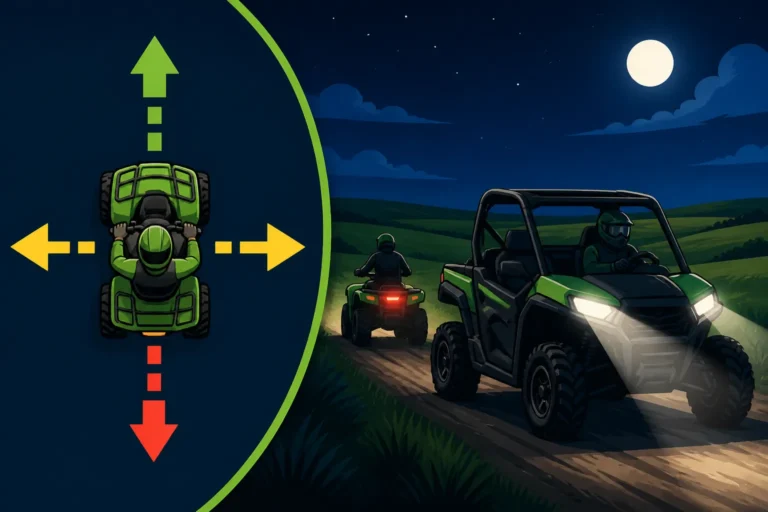
One of the most frequently asked questions is about riding on roads. Generally, in Saskatchewan, ATVs and UTVs are not permitted on the travelled portion of provincial highways. However, they can often be operated in the ditch adjacent to these highways, under strict conditions. [Saskatchewan Rules for Riding a Ditch] stipulate that you must stay at least two metres from the travelled portion of the highway, travel in the same direction as adjacent traffic, and adhere to specific speed limits, usually 80 km/h. This is often where riders run afoul of the law if they're not careful. Similarly, [Saskatchewan Rules for Crossing a Highway] state that all passengers must dismount, and the crossing must be made at a right angle by the shortest, most direct route after coming to a complete stop. These rules apply equally to locals and visitors.
Furthermore, individual [Saskatchewan Municipal Bylaws on Roads] can dictate whether ATVs and UTVs are permitted on grid roads or town streets within their boundaries. Some rural municipalities allow it, while others restrict it heavily. Before you venture onto any municipal road, it's always best to check with the local RM office. A great way to do this is to visit their website or call ahead to ask about their specific ATV bylaws. Never assume that because it's allowed in one RM, it's allowed everywhere.
Riding on Crown Land and Private Land
Saskatchewan offers extensive opportunities for off-road riding, particularly on Crown land. However, access to Crown land is not unrestricted. There may be specific administrator orders that close certain areas, or seasonal restrictions due to things like [Saskatchewan Wildfire Season Rules for Riders]. Always check for current fire bans and access restrictions before planning your trip, especially if you're coming from out of province and aren't familiar with local conditions. The provincial government's website often has up-to-date information on fire bans and closures.
When it comes to private land, the rule is simple: you must have explicit permission from the landowner before riding. This includes farm fields, pastures, and even wooded areas that are privately owned. Trespassing laws are enforced, and landowners have the right to deny access. Always seek permission, preferably in writing, to avoid any misunderstandings or legal issues. Whether your machine is stock or equipped with heavy-duty control arms and lift kits from SuperATV for tackling rough terrain, respecting private property rights is paramount.
Remember, the goal is to enjoy Saskatchewan's beautiful outdoors responsibly. By understanding and adhering to these rules, out-of-province riders can have a fantastic and hassle-free experience exploring everything the province has to offer on their ATV or UTV.
Disclaimer
This article is for general informational purposes only and does not constitute professional advice. Laws, prices and regulations vary by location and change over time. Consult a qualified professional for guidance on your specific situation.