When a Dealer Handles the Paperwork for You
Navigating the world of ATV and UTV purchases can feel like a maze, especially when it comes to paperwork. Many folks assume that when you buy a brand-new or even a used machine from a dealer, everything will be magically handled, leaving you free to just sign on the dotted line and ride off into the sunset. The reality in Saskatchewan, however, is a little more nuanced, and misunderstanding your responsibilities can lead to headaches down the road. This guide is here to untangle the paperwork process, explaining precisely what a Saskatchewan dealer will take care of for your ATV or UTV purchase, what remains your responsibility, and why that distinction is so critical.
Understanding Saskatchewan's Unique ATV Paperwork Landscape
Before we dive into what your dealer does or doesn't do, it's crucial to grasp the fundamental difference in how Saskatchewan treats ATVs compared to, say, your car or truck. This isn't just a minor detail; it's the entire foundation upon which all ATV ownership paperwork rests in our province.
Saskatchewan Does Not Register ATVs (Provincially)
One of the biggest eye-openers for new ATV owners, or even seasoned riders from other provinces, is learning that Saskatchewan has no provincial registration system for ATVs. You read that right. Unlike your car, which needs a registration and license plate from SGI, there's no central government registry for quads here. This can feel incredibly strange if you're used to other vehicles or if you've ever owned a snowmobile in Saskatchewan, which does require provincial registration. For a deep dive into this, you can look at [Saskatchewan Does Not Register ATVs]. This absence of a provincial registry means your dealer isn't sending your information off to a government database to "register" your new quad in your name. They simply can't, because that system doesn't exist.
No Provincial Title to Transfer
Hand-in-hand with the lack of provincial registration is the absence of a provincial title for ATVs. In many jurisdictions, a title is a crucial document that proves legal ownership, similar to a deed for a house. It's often transferred from seller to buyer during a sale. But in Saskatchewan, for ATVs, there's no such official document issued by the province. This can make proving ownership feel a bit less concrete than with titled vehicles, but don't worry, there's a well-established alternative. For more on this, check out [Saskatchewan Has No Title to Transfer]. Because there's no title, your dealer isn't handling a title transfer; they're focusing on creating a solid paper trail through other means.
The Bill of Sale is Your Proof of Ownership
So, if there's no registration and no title, how do you prove you own your ATV? The answer is simple and incredibly important: the bill of sale. This document, generated by your dealer, becomes your primary, and often sole, proof of ownership. It's not just a receipt; it's a legal record of the transaction between you and the dealership, detailing the machine, the price, and the parties involved. Think of it as your ATV's birth certificate and deed rolled into one. Without a robust bill of sale, you could face significant challenges if your machine is ever stolen, if you need to make an insurance claim, or when you decide to sell it yourself down the line. [Saskatchewan Bills of Sale Do the Work] explains this concept in more detail.
What Your Dealer Will Handle for a New or Used ATV/UTV Purchase
Even without provincial registration, dealers play a crucial role in ensuring a legitimate and smooth transaction. They handle several key pieces of paperwork and financial obligations that are essential for your purchase.
Collecting and Remitting Sales Taxes
This is perhaps the most significant piece of financial paperwork your dealer will handle. When you purchase a new or used ATV or UTV from a licensed dealer in Saskatchewan, they are legally obligated to collect both the Provincial Sales Tax (PST) and the Goods and Services Tax (GST) on your behalf.
- Saskatchewan PST: The dealer will calculate the PST based on the selling price of the machine, including any accessories or services like freight and pre-delivery inspection (PDI) charges. This is generally a percentage of the total, and it's a non-negotiable part of buying from a dealer. They collect this amount from you and then remit it directly to the provincial government. This ensures the province gets its due revenue, and you, as the buyer, fulfill your tax obligations at the point of sale. For a closer look at the provincial tax, consult [Saskatchewan PST at Purchase].
- Federal GST: In addition to PST, the dealer will also collect the federal GST. This tax applies nationwide to most goods and services, and ATVs are no exception. Similar to PST, the dealer collects this from you and then remits it to the federal government. Understanding both these taxes is crucial for calculating your "out-the-door" price. You can find more information about the federal component in [Saskatchewan GST at Purchase].
It's important to remember that these taxes are applied to the total sale price after any cash discounts but before any manufacturer rebates. Your dealer will provide you with an invoice detailing these charges, which serves as proof that the taxes have been collected and will be remitted.
Issuing a Comprehensive Bill of Sale
As discussed, the bill of sale is paramount. Your dealer will generate this document, and it's their responsibility to ensure it's accurate and complete. A proper bill of sale from a dealer should include:
- The full legal names and addresses of both the dealership (seller) and you (buyer).
- A detailed description of the ATV/UTV, including make, model, year, colour, and most importantly, the Vehicle Identification Number (VIN) or serial number. Double-check this against the machine itself before you leave the lot!
- The date of sale.
- The purchase price, clearly showing how PST and GST were calculated and applied.
- Any trade-in details, if applicable.
- Signatures from both the authorized dealer representative and you, the buyer.
This document is your legal record. Don't be shy about asking for any clarifications or ensuring every detail is correct. A comprehensive bill of sale protects both you and the dealer. Should you ever decide to sell the machine privately, your buyer will expect to see this document. LawDepot, for example, offers templates for bills of sale for private sales, which can give you a good idea of what details are considered essential in such legal documents, even if a dealer is preparing yours.
Processing Manufacturer Warranty Registrations
If you're buying a new ATV or UTV, your dealer will typically handle the registration of your machine with the manufacturer for warranty purposes. This ensures that if any issues arise that are covered by the manufacturer's warranty, your machine is on record, and you can access service or parts as needed. They'll submit your purchase information, and you'll usually receive confirmation directly from the manufacturer. This isn't a provincial requirement but a critical part of consumer protection for new machines.
Handling Financing Documents (if applicable)
If you're financing your ATV or UTV through the dealership, they will manage all the necessary credit applications, loan agreements, and related paperwork. This can involve working with various lenders to secure a loan. You'll sign all the financing documents directly with the dealership, and they will ensure these are properly executed and sent to the financial institution. This process ensures the lien is correctly recorded against the machine, even without a provincial title. For those interested in how financing works without a traditional title, learning about [Financing an Unregistered Machine in Saskatchewan] can be helpful.
Temporary Insurance for Pickup (often)
While not always "paperwork" in the traditional sense, many dealers will arrange for temporary insurance coverage to get your new machine off their lot and to your home, especially if you haven't yet secured your own long-term policy. This might be basic liability coverage for a short period. It's a courtesy, not a legal requirement for the dealer, but it's a good practice that provides peace of mind for the initial transport. Always confirm this with your dealer.
What Your Dealer Won't Directly Handle (and Why)
While dealers are invaluable for facilitating the sale, there are several key areas of paperwork and responsibility that fall squarely on your shoulders as the owner, primarily due to Saskatchewan's unique ATV laws.
Provincial Registration and Title (Because They Don't Exist)
As reiterated earlier, because there is no provincial registration or title for ATVs in Saskatchewan, your dealer literally cannot "register" your machine with the province or transfer an official title. This isn't a dealer oversight; it's simply how the system works. It's a common point of confusion, so it bears repeating: don't expect a registration card or a title certificate from SGI for your ATV from the dealership. If you're coming from a province or state where this is the norm, it's a big adjustment.
Municipal ATV Plates or Permits
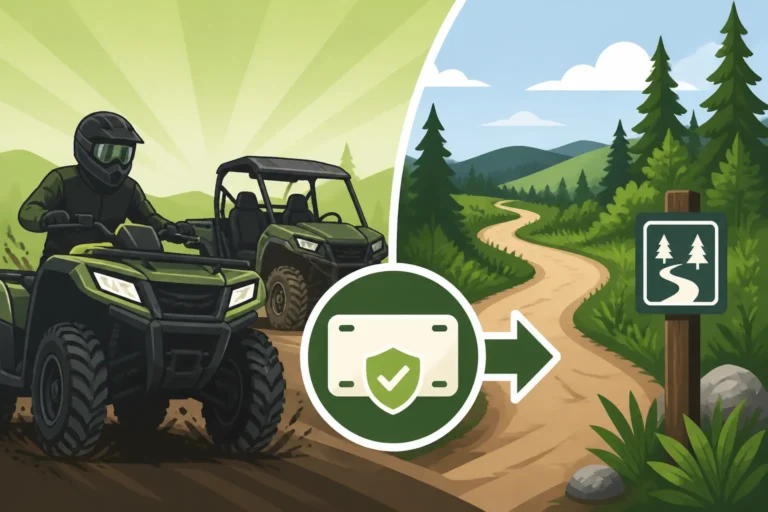
This is where things can get a bit more complex, as local rules come into play. While the province doesn't register ATVs, some rural municipalities, villages, or towns in Saskatchewan do have their own bylaws requiring local permits or plates for ATVs operated within their boundaries, especially if you intend to ride on municipal roads or trails. For example, communities like Candle Lake or the District of Lakeland have their own permit systems. Your dealer will generally not handle these municipal permits for you.
- Why not? These are hyper-local requirements. A dealer in Saskatoon won't know the specific bylaws of every small municipality where their customers might ride. Processing these would require knowing your exact riding intentions and dealing with dozens of different municipal offices, each with their own fees, forms, and procedures.
- Your responsibility: It is your responsibility to research the specific bylaws of any municipality where you plan to ride your ATV and obtain the necessary local permits. This often means a trip to the local village or RM office with your bill of sale and proof of insurance. Take a look at [Saskatchewan Municipal Plate Schemes] for more context. You'll want to ask about [Saskatchewan Municipal Plate Costs] and [Saskatchewan Municipal Plate Renewals] as well.
Your Long-Term ATV Insurance Policy
While a dealer might offer temporary coverage or suggest insurance providers, securing your comprehensive, long-term ATV insurance policy is ultimately your responsibility. Saskatchewan does require all ATVs operated on public land (which includes ditches and grid roads) to have at least $200,000 in third-party liability insurance. Your dealer won't be able to force you to buy insurance from a specific provider, nor will they typically manage your ongoing policy.
- What you need to do: You'll need to contact an insurance broker or provider directly to arrange for your ATV policy. Be prepared to provide the VIN and details from your bill of sale. It's crucial to have this in place before you head out for your first ride. For more information, check out [Saskatchewan Insurance Requirements for Riders].
Off-Season Storage or Maintenance Agreements
Beyond the initial sale, your dealer generally won't proactively set up your off-season storage, winterization, or ongoing maintenance schedule. While they might offer these services, it's on you to initiate and arrange them. Many riders store their machines at home, in sheds, or on their farms. If you plan to use dealer services for storage or maintenance, you'll need to schedule those separately.
Your Responsibilities as the Buyer After the Dealer Handover
Once you've signed the paperwork and taken possession of your new ATV or UTV, your role as a responsible owner really begins. There are several vital steps you need to take to protect your investment and ensure you're riding legally and safely.
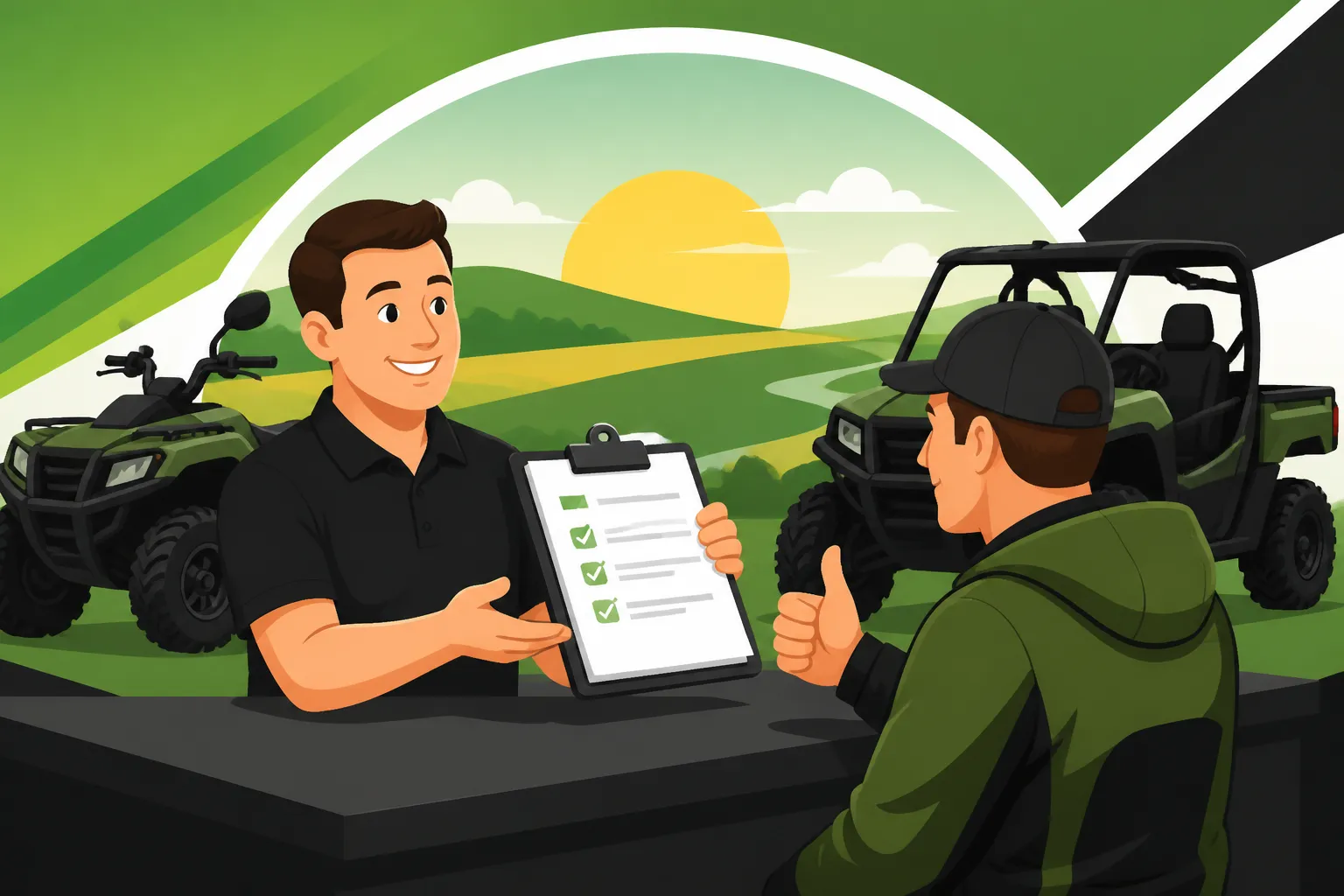
Verifying All Paperwork Before You Leave the Lot
This cannot be stressed enough: do not drive off the lot without thoroughly reviewing every document.
- Check the VIN: Ensure the Vehicle Identification Number (VIN) on your bill of sale matches the VIN physically stamped on your ATV or UTV. A discrepancy here can cause major headaches down the line, including challenges with insurance claims or proving ownership.
- Accuracy of details: Confirm all other details – make, model, year, your name and address, and the purchase price are correct on the bill of sale.
- Understand all costs: Make sure you understand every line item on your invoice, from the machine price to taxes, freight, PDI, and any accessories. Ask questions until you're clear.
Taking a few extra minutes at the dealership can save you immense frustration later.
Safely Storing Your Bill of Sale and Proof of Ownership
Since your bill of sale is your primary proof of ownership, treat it like gold. Make multiple copies (digital and physical) and store the original in a safe place, like a fireproof box or a secure home safe. You should also carry a copy with you when riding, especially if venturing onto public lands or into municipalities that require local permits. This is critical for reasons outlined in [How to Prove You Own an ATV in Saskatchewan]. If you're ever in a situation where ownership is challenged (e.g., after a theft or an accident), this document will be your strongest ally. LawDepot can also be a useful resource for understanding what makes a legal document valid and how to best safeguard important paperwork.
Obtaining Local Municipal Permits (If Applicable)
If you plan to ride in areas with local ATV bylaws, your next step is to visit the relevant municipal office to obtain the necessary plate or permit.
- What to bring: You'll typically need your bill of sale, proof of insurance, and possibly your driver's license.
- Understanding local rules: While there, ask about any specific local rules of operation, such as speed limits, permissible riding areas, or hours of operation. These can vary greatly between communities.
- Displaying the permit: Ensure you understand where the municipal plate or sticker needs to be displayed on your machine. [Saskatchewan Municipal Plate Costs] gives you an idea of typical fees.
Securing Adequate Insurance Coverage
Before you hit any public trails, ditches, or roads, ensure you have a valid and comprehensive ATV insurance policy. While Saskatchewan mandates a minimum of $200,000 liability, consider higher limits for greater protection.
- Types of coverage: Discuss options with your broker beyond liability, such as collision, comprehensive (for theft, fire, vandalism), and even coverage for any modifications or accessories you add.
- Proof of insurance: Always carry proof of insurance with you when you ride. An officer can ask to see this, and not having it can lead to fines. [Saskatchewan Insurance Proof on the Trail] is a good article to review.
Maintaining Your Machine and Keeping Records
Good maintenance isn't just about performance; it's about protecting your investment and maintaining its resale value. Keep a log of all maintenance performed, including oil changes, filter replacements, and any repairs.
- Service records: If your dealer performs service, keep their invoices. If you do it yourself, keep receipts for parts and note down dates and mileage/hours.
- Resale value: When you eventually sell your ATV, a comprehensive maintenance record can significantly increase its appeal and value to potential buyers.
This table summarizes the core responsibilities regarding ATV/UTV paperwork in Saskatchewan when purchasing from a dealer:
| Aspect | Dealer's Responsibility | Buyer's Responsibility |
|---|---|---|
| Provincial Registration | None (does not exist) | None (does not exist) |
| Provincial Title | None (does not exist) | None (does not exist) |
| Bill of Sale | Create accurate, complete document with VIN, price, parties. | Verify accuracy, safely store original, carry copies. |
| PST & GST Collection | Collect and remit provincial and federal sales taxes. | Pay applicable taxes as part of purchase. |
| Manufacturer Warranty | Register new machine with manufacturer for warranty. | Understand warranty terms, follow maintenance schedule. |
| Financing Documents | Process credit applications, loan agreements (if applicable). | Review and sign all loan documents, understand terms. |
| Municipal Permits | Generally none. | Research and obtain specific permits from local RMs/villages. |
| Long-Term Insurance | May offer temporary; recommend providers. | Secure adequate liability and optional coverage before riding. |
| Ongoing Maintenance | May offer service packages. | Schedule and track all maintenance, keep records. |
By understanding these clear distinctions, you can approach your ATV or UTV purchase from a Saskatchewan dealer with confidence. You'll know what to expect, what questions to ask, and most importantly, what steps you need to take to be a fully compliant and prepared rider in our beautiful province.
Disclaimer
This article is for general informational purposes only and does not constitute professional advice. Laws, prices and regulations vary by location and change over time. Consult a qualified professional for guidance on your specific situation.