Saskatchewan Snowmobile Insurance Included
It's a common question that pops up around the campfire or at the trailhead: "Does my snowmobile registration in Saskatchewan actually come with insurance?" Many riders, especially those new to the snowmobiling scene or folks who also ride ATVs, are often confused about what their provincial registration really covers. This guide is here to untangle the details, explaining exactly what kind of insurance is included with your Saskatchewan snowmobile registration, what it doesn't cover, and why you might still need to look at additional policies to truly protect yourself and your machine.
The Unique World of Saskatchewan Snowmobile Registration
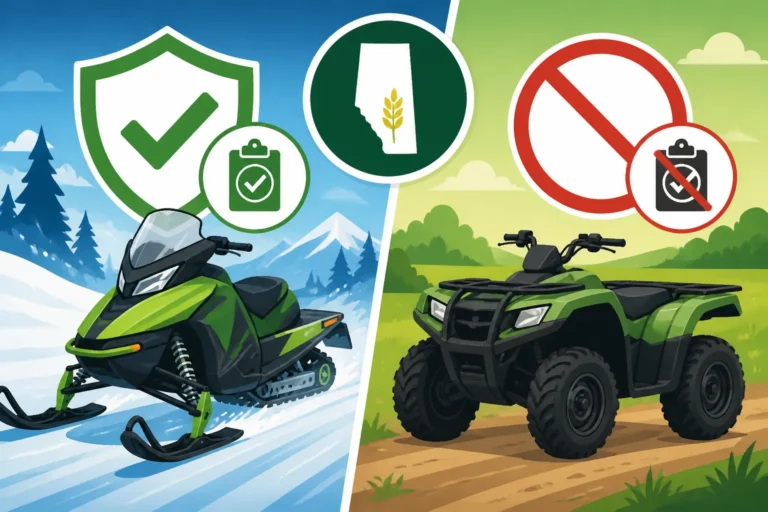
Here in Saskatchewan, snowmobiles operate under a different set of rules compared to their summer-time cousins, the ATVs. While the province decided long ago that ATVs didn't need a central registry, snowmobiles have always been part of a mandatory registration system. This distinction is crucial, as it’s the very mechanism through which that "included" insurance comes into play.
The Obligation to Register Snowmobiles
Unlike all-terrain vehicles, which generally don't require provincial registration in Saskatchewan (unless a specific municipality requires a local permit for road access), snowmobiles absolutely must be registered with the Saskatchewan Government Insurance (SGI). It's not an option; it's a legal requirement if you plan to operate your machine anywhere beyond your own private property. This mandatory registration ensures a basic level of accountability and, importantly, provides a fundamental safety net for riders and the public. You can find more details on this difference in [Saskatchewan Registers Snowmobiles, Not ATVs]. Without this registration, you're not just risking a fine; you're also riding without the essential liability coverage that comes with it.
It's a system designed to protect everyone. Imagine hitting the trails, enjoying the crisp winter air, and suddenly, an unexpected incident occurs. If snowmobiles weren't registered, tracing ownership, ensuring minimum safety standards, and providing basic accident protection would become an administrative nightmare. This provincial oversight is a key reason why you see registration stickers and plates on every sled out there, a stark contrast to the unplated ATVs.
What Your Registration Fee Covers
When you pay your annual snowmobile registration fee to SGI, you're not just getting a piece of paper and a plate; you're actually getting a package deal. The fee, which is renewed annually, covers both the administrative costs of registration and a non-deductible personal liability insurance policy. This bundled approach simplifies things for snowmobilers, ensuring that every registered machine has at least a foundational layer of protection. For instance, [A Saskatchewan Snowmobile Registration Runs $150 a Year] gives you an idea of the costs involved, and that price isn't just for the sticker; it's for peace of mind too.
This fee essentially covers the basics required to legally operate your snowmobile on public land, designated trails, and road allowances. It's designed to be a comprehensive, yet basic, solution that minimizes administrative hurdles for riders while maximizing public safety. The "included" nature of the insurance component is often highlighted, as it's a significant benefit that many other recreational vehicles don't automatically receive without purchasing a separate policy. It's a testament to the structured approach Saskatchewan takes towards snowmobiling as an organized winter sport and activity.
Contrasting with ATV Registration
The stark difference between snowmobile and ATV requirements can be a source of confusion for many. When you buy an ATV in Saskatchewan, there's no provincial registry to visit, no provincial plate to affix, and no insurance policy automatically included. Riders of quads often have to arrange their own private liability and physical damage coverage, sometimes through their existing home or auto insurance provider, or a dedicated broker. [Saskatchewan Has No ATV Plate or Decal] highlights this fundamental difference. This means if you own both a snowmobile and an ATV, you're looking at two very different approaches to ensuring they're legally and safely operated.
For ATVs, proof of ownership often relies on a proper bill of sale, especially since there's no central database to track ownership. This makes robust documentation incredibly important. If you’re ever selling an ATV, a comprehensive bill of sale, perhaps generated through a service like LawDepot, can be crucial for both buyer and seller to establish clear legal ownership, which in turn can be important for acquiring private insurance or for any future claims. For snowmobiles, while a bill of sale is still vital for proof of purchase, the registration itself serves as the official record of the operator. This contrast underscores why understanding the specific regulations for each type of machine is paramount for riders in Saskatchewan.
Deciphering the "Included" Insurance Coverage
So, what exactly does this "included" insurance really cover? It's not a full-coverage policy that will replace your machine if you roll it or cover all your medical expenses if you get hurt. Instead, it's a very specific type of coverage, primarily focused on liability. Understanding these limitations is key to making informed decisions about your snowmobile insurance needs.
The Liability Coverage Provided
The insurance bundled with your SGI snowmobile registration provides substantial third-party liability coverage. This means if you are involved in an accident where you are at fault and cause injury or damage to another person or their property, this policy will respond. Specifically, [Two Hundred Thousand of Liability Bundled In] tells us that you're looking at up to $200,000 in liability coverage. This is a critical safety net, protecting you from potentially ruinous financial claims if, for example, you accidentally collide with another snowmobiler, damage private property near a trail, or cause injury to a bystander.
This liability coverage extends to legal defense costs if you're sued, and it helps cover medical expenses for injured parties or repair costs for damaged property, up to the policy limit. It's designed to ensure that victims of snowmobile accidents caused by a registered machine have a pathway to compensation, without placing the entire burden solely on the individual operator. This is a crucial distinction and a significant benefit of Saskatchewan's snowmobile registration system.
What This Basic Coverage Does Not Include
While $200,000 in liability coverage is a solid foundation, it's vital to understand what it doesn't cover. This included insurance does not provide any coverage for damage to your own snowmobile. If you hit a tree, roll your sled, or it gets stolen, the provincial liability coverage won't pay for repairs or replacement. This is known as "collision" or "comprehensive" coverage, and it must be purchased separately. Furthermore, this basic policy does not typically cover medical expenses for you as the operator, or your passengers, beyond what might be available through your provincial health plan. Nor does it cover loss of personal effects or emergency roadside assistance.
Think of it this way: the included insurance is there to protect others from your actions, and to protect you from the financial repercussions of harming others. It's not designed to protect your investment in the machine itself, nor is it robust personal injury coverage for yourself. Riders often overlook these gaps until it's too late, facing significant out-of-pocket costs after an incident that damages their machine or injures themselves.
Situations Where the Included Insurance Kicks In
The included liability insurance becomes active in various scenarios where your snowmobile operation leads to third-party damage or injury. For instance, if you're riding on a public trail and, due to an error, you accidentally swerve and damage another rider's machine, or worse, cause them an injury, your SGI liability coverage would be the primary responder. Similarly, if you're crossing a farmer's field (with permission, of course!) and accidentally take out a fence post, this insurance would help cover the repair costs.
It also applies if you’re pulling a small trailer for gear and it detaches, causing property damage. The key is that the incident must involve your snowmobile, and it must result in damage or injury to a third party or their property. This foundational coverage helps to ensure that everyone on the trails, and the landowners bordering them, have a baseline level of protection against unforeseen circumstances. Understanding these applications helps illustrate the real-world value of that included policy, even with its limitations.
The Critical Need for Supplemental Snowmobile Insurance
Given the specific nature of the insurance included with your registration, many snowmobilers find it prudent – and often essential – to purchase additional, supplemental insurance. This private coverage fills the significant gaps left by the provincial policy, offering a much broader spectrum of protection for both you and your machine.
Protecting Your Investment: Collision and Comprehensive
The most common reason snowmobilers seek additional insurance is to protect their investment. A new snowmobile can be a significant expense, and even a used one represents a valuable asset. The provincial liability coverage does nothing if your machine is damaged in an accident you cause, or if it's stolen, vandalized, or damaged by fire or natural disaster. That's where collision and comprehensive coverage come in. Collision coverage pays for damage to your snowmobile resulting from an impact with another object or vehicle, or from rolling over. Comprehensive coverage, on the other hand, covers non-collision events like theft, vandalism, fire, hail, or even hitting an animal.
Without these coverages, a single mishap could mean the total loss of your snowmobile with no financial recourse. Imagine coming back to your parked sled after a break only to find it's been stolen, or misjudging a turn and ending up in a ditch, damaging the suspension and bodywork. A private policy offering these coverages provides the financial safeguard you need. Many insurance brokers in Saskatchewan specialize in recreational vehicle policies and can walk you through the options. [Saskatchewan Snowmobile Insurance Cost] can vary greatly depending on these additional coverages.
Expanding Your Liability Protection
While the $200,000 liability coverage from SGI is a good start, it might not be enough in every scenario, especially if a serious accident results in catastrophic injuries or extensive property damage. Legal settlements and medical costs can quickly exceed that amount. Many riders choose to increase their third-party liability coverage by purchasing an umbrella policy or an extended liability rider through a private insurer. You might opt for $1 million, $2 million, or even higher limits, depending on your personal risk tolerance and financial situation.
This extra layer of liability protection offers enhanced peace of mind. For example, if you're involved in a severe collision where multiple people are injured, or if you damage high-value property, the costs can escalate rapidly. Having higher liability limits protects your personal assets from being targeted in a lawsuit if the claim exceeds your basic provincial coverage. It's about ensuring that you're covered for the worst-case scenario, safeguarding your financial future.
Considering Uninsured Motorist Coverage
Another valuable addition that private insurers offer is uninsured or underinsured motorist coverage. While all snowmobiles operating on public land should be registered and thus have that basic liability, the reality is that sometimes people ride illegally. If you're involved in an accident with an unregistered snowmobile, or one whose operator is otherwise uninsured or underinsured, this coverage would step in to cover your damages or injuries, which the at-fault party cannot.
This is a proactive measure against those who don't play by the rules. It's a sad reality that not everyone adheres to registration and insurance requirements. If you're hit by an uninsured rider, collecting compensation can be incredibly difficult, if not impossible. Uninsured motorist coverage closes this potential gap, ensuring that you're not left holding the bag for someone else's negligence. It’s a smart consideration for any comprehensive snowmobile insurance plan.
Practicalities for Saskatchewan Snowmobilers
Beyond just understanding what's included and what's not, there are practical considerations for every snowmobiler in Saskatchewan. From carrying the right documents to knowing your overall expenses, being prepared makes for a much smoother and more enjoyable riding season.
Carrying Proof of Insurance on the Trail
Just like with a car, you need to be able to prove you're properly registered and insured when operating your snowmobile. When you complete your annual registration with SGI, you'll receive a registration certificate and a license plate (or sticker, depending on the year). This certificate is your proof of both registration and the included liability insurance. It is a legal requirement to carry this document with you whenever you're operating your snowmobile off your own property. Peace officers, park officials, or even a conservation officer can ask to see it. [Saskatchewan Insurance Proof on the Trail] elaborates on this.
It's a small but significant detail. Keep your registration certificate in a waterproof bag or a secure pocket on your sled. For multi-day trips or rides in remote areas, having a digital copy on your phone as a backup is also a good idea, though a physical copy is always recommended in case of technical issues. Ensuring this document is readily accessible can prevent delays, fines, or other complications if you're stopped. For snowmobilers taking advantage of trails within provincial parks, officers may also specifically check for [Saskatchewan Insurance Shown to a Park Officer] to ensure compliance with park regulations.
What Happens if You Don't Have It
Riding a snowmobile in Saskatchewan without current registration and the associated included insurance can lead to some pretty significant headaches. If you're stopped by a peace officer and cannot produce valid registration, you could face fines and potentially even have your snowmobile impounded. Furthermore, if you're involved in an accident while unregistered, you'd be personally liable for any damages or injuries you cause, with no provincial insurance safety net to fall back on. This could result in substantial financial claims against you.
The provincial government takes these regulations seriously to ensure public safety and accountability on the trails. The penalties for operating an unregistered or uninsured snowmobile are designed to deter non-compliance. It's a clear message: follow the rules, and you're covered; disregard them, and you're on your own. It's a risk simply not worth taking, especially when the registration process is straightforward and the included liability coverage is so vital.
Understanding Your Total Annual Costs
When budgeting for your snowmobiling season, it's essential to look beyond just the purchase price of the machine. Your annual costs will typically include:
- SGI Snowmobile Registration Fee: This covers your registration and the basic $200,000 liability insurance. This is a fixed annual cost you can always anticipate.
- Private Insurance Premiums: If you opt for additional collision, comprehensive, or extended liability coverage, this will be your biggest variable cost. Premiums will depend on your machine's value, your riding history, where you live, and the coverage limits you choose. [Saskatchewan Snowmobile Insurance Cost] can vary significantly here.
- Maintenance and Repairs: Regular servicing, fuel, oil, and unforeseen repairs are part of ownership.
- Gear and Accessories: Helmets, suits, boots, gloves, and any upgrades for your sled add up.
- Trail Passes/Club Memberships: While some trails are free, joining local snowmobile clubs often comes with a membership fee that supports trail maintenance, and some areas may have specific trail pass requirements.
Here's a simplified breakdown:
| Cost Category | Included with SGI Registration? | Typically Purchased Separately? | Why it Matters |
|---|---|---|---|
| Provincial Liability | Yes ($200,000) | No (but can be supplemented) | Legal requirement, protects you from claims by others. |
| Physical Damage (Collision) | No | Yes | Covers damage to your snowmobile from accidents. |
| Physical Damage (Comprehensive) | No | Yes | Covers theft, fire, vandalism, natural disasters to your machine. |
| Extended Liability | No | Yes | Increases provincial limit, stronger financial protection. |
| Uninsured Motorist | No | Yes | Protects you if hit by an uninsured or underinsured rider. |
| Personal Injury (for you/passengers) | No | Yes (or rely on health plan) | Covers medical costs for you/passengers after an accident. |
| Registration Fee | Yes (part of the fee) | N/A | Legal requirement to operate on public lands. |
By considering all these factors, you can create a realistic budget for enjoying Saskatchewan's winter wonderland on your snowmobile. Understanding these costs helps you avoid surprises and ensures you're adequately prepared for whatever the riding season throws your way. This is particularly important when comparing snowmobiles to ATVs, as [Saskatchewan Snowmobile Registration Compared] shows how differing regulations lead to different overall ownership costs and responsibilities.
Disclaimer
This article is for general informational purposes only and does not constitute professional advice. Laws, prices and regulations vary by location and change over time. Consult a qualified professional for guidance on your specific situation.