80 km/h at Most
It's incredibly frustrating when you're out enjoying the vast Saskatchewan landscape on your ATV or UTV, but you're constantly second-guessing whether you're breaking the rules, especially when it comes to speed. Many riders know there are limits, but the specifics can be hazy, leading to uncertainty and potential fines. This guide is here to cut through that confusion, focusing on the provincial 80 km/h speed limit that applies to off-road vehicles on our public roadways and ditches, helping you ride confidently and legally.
Understanding Saskatchewan's ATV Speed Limit on Roads and Ditches
Riding an ATV or UTV in Saskatchewan offers unparalleled freedom, whether you're navigating grid roads to check cattle, heading to a favourite fishing spot, or simply exploring the vast provincial network of trails and ditches. However, with that freedom comes a crucial responsibility: understanding and adhering to the province's specific rules for off-road vehicles when they interact with public roads. One of the most common points of confusion revolves around speed limits, and getting this wrong can lead to serious consequences.
The 80 km/h Threshold: What It Means in Practice
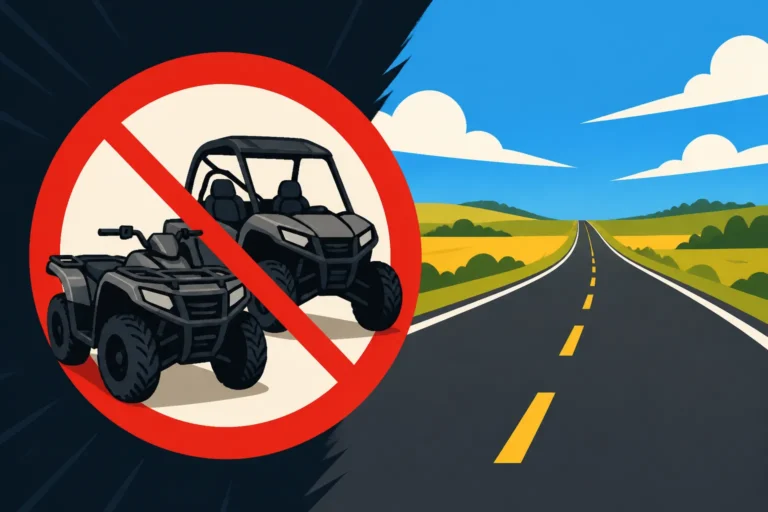
The provincial legislation in Saskatchewan dictates a maximum speed for ATVs and UTVs when they are operated on or adjacent to public roads. Simply put, you cannot exceed 80 kilometres per hour (km/h). This isn't just a suggestion; it's a hard limit enshrined in [Saskatchewan's All Terrain Vehicles Act]. This rule applies uniformly whether you're riding in a highway ditch, traversing a grid road, or briefly using a highway shoulder to get from one point to another. It's a critical distinction, as the posted speed limit for cars and trucks on a particular highway might be 100 km/h or even higher, but your off-road machine is still restricted to 80 km/h, regardless of what other vehicles are doing.
Consider a scenario where you're moving your UTV between two fields that are separated by a long stretch of municipal grid road. Even if that road is smooth and seems safe for higher speeds, you must keep your speedometer reading at or below 80 km/h. Similarly, if you're using a highway ditch to access a trail system, the 80 km/h limit is still in effect. This threshold is in place to ensure a safer co-existence between off-road vehicles and conventional road traffic, acknowledging the inherent differences in their design and handling characteristics. Riders sometimes assume that if the road itself is fast, their quad can match that speed, but this is a dangerous misconception.
Why This Specific Speed Limit Exists
You might wonder why ATVs and UTVs are singled out for a lower speed limit compared to other vehicles on the same roads. The reasons are rooted deeply in safety and the fundamental design differences of these machines. Unlike cars or trucks, ATVs and UTVs are engineered primarily for off-road terrain. Their suspension systems, tire types, and braking capabilities are optimized for dirt, mud, and uneven ground, not high-speed highway travel. At speeds exceeding 80 km/h, many off-road vehicles can become less stable, making them more difficult to control, especially in emergency braking situations or when encountering unexpected obstacles like potholes or loose gravel.
Higher speeds also exacerbate the risks associated with an ATV's narrower wheelbase and higher centre of gravity compared to a car. These factors increase the likelihood of rollovers or loss of control, particularly during sharp turns or sudden manoeuvres. Furthermore, the visibility of ATVs and UTVs can be lower for other motorists, and higher speeds reduce the reaction time for everyone involved. The 80 km/h limit strikes a balance, allowing riders to travel efficiently between locations while mitigating the increased risks associated with operating these specialized machines at speeds they weren't primarily designed for on public roads. It's a pragmatic approach to keeping everyone safe on our shared thoroughfares, ensuring that the unique characteristics of off-road vehicles are accounted for. You can learn more about general rules in [Saskatchewan ATV Road Rules Explained].
Situations Where the 80 km/h Limit Applies (and When It Might Differ)
The 80 km/h speed limit for ATVs and UTVs in Saskatchewan isn't a blanket rule for all riding, but it is a critical one for most scenarios involving public access. Knowing exactly where and when this limit applies, and recognizing when local regulations might supersede it, is key to responsible riding. This section breaks down the specific contexts for the 80 km/h rule and highlights situations where other speed limits might come into play.
Riding in Highway Ditches and Grid Roads
Perhaps the most common application of the 80 km/h limit is when you're riding an ATV or UTV in a highway ditch or on a grid road. Saskatchewan's regulations allow for ditch riding, but it comes with strict conditions, including speed. Even though you're technically off the main "travelled portion" of the highway, the 80 km/h maximum still applies. This means that while you might be safely out of the direct path of fast-moving highway traffic, you're still expected to maintain a speed that allows for control and safe interaction with any other users of the ditch or approaches.
Think about a farmer needing to move a quad a few kilometres down a grid road to reach another pasture. Even on a perfectly smooth, straight gravel road where a car might comfortably travel at 90-100 km/h, the ATV driver must adhere to 80 km/h. Similarly, if you're using a highway ditch to bypass a section of private land to get to Crown land, your speed must be within the 80 km/h provincial maximum. This rule ensures consistency and predictability for peace officers and other road users. It’s also crucial to remember the [Saskatchewan Ditch Riding and the 2-Metre Rule], which dictates how far you must stay from the travelled portion, further emphasizing the need for controlled speeds. Even when you're technically off the main road, safety and the law require you to remain vigilant about your speed.
Crossing Highways and Other Roadway Maneuvers
While the act of crossing a highway itself is meant to be done quickly and by the shortest route, the 80 km/h limit still frames the approach and departure from that crossing. You can't just floor it at 100 km/h to get across faster. The provincial regulations require ATVs to come to a complete stop before crossing a highway and for passengers to dismount if the machine isn't designed for multiple riders to cross safely. These actions, combined with the overall speed limit, are designed to minimize risk during these inherently dangerous manoeuvres. For more details on safe crossings, check out [Saskatchewan Crossings Require Passengers to Dismount] and [Saskatchewan Crossings by the Shortest Route].
Imagine you're at the edge of a field, needing to cross a provincial highway to access another property. You stop, check traffic, and plan your crossing. As you accelerate to cross, and once you've made it to the other side, your speed cannot exceed 80 km/h. This applies to any brief interaction with the roadway, whether it's crossing, making a turn that temporarily puts you on the paved surface, or using a shoulder to navigate around an obstruction in the ditch. The consistent 80 km/h maximum is there to ensure that even during these brief, necessary interactions with higher-speed roads, the ATV remains controllable and predictable for both the operator and other drivers on the road.
Municipal Bylaws and Lower Speed Zones
Here's where things can get a little more intricate. While the provincial maximum for ATVs on public roads and ditches is 80 km/h, local municipalities have the authority to impose lower speed limits within their own jurisdictions. This is a crucial point that many riders overlook, often to their detriment. A small town, village, or even a rural municipality might have specific bylaws that restrict ATV speeds on their local streets, designated ATV routes, or even specific ditch lines to much less than 80 km/h – sometimes as low as 20 km/h or 30 km/h, especially in built-up areas or residential zones.
For instance, you might be riding through a resort village near a lake, and their local bylaw explicitly states that ATVs cannot exceed 30 km/h on any municipal road or trail. Even if the provincial Act says 80 km/h is the maximum on a grid road, if that grid road falls within the municipal boundaries of that village, the lower 30 km/h limit takes precedence. It's imperative to do your homework and check [Saskatchewan Municipal Bylaws on Roads] or utilize resources like [Saskatchewan Bylaw Lookups Before You Ride] before you head out. Riding based solely on the provincial 80 km/h rule without considering local ordinances could lead to unexpected fines. While SuperATV offers great accessories like GPS units that can display your speed, they won't automatically alert you to a local bylaw. It's up to you to be informed and adjust your speed accordingly to stay legal and safe.
Consequences of Exceeding the Speed Limit and Safe Riding Practices
Ignoring speed limits on your ATV or UTV in Saskatchewan isn't just a minor infraction; it carries tangible legal and financial consequences, and more importantly, it significantly escalates safety risks for everyone. Responsible riding goes beyond simply knowing the rules; it's about making informed choices that prioritize safety, adherence to the law, and respect for others sharing the land and roads. Let's delve into what happens when you push the speed limits and how you can maintain a high standard of safe operation.
Penalties and Legal Ramifications
When a peace officer catches you operating your ATV or UTV above the legal 80 km/h limit (or a lower municipal limit), you're looking at more than just a stern warning. Speeding tickets for off-road vehicles fall under [Saskatchewan Fines Capped at $1,000], and the specific amount will depend on how far over the limit you were travelling. These fines can quickly add up, especially if you're a repeat offender. Beyond the immediate financial hit, there can be broader implications. A conviction for speeding can impact your driving record, and while ATVs aren't provincially registered like cars, your driver's licence is still linked to such infractions.
Furthermore, if you're involved in an accident while exceeding the speed limit, the legal ramifications can become much more severe. In Saskatchewan, there's often a "reverse onus" on the owner of an ATV in a civil claim if it's involved in an accident. This means the owner might have to disprove negligence, which becomes incredibly difficult if the machine was being operated above the legal speed limit. This could lead to significant liability for damages, injuries, or even wrongful death claims. [Saskatchewan Owner Liability Rules] are something every ATV owner should be deeply familiar with, as a simple speeding ticket could be the least of your worries if an accident occurs. Always remember that the rules are there to protect you and others, and breaking them puts everything at risk.
Safety Beyond the Speed Limit
While 80 km/h is the maximum speed allowed on public roads and ditches, it's absolutely crucial to understand that it is not a target speed. In many, if not most, riding conditions, operating an ATV or UTV at 80 km/h would be profoundly unsafe. Safety on an off-road vehicle extends far beyond simply adhering to the posted limit. You need to constantly assess various factors that influence safe operation, such as the specific road surface (gravel, mud, fresh snow, ice), current weather conditions (rain, fog, high winds), your own experience and skill level, and the condition of your machine.
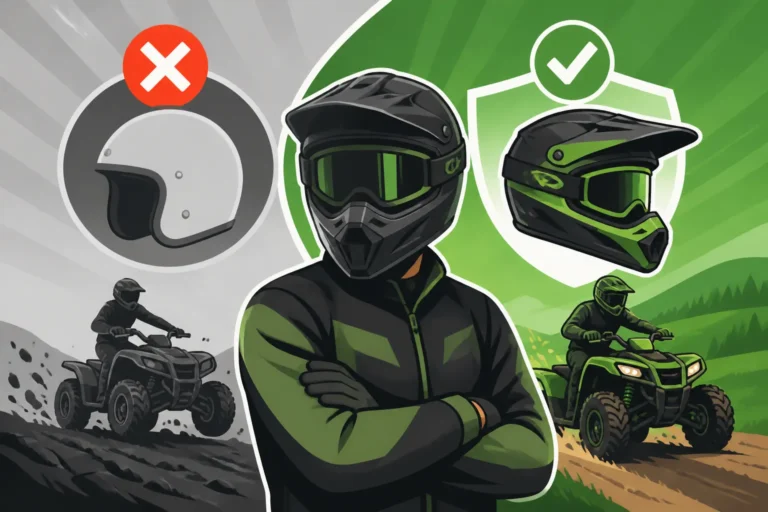
Imagine riding a heavily rutted grid road after a spring thaw. Even 40 km/h might be too fast given the instability of the surface. Or consider a dusty autumn day on a gravel road, where visibility can drop to nearly zero behind another vehicle. In these scenarios, reducing your speed far below the 80 km/h maximum is not just wise, it's essential. Always wear appropriate safety gear, including a certified helmet and eye protection, as outlined in [Saskatchewan Helmet and Eye Protection Rules]. Aftermarket parts from companies like SuperATV, such as upgraded suspension components or specialized tires, can enhance your machine's handling and stability, but they don't grant you permission to exceed legal speed limits or to ride unsafely for the conditions. They are tools to improve your riding experience, not excuses to push boundaries.
Pre-Ride Checks and Responsible Riding
A truly responsible rider knows that safety starts long before the engine even turns over. Performing thorough pre-ride checks is a non-negotiable step. This includes inspecting your tires for proper inflation and wear, checking your brakes for responsiveness, ensuring all lights (headlights, taillights, brake lights) are functioning, and verifying fluid levels. Any issues found during these checks should be addressed before you hit the trail or road. Peace officers performing [Saskatchewan Equipment Checks by Officers] will be looking for machines that are in good working order, and a faulty brake or headlight can be grounds for a citation.
Beyond the machine itself, responsible riding involves a mindset. Always ride within your skill level and never take unnecessary risks. Be constantly aware of your surroundings, anticipate potential hazards, and always yield to other vehicles and pedestrians. If you're riding with a group, communicate clearly and maintain safe distances. For example, if you're heading out to a remote area, carry a map, a first-aid kit, and enough supplies for your trip. Understanding that the 80 km/h speed limit is a legal maximum, and not a benchmark for performance, is a fundamental aspect of operating an ATV or UTV responsibly in Saskatchewan. By combining legal adherence with sound judgment and diligent preparation, you ensure enjoyable and safe experiences for yourself and those around you.
| Riding Environment | Provincial Speed Limit (ATV/UTV) | Notes |
|---|---|---|
| Highway Ditches | 80 km/h maximum | Applies when riding in the ditch adjacent to a provincial highway. |
| Grid Roads / Rural Roads | 80 km/h maximum | Applies on most unpaved or lightly travelled rural roads. Always be aware of municipal bylaws that might impose lower limits. |
| Crossing a Highway | 80 km/h maximum (approach/exit) | While the act of crossing is short, the speed limit applies as you approach and exit the main travelled portion. Passengers must dismount. |
| Municipal Streets/Roads | Varies by Bylaw | Crucial: Local bylaws often set lower limits (e.g., 20, 30, 40 km/h) in towns, villages, or specific zones. Always check local ordinances. |
| Designated ATV Trails | Varies by Trail/Administrator | Speed limits on specific designated trails (e.g., in provincial parks, club trails) may be different and posted. Follow specific trail signage. |
| Private Land (with permission) | No provincial limit (owner discretion) | On private land with owner permission, there's no provincial speed limit, but safe and responsible speeds should always be maintained, considering terrain, visibility, and the presence of people or livestock. |
Disclaimer
This article is for general informational purposes only and does not constitute professional advice. Laws, prices and regulations vary by location and change over time. Consult a qualified professional for guidance on your specific situation.