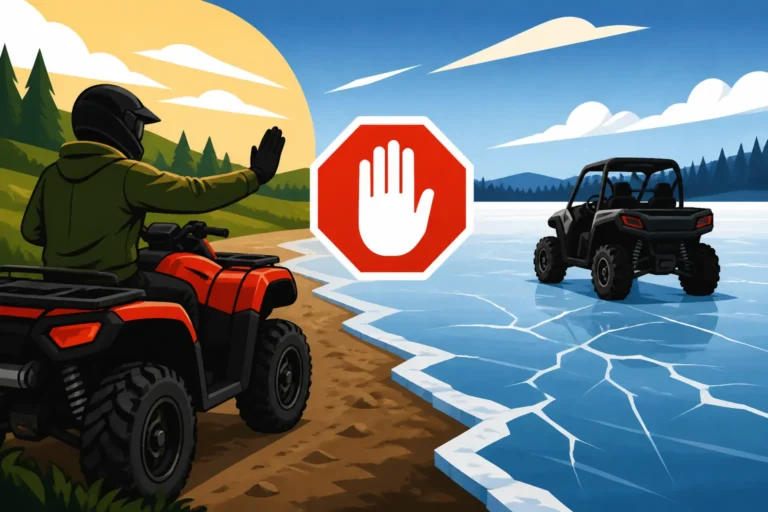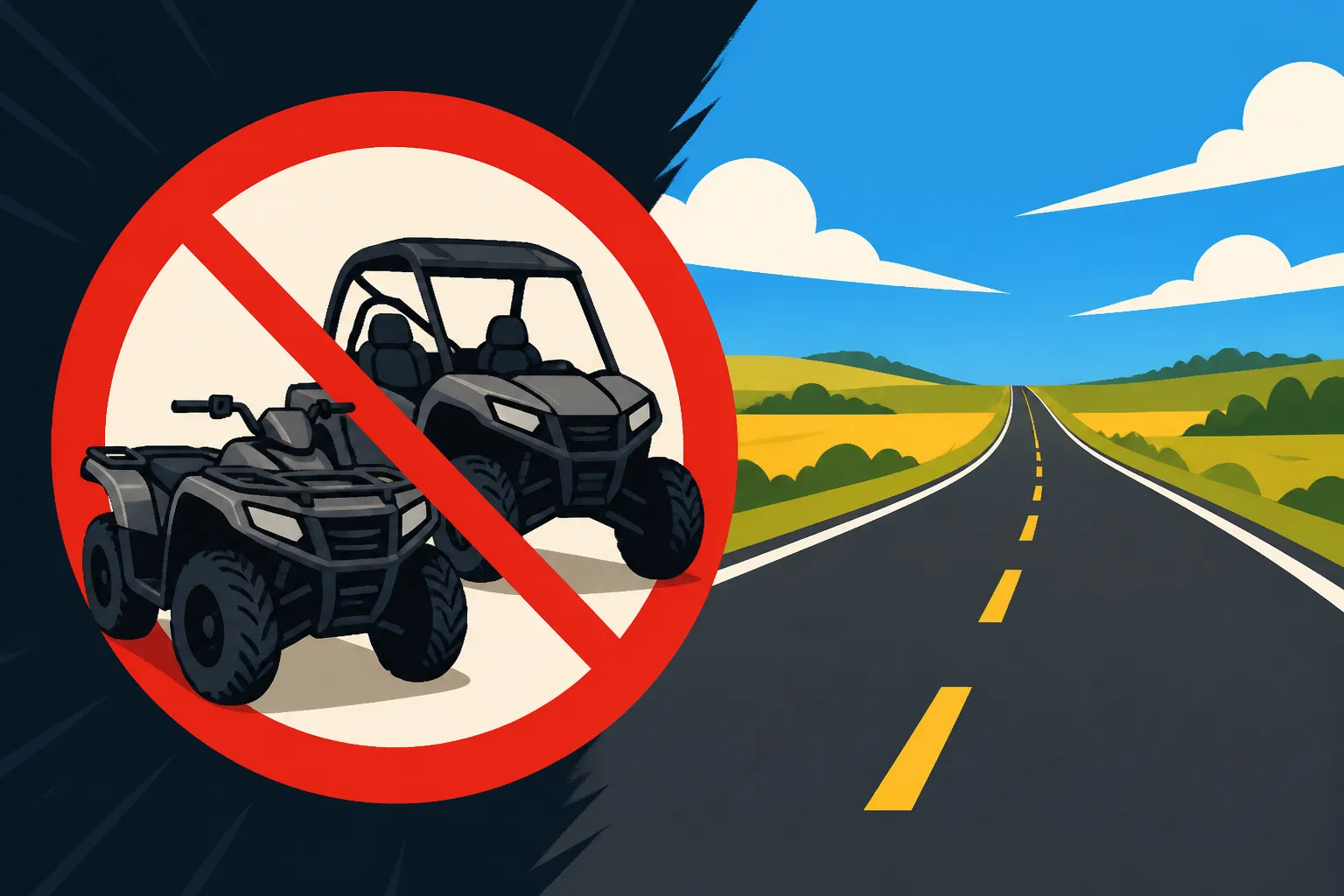
The Travelled Portion of a Highway Is Off Limits
It's a common dilemma for ATV and UTV riders across Saskatchewan: you're out enjoying the vast, beautiful landscape, but inevitably, you encounter a highway, a grid road, or even a main street in a small town. The question quickly surfaces, often with a knot of anxiety: "Can I ride my machine here? And what exactly is the 'travelled portion' they talk about?" It can feel like a minefield of rules, and the fear of a ticket or, worse, an accident, is very real. This guide is here to untangle those rules, specifically focusing on the critical provincial restriction that keeps your ATV or UTV off the main flow of traffic, so you can ride confidently and safely.
Understanding Saskatchewan's Core Restriction: The Travelled Portion
Navigating the rules for ATV and UTV use in Saskatchewan can be confusing, especially when it comes to roads. The province has clear regulations designed for safety, and one of the most fundamental is the prohibition against riding on the "travelled portion" of a highway. This isn't just a suggestion; it's a hard rule that every rider needs to understand to stay legal and, more importantly, stay safe.
What "Travelled Portion" Truly Means
Let's get down to brass tacks: what exactly does the province mean by the "travelled portion"? In Saskatchewan, this refers to the part of the highway, road, or street that is ordinarily used for vehicle traffic. Think of it as the main driving surface, whether that's smooth asphalt, packed gravel, or even a well-worn dirt path that cars and trucks regularly use. It includes all traffic lanes and, importantly, often extends to paved or regularly maintained shoulders right alongside those lanes.
It's not just the paved part; a gravel road's "travelled portion" is the part where vehicles commonly drive, creating ruts or a smoother path. The core idea is that if a car, truck, or farm implement would typically drive there, your ATV or UTV generally cannot. For example, imagine you're on a rural gravel grid road. The centre, where vehicles usually pass, is the travelled portion. The edges, which might be rougher and less maintained, could be considered the ditch, but anything that forms part of the main driving surface is off-limits. This distinction is crucial because the design and speed of ATVs and UTVs are simply not compatible with the flow of conventional road traffic.
The Rationale Behind the Restriction
The provincial government isn't trying to make life difficult for ATV and UTV enthusiasts just for the sake of it. This restriction is fundamentally about safety, both for you and for other road users. ATVs and UTVs are designed for off-road conditions. Their suspension, tires, and handling characteristics are optimized for trails, fields, and rough terrain, not high-speed pavement. When you mix these machines with cars and trucks travelling at 80 km/h or more, the risks skyrocket.
Consider the speed differential: a typical ATV might cruise comfortably at 40-60 km/h, while highway traffic often moves much faster. This creates a significant hazard, as drivers of larger vehicles may not anticipate an ATV on the travelled portion, leading to dangerous closing speeds and reduced reaction time. Furthermore, the smaller size and lower profile of ATVs and UTVs can make them less visible, especially at dawn, dusk, or in adverse weather. There's also the matter of braking and stability; a sudden stop or maneuver on pavement can be very different and more challenging for an ATV than for a conventional vehicle. The province also recognizes that these machines typically lack the same safety features, like airbags and crumple zones, found in cars and trucks. It's a pragmatic approach to minimize accidents and ensure everyone's safety on Saskatchewan's diverse road network.
Where You Can Ride: Permitted Areas and Exceptions
While the travelled portion of a highway is a no-go zone, that doesn't mean you're completely confined to private land or dedicated trails. Saskatchewan's regulations do provide specific scenarios and areas where ATVs and UTVs can operate near or even on public roadways, under strict conditions. Understanding these nuances is key to responsible riding and avoiding unwanted attention from law enforcement.
Riding in Ditches: The 2-Metre Rule
One of the most frequently asked questions revolves around ditch riding. Yes, in Saskatchewan, you can generally ride your ATV or UTV in the ditch, but there's a critical caveat: you must stay at least [2 Metres From the Travelled Portion]. This isn't an arbitrary distance; it's a safety buffer. The "ditch" refers to the area between the edge of the travelled portion and the property line. It's often unmaintained, grassy, or gravelly, and clearly distinct from where cars would drive.
However, riding in ditches comes with its own set of challenges and responsibilities. Ditches can conceal all sorts of hazards: hidden culverts, large rocks, deep ruts, and even discarded debris. Driveways also pose a risk, as vehicles may suddenly turn into or out of them, often without expecting an ATV in the ditch. It's crucial to reduce your speed, maintain a sharp lookout, and be prepared for unpredictable terrain. While it's a legal place to ride, it's not without its dangers, and riders should always exercise extreme caution. Remember, the [Saskatchewan Ditch Riding and the 2-Metre Rule] is there to keep you out of the direct path of fast-moving traffic, but personal vigilance is your best defence against unseen obstacles.
Crossing Highways Safely
There will undoubtedly be times when your route requires you to cross a highway or paved road. Saskatchewan's legislation permits this, but under very specific and non-negotiable conditions, again, all for your safety. When crossing any highway or roadway:
- Stop Completely: You must bring your ATV or UTV to a full and complete stop before entering the travelled portion. Treat it like a stop sign, even if one isn't present.
- Cross by the Shortest Route: You must cross at a right angle (as close to 90 degrees as possible) to the highway and take the shortest practical route to the other side. This minimizes your time in the path of oncoming traffic.
- Passengers Must Dismount: This is a crucial rule for UTVs and ATVs designed for more than one rider. All passengers, including children, must dismount and walk across the travelled portion separately from the machine. They can only re-board once the machine has safely cleared the roadway. This rule dramatically reduces the risk of injury for passengers in the event of a collision during the crossing.
- Yield to Traffic: You must yield the right-of-way to all vehicles on the highway. Do not proceed until it is safe to do so.
These rules are strict, but they are there to prevent catastrophic accidents. Imagine a long, diagonal crossing where your machine is exposed to fast-moving traffic for an extended period. The risks are simply too high. Always prioritize safety, and when in doubt, find an alternative route if possible. You can find more details about these requirements in our post on [Saskatchewan Crossings Require Passengers to Dismount] and [Saskatchewan Crossings by the Shortest Route].
Municipal Bylaws and Designated Roads
While the provincial All Terrain Vehicles Act sets the overarching rules, individual municipalities in Saskatchewan have the power to create their own bylaws regarding ATV and UTV use within their boundaries. This is where things can get a bit more localized and, at times, a little confusing, as what's allowed in one village might be prohibited in another.
Some rural municipalities, villages, or towns may, by local bylaw, designate certain streets or roads where ATVs and UTVs are permitted to operate. These are typically lower-speed roads, often gravel or residential streets, and are usually accompanied by specific conditions like speed limits, hours of operation, or even requirements for [Saskatchewan Municipal Plate Schemes]. For example, a small resort village might allow ATVs on certain side streets to access trails or amenities, recognizing that these machines are an integral part of the local lifestyle.
However, it's critical to remember that these municipal allowances are exceptions, not the rule. You cannot assume that because you can ride on a street in one town, you can do so in every town. Before you even think about riding your ATV or UTV on a municipal road, you must check the specific bylaws of that municipality. A quick call to the local village or town office can save you a significant fine and potential impoundment of your machine. When riding in these designated areas, it's also a good idea to ensure your machine is equipped for maximum visibility. While not explicitly "street legal," having bright lights, like those offered by SuperATV, can significantly enhance your presence to other drivers, even on permitted municipal roads. Our guide on [Saskatchewan Municipal Bylaws on Roads] offers more insight into this patchwork of local rules, and it's worth checking to see [Which Municipalities Run Their Own Plate Scheme] as an indicator of where local access might be more permissive.
Essential Safety and Equipment Considerations
Riding an ATV or UTV in Saskatchewan is an exhilarating experience, but it comes with serious responsibilities. Whether you're navigating permitted ditches, crossing a highway, or operating on private land, ensuring your machine is properly equipped and that you're wearing the right gear isn't just about following the law – it's about protecting yourself and others. These aren't optional extras; they're fundamental to safe operation.
Visibility and Lighting
Visibility is paramount, especially when operating your ATV or UTV near public roadways or when daylight starts to fade. Even if you're meticulously sticking to the ditch, passing motorists need to be able to see you. Saskatchewan law has specific requirements for lighting when operating between a half-hour after sunset and a half-hour before sunrise, or at any other time when visibility is poor.
Your machine must be equipped with:
- At least one headlamp: Emitting a white or amber light, clearly visible for at least 60 metres (200 feet).
- At least one tail lamp: Emitting a red light, clearly visible for at least 60 metres (200 feet).
Many riders choose to enhance their visibility beyond these minimums. Aftermarket lighting, such as brighter LED headlights or additional auxiliary lights, can make a significant difference. Brands like SuperATV offer a range of robust lighting solutions, from LED light bars to replacement headlights, that can dramatically improve your ability to see and be seen. Reflective tape on your machine or helmet, and wearing high-visibility clothing, are also smart choices, especially if you anticipate being near roads or operating after dark. Always ensure your lights are clean and functioning before each ride. You can learn more about these requirements in [Saskatchewan Lighting Rules at Night] and [Saskatchewan Lighting Requirements on a Machine].
Helmets, Eye Protection, and Other Gear
Saskatchewan has clear and mandatory rules regarding personal protective equipment for ATV and UTV riders. These aren't suggestions; they are laws designed to prevent serious injury.
- Helmets: Every person operating or riding as a passenger on an ATV or UTV must wear a helmet that meets an approved standard (e.g., DOT, Snell, ECE). The helmet must be properly secured. This is non-negotiable. A helmet can be the difference between a minor bump and a life-altering head injury, even in a low-speed incident. Always ensure your helmet fits snugly and is in good condition. You can find detailed information about standards in [Saskatchewan Helmet Standards Accepted].
- Eye Protection: You must wear appropriate eye protection. This could be goggles, a face shield integrated into your helmet, or shatterproof glasses. The goal is to protect your eyes from dust, debris, insects, branches, and the elements. Imagine riding down a gravel ditch and having a rock kicked up by a passing truck – proper eye protection is crucial. [Saskatchewan Helmet and Eye Protection Rules] go into more detail on this.
- Appropriate Clothing: While not specifically legislated, wearing long pants, long-sleeved shirts, and sturdy over-the-ankle boots is highly recommended. This protective clothing can shield you from scrapes, cuts, burns, and other injuries in the event of a fall or contact with the machine or environment. Gloves are also a good idea for grip and hand protection.
Investing in quality safety gear isn't an expense; it's an investment in your well-being. Think of it as a necessity, just like fuel for your machine. You wouldn't skip fueling up, so don't skip gearing up safely.
Avoiding Penalties and Staying Legal
Nobody wants to deal with the stress and cost of a ticket, or worse, having their machine seized. Understanding the rules and consistently adhering to them is the best way to ensure your rides are enjoyable and free of legal complications. Saskatchewan's regulations concerning ATVs and UTVs are enforced, and peace officers have the authority to issue fines and take other actions for non-compliance.
Common Violations and Fines
Riding your ATV or UTV on the travelled portion of a highway is a clear violation of the provincial Act, and it's not the only one that can land you in hot water. Common infractions that can lead to fines include:
- Riding on the travelled portion of a highway: This is the primary focus of this guide, and it carries significant penalties.
- Failing to stay 2 metres from the travelled portion when in a ditch.
- Failing to stop or dismount passengers when crossing a highway.
- Operating without a helmet or eye protection.
- Riding without mandatory liability insurance.
- Operating an unregistered machine on Crown land where registration (for snowmobiles) is required (though not for ATVs).
- Unsupervised riding by youth under the age of 16 (or under 12, depending on the machine).
- Exceeding posted speed limits, whether provincial or municipal.
Fines for these violations can quickly add up, and repeat offenses can lead to more severe consequences. Under [Saskatchewan Fines Capped at $1,000], a single infraction can set you back considerably. In some cases, a peace officer also has the power to seize and impound your machine for certain offenses, especially if you're operating dangerously or are a repeat offender. Getting a seized machine back can be a lengthy and costly process, as detailed in [Saskatchewan Seizure and Impoundment Rules]. It's far easier, and cheaper, to simply follow the rules.
Insurance and Proof of Ownership
Even though ATVs and UTVs do not require provincial registration or a plate in Saskatchewan (unlike snowmobiles), there are still crucial requirements you must meet, especially concerning insurance and proof of ownership. Many riders mistakenly believe that because there's no registration, there are no "papers" to carry – this is a dangerous misconception.
- Mandatory Insurance: [Saskatchewan Minimum Insurance Requirement] dictates that every ATV or UTV operated off private land (i.e., on public land, in ditches, or crossing roads) must be covered by at least $200,000 in third-party liability insurance. This is incredibly important. In the event of an accident where you are at fault and cause damage or injury to another person or their property, this insurance protects you from potentially ruinous financial claims. Without it, you are personally liable. A peace officer can ask for proof of insurance, so you need to carry it with you. Our post on [Saskatchewan Insurance Requirements for Riders] provides more context.
- Proof of Ownership: While there's no provincial registration certificate or "title" for ATVs in Saskatchewan, you still need to be able to prove you own your machine. This is critical for theft recovery and also to demonstrate to a peace officer that the machine isn't stolen or illegally acquired. Your best form of proof is your original bill of sale. If you bought from a dealer, this will be comprehensive. For private sales, a hand-written bill of sale is acceptable, as long as it clearly identifies the machine (make, model, VIN/serial number), the buyer, the seller, date, and price. Always carry a copy of this with you when riding. It's how to [How to Prove You Own an ATV in Saskatchewan]. Some riders even store important documents in a secure, waterproof compartment on their machine, perhaps using a heavy-duty storage box from a company like SuperATV, ensuring they always have them accessible.
By having your insurance and proof of ownership readily available, you streamline any interactions with law enforcement and protect yourself in the event of an unforeseen incident. These simple steps can save you a world of trouble down the line.
Summary of Road-Related ATV/UTV Rules in Saskatchewan
To help keep things clear, here’s a quick overview of the dos and don'ts when it comes to riding your ATV or UTV near and on Saskatchewan roads:
| Activity | Permitted (Conditions Apply) | Prohibited (Always) |
|---|---|---|
| Riding on Travelled Portion of Highway | No | Yes (main driving lanes, paved shoulders) |
| Riding in Highway Ditch | Yes, if at least [2 Metres From the Travelled Portion] | No, if within 2 metres of the travelled portion or blocking traffic |
| Crossing a Highway | Yes, if done at a full stop, shortest route, passengers dismount, and yielding to traffic. | No, if done at an angle, without stopping, with passengers on board, or failing to yield |
| Riding on Municipal Roads/Streets | Yes, if specifically permitted by local bylaw (check with municipality first). | Yes, unless specifically permitted by local bylaw |
| Operating After Dark | Yes, if equipped with working headlight(s) and tail light(s). | No, without proper lighting |
| Operating Without Helmet/Eye Protection | No | Yes (mandatory for all riders and passengers) |
| Operating Without $200K Liability Insurance | No | Yes (mandatory for all public land operation) |
| Operating Without Proof of Ownership | No (always carry a bill of sale or equivalent) | Yes (can lead to impoundment if ownership is unclear) |
Disclaimer
This article is for general informational purposes only and does not constitute professional advice. Laws, prices and regulations vary by location and change over time. Consult a qualified professional for guidance on your specific situation.