What to Write in the E-Transfer Memo Line
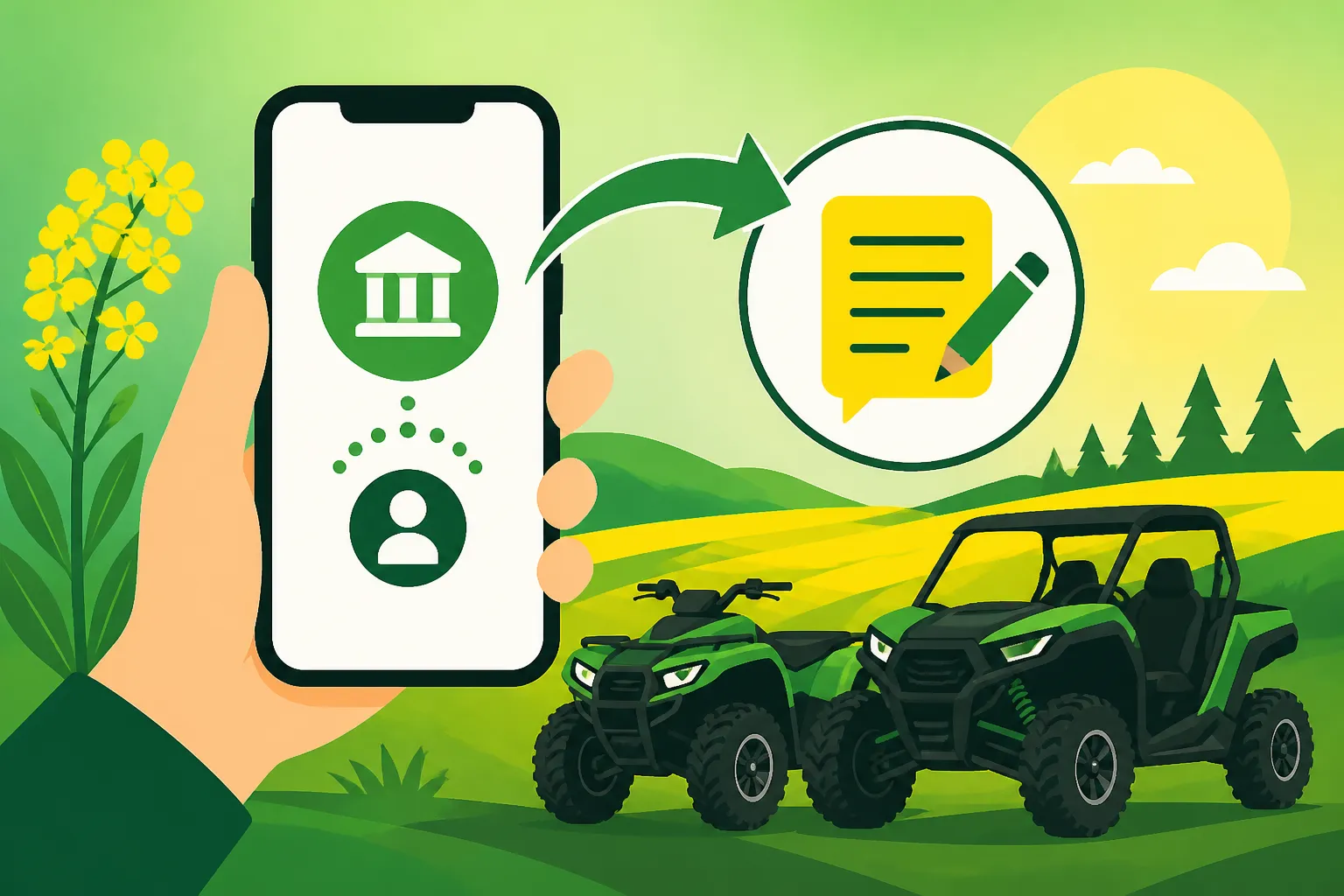
When a Saskatchewan municipality accepts an e-transfer for an ATV permit, the memo line helps staff match your payment to the right person and machine. A vague note can slow down processing, especially if the permit is for someone else or you are renewing. Use the memo to identify the applicant and purpose, then follow the municipality’s payment instructions exactly.
What the memo line is for
An e-transfer memo is a short payment reference. It helps the recipient connect money received with an application, permit, or municipal account. It does not replace an application form, proof of ownership, or any other information the municipality asks you to provide.
That distinction matters because Saskatchewan does not issue a province-wide ATV plate. Some municipalities have their own permit or plate systems, with local payment methods and procedures. A local permit is not the same as provincial registration, and its rules may not apply outside the municipality. For context, see Saskatchewan Municipal ATV Plates Explained.
If a municipality accepts e-transfer, staff may need to determine:
- Who sent the payment
- Who the permit is for
- Whether the payment is for a new permit or a renewal
- Which machine or application the payment relates to
- How to contact you if something is missing
The memo should make those details easy to recognize without exposing unnecessary personal information. A useful format is usually the applicant’s last name, the permit purpose, and—if the municipality requests it—a plate, application, or machine reference.
For example, a concise note might say: Lee, ATV permit renewal, plate 214. Use a plate or application number only if the municipality has assigned one and asked you to include it. If you are applying for the first time and do not have a number yet, identify the applicant and say that it is a new ATV permit.
Do not assume every municipality uses the same process. Before sending money, check the local instructions for the recipient address, required memo details, payment amount, and any separate application or document submission. The information in Paying for an ATV Permit by E-Transfer may help explain the payment step, but the office’s current instructions should settle what to enter for your own payment.
What to include, and what to leave out
A good memo is specific enough to identify the payment but short enough to read at a glance. If the municipality provides an exact format, use it rather than improvising. If it does not, use a clear combination of your name and the permit purpose.
| Situation | Useful memo details | Avoid |
|---|---|---|
| New permit | Applicant’s name and “new ATV permit” | Calling it a renewal |
| Renewal | Applicant’s name, “ATV permit renewal,” and assigned plate or account number if requested | Assuming last year’s number is still valid |
| Payment for another person | Permit holder’s name and permit purpose; sender’s name too if requested | Identifying only the person sending the money |
| More than one machine | Applicant’s name and a clear reference to each machine or application, following the office’s instructions | A single vague note such as “ATV permits” |
| Unsure which details are required | Applicant’s name and purpose, then confirm with the office before sending | Putting sensitive details in the memo to compensate for uncertainty |
Keep the memo focused. In most cases, it is not a good place for a full mailing address, banking details, date of birth, or a long explanation. Share personal information through the channel the municipality specifies, such as its application form or a direct conversation with staff. The memo may be visible in transaction records, so include only what is needed to identify the payment.
If you are paying for a family member, name the permit holder first. The sender’s bank account may display a different name from the person applying, and staff may otherwise have trouble matching the payment. If the municipality asks for both names, include both in the order it recommends.
For a household with more than one machine, do not assume one memo or one payment covers them all. Ask whether the municipality wants a separate application or payment for each machine, or whether it can process multiple permits together. The local rules and forms determine what is acceptable, not the memo line alone.
If you are applying in a place such as Candle Lake, check the instructions that apply there rather than relying on another municipality’s process. Saskatchewan Candle Lake Permit Fees and Picking Up a Plate at the Candle Lake Office are related topics, but confirm payment and pickup details directly with the local office before you send money.
Before you send the e-transfer
Treat the payment as one part of the application, not as proof that the permit has already been issued. A transfer can be received while an application is incomplete, a detail is unclear, or a permit still needs to be picked up. Check the recipient’s full instructions before sending anything.
-
Confirm that e-transfer is accepted. Some offices may require a different payment method, accept transfers only under certain conditions, or handle payments in person. Do not send money to an address found in an old message or an unrelated online post without checking that it is current and belongs to the municipality.
-
Check the recipient address and payment instructions. Confirm the exact e-transfer email or phone number, whether a security question is needed, and how the recipient wants the answer communicated. Never put a security-question answer or password in the memo.
-
Confirm the amount and what it covers. A municipal permit may have its own local charge, and it may not include insurance, park access, or permission to ride on private or Crown land. For a local permit process, see How to Buy a Saskatchewan Municipal Plate. Check the municipality for current amounts and what the payment covers.
-
Complete any application or provide supporting details. The office may require an application, machine information, proof of ownership, or contact details separately. A memo cannot supply information that the form requires.
-
Write a short, recognizable memo. Include the applicant’s name and the permit purpose. Add an assigned reference number only if the instructions call for it. Make sure the wording matches the name on the application, or explain the difference if someone else is paying.
-
Save the transfer confirmation. Keep the confirmation and any application receipt until the office confirms that the permit has been processed. If there is a delay, the confirmation can help staff locate the payment.
-
Wait for confirmation before assuming you can ride. Ask whether you need to collect a plate, display it, carry a receipt, or meet another condition. Planning a Village Office Visit Before You Drive can help you prepare if pickup is required.
The key practical point is to use the memo to make matching easy, not to cram in every detail about the machine. A plain, readable note is more useful than a long description.
If the memo is wrong or the payment is hard to match
If you notice a typo after sending the transfer, contact the municipal office promptly. Give staff the sender’s name, the transfer date, the amount, and the permit holder’s name. If you have a confirmation number, include it through the contact method the office recommends. Do not send a second payment just because the first one has not been matched; first ask the office whether it has received the transfer.
If the transfer went to the wrong recipient, contact your financial institution and follow its instructions. The municipality may not be able to retrieve a payment sent to an unrelated address. That is why it is worth verifying the recipient before confirming the transfer.
If you entered a vague memo such as “permit,” the payment may still be identifiable from the sender’s name and the office’s records. Contact staff and explain what it was for. Keep the explanation factual and consistent with your application. Do not send extra personal information unless the office requests it through an appropriate channel.
It is also possible for a payment to be matched correctly while the permit is not ready. Ask what remains outstanding and whether you need to submit an application, show ownership information, or pick up a physical plate. A receipt for payment does not necessarily establish that a permit has been approved or issued.
When buying, selling, or transferring a machine, do not assume a municipal plate follows the ATV to its next owner. Local schemes can have their own conditions, and a plate may be tied to a permit holder rather than the machine. Check Why a Municipal Plate Cannot Be Transferred before relying on a previous owner’s permit. Keep your purchase documents as well; Saskatchewan Proof of Ownership on the Trail explains why ownership records matter even when there is no provincial ATV registry.
Visitors should check local requirements too. A permit issued by one municipality does not automatically serve as permission to ride in another, and visitors may face different local rules. See Saskatchewan Visitors and Municipal Plates and confirm with the municipality where you plan to ride.
A reliable memo is simple: identify the applicant, state the permit purpose, and add only the reference details the office asks for. Verify the payment instructions first, submit any required application separately, and wait for confirmation about pickup or display before treating the permit as ready.
Disclaimer
This article is for general informational purposes only and does not constitute professional advice. Laws, prices and regulations vary by location and change over time. Consult a qualified professional for guidance on your specific situation.