Saskatchewan Spark Arrestor Requirements
A spark arrestor can look like a small exhaust part, but it matters when you ride an ATV or UTV in Saskatchewan’s forested areas. Riders often wonder whether every machine needs one, what counts as an acceptable device, and whether a fire ban changes the rule. The practical answer depends on where you ride, your machine’s exhaust setup and current wildfire restrictions.
When Saskatchewan riders need a spark arrestor
Saskatchewan’s wildfire rules make spark prevention a real operating concern, particularly in forest areas. A machine used there may need an exhaust system in good working order that prevents sparks from escaping. That can apply to both ATVs and UTVs with internal-combustion engines.
The location matters. A requirement tied to forest areas is not automatically the same as a blanket rule for every machine, on every property, at all times. But riders should not assume that a public trail, Crown land route or remote riding area is exempt just because it is not inside a provincial park. Check the rules that apply to the specific land and route before you ride.
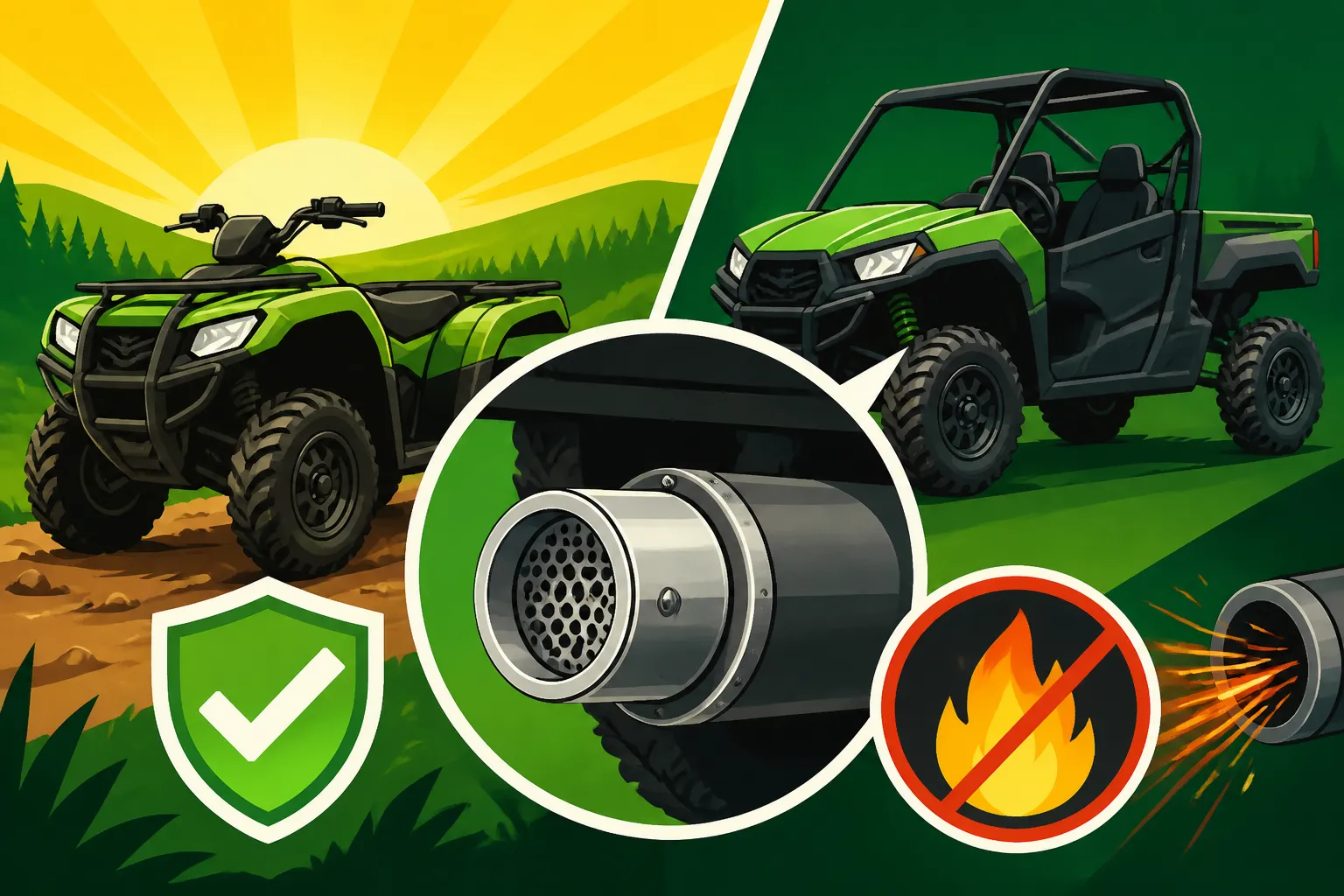
A spark arrestor is intended to stop hot particles from leaving the exhaust. It is not the same as a muffler: the muffler reduces exhaust noise, while the arrestor helps contain sparks. A muffler alone does not necessarily mean the exhaust system has adequate spark-arresting protection.
Wildfire requirements are only one part of the picture. Rules can also address combustible material on or around a machine, fire bans, restricted areas and closures. Review Saskatchewan Wildfire Season Rules for Riders and Saskatchewan Wildfire Act Duties for Riders before a trip, especially if you are heading into wooded or dry terrain.
| Riding situation | What to check |
|---|---|
| Forest area or wooded trail | Confirm the exhaust has a suitable spark arrestor and is in good working order |
| Public riding area during fire season | Check for current fire restrictions, closures and site-specific rules |
| Private property | Do not assume private land is exempt from wildfire duties or local restrictions |
| Fire ban or area closure | Follow the current order; an arrestor does not make prohibited riding legal |
| Modified or damaged exhaust | Verify the replacement setup and repair defects before operating the machine |
Wildfire season is generally identified as running from April 1 through October 31, but dates and restrictions should be checked with official sources before riding. Conditions can lead to limits or closures that apply to particular areas. Saskatchewan Fire Bans That Close Riding explains why a machine that meets equipment requirements may still have to stay off a route.
What counts as a spark arrestor
On many machines, spark-arresting components are part of the original exhaust system. The owner’s manual or the manufacturer can help you determine whether your machine’s standard exhaust includes a spark arrestor and how it should be maintained. If the machine has been modified, or the exhaust has been replaced, do not assume the original setup still applies.
An aftermarket part should be made for the machine and exhaust configuration, installed correctly and suitable for the rules in the area where you plan to ride. A product description that merely says “screen,” “insert” or “spark arrestor” is not enough to establish compliance. Keep the part information and installation details, and ask the manufacturer or a qualified repair shop if you are unsure.
Online marketplaces, including Amazon, may list universal exhaust screens and replacement parts. A listing alone does not confirm that a part is appropriate for your ATV or UTV, or that it satisfies the applicable requirement. Match the part to the machine and verify its intended use before buying.
The exhaust system also needs to remain in good condition. A cracked pipe, loose connection, missing component or poorly secured insert can undermine the purpose of the arrestor. An exhaust modification intended to increase sound or performance may remove or bypass equipment that was part of the original setup. If you cannot confirm that the current system prevents sparks from escaping, have it inspected before riding in a forest area.
A spark arrestor is not a fireproofing device. It does not eliminate the risk of fire from hot exhaust parts, dry grass, debris or other ignition sources. It also does not replace the rider’s responsibility to check restrictions and keep the machine clear of combustible material. See Your Legal Duty to Check for Combustible Debris for the wider prevention duties that can matter during a ride.
How to check your ATV or UTV before riding
A quick inspection before hauling out can prevent a compliance problem and reduce fire risk. Start with the machine’s documentation, then inspect the exhaust and the rest of the vehicle.
- Identify the exhaust setup. Check the owner’s manual and any documentation for an aftermarket exhaust or arrestor. If you bought the machine used, ask whether the exhaust has been changed.
- Look for damage or missing parts. Check the exhaust for cracks, loose joints, missing fasteners or an absent insert. Do not operate a machine with an obviously damaged or incomplete system in an area where spark prevention is required.
- Confirm the replacement component fits. If the exhaust has been modified, ask the part manufacturer or a qualified mechanic whether the arrestor is intended for that machine and installation.
- Remove combustible material. Clear dry grass, leaves, mud and other debris from around the exhaust, engine and underbody. Debris can collect during a ride, so the check should not happen only at home.
- Check current area restrictions. Look for wildfire notices, fire bans, closures and trail-specific instructions before unloading. A technically compliant machine can still be prohibited from entering a closed area.
- Inspect again during a long ride. Stop at reasonable intervals, especially after travelling through dry grass or heavy brush. Recheck for debris and visible exhaust problems.
A machine that has been stored for months may deserve extra attention. Check for corrosion, loose exhaust parts and signs that someone altered the system. If you are buying a used quad or side-by-side, inspect the exhaust just as carefully as the tires, brakes and controls. A missing arrestor or undocumented modification can mean additional repair work before the machine is ready for a forest ride.
Keep proof of the exhaust part or repair if you have it. That record may help explain what is installed if an officer or land manager asks about the setup. It is not a substitute for compliance, and riders should not expect a receipt or product page to settle every question. If the machine’s configuration is uncertain, get advice before using it in a regulated area.
For more on practical inspection during a ride, see Inspecting Your Machine Throughout a Day of Riding. You should also check the official fire information for the riding area, rather than relying only on old trail posts or a previous trip’s conditions. Which Fire Centre Map Covers Your Riding Area can help you identify the relevant area information.
Fire bans, closures and common mistakes
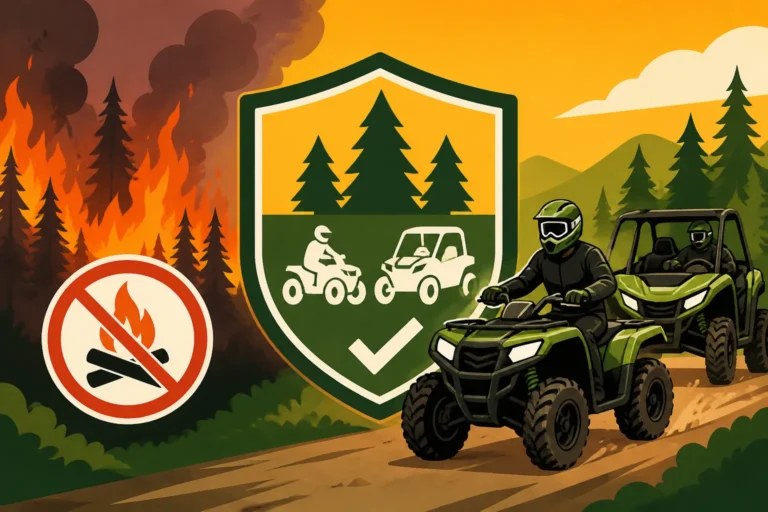
A spark arrestor does not give permission to ride during a fire ban or closure. Restrictions can limit access, prohibit certain activities or apply to specific land and trails. Follow the current order even if your machine is well maintained and equipped with an arrestor.
Riders commonly make these mistakes:
- Treating an arrestor as a substitute for checking fire notices. Equipment compliance and access permission are separate questions.
- Assuming a standard muffler is enough. Noise control and spark prevention serve different purposes.
- Buying a generic insert without checking fit or suitability. A part that can be physically installed is not necessarily appropriate for the exhaust.
- Ignoring damage because the machine still runs. A cracked or loose exhaust can create both safety and compliance concerns.
- Checking only before departure. Dry debris can build up around hot components as the machine moves through grass, brush and mud.
- Assuming private land has no wildfire obligations. Land ownership does not automatically remove duties or restrictions that apply to the activity or location.
If a machine is seized or an officer issues a ticket, the consequences may depend on the circumstances and the applicable rule. Do not rely on a general online summary to resolve a specific enforcement issue. Review Saskatchewan Wildfire Penalties and confirm current requirements with the relevant official authority.
The safest approach is straightforward: confirm the machine’s exhaust setup, keep it in working condition, clear combustible debris, and check access restrictions before and during the ride. That routine matters most when conditions are dry or when riding through wooded areas, but it is sensible year-round.
Disclaimer
This article is for general informational purposes only and does not constitute professional advice. Laws, prices and regulations vary by location and change over time. Consult a qualified professional for guidance on your specific situation.