Saskatchewan Agricultural Implements Are Excluded
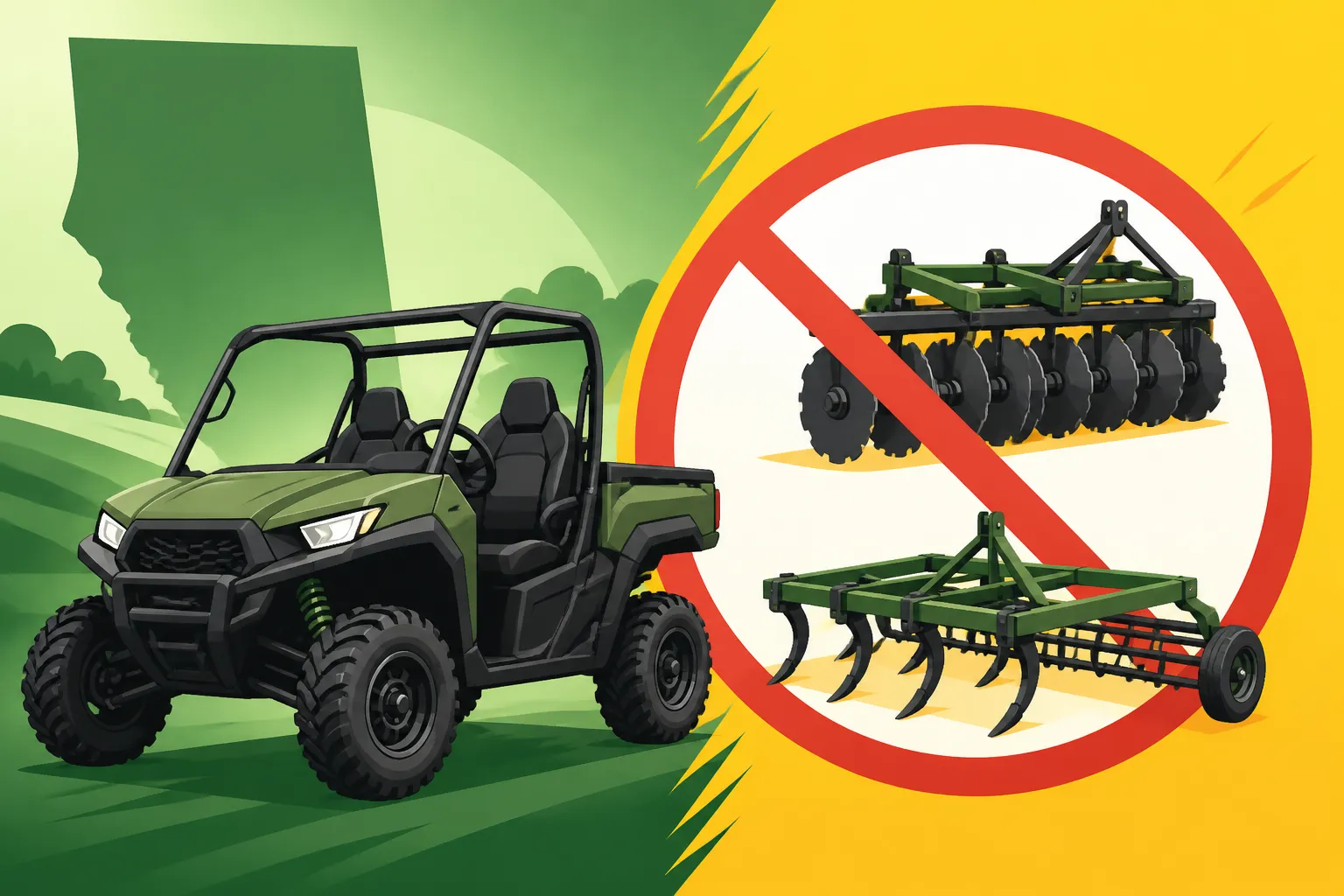
It can be incredibly confusing when you're trying to figure out the rules for your off-road machine in Saskatchewan, especially if you're using it on the farm. Many people assume if it's on the farm, it's just "farm equipment," but the provincial regulations make some very specific distinctions. This guide will dive deep into why agricultural implements are excluded from certain ATV regulations in Saskatchewan, helping you understand what this means for your machine and how to navigate these often-misunderstood rules.
Understanding the All Terrain Vehicles Act in Saskatchewan
Navigating the rules and regulations around All-Terrain Vehicles (ATVs) in Saskatchewan can feel like trying to find a needle in a haystack, especially when you consider how many different types of machines are out there and how they're used. For many rural residents and farmers, ATVs and Utility Task Vehicles (UTVs) are essential tools, not just recreational toys. This practical usage is often at the heart of the distinctions made within the province's legislation.
What the Act Covers and Doesn't
The [Saskatchewan's All Terrain Vehicles Act] is the foundational document that lays out the rules for operating ATVs within the province. When it was enacted, the legislators had a specific type of vehicle in mind: a motorized machine, other than a snowmobile, designed to travel on land over natural terrain, and that is less than 1.5 metres (60 inches) in width. This definition is crucial because it helps draw the line between what is considered an ATV and what might fall into another category, like a dirt bike, a golf cart, or indeed, an agricultural implement.
What the Act doesn't cover, or rather, explicitly excludes, is just as important as what it includes. These exclusions are designed to prevent overreach of the legislation into areas that are already governed by other acts or where the nature of the vehicle's use makes ATV-specific regulations impractical or unnecessary. This is where agricultural implements come into play. They aren't simply forgotten; their exclusion is a deliberate choice reflecting their distinct purpose and operational environment. Understanding these specific definitions is key to knowing whether your machine falls under the Act or not.
The Core Purpose of the Legislation
At its heart, the Saskatchewan All Terrain Vehicles Act exists to promote safe and responsible operation of ATVs and to clarify accountability. Unlike cars and trucks, which operate on designated public roadways with a robust licensing and registration system, ATVs often operate off-road, on trails, private land, or sometimes on public land where specific rules apply. The Act seeks to minimize accidents, protect individuals, and ensure that when incidents do occur, there’s a framework for addressing them. This includes rules about age restrictions, helmet use, insurance requirements, and even where and when you can ride.
However, the core purpose also acknowledges the diverse uses of these machines. For recreational riders, the Act provides guidelines for enjoying trails responsibly. For those who use ATVs for work, such as surveyors, trappers, or utility workers, it offers a framework that recognizes their occupational needs. When it comes to agriculture, the legislators understood that machines primarily designed and used for farming tasks operate in a very different context than recreational quads, and therefore, a different regulatory approach was needed, often leading to exclusions rather than inclusions under the ATV Act itself.
Defining "Agricultural Implement" in Saskatchewan's Context
When we talk about "agricultural implements" in Saskatchewan, it's important to understand that this isn't just a casual term for "anything on a farm." The law has specific ideas about what constitutes an agricultural implement, and these ideas are rooted in the machine's primary design and function, not just where it happens to be used. This distinction is critical for farmers, as it determines whether their equipment falls under the purview of the [Saskatchewan Does Not Register ATVs] rule or if it's exempted entirely from specific parts of the Act.
Characteristics That Qualify a Machine as an Agricultural Implement
An agricultural implement, in the eyes of Saskatchewan's regulations, is generally a machine or piece of equipment that is primarily designed for and used in agricultural operations. This means its fundamental purpose is related to cultivating the soil, raising crops, harvesting, or tending to livestock. Think about machinery like tractors, cultivators, combines, seeders, or even specialized spraying equipment. These machines have design features – such as PTOs (Power Take-Offs), specific hitches, specialized tires, or integrated application systems – that clearly point to their agricultural function.
The key here is "primarily designed for." A standard ATV, while incredibly useful for checking fences or hauling feed, is not primarily designed as a piece of agricultural equipment. Its design leans towards off-road travel and utility, which can be adapted for farm use, but it doesn't inherently possess the specialized characteristics that define an agricultural implement in a legal sense. This distinction means that just because you use your quad to pull a small cart of tools around your yard, it doesn't transform into an "agricultural implement." The machine's inherent design and dedicated function are what matter most.
Real-World Examples of Excluded Farm Machines
Let's think about some tangible examples to clarify this. A large, four-wheel-drive tractor used for tilling fields or pulling heavy equipment is a quintessential agricultural implement. So is a combine harvester, designed exclusively for harvesting crops. Sprayers, whether towed or self-propelled, that apply pesticides or fertilizers to fields also fit this description perfectly. Even older, specialized farm vehicles like hay balers, manure spreaders, or specialized seeding drills are agricultural implements.
These machines are built for very specific, heavy-duty farm tasks. They might have lights and safety features required for occasional road travel between fields, but their primary domain is the field itself. They are not designed for recreational trail riding or general utility in the same way an ATV is. The provincial government recognizes this fundamental difference, which is why Saskatchewan Agricultural Implements Are Excluded from the specific registration and operational requirements laid out for ATVs. This exclusion avoids burdening farmers with regulations that aren't truly applicable to the specialized equipment they need to run their operations.
Why Agricultural Implements Are Excluded from ATV Registration Requirements
The decision to exclude agricultural implements from provincial ATV registration requirements isn't arbitrary. It's a reflection of practical considerations, the distinct nature of farming operations, and a desire to avoid redundant or inappropriate regulations. This exclusion simplifies things for producers while maintaining the intent of the All Terrain Vehicles Act for machines that truly fit the "ATV" designation.
Focus on Functionality Over Vehicle Type
One of the primary reasons for this exclusion is the legislative focus on the functionality and primary design of the machine rather than merely its appearance or whether it has four wheels. Agricultural implements are built with a singular purpose in mind: to facilitate farming activities. Their design features, engineering, and operational characteristics are geared towards heavy-duty, often slow-moving, and specialized tasks within an agricultural setting. They are not designed for high-speed recreational travel or navigating diverse off-road terrain in the same way an ATV or UTV might be.
Because their purpose is so distinct, applying general ATV regulations, particularly those concerning registration and titling, would be largely ineffective and administratively cumbersome. These machines often have very long lifespans, change hands within farming families, or are bought and sold based on their utility rather than a formal, province-wide registration process. The province has determined that specific ATV registration ([Saskatchewan Does Not Register ATVs]) is not a necessary or practical requirement for equipment that is inherently tied to the agricultural industry. This means that unlike a snowmobile, which does require registration, an agricultural implement operates under a different set of expectations. [Saskatchewan Registers Snowmobiles, Not ATVs] is an important distinction, highlighting that legislative choices are made based on the vehicle type and its predominant use.
Impact on Farmers and Rural Operations
For farmers and rural operations, this exclusion means a significant reduction in administrative burden and costs. Imagine if every piece of farm equipment—from a sprayer to a seeder to a tractor—needed to be formally registered with the province. The sheer volume of paperwork and the associated fees would be substantial, adding another layer of complexity to an already demanding industry. By excluding agricultural implements, the government streamlines the process for farmers, allowing them to focus on their core business of food production.
This exemption also reflects the reality of how these machines are typically acquired, owned, and transferred. Often, farm equipment is part of a larger operation, passed down through generations, or purchased through private sales where formal provincial registration systems aren't the primary mechanism for proving ownership. Instead, things like a [Saskatchewan Bill of Sale Stands In for a Registration] for the sale of agricultural implements often suffice for internal records and private transactions, much like how a bill of sale would work for an ATV itself. This pragmatic approach supports the agricultural sector, recognizing its unique operational environment and reducing unnecessary red tape for machines that are essentially tools of the trade.
Practical Implications for Farmers and Landowners
Understanding that your machine is an "agricultural implement" and thus excluded from ATV registration is one thing, but knowing the practical implications of this distinction is another entirely. For farmers and landowners in Saskatchewan, this exclusion comes with specific freedoms but also responsibilities, especially when these machines need to move beyond the confines of private land.
Operating Excluded Machines on Private Land
On your own private land, operating an agricultural implement is generally straightforward. You're using a tool for its intended purpose, often within the boundaries of your farm, field, or ranch. The provincial ATV Act primarily focuses on regulating operations on public land and certain designated areas. Therefore, if your machine genuinely qualifies as an agricultural implement and you're using it on land you own or have permission to operate on, you typically won't encounter provincial ATV Act registration issues.
However, "excluded from registration" doesn't mean "excluded from all safety considerations" or common sense. Even on private land, responsible operation, proper maintenance, and adherence to manufacturer guidelines are crucial for safety. While you might not need a provincial ATV plate or decal, you still have a duty to operate safely, especially if others, like employees or family members, are using the equipment. This is where robust internal documentation, such as service records or an internal bill of sale if transferring ownership within the family, can be incredibly helpful. You might also find resources like [Saskatchewan Machines Used Only on Family Land] or [Saskatchewan Machines Used on a Farm] provide further context on related operational considerations, even if they technically refer to ATVs.
Operating Excluded Machines on Public Roadways (with caveats)
This is where things can get a bit more complex. While agricultural implements are excluded from ATV registration, they are not necessarily exempt from all rules when they venture onto public roads. The Traffic Safety Act and its regulations govern the operation of vehicles on public highways, including grid roads and municipal roads. An agricultural implement, such as a tractor or combine, moving between fields on a public road, must still comply with rules regarding lighting, signaling, width restrictions, and often, specific permits for oversized loads.
Crucially, an agricultural implement is typically not considered an ATV when operating on a public roadway. This means the rules around [Saskatchewan ATV Road Rules Explained] don't apply to it directly in the same way they would to a recreational quad. Instead, different sections of provincial traffic legislation or specific bylaws concerning agricultural equipment would apply. If you're using what is essentially an ATV, but trying to claim it as an agricultural implement for road use, you might find yourself in a grey area. Law enforcement will often look at the primary design and use. For instance, a quad pulling a small utility trailer might be considered an ATV, while a sprayer with large booms is clearly an agricultural implement. Always check local municipal bylaws for specific rules regarding farm equipment on their roads.
Documentation for Agricultural Implements
Since there's no provincial registration or title for agricultural implements, how do you prove ownership or the details of a transaction? This falls back to fundamental contractual principles and careful record-keeping. A detailed bill of sale is paramount when buying or selling any agricultural implement. This document should clearly identify the machine (make, model, serial number), the buyer and seller, the date of sale, and the price. This serves as your primary proof of ownership and can be crucial for insurance purposes, future sales, or resolving disputes.
It’s not uncommon for transactions involving farm equipment to be quite informal, but this can lead to headaches down the road. Even for machines not requiring a formal provincial registry, having a solid paper trail protects both parties. Services that provide legal document templates, such as LawDepot, can be a valuable resource for drafting professional and comprehensive bills of sale for agricultural implements. While the province might not track ownership, you absolutely need to. This is similar to how a [Saskatchewan Bills of Sale Do the Work] for an ATV, providing that essential proof of ownership in a system without provincial registration.
Distinguishing an ATV/UTV from an Agricultural Implement
This distinction is probably the most common source of confusion for many individuals, particularly in rural Saskatchewan. It's easy to assume that if a machine is used on a farm, it automatically becomes an "agricultural implement." However, the legal reality is often far more nuanced, and misunderstanding this can lead to unintended regulatory violations.
When a "Farm Quad" is Still an ATV
Let's get straight to it: most ATVs and UTVs used on farms are not considered agricultural implements under the law. Even if you use your quad every single day to check cattle, haul fence posts, or spray a small patch of weeds, its fundamental design classifies it as an ATV or UTV. These machines are designed for off-road travel, general utility, and often recreational use, even if that recreation isn't their primary role on your farm. They don't have the specialized engineering, specific attachment points, or dedicated agricultural functionality that defines a true agricultural implement like a tractor or combine.
Think about it this way: your pickup truck might be used exclusively for farm work, but it's still a motor vehicle regulated by the Traffic Safety Act, not an agricultural implement. Similarly, an ATV, regardless of its owner's profession or how much time it spends in a field, remains an ATV in the eyes of the All Terrain Vehicles Act if it fits that definition. This means that rules like [Saskatchewan Has No ATV Plate or Decal] are relevant to your quad, even if you use it for farm work, because it's still an ATV in its legal classification. If you ever operate it off your own land, on Crown land, or in municipalities with specific bylaws, you'll need to adhere to the ATV rules, not the agricultural implement exemptions.
The Grey Areas and How to Navigate Them
While the definitions might seem clear on paper, the real world often presents grey areas. What about a UTV with specialized spraying equipment permanently mounted on it? Or a side-by-side that is exclusively used for feeding livestock and has a custom bale spear attachment? These situations can blur the lines. In such cases, authorities will often look at the preponderance of evidence regarding the machine's primary design and exclusive use. Is it still capable of general off-road travel and utility in the same way a recreational UTV is, or has it been so heavily modified and dedicated to agricultural tasks that its ATV characteristics are secondary?
Navigating these grey areas requires a common-sense approach and, when in doubt, leaning towards compliance with the more restrictive regulations. If your "farm quad" looks, feels, and operates largely like a recreational quad, it's best to assume it falls under the ATV Act. This means ensuring you meet the provincial insurance requirements ([Saskatchewan Insurance Requirements for Riders]), adhere to age restrictions, and follow helmet laws when applicable. For specific, unique modifications or uses, consulting with agricultural regulatory bodies or even local law enforcement might be necessary to get a definitive answer. When selling such a modified machine, being clear about its status and documenting the sale thoroughly, perhaps using templates from LawDepot, can prevent future misunderstandings.
Other Exclusions Under the Act
While agricultural implements are a significant exclusion, they are not the only type of machine that falls outside the direct regulatory scope of the Saskatchewan All Terrain Vehicles Act. Understanding these other exclusions helps paint a clearer picture of what the Act does and doesn't intend to govern. It's all about ensuring the right rules apply to the right machines in the right contexts.
Common Misconceptions About What's Excluded
Many riders and landowners make assumptions about exclusions that don't always align with the letter of the law. A common misconception, as we've discussed, is that any quad used on a farm becomes an "agricultural implement." Similarly, some might believe that if a machine is old or rarely used, it's automatically exempt. This isn't true; the age or frequency of use doesn't change a machine's classification. Another common belief is that if you only ride on private land, no rules apply. While provincial registration might not be an issue, other laws (like those around impaired operation or reckless endangerment) certainly still hold true, and municipalities might have their own bylaws.
It's vital to rely on the actual definitions within the Act rather than assumptions. The Act defines an ATV specifically by its width (less than 1.5 metres), its design for natural terrain, and that it's "other than a snowmobile." If your machine fits this description, then it's an ATV unless explicitly excluded by another provision. For example, some might mistakenly believe a heavily modified "mud truck" would be an ATV, but its size and design often push it into other vehicle classifications, typically covered by general traffic laws if street-legal, or entirely unregulated if not, rather than the ATV Act.
Other Machines That Don't Need Provincial Registration
Beyond agricultural implements, several other types of machines are specifically excluded from the Saskatchewan All Terrain Vehicles Act, meaning they don't fall under its registration or operational requirements. These exclusions are often based on the machine's primary purpose or its existing regulation under other acts.
One notable exclusion is any vehicle registered under The Traffic Safety Act. This refers to machines like cars, trucks, and motorcycles that are legally licensed for road use. Since they operate under a comprehensive set of traffic laws, applying ATV rules to them would be redundant. So, if your dirt bike happens to be street-legal and registered for the road, it's not an ATV under this Act. Similarly, [Saskatchewan Restricted Use Motorcycles] are a distinct category, and while they might operate off-road, their specific definition usually keeps them separate from general ATVs.
Another clear exclusion is [Saskatchewan Golf Carts Are Excluded]. These machines, despite often being four-wheeled and capable of off-road travel (e.g., on a golf course), are specifically designed for low-speed use on golf courses or private communities. Their characteristics and typical operation are distinct enough to warrant their own exclusion. Furthermore, [Saskatchewan Machines the Act Excludes] also include things like motorized wheelchairs or other mobility aids, recognizing their essential role for individuals with disabilities rather than recreational use. Understanding these distinctions helps clarify which machines require attention under the ATV Act and which are simply outside its scope, providing much-needed clarity for residents across the province.
Comparison: ATV/UTV vs. Agricultural Implement
To help clarify the distinctions we've discussed, here's a table comparing typical characteristics and regulatory status for an ATV/UTV and an agricultural implement in Saskatchewan.
| Feature / Criteria | Typical ATV/UTV | Agricultural Implement |
|---|---|---|
| Primary Design Purpose | Off-road travel, utility, recreation | Specific agricultural tasks (tillage, planting, harvesting, spraying) |
| Typical Width | Generally under 1.5 meters (60 inches) | Varies widely; often much wider or larger |
| Specialized Farm Attachments | General utility attachments (trailer hitches, winches) | Integrated specific farm attachments (plows, spray booms, seeders, PTOs) |
| Provincial ATV Act Registration | Not Required (Saskatchewan doesn't register ATVs) | Not Required (Excluded from ATV Act definitions) |
| Provincial ATV Act Operational Rules (e.g., helmets, age, insurance) | Generally Applicable (when on Crown land, municipal roads/ditches, etc.) | Generally Not Applicable (governed by traffic safety for road use, otherwise private land rules) |
| Proof of Ownership | [Saskatchewan Bills of Sale Do the Work] | Bill of sale, purchase records (e.g., from LawDepot) |
| Usage Context | Trails, bush, private land, ditches, sometimes roads (with bylaws) | Fields, farmyards, limited road travel between fields |
| Example Machine | Polaris Ranger, Can-Am Outlander, Yamaha Grizzly | John Deere Tractor, Case IH Combine, Brandt Grain Cart |
Disclaimer
This article is for general informational purposes only and does not constitute professional advice. Laws, prices and regulations vary by location and change over time. Consult a qualified professional for guidance on your specific situation.