Buying From a Private Seller in Saskatchewan
Buying an ATV or UTV privately in Saskatchewan can feel like navigating a maze blindfolded, especially when you're used to other provinces or vehicles that have formal registration. The biggest hurdle? There's no provincial registry for quads, meaning no official title or certificate of ownership to transfer, which can leave you feeling exposed and unsure of how to prove you actually own the machine you just bought. This guide is here to cut through that confusion, walking you through every critical step to ensure your private ATV or UTV purchase is as smooth, safe, and legally sound as possible.
Why Private Sales Feel Different in Saskatchewan
Let's be real, the way ATVs and UTVs are handled in Saskatchewan is unique, and it often catches people off guard. When you're used to buying a car or even a snowmobile, there's a clear paper trail: a provincial registration, a title, a transfer document. You sign it, you send it in, and presto – it's yours. Not so with quads here in the Prairies, and understanding this fundamental difference is the first step to a secure private transaction.
No Provincial Registry Means No Title
One of the most common questions we hear is, "Where do I register my new-to-me quad?" The answer, which often raises eyebrows, is that [Saskatchewan Does Not Register ATVs] at a provincial level. This means there's no central government database tracking who owns which ATV or UTV. Unlike a car that has a vehicle registration certificate or a house with a land title, your off-road machine doesn't come with a piece of paper issued by the province that definitively declares you the owner. This isn't just a minor administrative detail; it profoundly impacts how you prove ownership and protect yourself during a private sale. When you go to sell it down the line, or if you ever need to prove ownership to law enforcement or an insurance company, you won't have a provincial title to lean on. This absence puts a much greater emphasis on other forms of documentation, particularly the bill of sale.
The Importance of a Strong Bill of Sale
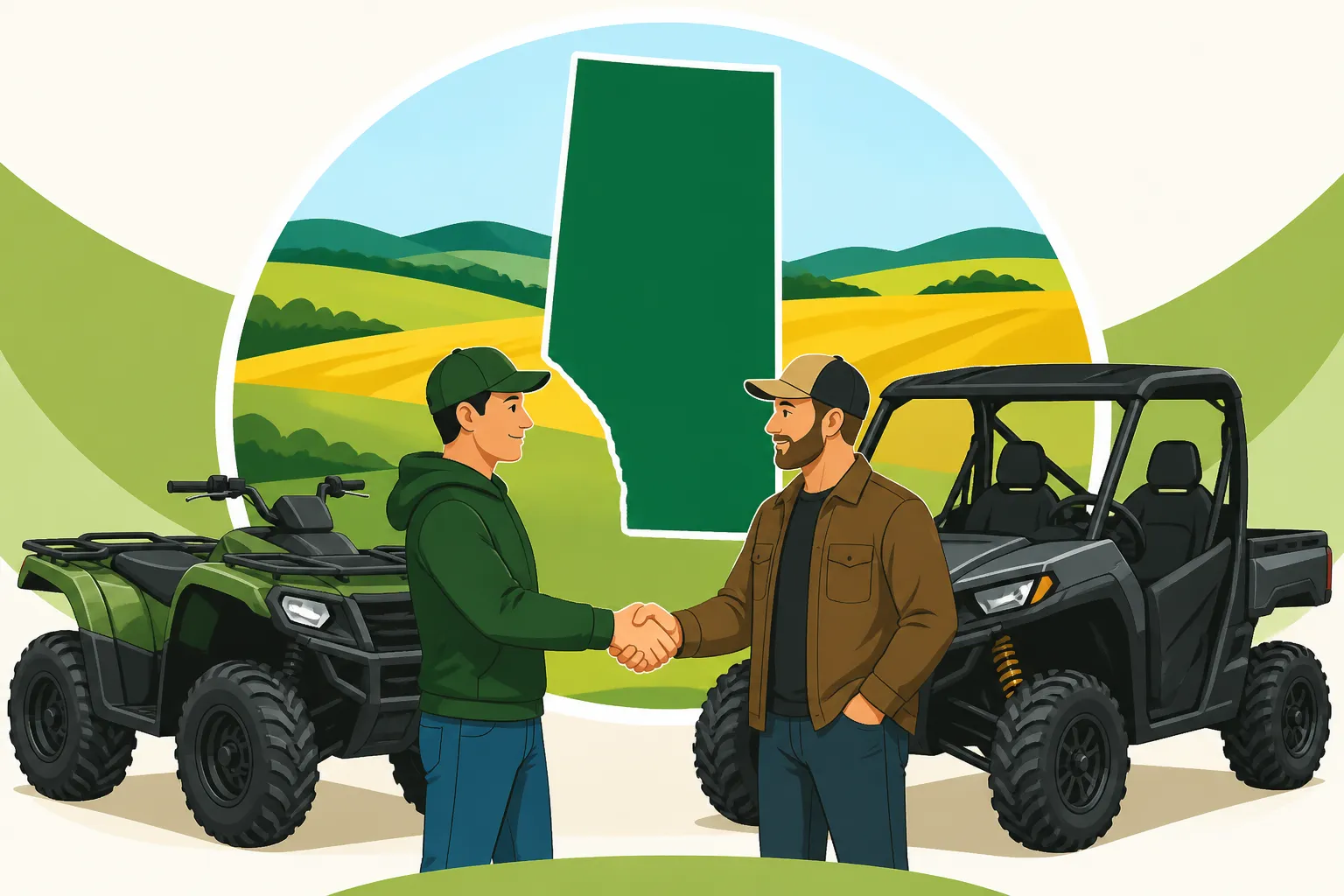
Because there's no provincial title, your bill of sale isn't just a formality; it becomes the cornerstone of your ownership proof. Think of it as your most critical document. It's the legal record that transfers the machine from the seller to you. Without a clear, comprehensive bill of sale, you could find yourself in a very difficult position if there's ever a dispute about ownership, if the machine is ever stolen, or if you need to make an insurance claim. This document is essentially your [Saskatchewan Proof of Ownership Without a Registry]. It needs to be thorough, accurate, and clearly state all the terms of the sale. Many people make the mistake of scribbling a few details on a napkin or using a super basic template, but that's a risky move. You're better off using a well-structured form to ensure all the necessary information is captured.
The Bill of Sale: Your Most Important Document
Given the unique situation in Saskatchewan, the bill of sale for your ATV or UTV is paramount. It’s not merely a receipt; it’s the legal backbone of your private purchase. It must be robust enough to stand up to scrutiny, clearly outlining the transfer of ownership from the seller to you. Rushing this step or using an incomplete document could lead to significant headaches down the road, making it difficult to prove your rights to the machine.
What Absolutely Must Be On It
When drafting or reviewing a bill of sale, certain pieces of information are non-negotiable. Firstly, it needs the full legal names, current addresses, and contact information for both the seller and the buyer. This ensures clarity about who is involved in the transaction. Secondly, a detailed description of the ATV or UTV is crucial. This includes the make, model, year, colour, and, most importantly, the Vehicle Identification Number (VIN) or serial number. Double-check this number against the physical machine, comparing it to the frame and any existing paperwork the seller provides. A discrepancy here can be a massive red flag. The agreed-upon purchase price, the date of the sale, and the signatures of both parties are also absolute musts. Having the signatures witnessed by a third party, while not always legally required, can add an extra layer of protection, especially if disputes arise later. You can find excellent templates from resources like LawDepot that guide you through all these essential fields, ensuring nothing critical is missed. This helps to ensure [What Your Bill of Sale Needs to Cover] is fully addressed.
Why a Generic Template Won't Always Cut It
While a simple template might seem sufficient, a generic, bare-bones bill of sale often lacks the specific clauses that protect you as the buyer. For instance, in an "as-is" sale, which is common in private transactions, a good bill of sale from a reputable source like LawDepot can clearly state that the buyer accepts the machine in its current condition, relieving the seller of implied warranties after the sale. However, it can also include a clause where the seller explicitly declares that they are the legal owner and that the machine is free of any liens or encumbrances. This seller declaration, though not an ironclad guarantee, provides a legal basis for recourse if it turns out to be false. A comprehensive bill of sale might also include space for listing any known defects or issues, fostering transparency. Without these details, you might have little legal standing if an issue arises post-purchase, or if it turns out the seller wasn't authorized to sell the machine in the first place. Therefore, investing a little time in a robust document is well worth it.
Verifying Ownership and Machine History
Even with a strong bill of sale, the absence of a provincial registration system for ATVs means buyers need to be extra diligent in verifying the legitimacy of the sale. You can't just check a government database to see previous owners or if a lien exists. This places the burden of due diligence squarely on your shoulders, but there are still concrete steps you can take to protect yourself from unknowingly purchasing a stolen machine or one with outstanding debts.
How to Prove You Own an ATV in Saskatchewan Without a Registry
Since there's no official title, your proof of ownership often becomes a chain of documentation. The most direct proof will be the bill of sale you receive from the current seller. However, it's highly recommended to ask the seller for their original bill of sale from when they purchased the machine, and ideally, any previous bills of sale if they bought it from someone else. This creates a clear lineage of ownership. Additionally, any old insurance documents for the ATV or UTV with the seller's name and the machine's VIN can serve as strong supporting evidence. If the municipality where the seller resides has its own municipal plate scheme, a past permit or registration sticker might also provide some verification. Always compare the VIN or serial number on all these documents with the actual machine. This process of collecting as much prior paperwork as possible is crucial, as it’s the closest you’ll get to an official ownership history in a province where [Saskatchewan Has No ATV Plate or Decal] from the government.
Checking for Liens and Stolen Status
One of the biggest anxieties in a private sale is unknowingly buying a stolen machine or one that has a lien against it, meaning it's still being used as collateral for a loan. While there's no provincial ATV registry to check for liens, you can and should perform a Personal Property Registry (PPR) search. This search will tell you if any financial institutions or individuals have registered a security interest (a lien) against the specific VIN of the ATV or UTV. A clean PPR search is a strong indicator that the machine isn't encumbered by debt. If a lien is found, the seller must clear it before the sale can proceed. Neglecting this step could mean you inherit the debt. For checking if a machine is stolen, your best bet is to contact your local RCMP or police service. Provide them with the VIN and ask them to run a check through their databases. While they might not provide extensive details, they can usually confirm if the machine has been reported stolen. It’s a simple call that can save you a world of trouble. Always insist on seeing the machine in person and verifying the VIN directly, matching it against any documentation and your own checks, as outlined in [Checking a Serial Number Twice Before You Pay].
Financial Considerations and Due Diligence
Beyond just establishing ownership, buying an ATV privately in Saskatchewan involves some important financial and practical considerations. It's not just about the agreed-upon price; you also need to factor in taxes and perform a thorough inspection of the machine itself. These steps are vital to ensure you're getting a fair deal and that there are no hidden costs or mechanical surprises waiting for you after the handshake.
Understanding Saskatchewan PST and GST
When you buy an ATV or UTV from a private seller in Saskatchewan, you're responsible for understanding and remitting the provincial sales tax (PST). Unlike purchases from a registered dealer, where the dealer collects the tax, private sales require the buyer to self-assess and pay the PST directly to the provincial government. Currently, [Saskatchewan PST at Purchase] is 6%. This 6% is calculated on the purchase price you paid for the machine. In addition to PST, you'll also owe 5% GST (Goods and Services Tax), the federal tax. Together, this means you're looking at an 11% combined tax rate on your purchase. It's crucial to budget for this, as it's an additional cost on top of the selling price. Many buyers forget about the PST in a private sale, leading to an unexpected bill from the province. Be aware that the "used goods exemption" for PST typically does not apply to recreational vehicles like ATVs, so don't assume you can skip this step. Make sure you understand how and when to remit this tax to avoid penalties.
Inspecting the Machine Thoroughly
Never, ever buy an ATV or UTV sight unseen or without a meticulous inspection. This is perhaps one of the most critical due diligence steps, especially when dealing with [Saskatchewan Machines With No Paperwork] or an older model. Arrange to view the machine in daylight and, if possible, in a clean, open space. Look for signs of damage: bent frames, cracked plastics, leaks from the engine, transmission, or differentials. Check the tires for excessive wear or damage. Pay close attention to the suspension, steering, and brakes. If permitted, a test ride can reveal a lot about the engine's performance, transmission shifting, and overall handling. Listen for unusual noises, feel for vibrations, and check that all lights and controls are functioning correctly. Don't be afraid to ask detailed questions about the machine's history, maintenance schedule, and why the seller is parting with it. Bringing a mechanically inclined friend can also be invaluable. This thorough inspection can help you identify potential issues that could lead to costly repairs down the line, giving you leverage for negotiation or even helping you decide to walk away from a bad deal.
Completing the Transaction and Post-Purchase Steps
You've done your research, inspected the machine, and agreed on a price. Now it's time to finalize the sale. This stage requires careful execution to ensure a smooth transfer of ownership and to protect your new investment. Proper handling of payment and understanding your responsibilities after the purchase are just as important as the pre-purchase due diligence.
Payment Methods and Secure Exchange
When it comes to payment, safety and security should be your top priority. Avoid carrying large amounts of cash. A certified cheque or bank draft is generally the most secure method for larger transactions, as these funds are guaranteed by the bank. If using an e-transfer, be aware of daily limits and ensure the full amount can be transferred safely. Always make the payment concurrently with receiving the signed bill of sale and the machine itself. Never transfer money before you have the machine and the paperwork in your possession. Consider meeting in a public place, or even at your bank or a notary, if you're feeling uneasy about the transaction. Once the payment is confirmed and the bill of sale is signed by both parties, you can take possession of your new ATV or UTV. Remember, the bill of sale from a credible source like LawDepot, properly filled out and signed, is your ultimate proof of purchase.
Post-Purchase Responsibilities
Once the machine is yours, your responsibilities don't end there. First and foremost, you'll need to arrange for [Saskatchewan ATV Insurance Requirements]. While there's no provincial registration, liability insurance is legally required if you plan to operate your ATV or UTV anywhere other than on your own private property. Contact an insurance broker to get a policy tailored to your needs. This protects you in case of an accident and can also cover theft or damage to your machine, depending on the coverage you choose. Secondly, while there's no provincial plate, some [Saskatchewan Municipal Plate Schemes] exist in certain towns and rural municipalities, like Candle Lake or the District of Lakeland. If you plan to ride within these jurisdictions, you may need to acquire a local permit or plate. Check with your local municipality or where you plan to ride to see if such bylaws apply. Finally, keep your bill of sale and all other purchase-related documents in a safe place. They are your official record and will be essential for insurance, future sales, or any situation requiring proof of ownership. Remember, these documents are your primary legal defense in the absence of a provincial title.
Disclaimer
This article is for general informational purposes only and does not constitute professional advice. Laws, prices and regulations vary by location and change over time. Consult a qualified professional for guidance on your specific situation.