Saskatchewan Rural Municipalities and Plates
It's incredibly frustrating when you're just trying to understand the rules for your ATV or UTV in Saskatchewan, only to find a tangled web of provincial non-registration and local bylaws. Many riders feel like they're constantly guessing whether they need a plate or not, especially when travelling between different areas. This guide is here to untangle that confusion, explaining how Saskatchewan's rural municipalities (RMs) handle ATV and UTV plates, permits, and what you need to know to ride legally and confidently.
The Provincial Absence of ATV Registration and Why RMs Step In
One of the biggest head-scratchers for anyone new to ATV or UTV riding in Saskatchewan, or even long-time residents, is the simple fact that our province doesn't have a province-wide registration system for these machines. It feels counter-intuitive, right? Most vehicles need a plate, a registration, something official to say they're recognized by the province. But for quads and side-by-sides, that's just not the case. This can lead to a lot of confusion, especially when you're riding a machine that feels just as substantial as a small car. [Saskatchewan Does Not Register ATVs] is a reality many struggle to wrap their heads around.
Understanding Saskatchewan's Non-Registration Stance
When you buy an ATV or UTV in Saskatchewan, whether new from a dealer or used from a private seller, you won't be heading to a provincial registry office to get a plate or decal. There's no provincial system in place to track ownership or levy an annual registration fee like there is for snowmobiles. This means you won't find yourself paying an annual fee to the provincial government or receiving a small sticker for your fender. This absence of a central registry leaves a significant gap in how these machines are managed across the vast landscapes of Saskatchewan. For many, it's just one more reason why [Why Saskatchewan Never Built a Quad Registry] remains a popular question among riders and policymakers alike.
The Vacuum and the Rise of Local Bylaws
This provincial hands-off approach, while simplifying things in some ways (no annual renewal to forget!), creates a void that local authorities often feel compelled to fill. Rural municipalities are the governing bodies for most of Saskatchewan's land, outside of cities, towns, and villages. They manage local roads, ditches, and recreational areas, and when it comes to ATVs and UTVs, they often face issues related to safety, noise, environmental impact, and enforcement. Without a provincial framework, RMs are left to create their own rules through municipal bylaws. These bylaws are designed to address the specific needs and concerns of their communities, often focusing on where and how ATVs can be operated within their boundaries, and sometimes, this includes the requirement for a local plate or permit.
How Rural Municipalities Implement ATV Plate Schemes
Given the lack of provincial registration, it falls to individual RMs to decide if they want to implement their own local ATV/UTV plate or permit schemes. This isn't a province-wide mandate; rather, it's a decision made at the municipal level, often in response to local concerns about managing off-road vehicle traffic. When an RM decides to go this route, they establish a specific bylaw detailing the requirements, fees, and operational rules within their jurisdiction.
The Mechanics of a Municipal Bylaw Plate
When an RM implements an ATV plate scheme, it typically involves a specific bylaw that outlines the rules. This bylaw will specify which types of machines require a plate (often all ATVs and UTVs operated within their boundaries, sometimes with exceptions for agricultural use), where these machines can be ridden, and what the associated fees are. Riders are usually required to purchase a permit or plate from the RM office and display it prominently on their machine. The purpose of these plates isn't for province-wide identification, but rather for local identification and compliance within that specific municipality's borders. For instance, you might find that [Saskatchewan Rural Municipality Rules] dictate specific speed limits or areas where riding is prohibited, all enforced through their local plate scheme.
Examples and Scope of Local Schemes
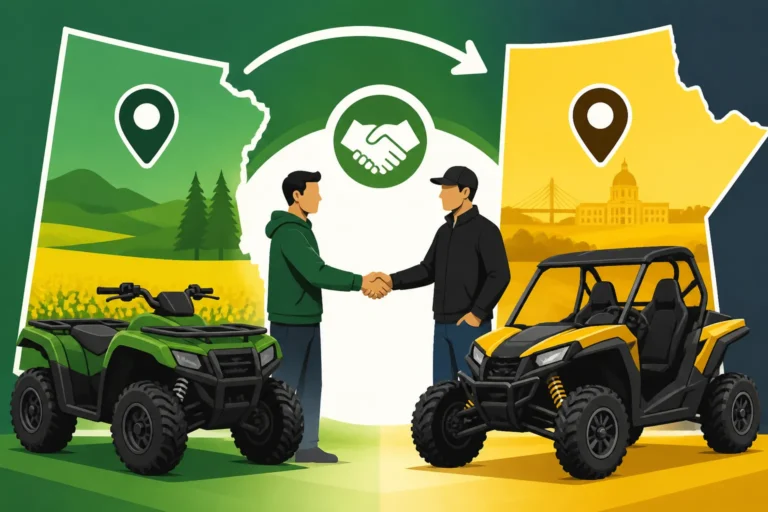
Some rural municipalities, particularly those with a strong recreational presence or numerous cabins and lakes, have been proactive in creating these schemes. For example, communities like the District of Lakeland and the Village of Candle Lake have well-established permit systems. These systems are designed to manage the flow of recreational traffic, fund local trail development, and ensure a degree of accountability for riders using municipal land and roads. The scope of these plates is crucial to understand: a plate from the District of Lakeland only grants permission to operate under their rules within the District of Lakeland. It doesn't magically confer legality for riding on municipal roads in a neighbouring RM that might have different or no such scheme. Riders often find themselves juggling different rules, and it’s a valid frustration to have to research each area individually.
Costs and Renewal Cycles
The costs for municipal plates or permits can vary quite a bit from one RM to another. They might be an annual fee, or sometimes a multi-year permit. These fees are generally much lower than what you'd expect for a provincial vehicle registration, but they serve an important local purpose. For instance, [Saskatchewan Municipal Plate Costs] could be a modest sum, often used to directly support local trail maintenance, signage, or administrative costs associated with enforcement. It’s also common for these plates to have specific renewal deadlines, often annually, to coincide with the recreational riding season. You'll need to check with the specific RM office for their current figures and renewal periods. [Saskatchewan Municipal Plate Renewals] are typically handled directly through the local municipal office.
What a Municipal Plate Means for Riders and Their Paperwork
As a rider, understanding the nuances of municipal ATV plates is key to avoiding fines and enjoying your time on the trails and roads. These plates are not a replacement for provincial laws regarding safe operation, such as helmet use or age restrictions, but rather an additional layer of local regulation. It’s about being a responsible member of the community you’re riding in, recognizing that while the province doesn’t register your quad, your local government might.
Not a Provincial Registration, But Still Important
It's vital to remember that obtaining a municipal plate does not mean your ATV is provincially registered. [Saskatchewan Has No ATV Plate or Decal] at the provincial level. What it does mean is that you've complied with the specific bylaw of that particular rural municipality. This distinction is important because it means the plate's validity is strictly confined to the borders of the issuing RM. If you ride from an RM with a plate scheme into one without, or into an RM with a different scheme, you'll need to be aware of the rules of your current location. This can feel like navigating a patchwork quilt of regulations, but it's the reality for riders in Saskatchewan.
Proving Ownership for Local Permits
Even though there's no provincial title for ATVs in Saskatchewan, you'll still need to prove ownership when you apply for a municipal plate or permit. This is where your [Your Bill of Sale Stands In for a Registration]. A solid, well-documented bill of sale is your primary proof of ownership for any ATV or UTV purchased in Saskatchewan, whether from a dealer or a private seller. When you visit your RM office to get a permit, they'll likely ask to see this document. Having a clear and complete bill of sale is crucial, and resources like LawDepot can provide templates to ensure all necessary details are covered, making the process smoother for you and the RM office. This documentation is essential not just for local permits, but also for insurance claims or proving legitimate ownership if your machine is ever stolen. [Saskatchewan Bills of Sale Do the Work] of establishing your legal claim to the machine.
Local Plates, Provincial Laws, and Insurance
Even with a municipal plate, all provincial laws under [Saskatchewan's All Terrain Vehicles Act] still apply. This includes rules around age limits for operators, helmet use, eye protection, and insurance requirements. In Saskatchewan, even without a provincial registration, you are still required to carry liability insurance for your ATV or UTV. When applying for a municipal plate, the RM might also ask for proof of this insurance. It's a key part of responsible riding. You can often get standalone ATV insurance from various brokers, and it's essential to have it, not just for legal compliance, but for your own financial protection. [Saskatchewan Insurance Requirements for Riders] are non-negotiable, regardless of whether you have a local permit or not.
Here’s a quick overview of how provincial and municipal rules generally interact:
| Feature | Provincial Stance (All of SK) | Municipal Stance (RM-specific) |
|---|---|---|
| Registration/Plate | None for ATVs/UTVs | Optional; may require local plate/permit |
| Proof of Ownership | Bill of sale is primary | Bill of sale typically required for permit |
| Insurance Requirement | Mandatory liability insurance | Often verified during permit application |
| Operating Rules | Age, helmet, eye protection, speed | May add local speed limits, restricted areas |
| Enforcement | RCMP, Conservation Officers | Bylaw officers, RCMP (depending on bylaw) |
| Jurisdiction | Province-wide | Limited to specific RM's boundaries |
| Fees | None (for registration) | Varies by RM; typically annual fee |
Navigating the Complexities: Visitor Rules and Enforcement
The decentralized nature of ATV regulation in Saskatchewan means that riders, especially those travelling between different RMs or from out of province, need to be particularly vigilant. What's perfectly legal in one area might get you a fine in another. It's not always straightforward, and it demands a bit of homework on the rider's part to ensure compliance.
What About Visitors and Out-of-Province Riders?
If you're visiting an RM that has a plate scheme from another part of Saskatchewan or from outside the province, you might be wondering if you still need to get their local permit. The general rule of thumb is yes. If the bylaw of that specific RM requires all ATVs operated within its boundaries to have a plate, then visitors are usually included. It's not about where your machine is "registered" provincially (since there's no such thing here), but about adhering to the local rules of the area you're operating in. For [Saskatchewan Visitors and Municipal Plates], the best advice is always to contact the RM office directly before you head out. This proactive step can save you a lot of hassle and potential fines.
Enforcement and Penalties
Enforcement of municipal bylaws is typically handled by local bylaw officers or, in some cases, by the RCMP who are often contracted to enforce municipal regulations. If you're caught riding without a required municipal plate in an RM that mandates one, you could face a fine. These fines are specific to the municipal bylaw and can vary. [Saskatchewan Fines for Riding Without a Plate] are issued for non-compliance with the local bylaw, not for a provincial registration infraction. It's crucial to understand that these local rules are legally binding within that RM's jurisdiction. They're not just suggestions; they carry the weight of law, and officers are within their rights to issue tickets.
The Importance of Checking Local Bylaws
Because each RM can have its own specific rules, the most responsible action any rider can take is to proactively check the local bylaws of their intended riding area. This means looking up the specific RM's official website, or even better, calling their municipal office. Don't assume that because you rode freely in one RM, the rules will be the same in the next. Some RMs might have specific roads or trails open to ATVs, while others might prohibit them entirely from ditches or public land. This research might feel like a chore, but it's essential for a stress-free ride. Resources like LawDepot can help you generate legal documents like a bill of sale, which is a foundational piece of paperwork for showing ownership when dealing with any municipal office regarding your ATV. Understanding and respecting these local nuances is paramount for enjoying Saskatchewan's diverse riding opportunities. Always check [Saskatchewan Bylaw Lookups Before You Ride] to ensure you're on the right side of the law.
Disclaimer
This article is for general informational purposes only and does not constitute professional advice. Laws, prices and regulations vary by location and change over time. Consult a qualified professional for guidance on your specific situation.