What to Bring to Get Your First Quad Plate
It's a common moment of confusion for many quad riders in Saskatchewan: you want to be a responsible operator, you're ready to get your machine registered and plated, and then you discover there's no provincial registry for ATVs. This guide will cut through that confusion and walk you through exactly what to bring when you're ready to secure a quad plate, specifically from a rural municipality that actually offers one.
Navigating Saskatchewan's Unique ATV Plate Landscape
Let's be honest, the situation with ATV registration in Saskatchewan can be downright perplexing, especially if you're new to the province or coming from another region where plates are standard. Most people assume that if you own a vehicle, whether it's a car, a snowmobile, or an ATV, the provincial government will have some sort of registry for it. But here in Saskatchewan, when it comes to All-Terrain Vehicles, that's just not the case. You can look high and low, but you won't find a provincial office that will issue you a plate or even a registration document for your quad. Many riders are left scratching their heads, wondering [Why Saskatchewan Never Built a Quad Registry].
This unique setup doesn't mean you're entirely off the hook for identification in certain areas. While the province itself doesn't require a plate, some forward-thinking rural municipalities and villages have taken matters into their own hands. These local governments, recognizing the popularity of quads and the need for some level of local accountability and identification, have created their own bylaws and municipal plate schemes. This is where the term "first quad plate" actually comes into play for Saskatchewan riders. If you're planning to ride within the boundaries of one of these specific communities, you'll absolutely need to get one of their local plates. So, while [Saskatchewan Does Not Register ATVs] provincially, you might very well need to get a plate at the local level.
Understanding this distinction is the first and most crucial step. You're not preparing for a provincial SGI visit like you would for a car or even a snowmobile (snowmobiles are provincially registered, which adds to the confusion!). Instead, you're preparing for a visit to a local municipal office – perhaps a village, town, or rural municipality – that has established its own system. These local offices operate under their own specific bylaws and will have their own requirements for what you need to bring. It's a localized solution to a province-wide gap, and it means your checklist will be tailored to what that specific municipality needs to see.
Essential Paperwork for a Municipal Quad Plate
When you finally track down a municipality that issues quad plates, such as Candle Lake or the District of Lakeland, you’ll find their requirements are surprisingly consistent. They want to know who you are, that the machine is legitimately yours, and that you’re insured to operate it. These three pillars – identity, ownership, and insurance – form the bedrock of what you'll need to present. Forget about finding a provincial [Saskatchewan Has No ATV Plate or Decal] to buy; these are local solutions.
Proof of Ownership: The Indisputable Document
This is arguably the most critical piece of paper you’ll need. Since there’s no provincial registration or title for ATVs in Saskatchewan, your proof of ownership is your primary document proving the quad belongs to you. For most riders, this means a solid, clear [Saskatchewan Bills of Sale Do the Work]. If you bought your quad from a dealership, they usually provide a professional bill of sale with all the necessary details, including the machine’s Vehicle Identification Number (VIN) or serial number, the make, model, year, purchase price, and the names of both the buyer and seller. Keep this document in a safe place, as it stands in for a registration certificate.
If you bought your quad from a private seller, the situation can be a little trickier, but it’s entirely manageable. You'll still need a bill of sale, and it should contain all the same vital information. If you're crafting one yourself for a sale, or buying from someone who's just scribbling on a napkin, it's wise to use a template to ensure all crucial details are captured. Resources like LawDepot offer easy-to-use bill of sale templates that can help you formalize the transaction and ensure you have all the necessary legal information. This is especially important for future resale or if there are any questions about the machine's history. Remember, your [Saskatchewan Proof of Ownership Without a Registry] hinges entirely on this document, so make it comprehensive.
Personal Identification: Proving You're You
This might seem obvious, but it’s worth stating. The municipal office needs to verify your identity. This usually means bringing a valid, government-issued photo ID. A Saskatchewan driver's licence is the most common and accepted form of identification, as it clearly shows your name, photo, and address. If you're new to the province or don't have a Saskatchewan driver's licence, other forms of ID, such as a provincial ID card or even a passport, might be accepted. It's always a good idea to call ahead to the specific municipal office you plan to visit to confirm their accepted forms of identification. They want to be sure they're issuing the plate to the correct individual.
Proof of Insurance: Your Safety Net
Operating an ATV, even in Saskatchewan where provincial registration is absent, comes with responsibilities, and having adequate insurance is a big one. While there's no provincial plate, [Saskatchewan Insurance Requirements for Riders] are very much a thing under The All Terrain Vehicles Act. Specifically, every operator of an ATV on public land (which includes ditches, grid roads, and municipal trails) must have at least $200,000 in third-party liability insurance. This is crucial for protecting yourself and others in the event of an accident.
When you go to get your municipal plate, you'll need to demonstrate that your quad is covered. This means bringing your insurance policy documents, typically a liability card or a certificate of insurance. This document will show your name, the machine's details (VIN/serial number), the policy number, and the coverage limits. Without this proof, most municipalities will not issue a plate, as they are essentially ensuring you meet the minimum legal requirements for safe operation within their jurisdiction. It's not just about getting a plate; it's about being prepared for the unexpected out on the trails or roads.
Beyond the Documents: What Else to Prepare for Your Municipal Visit
Getting your paperwork in order is a huge step, but there are a few other considerations to keep in mind when you head to that local municipal office to secure your first quad plate. These practicalities can save you a return trip and ensure a smooth process. Knowing what to expect regarding fees, local regulations, and the general process will make your visit much more efficient.
Payment for the Plate and Permits
Just like with any official document or permit, there's usually a fee associated with obtaining a municipal quad plate. These fees can vary from one municipality to another, so it's always best to check with the specific office beforehand. For example, you might find that [Saskatchewan Candle Lake Permit Fees] are different from those in the District of Lakeland. The cost often covers the administrative work involved in issuing the plate and maintaining local records, and sometimes, a portion of these funds even goes towards local trail maintenance or development.
It's a good idea to ask what forms of payment they accept when you call ahead. Some smaller municipal offices might prefer cash or debit, while others are equipped for credit card payments. Having the correct amount, or a flexible payment method, will prevent any last-minute delays. Remember, these aren't high-volume provincial offices; they're local community centres providing a service, so being prepared with payment makes everyone's day easier.
Understanding Local Bylaws and Riding Regulations
While you're at the municipal office, it's an excellent opportunity to familiarize yourself with their specific local bylaws regarding ATV operation. Each municipality that issues plates likely has a set of rules governing where and when you can ride within their boundaries. These can cover anything from speed limits on certain roads, specific streets where ATVs are prohibited, or even rules about riding near lakeshores or beaches. For instance, the [Saskatchewan Lakeland Speed Limits] and [Saskatchewan Lakeland Prohibited Streets] are important to know if you're riding in that area.
Engaging with the local staff can provide invaluable insights. They can often clarify specific routes, highlight areas to avoid, and explain any nuances of their local regulations. It's not just about getting the plate; it's about being a respectful and law-abiding rider in that community. Taking the time to understand these rules prevents potential fines and helps maintain positive relationships between riders and local residents. You'll likely find that [Saskatchewan Municipal Bylaws on Roads] are very specific and vary greatly.
The Application Process and Plate Display
The actual application process for a municipal plate is usually quite straightforward. You'll likely fill out a short form providing your personal details, the machine's information, and confirming your insurance. The staff will then verify your documents and issue you the plate.
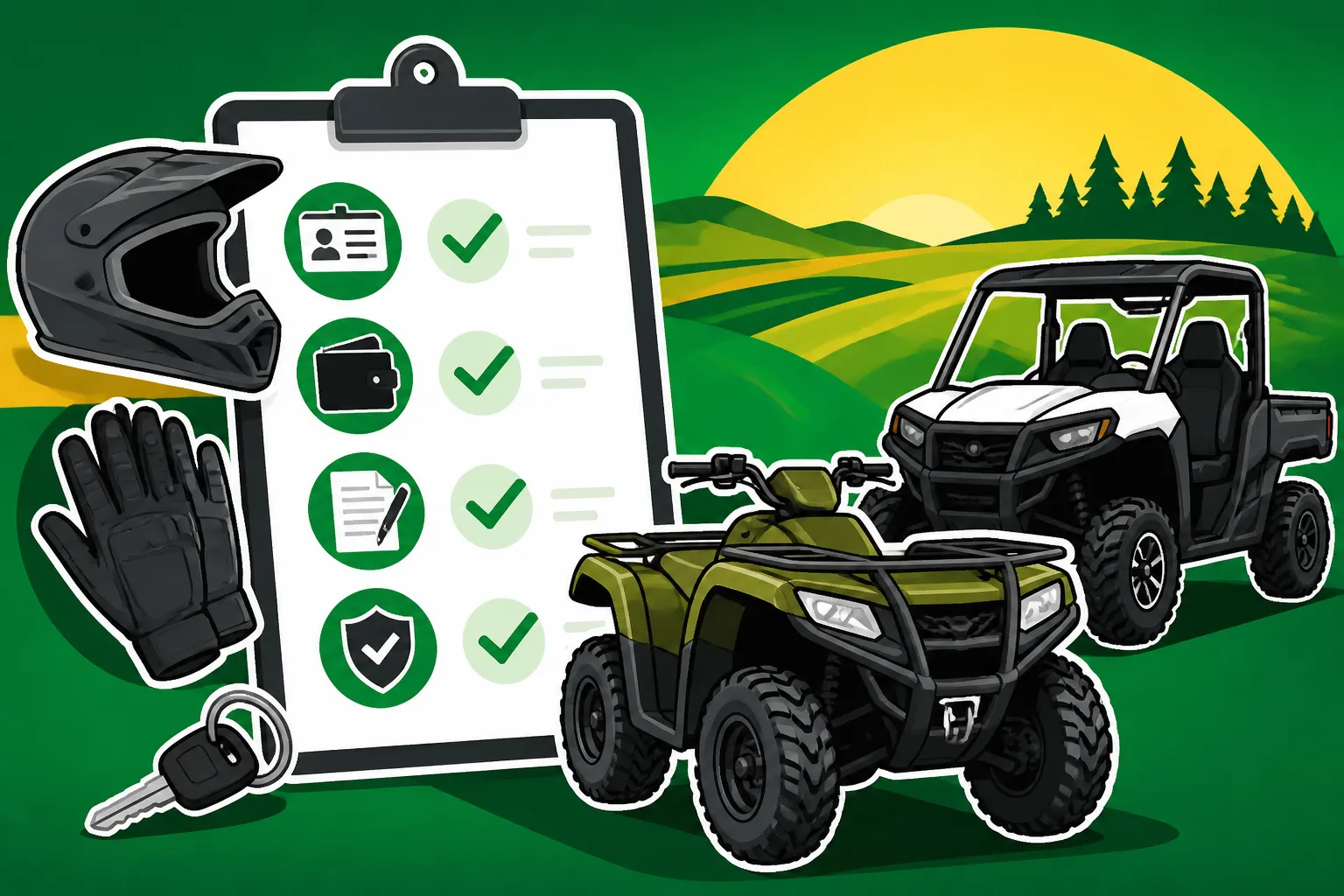
Here's a quick summary of what to bring:
| Document/Item | Purpose | Notes |
|---|---|---|
| Proof of Ownership | Establishes legal ownership of the ATV | Bill of sale (dealer or private), ensuring VIN, buyer/seller, and date are clear. Use a LawDepot template for private sales. |
| Personal ID | Verifies your identity | Valid Saskatchewan driver's licence or other government-issued photo ID. Call ahead to confirm. |
| Proof of Insurance | Confirms minimum liability coverage | Insurance liability card or certificate showing at least $200,000 third-party liability. |
| Payment | Covers the municipal plate/permit fee | Cash, debit, or credit card. Confirm accepted methods and fee amount with the municipality beforehand. |
| ATV Information | Details about your machine | Know your ATV's make, model, year, and VIN/serial number. Having a photo on your phone can be helpful. |
Once you receive your plate, pay attention to any instructions on where and how to display it on your machine. Most plates are designed to be attached to the rear of the quad, clearly visible. This allows peace officers and municipal bylaw officers to easily identify your machine as compliant with local regulations. It's a visual cue that you've done your due diligence, and it helps ensure that everyone is operating safely and responsibly. You'll find specific details on [What to Bring to Get Your First Quad Plate] directly from the municipality.
Why Having a Municipal Plate (and the Right Paperwork) Matters
Even though Saskatchewan doesn't have a provincial ATV registration, going through the effort of getting a municipal plate and keeping all your ownership and insurance documents in order is incredibly important. It's not just about avoiding a fine; it's about protecting yourself and your investment, and being a responsible member of the riding community. Many riders wonder [Saskatchewan Registration Questions Riders Ask], and the answers often point back to these local requirements.
Compliance and Avoiding Fines
The most immediate benefit of having a municipal plate is staying on the right side of the law in those specific communities that require one. Rural municipalities aren't issuing these plates just for fun; they're doing it because they have bylaws in place. Operating an unplated ATV in an area where a municipal plate is required can lead to fines and other penalties. It’s a bit like driving in a city where parking permits are required; you need to adhere to the local rules. By securing your municipal plate, you're signaling your commitment to compliance and helping to ensure that quads remain welcome in those areas. Understanding [Saskatchewan Municipal Plate Costs] is a small price to pay for peace of mind.
Proving Ownership for Peace Officers and Insurance
Imagine this scenario: you're out riding, and a peace officer stops you. They might ask to see proof of ownership and insurance. If you only have the provincial perspective in mind, you might assume you don't need anything because there's no provincial registration. However, a strong bill of sale and your insurance documents are vital. An officer can ask to see [Saskatchewan Insurance Proof on the Trail], and being able to produce it quickly can prevent further questioning or even a citation.
In the unfortunate event of theft, your detailed bill of sale and other ownership documents become absolutely critical. While there's no provincial database to instantly flag a stolen ATV, your robust proof of ownership is what you'll use to report the theft to the RCMP. This documentation will be the basis for any recovery efforts. Similarly, for insurance claims – whether it's for theft, damage, or liability – your insurance provider will demand proof of ownership to process your claim. Without it, you could face significant hurdles or even outright denial. This is where a clear [What Your Bill of Sale Needs to Cover] becomes a lifesaver.
Supporting Local Infrastructure and Community Relations
When a rural municipality decides to implement an ATV plate scheme, they're often doing so with specific goals in mind. A portion of the fees collected might directly fund the maintenance of local trails, signage, or other infrastructure that benefits riders. By purchasing a plate, you're directly contributing to the local riding experience and helping to ensure these areas remain accessible and enjoyable for everyone.
Furthermore, being a plated and insured rider in a community shows respect and responsibility. It fosters better relationships between ATV users and local residents and officials. When communities see riders making an effort to comply with local rules, they are more likely to view ATVs positively, potentially leading to more open trails, designated riding areas, and a more welcoming environment for the sport. This collective effort is how we ensure [Saskatchewan Rural Municipalities and Plates] continue to provide riding opportunities.
In Saskatchewan, getting your "first quad plate" isn't a one-size-fits-all provincial affair. It's a localized, community-driven process that requires diligence and preparedness. By gathering your proof of ownership, personal ID, and insurance, and understanding the local bylaws and fees, you’ll be well on your way to enjoying the vast and beautiful riding opportunities Saskatchewan has to offer, responsibly and legally.
Disclaimer
This article is for general informational purposes only and does not constitute professional advice. Laws, prices and regulations vary by location and change over time. Consult a qualified professional for guidance on your specific situation.