Saskatchewan Insurance Claims Without a Plate
It’s a common worry among ATV and UTV riders here in Saskatchewan: "My quad doesn't have a provincial registration or plate, so what happens if I need to make an insurance claim?" It’s a completely valid concern that often keeps riders up at night, especially when you've invested good money in your machine. This guide aims to clear up that confusion, explaining exactly what matters to your insurance company when you don't have a piece of provincial paper for your ATV or UTV.
Understanding Saskatchewan's Unique ATV Situation
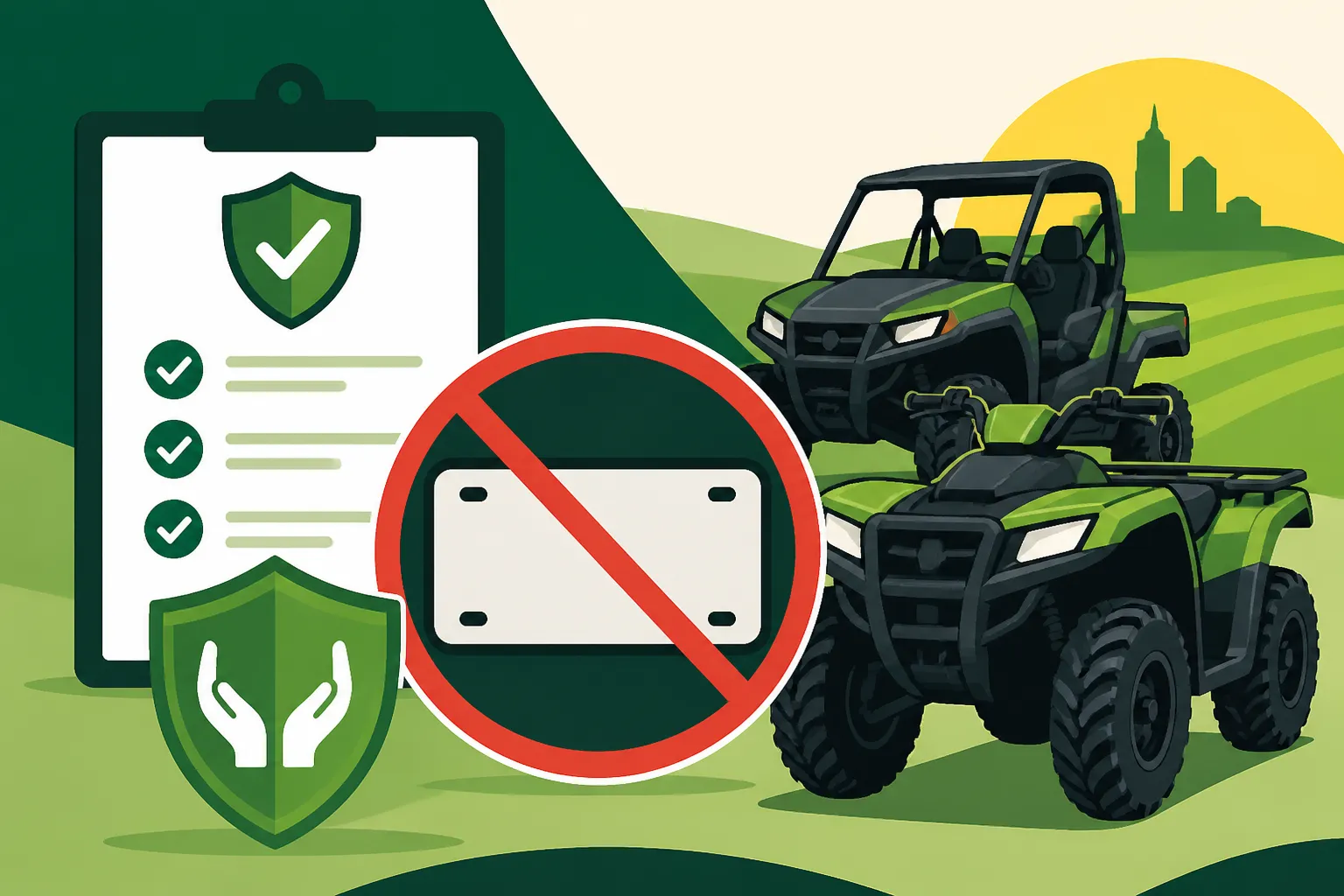
Let’s get this out of the way upfront: if you own an ATV or UTV in Saskatchewan, you're not missing a crucial piece of paper. The province simply doesn't have a provincial registration or titling system for these types of machines. This fact often surprises new riders, or those moving here from other provinces or states where quads are registered just like cars. But for us, it’s just how it is.
Why There's No Provincial ATV Plate
Saskatchewan has a long history of independent ATV ownership and usage, particularly in our vast rural areas and for recreational purposes. For decades, the provincial government has opted not to implement a province-wide registration or licensing system for ATVs. This means there's no central registry where your quad's VIN (Vehicle Identification Number) is tied to your name by the province. There's also no provincial plate or sticker to display, unlike with snowmobiles, which are provincially registered. For a deeper dive into this unique provincial approach, you can read [Saskatchewan Does Not Register ATVs]. This absence of a provincial registry means that insurance companies operating in Saskatchewan are well aware of this reality. They don't expect you to produce a document that simply doesn't exist.
What "Unregistered" Truly Means for Insurers
When we talk about an ATV being "unregistered" in Saskatchewan, it's not the same as driving an unregistered car on a highway in a province where car registration is mandatory. For an ATV, "unregistered" simply means there's no provincial database tracking its ownership or allowing for a provincial plate. It does not mean your machine is illegal, nor does it automatically void your insurance coverage. Your insurance policy is a contract between you and your insurer, and it outlines the conditions under which you are covered. As long as you meet those conditions, the lack of a provincial registration won't be an issue. The key is to ensure you have a legitimate insurance policy in place, as [Saskatchewan Insurance Requirements for Riders] makes clear that having at least $200,000 in liability coverage is mandatory when operating on public lands or ditches.
The Role of Municipal Plates
Now, this is where a little nuance comes in. While the province doesn't issue ATV plates, some local municipalities, particularly those with a lot of recreational activity like Candle Lake or the District of Lakeland, have implemented their own local permit or plate systems. These are specific to riding within that municipality's jurisdiction, often on designated streets or trails they maintain. For example, [Candle Lake Charges $25 for an ATV Permit] to ride within its boundaries. It’s crucial to understand that these municipal plates are not provincial registrations. They are local permits, and while having one might be a condition of riding in a specific area, your provincial insurance company isn't going to treat it as a provincial registration for claim purposes. Its absence or presence won't typically affect a claim outside that municipality, or even within it, as long as your underlying provincial liability insurance is active.
What Insurers Really Look For in an ATV Claim
Given that a provincial plate isn't a factor, what does an insurance company scrutinize when you file a claim for your ATV or UTV in Saskatchewan? They're looking for evidence that you own the machine, that you had a valid policy, and that you were operating within the terms of that policy and the law.
Proof of Ownership is Paramount
Without a provincial title or registration, your proof of ownership becomes absolutely critical. This usually comes down to your bill of sale. Whether you bought your quad new from a dealer or used from a private seller at a farm gate, that bill of sale is the single most important document you possess regarding ownership. It needs to clearly identify the machine (VIN, make, model, year), the seller, the buyer, the date of sale, and the purchase price. Many riders find it helpful to use standardized templates for private sales. Resources like LawDepot offer easy-to-use templates that ensure all necessary information is captured, giving you solid documentation. This document is your stand-in for a provincial title. For more information on what this document entails, refer to [Saskatchewan Bills of Sale Do the Work]. When a loss occurs, your insurance adjuster will ask for this. If you can’t prove you own it, you can’t make a claim on it.
Valid Insurance Policy and Premiums Paid
This might seem obvious, but it's fundamental: you must have an active and paid-up insurance policy covering the ATV at the time of the incident. Simply stating "I have insurance" isn't enough; you need to be able to show proof. Your policy documents will detail the coverage limits (e.g., liability, collision, comprehensive), the deductible, and the effective dates. If you’ve missed premium payments, or if the policy was cancelled for any reason, your claim will likely be denied. It’s a good practice to carry a copy of your insurance card or policy declaration page with you when you ride, especially if you're on Crown land or public access areas, as a peace officer or park warden might ask to see [Saskatchewan Insurance Proof on the Trail].
Compliance with Operating Rules
Your insurance policy is typically contingent on you operating the machine legally and safely, as outlined in the All Terrain Vehicles Act and its associated regulations. If the incident occurred while you were breaking the law, your claim could be denied or significantly reduced. This includes things like:
- Age restrictions: For instance, [Saskatchewan Bans Riders Under 16] from operating an ATV without supervision, and there are specific rules for riders aged 12 and over, as detailed in [Saskatchewan's Exception for Riders 12 and Over].
- Helmet and eye protection: Not wearing an approved helmet or proper eye protection could be an issue if an injury occurs. [Saskatchewan Helmet and Eye Protection Rules] are clear on this.
- Impaired operation: Operating an ATV while under the influence of alcohol or drugs will almost certainly lead to a denied claim and severe legal repercussions.
- Prohibited areas: Riding in areas where ATVs are specifically prohibited (e.g., certain provincial parks, ecologically sensitive zones, or private land without permission) can also jeopardize a claim.
- Passengers: Carrying passengers on an ATV not designed for more than one person is another common violation. [Saskatchewan Passengers Only on Designed Machines] clarifies this.
In essence, your insurer wants to know that you were acting responsibly and legally. Any deviation can be used by the insurance company to deny or limit your claim, regardless of whether your ATV has a plate or not.
Here's a quick overview of what helps and hinders an ATV insurance claim in Saskatchewan:
| Factor | Helps Claim | Hinders Claim |
|---|---|---|
| Provincial ATV Plate | Not applicable (doesn't exist) | Not applicable |
| Valid Bill of Sale | CRITICAL: Clear proof of ownership. | Missing, incomplete, or fraudulent bill of sale. |
| Active Insurance Policy | Policy in force, premiums paid, coverage for incident. | Lapsed policy, missed payments, no coverage for specific loss (e.g., no collision for an accident). |
| Legal Operation | Adherence to ATV Act (age, helmet, areas). | Violations of ATV Act (e.g., underage riding, no helmet, impaired operation, trespassing, riding in prohibited zones). |
| Accurate Claim Details | Honest, detailed account of incident. | Inconsistencies, misrepresentations, or fraudulent reporting. |
| Damage Documentation | Photos, videos, repair estimates. | Lack of proof of damage or loss. |
| Local Permits (e.g., Municipal) | Demonstrates responsible local riding (minor impact). | Not having one if required for specific area of incident (minor impact, primarily relates to local bylaws). |
Navigating the Claims Process Without a Provincial Plate
So, the worst happens: you've had an incident with your ATV. Here’s how you can best prepare for and navigate the insurance claims process, especially when there’s no provincial plate to point to.
Documenting the Incident Thoroughly
From the moment an incident occurs, start documenting everything you can. This is perhaps the most crucial step in any insurance claim, and it's no different for an ATV.
- Photos and Videos: Take numerous photos and videos of the scene, the damaged machine, any other vehicles or property involved, and even the surrounding environment. Capture different angles and close-ups of the damage. If there are any environmental factors like a tricky trail condition or a poorly marked obstacle, document those too.
- Incident Details: Write down a detailed account of what happened: date, time, location (GPS coordinates are excellent), weather conditions, how the incident occurred, and any contributing factors.
- Witness Information: If there were any witnesses, get their contact information (names, phone numbers, email addresses). Their statements can be invaluable.
- Police Reports: If the incident involved another party, significant property damage, or injuries, you might need to contact the police. Even if they don't file a formal "accident report" like they would for a car, having a police presence and potentially a police file number can be helpful. Remember, [Saskatchewan Accident Reporting Duties] might require you to report certain incidents to the authorities.
The more evidence you collect, the smoother the claims process will generally be. An adjuster's job is to investigate, and good documentation makes their job easier, which in turn benefits you.
Providing Proof of Ownership to the Adjuster
As mentioned, your bill of sale is your golden ticket here. When your insurance adjuster contacts you, they will ask for it. Be ready to provide a clear copy. If you used a professional template from a service like LawDepot, your bill of sale will likely contain all the necessary information, making it easy for the adjuster to verify your ownership.
What if you bought your ATV privately and only have a handwritten note, or perhaps no formal receipt at all? This is where things can get tricky. While a handwritten bill of sale can be valid, it must contain enough detail to be credible. If it's vague, missing VINs, or lacks signatures, the insurer might question its authenticity. In cases with very little paperwork, other forms of proof might be considered, such as cancelled cheques, bank statements showing payment, or past insurance documents that list you as the owner. For a private sale, a clear, dated [Saskatchewan Bills of Sale for a Quad] is essential for both the buyer and seller.
Being Prepared for Questions About Operation
Expect your adjuster to ask about the circumstances of the incident, particularly concerning how you were operating the ATV. They might inquire about your riding experience, whether you were wearing a helmet and eye protection, if you had passengers, and the specific location you were riding in. This is where your knowledge of [Saskatchewan ATV Road Rules Explained] and local bylaws becomes important. If you were riding responsibly and legally, your detailed account, supported by your documentation, will strengthen your claim. If there were any breaches of the ATV Act, be prepared to discuss them, as they could impact the outcome of your claim. Honesty, even if it reveals a minor transgression, is usually the best policy, as misrepresentation can lead to a complete denial.
Protecting Yourself: Beyond the Non-Existent Plate
Since you can't rely on a provincial registration, it's up to you as the ATV owner to be proactive in protecting your investment and ensuring you're covered.
Ensuring Your Bill of Sale is Solid
This cannot be stressed enough. Think of your bill of sale as your ATV's birth certificate and title all rolled into one. If you're buying a used machine from a private seller, take the time to create a thorough document. Don't just scrawl a few lines on a napkin. Use a template that includes:
- Full names and addresses of both buyer and seller.
- The date of sale.
- The full purchase price.
- A clear description of the ATV (make, model, year, colour).
- The complete VIN (Vehicle Identification Number) – double-check this against the machine itself!
- A statement that the seller is the legal owner and the machine is free of liens (if applicable).
- Signatures of both parties.
Using a service like LawDepot to generate this document can give you peace of mind, knowing all the legal bases are covered. This professional-grade paperwork will serve as [How to Prove You Own an ATV in Saskatchewan] and will be critical if you ever need to file an insurance claim, secure financing, or even sell the machine yourself later on. It’s also crucial for determining [Saskatchewan PST at Purchase] on private sales if applicable.
Reviewing Your Policy Annually
Don't just set and forget your insurance policy. Life changes, and so do your needs. Take the time each year to review your ATV insurance policy with your broker.
- Coverage Levels: Are your liability limits still adequate? Do you need comprehensive or collision coverage?
- Machine Details: Is the correct make, model, year, and VIN listed on your policy? If you've added accessories like a winch or plow, make sure they are noted, as some policies have limits on aftermarket additions.
- Usage: Has your primary use for the ATV changed? Are you now using it for work on a farm, or primarily for recreational trail riding? This can affect your premium and coverage.
- Operator List: If other family members or friends will be operating your ATV, ensure they are listed as occasional operators on your policy, or that your policy extends coverage to permissive users.
An annual review ensures that your policy accurately reflects your current situation, providing the best protection for [Saskatchewan Insurance Claims Without a Plate].
Understanding Saskatchewan's Liability Rules
Even without a provincial registration, the All Terrain Vehicles Act lays out clear rules for liability. [Saskatchewan Owner Liability Rules] states that the owner of an ATV can be held liable for damages caused by the operation of their machine, even if they weren't the one driving it. This is why having robust liability insurance is non-negotiable. If someone borrows your quad and causes an accident, your policy could be on the hook. Make sure anyone who borrows your machine is aware of all operating laws and your insurance coverage terms. Some policies might require specific named operators, while others offer broader coverage, but it's always best to clarify this with your insurer. It can also affect [Who Pays When a Borrower Crashes Your Saskatchewan Quad?].
By taking these proactive steps—especially by maintaining a detailed bill of sale, diligently reviewing your insurance, and understanding the operating rules—you can significantly strengthen your position should you ever need to file an insurance claim for your ATV or UTV in Saskatchewan. The absence of a provincial plate truly doesn't have to be a roadblock to getting the coverage you've paid for.
Disclaimer
This article is for general informational purposes only and does not constitute professional advice. Laws, prices and regulations vary by location and change over time. Consult a qualified professional for guidance on your specific situation.