Planning a Village Office Visit Before You Drive
There's nothing quite as frustrating as taking time out of your busy day, loading up the kids or running your errands, and then finally arriving at your local village or RM office, only to find out you've forgotten that one crucial piece of paperwork. You're trying to do the right thing and get your ATV or UTV plated for local riding, but the process can feel a bit like a scavenger hunt if you're not prepared. This guide is all about helping you avoid that wasted trip by detailing exactly what you'll need before you even think about putting your truck in reverse.
Why a Village Office, and Not the Province?
If you're new to the Saskatchewan off-road scene, or perhaps just new to owning an ATV or UTV here, you might be wondering why we're even talking about a "village office" for what sounds like a registration process. It's a fair question, and one that often trips up riders from other provinces. The simple truth is that [Saskatchewan Does Not Register ATVs] at the provincial level. There's no province-wide registry, no provincial plates, and no central database for these machines like there is for cars, trucks, or even snowmobiles. This can be a bit of a head-scratcher for many, especially when you're used to a different system.
So, if the province isn't handling it, why are we heading to a local office? The answer lies in local control. While the province sets the broad strokes for operating ATVs and UTVs on public lands and ditches, individual municipalities – like villages, towns, and rural municipalities (RMs) – have the authority to create their own bylaws regarding how these machines operate within their specific boundaries. Many of these municipalities, especially those in popular recreational areas, have decided to implement their own local plate or permit schemes. This allows them to manage local trail use, address safety concerns, and often, generate some much-needed revenue to maintain local trails and infrastructure. It's a localized solution to a province-wide gap, and understanding this distinction is the first step to a smooth visit.
Understanding Municipal Plate Schemes
It's important to grasp that these municipal plates aren't universal. A plate from the Village of Candle Lake, for instance, might be perfectly valid for riding their designated trails and specific roads, but it won't necessarily grant you permission to ride legally in the District of Lakeland, or vice-versa. Each municipality sets its own rules, fees, and areas of validity. This means your planning needs to be specific to where you intend to ride. If you're planning to ride in multiple areas, you might find yourself needing permits or plates from different jurisdictions, which can be an added layer of complexity.
Think of it like getting a fishing license for a specific lake versus a provincial license that covers all waters. The municipal plate is highly localized. These schemes are usually established under local bylaws to help ensure accountability and to provide funding for local infrastructure and safety initiatives. Many riders appreciate these local efforts because the fees often directly support the very trails they want to ride. Just remember that the absence of a provincial plate doesn't mean a free-for-all; it often means you need to be extra diligent about checking local regulations. Knowing this upfront can save you a lot of grief and ensure you're riding legally and responsibly wherever you go. You can learn more about this by looking at [Saskatchewan Municipal Plate Schemes].
The Non-Existence of a Provincial Registry
The fact that [Saskatchewan Has No ATV Plate or Decal] from the provincial government is a significant detail. This means that when you go to a village office, you're not registering your machine with a provincial authority that will then issue a title or a central record of ownership. Instead, you're applying for a local permit or plate that signifies you have paid the local fee and agreed to their specific bylaws. This distinction is critical because it impacts how ownership is proven and how the process unfolds.
Because there's no provincial registry, local offices rely heavily on other forms of documentation to verify your ownership and identity. This also means that many of the typical "registration" concerns you might have from other jurisdictions – like transferring a title or updating a provincial ownership record – simply don't apply at this level. The village office isn't interested in tracking your machine's provincial ownership history, because such a history doesn't exist for ATVs in Saskatchewan. Their focus is much narrower: "Are you who you say you are, do you own this machine, and are you willing to pay the fee and abide by our local rules?" Understanding this helps manage your expectations and ensures you bring the right kind of documentation.
What to Gather Before You Go
Okay, so you understand why you're going to the village office. Now, let's talk about the practical stuff: what to actually bring with you. This is where most people get tripped up, and a little preparation can save you a lot of frustration. Think of your visit as proving two main things: your identity and your ownership of the machine. Without these, even the friendliest clerk can't help you.
Proof of Identity
First and foremost, you need to prove you are who you say you are. This might seem obvious, but you'd be surprised how many people forget a crucial piece of ID. Always bring government-issued photo identification. Your valid Saskatchewan driver's license is usually the best option, as it proves both your identity and your residency. If you don't have a driver's license, a Saskatchewan ID card will work just as well. Some offices might be stricter than others, so it's always a good idea to have a secondary piece of identification, such as a health card (though often not photo ID), a credit card with your name on it, or a passport. This extra step can prevent a wasted trip if their system requires two forms of verification or if there's any doubt about your primary ID.
It's also worth noting that some municipalities might have age restrictions for who can apply for a permit, or specific rules for youth riders. While [Saskatchewan Bans Riders Under 16] on public roads and ditches unless supervised, local bylaws might have additional stipulations. Ensure that your ID clearly shows you meet any age requirements for the specific permit you're seeking.
Proof of Ownership for Your ATV or UTV
Since there's no provincial registration for ATVs and UTVs, proving ownership might feel a bit different than with other vehicles. You won't have a provincial title or registration document to present. Instead, the village office will rely on a clear chain of ownership established through other documents.
The most critical document you can bring is a solid Bill of Sale. This is your primary proof that you legally acquired the machine. For a new machine purchased from a dealer, you'll want the original sales invoice or receipt that clearly details the machine's VIN (Vehicle Identification Number) or serial number, the purchase date, the seller's information (the dealership), and your information as the buyer. Make sure it explicitly states that the machine is an ATV or UTV. When buying from a private seller, a handwritten or typed bill of sale signed by both parties is essential. You can find templates online, including from services like LawDepot, that help ensure all necessary information is included. A well-prepared bill of sale should list the full names and addresses of both buyer and seller, the date of sale, the purchase price, and a clear description of the ATV, including its make, model, year, and serial number.
If you don't have a bill of sale – perhaps you inherited the machine, or bought it years ago and misplaced the paperwork – things get a bit trickier, but not impossible. You might need to provide a sworn affidavit of ownership, or other supporting documents like old insurance policies, repair receipts with the VIN, or even testimony from the previous owner. It's best to call the municipal office ahead of time if you're in this situation to confirm what they will accept as [Saskatchewan Proof of Ownership Without a Registry]. They'll be able to guide you on their specific requirements. Remember, the goal is to clearly link you to that specific machine.
What to Expect at the Office
You've got your ID, your bill of sale, and you're ready to roll. Great! Now, let's talk about what actually happens once you walk through the door of that village or RM office.
The Application Process
When you arrive, you'll likely be greeted by a municipal clerk or administrator. They'll probably ask you the purpose of your visit, and you can simply state you're there to get an ATV/UTV permit or plate. They'll provide you with an application form. These forms are usually straightforward, asking for your personal details (name, address, contact information), and information about your ATV or UTV (make, model, year, VIN/serial number). This is where having all your documents organized comes in handy – you can quickly transfer the necessary details to the form.
The clerk will review your identification and your proof of ownership. They might compare the VIN on your bill of sale to physical records they have or simply verify that the documentation is complete and legitimate. Don't be surprised if they ask a few clarifying questions about your machine or your intended use, especially if it helps them determine the correct permit type or if there are specific local rules they need to make you aware of. Many offices will ask you to sign an acknowledgement that you understand and agree to abide by the local bylaws governing ATV/UTV use within their jurisdiction. This is an important step, as these bylaws often outline specific speed limits, prohibited areas, and times of operation that differ from general provincial rules.
Fees and Payment
Of course, there's usually a fee involved. [Saskatchewan Municipal Plate Costs] vary significantly from one municipality to another. Some might charge a nominal annual fee, while others, particularly those in high-recreational areas, might have a more substantial charge, often reflecting the cost of maintaining local trails. For example, some might charge a flat rate, while others might have different tiers for residents versus non-residents, or for different types of machines.
It's a really good idea to call ahead and ask about the current fee structure. Also, inquire about accepted payment methods. While many offices accept cash, debit, and credit cards, smaller rural offices might have more limited options. Some might even accept e-transfer, as is sometimes the case at places like the Candle Lake office. Knowing this in advance prevents an awkward situation at the counter. Remember, this fee directly supports local initiatives, so it's an investment in your local riding experience. Be prepared to pay the full amount at the time of application, as permits are generally issued only after payment is received.
Issuance of Your Plate or Permit
Once your application is processed and fees are paid, the office will issue your municipal plate or permit. This might be a physical metal plate, a sticker to affix to your machine, or even just a dated paper permit that you need to carry with you. Each municipality has its own system. They'll also explain where and how you need to display your plate or permit on your ATV or UTV. Make sure you understand these instructions clearly, as improper display could lead to a ticket.
Some municipalities might also provide you with a copy of their local ATV/UTV bylaws or direct you to their website to review them. Take this opportunity to familiarize yourself with any specific rules about speed limits, times of operation, or designated riding areas. This is crucial for avoiding fines and being a responsible rider in that community. Remember, these plates are typically renewed annually, so you'll be back at some point!
Common Pitfalls to Avoid
Even with the best preparation, things can sometimes go sideways. Knowing the common hurdles can help you anticipate and avoid them, making your village office visit as smooth as possible.
Missing or Incomplete Paperwork
This is by far the biggest reason for a wasted trip. Forgetting your government-issued ID, or showing up with a bill of sale that lacks key information (like the VIN or the seller's full details), can bring the whole process to a grinding halt. Imagine trying to prove you own a machine with a scribbled note on a napkin – it just won't fly. Take the time to double-check everything before you leave your driveway. Lay out all your documents, compare the VINs, and ensure all names and addresses are correctly listed. If you used a template from LawDepot for your bill of sale, review it carefully to confirm all fields are filled out accurately. This meticulousness will save you immense frustration.
Another common mistake is not having the serial number or VIN readily accessible on your machine itself, should the clerk need to verify it. While they likely won't come out to the parking lot to check, it's not unheard of, especially in smaller offices where staff might be more hands-on. Knowing exactly where your VIN is located on your machine (usually stamped on the frame) is always good practice for any owner. This detailed preparation ensures you cover all your bases, preventing a scenario where you have to go home, retrieve a forgotten document, or try to track down a previous owner for missing information.
Not Understanding Local Bylaws
Getting the plate is only half the battle; knowing where and how you can actually ride is the other. Many riders make the mistake of assuming that once they have a municipal plate, they can ride anywhere within that municipality. This is rarely the case. Municipalities often have very specific bylaws that designate certain streets, trails, or areas where ATVs/UTVs are permitted, and just as importantly, where they are prohibited. For instance, [Saskatchewan Municipal Bylaws on Roads] might open some municipal roads to ATVs while keeping others strictly off-limits. You might also find rules about noise, operating hours, or even proximity to residential areas or lakeshores.
A permit from the Village of Candle Lake, for instance, comes with specific rules about lake-shore setbacks that are crucial to follow. Always ask for a copy of the bylaws or where to find them online. Familiarize yourself with them before you head out on your first ride. Ignorance of the law is never an excuse, and a ticket for riding in a prohibited area can quickly negate the joy of your new plate. Some municipalities even have posted signs indicating permitted or prohibited areas, so keep an eye out for those while riding.
Issues with Payment or Expiry Dates
You'd be surprised how often a quick trip can be delayed by a forgotten wallet or an expired payment card. Always confirm the accepted payment methods and have your chosen method ready. It sounds simple, but it happens! Also, be mindful of permit expiry dates. Most municipal plates are issued for a specific period, often an annual cycle ending on a particular date (e.g., April 30th for many municipalities in the north). If you're buying a permit mid-season, understand if it's pro-rated or if you're paying for a full year regardless.
Renewing your plate is typically a simpler process than getting the initial one, but it still requires attention to detail and payment. Missing a renewal deadline can mean riding illegally, or having to pay late fees. Always make a note of your expiry date and plan to renew well in advance. Some municipalities will send reminders, but it's ultimately your responsibility to keep your permit current. This vigilance ensures continuous legal riding and avoids any surprises when you're out enjoying the trails. You can find more information about this in [Saskatchewan Municipal Plate Renewals].
Table of Essential Documents for Your Village Office Visit
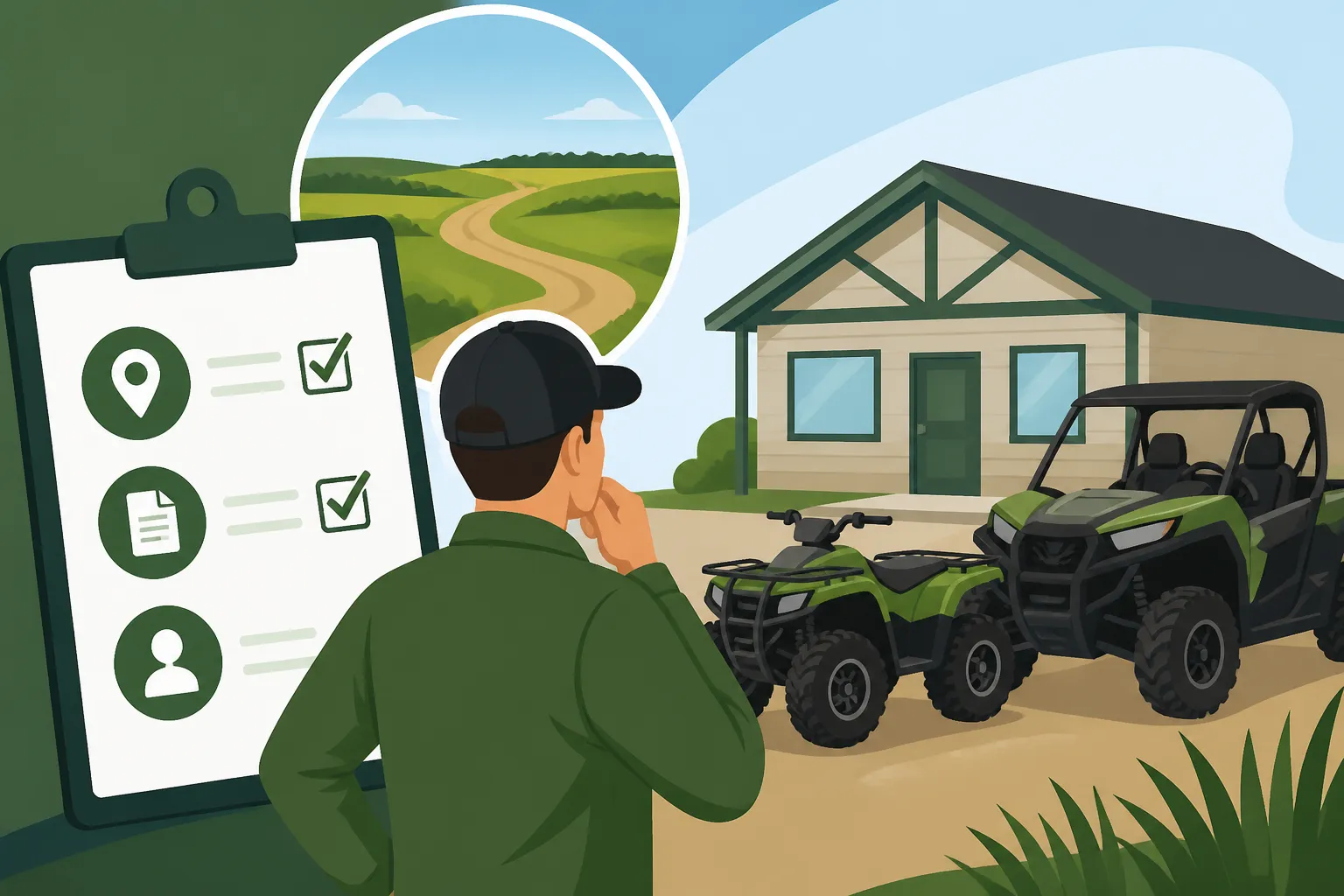
To make your trip as smooth as possible, here's a handy checklist of items you should aim to have with you. Remember, it's always best to call the specific municipal office ahead of time to confirm their exact requirements, as they can vary.
| Document Type | Specific Item | Purpose | Notes |
|---|---|---|---|
| Proof of Identity | Government-issued Photo ID | To verify your identity and age | Valid Saskatchewan Driver's License or Saskatchewan ID Card is ideal. |
| Secondary ID (optional, but recommended) | Extra verification, if required by the office | Health card, credit card, or passport (ensure it matches your primary ID). | |
| Proof of Ownership | Original Bill of Sale / Sales Invoice | To prove you legally acquired the ATV/UTV | Must clearly show VIN/Serial Number, buyer/seller details, date, and purchase price. A template from LawDepot can ensure all details are included, particularly for private sales. [Saskatchewan Bills of Sale Do the Work] |
| Previous Registration (if applicable, e.g., from out-of-province) | To show continuous ownership history if machine was previously registered elsewhere | While Saskatchewan doesn't register ATVs, if you're a [Saskatchewan Paperwork for a New Resident] bringing an ATV from a province that does, this can help. | |
| Sworn Affidavit of Ownership | If original bill of sale is lost or unavailable | Only if specifically accepted by the municipal office; call ahead to confirm. | |
| Machine Information | ATV/UTV Make, Model, Year | To complete application form | Easily found on your bill of sale or owner's manual. |
| VIN (Vehicle Identification Number) | Essential unique identifier for your machine | Double-check this number from your machine against your bill of sale before you go. | |
| Payment | Accepted Payment Method (Cash, Debit, Credit) | To pay the permit/plate fee | Call ahead to confirm accepted methods and the exact fee amount. [Saskatchewan Municipal Plate Costs] |
| Additional Items | Proof of Insurance | Some municipalities or park systems may require this | While [Saskatchewan Has No Registration Fee] and thus no provincially bundled insurance, you MUST have liability insurance to ride legally. You'll likely need to show [Saskatchewan Insurance Proof on the Trail] if stopped by an officer. |
| Copy of Local Bylaws (if available/printed) | For quick reference and understanding rules | Often provided by the office or available on their website. |
Taking the time to compile these documents and make any necessary calls beforehand will make your village office visit a breeze. You'll walk in confident, get your permit, and be one step closer to enjoying the incredible riding opportunities Saskatchewan has to offer.
Disclaimer
This article is for general informational purposes only and does not constitute professional advice. Laws, prices and regulations vary by location and change over time. Consult a qualified professional for guidance on your specific situation.