Writing a Bill of Sale by Hand at a Farm Gate
Buying or selling an ATV or UTV privately at a farm gate in Saskatchewan can feel like navigating a maze without a map, especially since our province doesn't have a centralized registry or title system for these machines. You might be standing there, ready to shake hands, and suddenly realize you're not entirely sure what paperwork you actually need to protect yourself. This guide is here to walk you through the nitty-gritty of creating a thorough, legally sound hand-written bill of sale on the spot, ensuring both buyer and seller leave the farm gate with confidence and clear proof of ownership.
Why a Hand-Written Bill of Sale is Your Cornerstone for ATV and UTV Ownership in Saskatchewan
In many places, when you buy a vehicle, you get a fancy title from the government. That piece of paper proves who the owner is, and it's a big deal. But here in Saskatchewan, our situation is a little different for ATVs and UTVs. We don't have a provincial registry for these machines, and consequently, there's no official title to transfer. This often leaves buyers and sellers feeling a bit exposed, wondering how they truly establish and prove ownership.
The Absence of Provincial Registration and Titles
The reality is that [Saskatchewan Does Not Register ATVs], and therefore, [Saskatchewan Has No Title to Transfer]. This isn't just a minor detail; it's a fundamental difference that shifts the entire responsibility of proving ownership onto the individuals involved in the sale. Without a government-issued document, the bill of sale isn't just a formality; it becomes the single most important piece of paper you have. It's your primary legal record, linking the machine directly to you, the buyer, from the moment of purchase. For the seller, it's their proof that they no longer own the machine and are absolved of future liability.
Imagine you've just bought a used quad, and a few months down the line, a question arises about its previous history or, worse, its ownership. Without a robust bill of sale, you have very little to fall back on. This document is what a peace officer might ask for if they have questions about your machine on a trail, or what you'll need to present to an insurance company if you ever file a claim. It’s the closest thing we have to a formal ownership record for these vehicles in our province.
How Your Bill of Sale Stands in for Official Paperwork
Because the province doesn't issue titles, [Saskatchewan Bills of Sale Do the Work] of establishing ownership. Think of your bill of sale as a mini-contract, detailing the transaction. It's the documented evidence that you legally acquired the machine from the previous owner. This is incredibly important for various reasons beyond just knowing who owns it. It's crucial for insurance purposes, helping you secure a policy and making a claim if needed. It's also vital if you ever decide to sell the machine yourself, as the next buyer will expect to see a clear chain of ownership.
Furthermore, if there's ever a dispute, perhaps regarding the condition of the machine post-sale, or if you need to demonstrate when and where you took possession, that bill of sale is your first and often only line of defence. It provides the crucial details of the transaction, establishing the agreement between buyer and seller. While you can find templates online, like those offered by LawDepot, knowing how to properly draft one by hand is an essential skill for anyone buying or selling an ATV or UTV in the province, especially in remote, rural settings where internet access might be limited.
Essential Elements: What Absolutely Must Go into Your Farm Gate Bill of Sale
When you're at a farm gate, maybe with the quad still a bit muddy from its last ride, it's easy to overlook crucial details. But a hastily scribbled note simply stating "Sold quad for $X" isn't going to cut it. You need a comprehensive document. Even a hand-written bill of sale must contain specific, detailed information to be truly effective and legally sound. This isn't about creating extra work; it's about protecting yourself from potential headaches down the road.
Identifying Information for Both Parties
The absolute first thing you need is clear and complete identification for both the buyer and the seller. This means full legal names, not just nicknames. You also need current residential addresses and reliable contact information, such as a phone number and email address. Without this, if an issue arises later, you have no way to reach the other party.
| Detail | Buyer Information | Seller Information | Why It Matters |
|---|---|---|---|
| Full Legal Name | John David Smith | Mary Jane Doe | Essential for legal standing and identification. |
| Current Address | 123 Main St, Anytown, SK S0A 0A0 | 456 Elm Ave, Somewhere, SK S0B 0B0 | For official correspondence and residency proof. |
| Phone Number | (306) 555-1234 | (306) 555-5678 | For urgent contact or resolving post-sale queries. |
| Email Address | john.smith@email.com | mary.doe@email.com | Alternative contact, especially for sending digital copies. |
| Driver's Licence # | AB1234567 (if applicable) | CD7890123 (if applicable) | Adds another layer of verifiable identification for both parties. |
Make sure these details are clearly legible. It's a good idea for both parties to show a piece of government-issued photo ID (like a driver's licence) to verify these details. You can even note the driver's licence number on the bill of sale for an extra layer of verification. This prevents any claims later that "that wasn't me" or "I didn't agree to that."
Detailed Machine Description
This is arguably the most critical section for the ATV or UTV itself. You need to describe the machine so accurately that there's no doubt which specific vehicle was sold. Start with the basics: make (e.g., Polaris, Can-Am, Honda), model (e.g., Sportsman, Outlander, Rancher), and year. But don't stop there. Include the colour and, if applicable, any distinctive features or noticeable damage that was present at the time of sale.
Most importantly, you must include the Vehicle Identification Number (VIN) or serial number. [Checking a Serial Number Twice Before You Pay] is not just good practice; it's essential for the bill of sale. This number is unique to that specific machine, just like a fingerprint. Double-check that you've written it down correctly, comparing it to the physical VIN plate on the vehicle. Errors here can lead to huge headaches down the line if you ever need to prove ownership, deal with an insurance claim, or heaven forbid, if the machine is ever stolen. If the machine has an odometer or hour meter, record the reading at the time of sale. This helps establish the machine's condition at the point of sale and can be useful in any future discussions about wear and tear.
The Purchase Price, Date, and Signatures
Every bill of sale needs to clearly state the agreed-upon purchase price, both in numbers and written out in words to prevent any ambiguity. For example, "$5,000 (Five Thousand Canadian Dollars)." This is important for future tax purposes, especially when dealing with [Saskatchewan PST at Purchase] and [Saskatchewan GST at Purchase], which you'll need to account for when buying from a dealer or in some private sales depending on the machine. Clearly state the date of the transaction (day, month, year) when ownership officially changed hands.
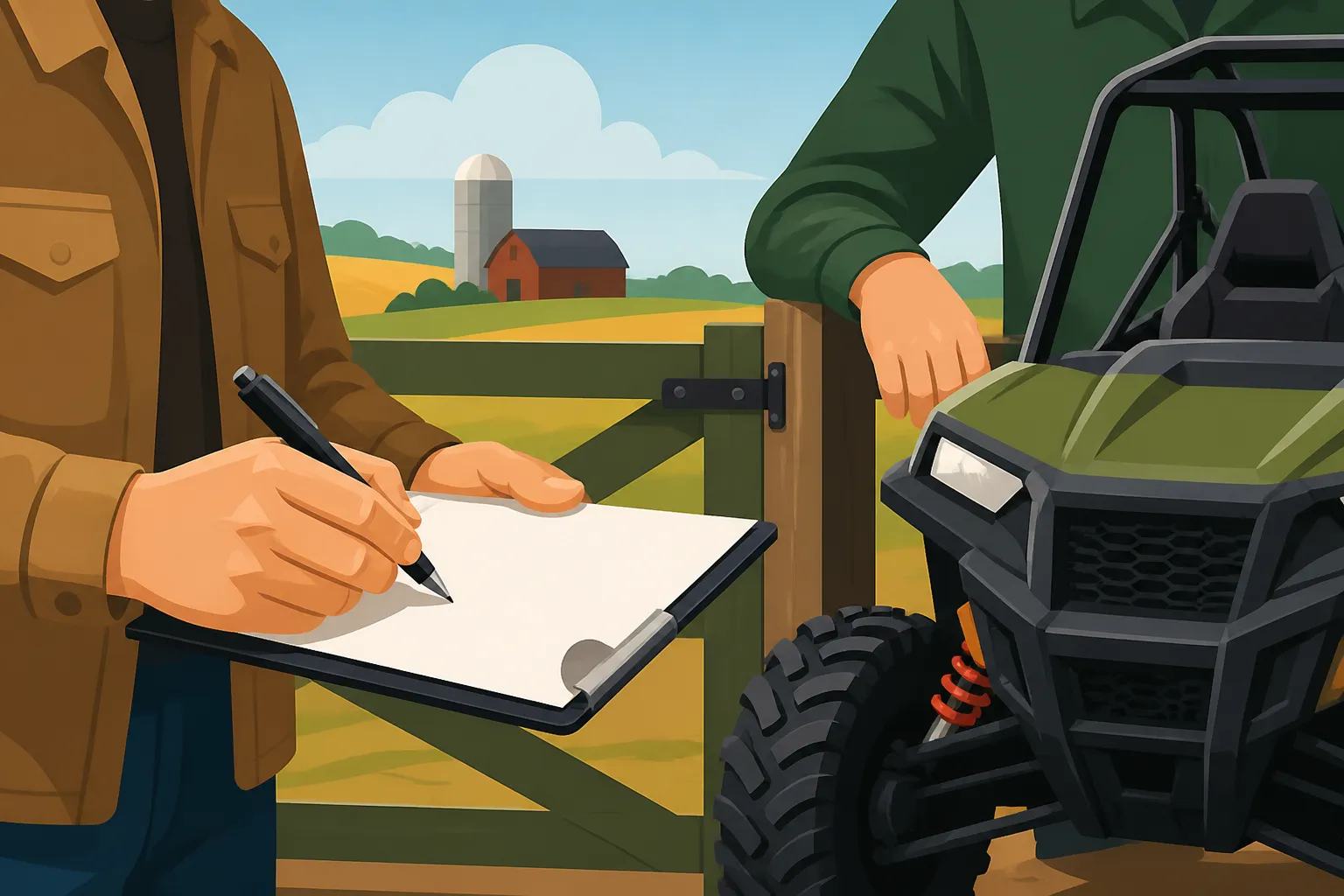
Finally, and perhaps most obviously, both the buyer and the seller must sign the document. Their signatures acknowledge their agreement to the terms outlined. It's highly recommended to include a line for a witness or two, if available, to also sign the document, noting their printed name and contact information. While not always possible at a remote farm gate, a witness adds another layer of credibility to the transaction. Make sure each party receives an original signed copy of the bill of sale. A photograph of the signed document on your phone can also be a good backup.
Crafting a Solid Bill of Sale on the Spot: Tips for Buyers and Sellers
When you're standing in a farmyard, perhaps with the wind whipping or a biting cold in the air, you might be tempted to rush the paperwork. Resist that urge! Taking a few extra minutes to get the bill of sale right can save you days or even weeks of frustration later. This section focuses on practical steps and considerations for creating that vital document without a formal office setting.
Before You Even Leave Home
Preparation is key, especially if you're venturing out to a private sale. As a buyer, consider printing a generic bill of sale template before you go, even if you just grab one from a reputable source like LawDepot. Having a structured document, even if you have to hand-fill it, makes it much harder to forget crucial details. Bring a pen (or two, just in case!), a clipboard or a hard surface to write on, and a flashlight if it's getting dark. You'll also want your government-issued ID and perhaps a second person to act as a witness.
For sellers, having a pre-printed form ready is equally important. Think about [What Your Bill of Sale Needs to Cover] in advance. Gather any existing paperwork for the machine, such as past bills of sale, service records, or original owner's manuals. This transparency builds trust and provides the buyer with valuable historical data. Have your own ID ready for verification and be prepared to take legible notes or fill out the form clearly. Remember, this document is your proof of [Selling a Quad Privately in Saskatchewan], so its accuracy is paramount.
During the Transaction: Writing it Down Clearly
When it's time to put pen to paper, clarity and legibility are your best friends. Use clear, block lettering if your handwriting isn't perfectly neat. Any smudges or illegible words could lead to misunderstandings later. Go through each required field one by one, double-checking the information with the other party. As mentioned earlier, verifying the VIN/serial number on the machine against what you're writing is non-negotiable. Don't rely on memory or what's written on an old piece of paper; physically check the machine's identification plate.
Make sure all conditions of the sale are noted, if any. For example, if the machine is being sold "as-is," write that explicitly. If a specific accessory is included or excluded, make that clear. Both parties should review the completed document carefully before signing. Read it aloud if necessary to catch any errors or omissions. It's often helpful to have two identical copies of the hand-written bill of sale. Both parties sign both copies, and then each person takes one original. This eliminates any disputes about alterations made after the fact.
What to Do Immediately After the Sale
Once the ink is dry and the machine has changed hands, your work isn't quite done. For the buyer, immediately put your copy of the bill of sale in a safe, memorable place. Don't just toss it in a glove box where it might get lost or damaged. Consider taking a clear photograph of the signed document with your phone as a digital backup, and email it to yourself or a trusted family member. This is critical for [How to Prove You Own an ATV in Saskatchewan] in a province without a formal registry.
As a seller, keep your copy just as carefully. This document proves you no longer own the machine, which can be crucial if the vehicle is later involved in an accident or other incident. While it's rare for Saskatchewan to have formal tax reporting on private ATV sales, it's still prudent to keep these records for your personal files, especially if you sold for a significant amount. For both parties, it's worth noting the serial number and other key details in a separate, secure record, just in case the physical document is ever lost.
Beyond the Basic Bill: Protecting Yourself from Common Pitfalls
Even with a perfectly written bill of sale, the world of private sales can have its challenges. It's important to understand that while the bill of sale is critical, it's just one piece of the puzzle in ensuring a smooth and secure transaction. Being aware of potential issues and taking proactive steps can save you a world of trouble.
Verifying the Seller's Ownership and Machine History
This is where the "no title" situation can feel most vulnerable. How do you know the person selling the ATV actually owns it? Unfortunately, without a provincial registry, there's no easy government database to check. This means you, as the buyer, need to be diligent. Ask the seller for their previous bill of sale. A legitimate seller should have a clear chain of ownership documents. If they can't produce one, or if their story seems a bit vague, that should raise a red flag. While not proof of ownership, seeing a previous bill of sale can give you confidence that you're not buying a stolen machine.
You should also inquire about the machine's history. Has it ever been in a major accident? Has it been modified? While a seller isn't legally obligated to disclose every minor detail, a reputable seller will be forthcoming. Always inspect the machine thoroughly yourself, or better yet, have a trusted mechanic look it over. Check for signs of tampering with the VIN or serial number. If the VIN looks altered or removed, walk away immediately. Unfortunately, [Saskatchewan Theft Recovery Without a Registry] can be incredibly challenging, so avoiding a potentially stolen machine is paramount.
What About Liens or Outstanding Debts?
Another common concern in private sales is the possibility of a lien or outstanding debt against the machine. Since there's no central registry, there's no easy provincial database to search for liens on ATVs or UTVs. This means you need to be cautious. If the seller tells you they have a loan on the machine, ensure that the loan is paid off before you hand over your money. Ideally, you want to see proof of the loan being cleared, or even better, conduct the transaction at the seller's financial institution where they can clear the loan and you can receive clear title (or rather, a clear bill of sale).
A seller might claim to be financing an unregistered machine, which is entirely possible. However, you want to ensure that the lender's interest is fully discharged before you take ownership. This might involve getting a letter from their bank or credit union confirming the loan is paid in full. If you're [Financing an Unregistered Machine in Saskatchewan] yourself, your lender will likely have their own requirements to protect their interest, which might include having a lien placed on the machine, even without a provincial title. Always be explicit in the bill of sale that the machine is being sold free and clear of all encumbrances.
Considering Future Scenarios and Documentation
Think ahead to what might happen years down the road. What if you move out of province? [Saskatchewan Paperwork for a New Resident] will rely heavily on that original bill of sale. What if you lose your original bill of sale? Having a clear photograph or digital copy stored securely can be a lifesaver. [Saskatchewan Paperwork Without a Receipt] for a machine you've owned for years is a difficult situation to be in, so safeguard that initial document.
Even for everyday use, carrying a copy of your bill of sale (or at least proof of insurance which often references your machine's VIN) is a good idea when you're out riding. While a peace officer might not always ask for it, it certainly helps establish your legitimate ownership if questions arise. Some municipalities, like those that offer local plate schemes, may also require proof of ownership, and your bill of sale will be critical for that. In essence, the humble, hand-written bill of sale is your most powerful tool for confirming ATV and UTV ownership in Saskatchewan.
Disclaimer
This article is for general informational purposes only and does not constitute professional advice. Laws, prices and regulations vary by location and change over time. Consult a qualified professional for guidance on your specific situation.