Saskatchewan Crossings by the Shortest Route
It’s a tale as old as time for Saskatchewan ATV and UTV riders: you’re out enjoying the open prairies, maybe heading to a favourite fishing spot or just exploring, when suddenly, a paved highway or busy grid road stands between you and your destination. This isn't just an inconvenience; it's a legal minefield, and understanding how to cross these roads "by the shortest route" is absolutely critical, not just for avoiding fines but for staying safe. This guide is here to untangle the complexities of Saskatchewan's ATV crossing rules, offering clear, actionable advice to help you navigate these tricky situations without a hitch.
Understanding Saskatchewan's ATV Crossing Rules: The Foundation
Riding an ATV in Saskatchewan offers incredible freedom, but that freedom comes with a significant responsibility, especially when you encounter public roads. The rules around crossing highways and grid roads aren't just arbitrary lines in the sand; they're in place for very important reasons. Neglecting to understand and follow them can lead to dangerous situations, not only for you but for other motorists. It’s about merging two very different worlds – off-road adventure and high-speed traffic – as safely as possible.
Why the Rules Exist: Safety First
Let's be real, an ATV is not a car. It handles differently, it's often slower, and it's much less visible to someone in a truck barrelling down a highway at speed. The Saskatchewan All Terrain Vehicles Act wasn't conjured up to restrict your fun; it was designed with rider safety, and the safety of everyone else on the road, at its absolute core. Imagine trying to quickly cross a busy highway where vehicles are travelling at 100 km/h or more. The speed differential alone is a huge hazard. Drivers might not expect an ATV to suddenly appear, and ATVs, especially smaller ones, can be incredibly difficult to see, particularly if you're not equipped with bright lights or reflective gear.
The rules aim to minimize the time an ATV spends in direct conflict with road traffic. They acknowledge that riders sometimes need to cross, perhaps to access land on the other side, get to a trail system, or simply return home. But they ensure that these necessary crossings are executed in a way that reduces the risk of collisions. Without these guidelines, the potential for serious accidents would skyrocket, turning a fun day out into a tragic memory.
What the Act Says About Crossings
The language in [Saskatchewan Crossings by the Shortest Route] is pretty clear, and it’s important to absorb its direct meaning. When you encounter a highway, the law requires you to come to a complete stop before entering the travelled portion. This isn't a rolling stop; it's a full, momentary halt that allows you to properly assess traffic. More importantly, if you have any passengers on your ATV or UTV, they must dismount before you cross. Yes, every single one of them. They have to get off, wait for you to cross, and then re-board on the other side. This rule for [Saskatchewan Crossings Require Passengers to Dismount] is often overlooked, but it's a non-negotiable safety measure. It's about reducing the number of people exposed to the risk during the crossing and simplifying the operation for the driver.
Furthermore, the Act explicitly states that you can only cross by the shortest route. This means a direct, perpendicular line across the travelled portion of the highway, from one side to the other. You cannot ride along the shoulder, even for a short distance, to find a "better" or "safer" spot. The moment you enter the highway, your intent must be to get off it immediately on the opposite side. This isn't about convenience; it's about minimizing your exposure to high-speed traffic and preventing you from becoming an unexpected slow-moving vehicle on a road not designed for you.
The Role of Peace Officers and Enforcement
When you’re out on the trails or grid roads, a peace officer might not be the first thing on your mind, but they are absolutely part of the landscape. Their job is to ensure everyone is adhering to the regulations set forth in the All Terrain Vehicles Act. If an officer observes you violating these crossing rules – perhaps you don't stop, or a passenger remains on board, or you ride along the shoulder – you can expect to be pulled over. They are looking for clear adherence to the rules because non-compliance is a significant safety risk.
The penalties for these infractions can be substantial. [Saskatchewan Fines Capped at $1,000] under the Act, which means a simple mistake could cost you dearly. Beyond the monetary fine, you could also face court costs or, in more severe or repeated cases, other consequences. It's not just about avoiding a ticket; it's about demonstrating responsible operation. An officer seeing proper procedure being followed is more likely to give a nod of approval than to stop you for a chat about your paperwork, provided you also have your [Saskatchewan Insurance Proof on the Trail] handy. Don't assume that because you're "just crossing," the rules are relaxed; they're actually at their strictest when you interact with public roadways.
The "Shortest Route" Principle: What It Really Means
The phrase "shortest route" might seem straightforward, but it often trips up riders who interpret it through the lens of convenience rather than legality and safety. In Saskatchewan, this specific wording carries a very precise meaning that leaves little room for individual interpretation. It's about minimizing risk and exposure, not about finding the easiest path for your machine.
Defining "Shortest Route" in Practice
When the Act says "shortest route," it is unequivocally referring to the most direct, perpendicular path across the travelled portion of a highway or public road. Imagine drawing a straight line from where you enter the pavement on one side to where you exit it on the other. That’s your shortest route. It implies that your ATV or UTV should be oriented to cross straight across, not to merge into traffic, not to make a turn, and certainly not to travel any distance along the road surface.
Consider a scenario where you're riding a ditch beside a major highway, and your trail or property entrance is directly opposite. You approach the highway, stop, and then cross directly over, aiming for the ditch or entrance on the other side. This is the intention. It's about getting off the high-traffic road as quickly and efficiently as possible, reducing the amount of time you spend in a dangerous environment. It requires a moment of careful planning to identify your entry and exit points before you even get close to the pavement.
Visualizing a Proper Crossing
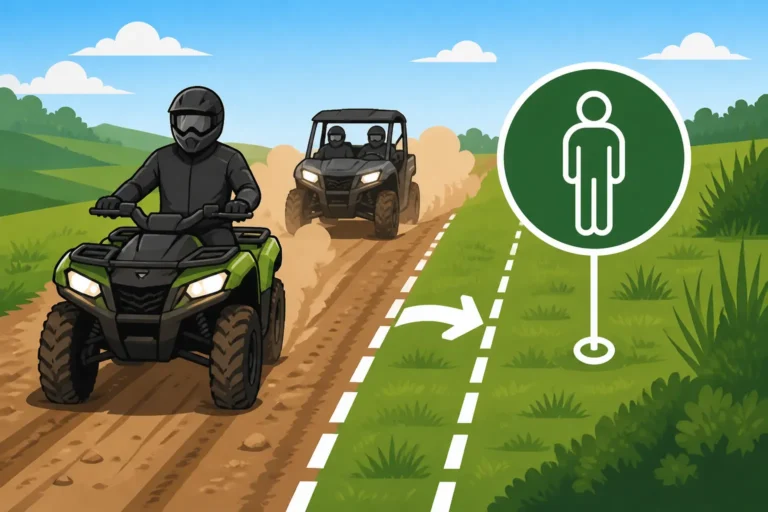
Let's walk through what a correct crossing looks like. You've been riding along a grid road, perhaps in the ditch, and you need to get to land on the opposite side. As you approach the paved or gravel road you intend to cross, you first look for a clear, safe spot where visibility is good for both you and oncoming traffic. You bring your machine to a complete stop before entering the travelled portion. If you have passengers, they dismount.
Now, you scan both directions for traffic – left, right, left again, making sure it’s absolutely clear. You then proceed to cross straight across the road. The goal is a quick, decisive maneuver that gets you from the shoulder on one side to the shoulder or ditch on the other. There's no weaving, no riding for a few meters to line up, just a direct traversal. Once you're safely on the other side, and clear of the travelled portion, your passengers can re-board. This kind of disciplined approach is what [Saskatchewan Crossings by the Shortest Route] mandates, ensuring that your time in the high-risk zone is as brief as possible. It might feel like a hassle, but that momentary inconvenience is a small price to pay for safety.
What "Shortest Route" Doesn't Mean
This is where many riders get into trouble. The "shortest route" absolutely does not mean riding along the shoulder of a highway or grid road for any distance, even if you think it's to find a safer crossing point further ahead. That constitutes travelling on the highway, which is generally prohibited for ATVs, except in very specific, municipality-bylaw-sanctioned circumstances (which are rare and highly localized). If you are riding in the ditch, you should stay in the ditch until your exact crossing point, then cross, and immediately re-enter the ditch or off-road area on the other side.
For instance, if you're approaching an intersection where you intend to cross, you cannot ride the shoulder from, say, 50 metres back to get a better angle or to line up with a side road. That 50 metres on the shoulder would be a violation. Your crossing must be direct from ditch to ditch, or from one private land access point to another. It also doesn't mean taking a winding route across an intersection, even if it feels like the "shortest path" to make a left turn. The law wants you to cross perpendicularly. Understanding this distinction is vital, as a peace officer will not interpret your "clever" shortcut as compliance. For more on general ditch riding rules, check out [Saskatchewan Ditch Riding and the 2-Metre Rule].
Practicalities of Crossing: Safety, Strategy, and Equipment
Executing a safe and legal crossing involves more than just knowing the rules; it requires preparation, awareness, and ensuring your machine is up to the task. It's a moment of heightened risk, and every factor that can improve your safety should be considered.
Pre-Crossing Preparations and Rider Awareness
Before you even get close to a road you need to cross, you should already be thinking about it. This means actively scanning the road ahead and behind for traffic. Is it a busy highway, or a quiet gravel grid? What’s the visibility like? Are there blind hills or curves that could obscure an oncoming vehicle? Knowing your machine is also crucial – how quickly does it accelerate from a stop? Are your brakes responsive?
Visibility is paramount. Wear bright clothing, especially during hunting season or low light conditions. If your machine isn't equipped with robust lighting, consider adding some. Companies like SuperATV offer a range of aftermarket lighting accessories, from bright LED light bars for off-road use to more focused auxiliary lights that can make you more visible during a quick crossing. These aren't just for aesthetics; they’re a critical safety upgrade. While [Saskatchewan Lighting Rules at Night] outline basic requirements, enhancing your visibility beyond the minimum is always a good idea, particularly when interacting with vehicle traffic. A pre-ride check of your lights, brakes, and tire pressure should be standard practice.
Executing a Safe Crossing
Once you've identified your crossing point and assessed the traffic, the execution needs to be swift and precise. Here's a step-by-step:
- Stop Completely: Bring your ATV/UTV to a full, unequivocal stop before any part of your machine enters the travelled portion of the road. This gives you a moment to clear your head and make a final visual check.
- Passengers Dismount: If you have passengers, they must get off at this point and wait safely off the road. This rule is absolute.
- Scan Thoroughly: Look left, look right, look left again. Take your time, but not so much that you hold up potential traffic. Make eye contact with drivers if possible. Wait for a clear, substantial gap in traffic.
- Signal (If Applicable): While ATVs typically don't have turn signals, if you have a UTV with signals, use them. Otherwise, a clear hand signal indicating your intent to cross can be helpful, though not legally required for a straight crossing.
- Cross Directly and Decisively: When the path is clear, accelerate smoothly and cross the road directly and quickly. Do not hesitate or change your angle. Your goal is to minimize time on the pavement.
- Re-enter Off-Road Area: Once you're safely on the other side and clear of the travelled portion, your passengers can re-board. Resume your off-road travel.
This disciplined approach ensures that you're operating within the law and, more importantly, maximizing your safety during a high-risk maneuver.
Machine Requirements and Maintenance for Road Use
While ATVs and UTVs aren't street legal in the same way cars are, any interaction with public roads means your machine needs to be in tip-top shape. This isn't just about legality; it's about reliability when you need it most. Imagine your brakes failing mid-crossing, or your engine sputtering out. Horrifying, right?
Key areas to check include:
- Brakes: Ensure they are fully functional and responsive. Test them before you head out.
- Tires: Check for proper inflation and adequate tread depth. Good traction is crucial for quick acceleration and stopping.
- Lights: All lights – headlights, taillights – must be working. If you've invested in aftermarket lights from a brand like SuperATV, make sure they're properly installed and functioning.
- Spark Arrestor: This is more about fire prevention than road safety, but it's a critical component for responsible riding, especially in dry prairie conditions. [Saskatchewan Spark Arrestor Guidance] requires them, and they should be regularly inspected.
Regular maintenance isn't just for preventing breakdowns; it's for ensuring your machine performs predictably and safely when you need to make critical decisions, like crossing a busy highway. A well-maintained machine is a safe machine, whether you're deep in the bush or momentarily interacting with vehicular traffic.
Common Misconceptions and Rider Frustrations
Even experienced riders can sometimes get tripped up by the nuances of Saskatchewan's ATV laws, and the crossing rules are a prime example. There's a natural human tendency to seek convenience, but the law often prioritizes safety over ease, leading to some common misunderstandings and frustrations.
The "Just for a Second" Mentality
This is perhaps one of the most dangerous misconceptions out there. Riders often think, "Oh, it's just a quick hop down the shoulder to that driveway," or "I'll just ride the pavement for 20 feet to get around this muddy spot." While it might seem harmless in the moment, the law doesn't make exceptions for "just a second." The moment your ATV enters the travelled portion of the highway or the shoulder and moves along it rather than across it, you are in violation.
This "just for a second" mentality is perilous because it normalizes behaviour that is statistically more dangerous. It exposes you to high-speed traffic for longer periods than a direct crossing, and it makes your movements less predictable to other drivers. What starts as a "harmless" shortcut can quickly escalate into a ticket, or worse, an accident. A peace officer isn't going to differentiate between 20 feet and 200 feet; any unauthorized travel along a road surface is a violation. It’s a habit that's hard to break once it starts, so it’s best to stick to the rules religiously from day one.
Confusion with Other Jurisdictions
Another major source of frustration and confusion stems from the fact that ATV laws vary wildly from province to province, and even from state to state south of the border. What might be perfectly legal in Alberta, such as greater allowances for road travel or different passenger rules, is often strictly prohibited in Saskatchewan. Riders moving to the province, or those visiting from neighbouring areas, frequently assume a consistency that simply doesn't exist.
For example, while some provinces might have specific registration requirements, Saskatchewan famously [Saskatchewan Does Not Register ATVs] provincially. This fundamental difference sets the tone for many other regulations. A rider from Alberta, accustomed to their provincial rules, might find the strict [Saskatchewan Crossings by the Shortest Route] requirement overly restrictive or confusing. The same goes for visitors from Manitoba; what's allowed there might not fly here. This lack of reciprocity can lead to unwitting violations. The best advice is always to assume the most restrictive rules apply, and if in doubt, always verify the specific regulations for Saskatchewan.
Dealing with Limited Access and Detours
Let's face it, sometimes the landscape of Saskatchewan, with its vast network of grid roads and occasional major highways, just doesn't cooperate with a seamless off-road journey. Riders often find themselves in situations where a natural path is interrupted by a highway that they can only cross, not travel on. This can mean taking lengthy detours, backtracking, or simply being unable to access a particular area directly. It's frustrating when you see your destination just across the pavement, but you know you can't just cruise down the shoulder to get there.
This frustration is valid. It's a real constraint on recreational riding and even on utility use, where the most direct path to a field or a remote cabin might involve multiple, inconvenient crossings or long detours through rough terrain. While there's no easy fix within the current legislative framework for this specific issue, understanding why the rules are structured this way – for safety – can help riders mentally prepare for these limitations. It often means planning your routes more meticulously, perhaps using online maps to identify safe crossing points and alternative paths through ditches or Crown land. For insights into permissible riding areas, [Saskatchewan ATV Trails: Crown Land and Ditches] can offer some guidance.
| Action | What the Act Requires for Crossing | What is PROHIBITED |
|---|---|---|
| Stopping | Full stop before entering pavement | Rolling stop or no stop |
| Route | Shortest, most direct across | Riding along shoulder or travelled portion for any distance |
| Passengers | Must dismount before crossing | Remaining on machine during crossing |
| Visibility | Rider's responsibility to ensure clear view | Assuming drivers will see you |
| Speed | Swift and decisive cross | Hesitating or slow crossing |
| Purpose | To get from one side to the other | To use the road as a shortcut |
Beyond the Crossing: Related Road and Ditch Riding Rules
While crossing a road is a specific maneuver, it's often part of a larger journey that involves riding in ditches or on specific types of public access ways. Understanding these related rules is essential for comprehensive compliance and safety on your Saskatchewan ATV adventures.
Ditch Riding vs. Highway Riding
This distinction is fundamental in Saskatchewan. Generally, riding an ATV on the travelled portion of a provincial highway or public road is prohibited. However, the Act does permit riding in the ditch adjacent to many roads, provided specific conditions are met. The key here is the 2-metre rule: you must stay at least [2 Metres From the Travelled Portion] of the highway. This buffer zone is crucial for your safety and for the safety of vehicles on the road, creating a physical separation.
Ditch riding is a common and accepted practice for many Saskatchewan riders, allowing access to various areas. But it's not a free-for-all. You still need to be aware of your surroundings, stay within the legal limits of the ditch, and certainly not treat the ditch as an extension of the highway. For example, if the ditch narrows significantly, forcing you closer than 2 metres to the pavement, you might need to stop and re-evaluate or seek an alternative path. Any deviation into the main roadway, even if accidental, could lead to a fine. It’s a privilege, not a right, to ride in these ditches, and responsible operation ensures that this access continues.
Municipal Bylaws and Road Access
While the provincial Act sets the baseline, it's absolutely vital to remember that individual municipalities – rural municipalities (RMs), villages, towns, and cities – have the power to enact their own bylaws regarding ATV use within their boundaries. These [Saskatchewan Municipal Bylaws on Roads] can sometimes open up roads to ATVs that would otherwise be off-limits, or conversely, they can impose stricter prohibitions than the provincial Act.
For instance, some smaller communities, especially those that cater to tourism, might have bylaws that allow ATVs to travel on certain designated streets or roads to access services like gas stations, restaurants, or lodging. These are rare exceptions and are usually clearly signed. On the other hand, a municipality might decide to completely prohibit ATVs from ditches within its jurisdiction due to safety concerns or nuisance complaints.
Before you plan a ride in an unfamiliar area, especially if it involves any interaction with roads beyond a direct crossing, it's always a good idea to check with the local RM or village office. Many municipalities now have their bylaws available online, or you can call their office. Some even have specific municipal permit or plate schemes, like the ones highlighted in [Saskatchewan Municipal Plates Fill the Gap the Province Left], which might grant limited road access. Being informed prevents unpleasant surprises.
Proof of Ownership and Insurance on Public Roads
Although Saskatchewan doesn't have a provincial registration system for ATVs, encountering a peace officer while crossing or riding a ditch means you absolutely need to have certain documents on hand. Your [Saskatchewan Insurance Requirements for Riders] are non-negotiable. The law requires you to have a minimum amount of liability insurance – typically $200,000 – whenever you operate your machine. This isn't just for accidents; it's a legal requirement that an officer can ask to see at any time, especially if you're interacting with public roads. Failing to produce proof of insurance can lead to significant fines.
Beyond insurance, while there's no provincial registration or title, you should always carry [How to Prove You Own an ATV in Saskatchewan] your bill of sale or other proof of ownership. This is crucial if you're ever stopped and questioned, or in the unfortunate event that your machine is stolen. Without a provincial registry, your bill of sale is your primary document to assert ownership. It's good practice to keep these documents, or clear copies, in a waterproof bag on your machine. You never know when a quick road crossing might turn into a conversation with law enforcement, and being prepared means a smoother interaction.
Disclaimer
This article is for general informational purposes only and does not constitute professional advice. Laws, prices and regulations vary by location and change over time. Consult a qualified professional for guidance on your specific situation.