Saskatchewan Bridges and Weirs
Riding an ATV or UTV in Saskatchewan offers an incredible sense of freedom, allowing you to explore vast landscapes that few ever see. However, that freedom comes with serious responsibilities, especially when you encounter man-made structures like bridges and weirs. Many riders mistakenly assume these are just another part of the trail, but the reality is that they often come with specific legal restrictions and significant safety concerns that can lead to fines, damage to your machine, or even serious injury. This guide is here to unravel the complexities surrounding ATVs and UTVs on bridges and weirs in Saskatchewan, helping you understand the rules, avoid common pitfalls, and keep your adventures safe and within the bounds of the law.
Understanding the Lay of the Land: What Are We Talking About?
When you’re out on the trails, whether it’s a dedicated path or simply a grid road ditch, you’re bound to encounter various crossings. But not all crossings are created equal, and the rules change dramatically depending on the type of structure and its location. It’s crucial to understand the distinct characteristics of bridges and weirs in Saskatchewan, and why they demand different considerations from ATV and UTV operators.
Defining Bridges in the Saskatchewan Context
In Saskatchewan, a bridge is generally a structure built to span an obstacle like a river, creek, or roadway, allowing passage over it. For ATV and UTV riders, bridges typically fall into a few categories: those that are part of a public highway system, those on dedicated recreational trails, and private bridges on farm or ranch land.
Bridges that are part of the provincial or municipal highway network are usually designed for vehicle traffic (cars, trucks) and are governed by The Traffic Safety Act. While The All Terrain Vehicles Act permits certain operations of ATVs in ditches adjacent to highways, or for specific crossings, it rarely, if ever, intends for ATVs to operate on the travelled surface of these major bridges. A major bridge crossing a river on a provincial highway, for instance, is absolutely off-limits for casual ATV use. Even smaller bridges that might feel like part of a rural road can still be considered part of the highway system, making them subject to the same strict rules. Understanding where a bridge fits into the legal landscape is the first step to staying out of trouble. Ignoring these distinctions can lead to significant fines and puts you in a position of conflict with the law and other road users.
Defining Weirs and Their Purpose
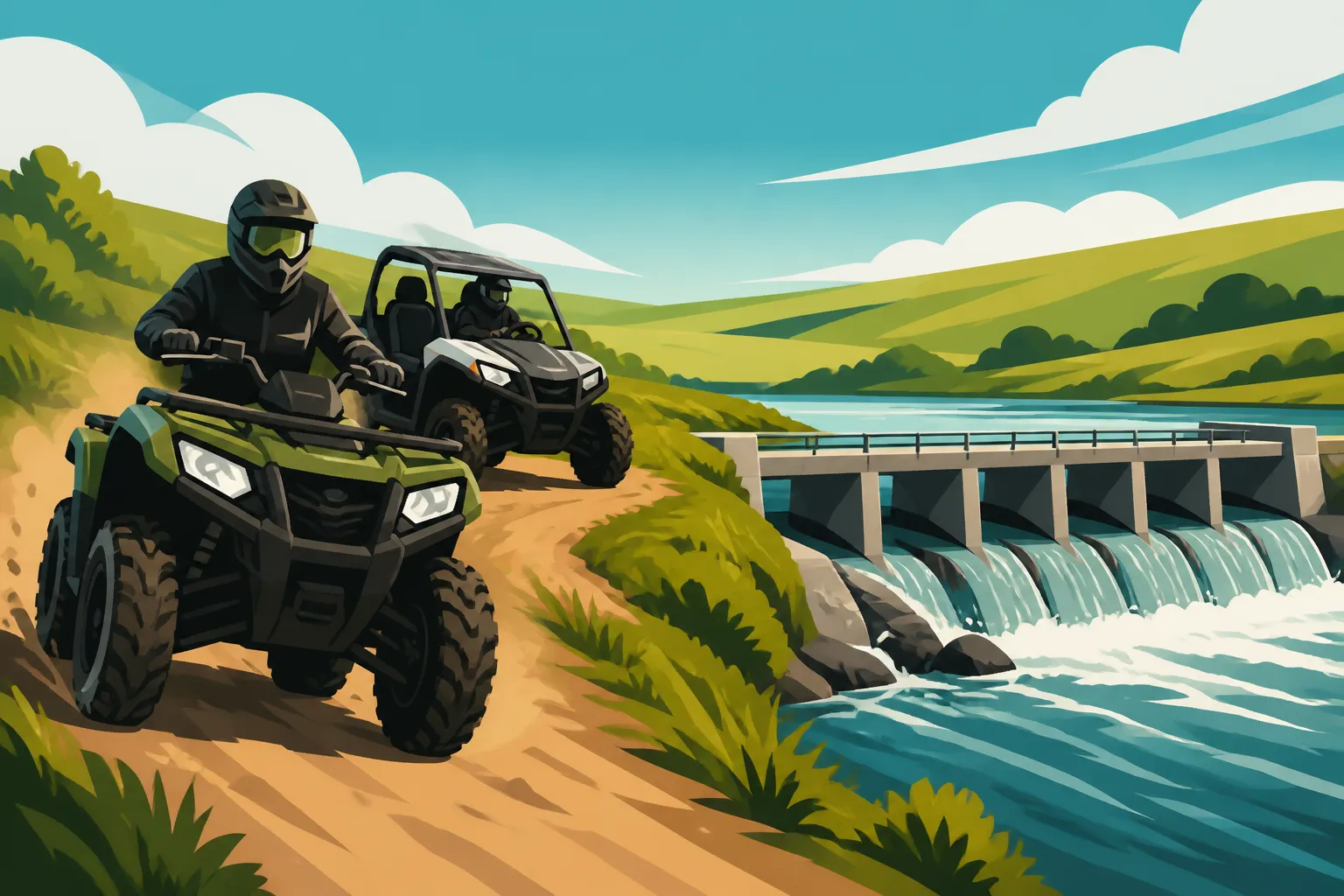
Weirs are a bit different. They are typically low-head dams built across a river or stream to alter its flow characteristics, often for water management, irrigation, or to create a pond. Unlike bridges, weirs are not primarily designed for travel across them. They are often infrastructure, built for a specific purpose related to water resources, and can be owned by various entities: a government department, a local municipality, or even a private landowner.
Because weirs aren't designed for vehicles, they often lack guardrails, clear markings, or proper surfaces for ATV or UTV traffic. They might be slippery, uneven, or have hidden drops or channels. The legal status of traversing a weir can be murky; it might be considered trespassing if it’s on private property or restricted Crown land, or it could fall under regulations related to water infrastructure. Treating a weir like a simple river crossing can be incredibly dangerous and could result in severe damage to your machine or personal injury. Many riders, especially those new to exploring the backcountry, don't realize the inherent dangers or the potential legal ramifications of attempting to cross these structures.
The Legal Ambiguity for Off-Roaders
This is where things get tricky for us riders. The All Terrain Vehicles Act, while comprehensive in many areas, doesn't specifically call out "weirs" or "bridges" as distinct entities with their own set of rules, beyond the general guidelines for operating on or near highways. This ambiguity often leaves riders scratching their heads, wondering if they’re breaking the law by simply trying to get from one side of a creek to another.
The core issue is that many of these structures, especially weirs, are not public access points. They were built for utility, not recreation. If a bridge or weir is on private land, you need explicit permission from the landowner to cross it, just as you would for any other part of their property. On Crown land, access rules can vary significantly depending on the specific designation of the land and whether there are any administrative orders in place. [Saskatchewan Crown Land Access Rules] are complex, and it’s important to remember that just because land isn't fenced, it doesn't mean you have free rein. Without clear signage, it's easy to stray into an area you shouldn't be, and a bridge or weir can often mark such a boundary. Always err on the side of caution and if in doubt, find an alternative route.
The All Terrain Vehicles Act and Crossing Structures
Saskatchewan's legislation for ATVs and UTVs, primarily The All Terrain Vehicles Act, outlines how these machines can operate, particularly concerning public roads and land. While it doesn't have a specific "bridge and weir" chapter, several general provisions directly impact how you can (or can't) navigate these structures. Ignoring these overarching rules is a surefire way to invite trouble from law enforcement.
General Rules for Highway Crossings and How They Apply
The Act is pretty clear on how ATVs and UTVs can interact with highways. Generally, you’re not allowed to ride directly on the travelled portion of a highway. However, exceptions exist for crossing a highway. When you need to cross, the rules mandate that you do so by the shortest route available. This isn't just a suggestion; it’s a legal requirement designed to minimize your time on the main road and reduce collision risk. [Saskatchewan Crossings by the Shortest Route] is a key directive.
Furthermore, if you’re carrying a passenger, they must dismount before you cross a highway. [Saskatchewan Crossings Require Passengers to Dismount] is a safety measure to reduce the risk to passengers during this potentially hazardous manoeuvre. These rules directly apply to any bridge that is considered an integral part of a highway. If you're on a grid road, and it goes over a bridge, that bridge is part of the highway, and these crossing rules apply. You are expected to treat the entire structure as part of the highway you are crossing, even if it feels like just a small extension of the ditch. The spirit of the law here is about minimizing exposure to higher-speed traffic and ensuring safety.
Specific Implications for Bridges that are Part of a Highway
Let's get specific about bridges. If you encounter a bridge that is clearly part of a public highway, whether it's a major multi-lane span or a simple concrete structure over a culvert on a rural grid road, the highway crossing rules are paramount. You cannot simply ride your ATV across it as if it were a dirt trail. You must approach the bridge, come to a complete stop, ensure it's safe to proceed, and then cross by the shortest, most direct route, usually perpendicular to the flow of traffic. Your passenger must be off the machine.
What does this mean in practice? It means you can't ride alongside traffic on a bridge. You can't stop halfway across to admire the view. You can't treat it as an extension of the ditch you might be riding. This applies even if you're on a smaller, less-travelled road. The moment you are on a structure designed for vehicular traffic, you are subject to those crossing rules. Trying to ride a large bridge that spans a major waterway on a provincial highway is almost certainly a violation and extremely dangerous. Even with sturdy aftermarket parts from a company like SuperATV that might enhance your machine's capabilities, they do not grant you immunity from the law or the physics of road safety.
Why Weirs Present Unique Challenges
Weirs, as we discussed, are generally not designed for public travel, and this is where the Act provides less direct guidance, but more implicit warnings. Since a weir is rarely a "highway" or even part of one, the specific highway crossing rules don't directly apply in the same way. However, other sections of the Act and related provincial laws come into play, primarily concerning trespass and safe operation.
If a weir is on private land, crossing it without permission is a clear act of trespass, irrespective of the Act's ATV rules. [Saskatchewan Trespass Law for Riders] applies here, and landowners have the right to prohibit access. If it's on Crown land, you need to be aware of any specific land use regulations or administrator orders that might restrict access to that particular structure or area. Beyond the legalities, weirs pose significant operational hazards. They can be slippery with algae, have sudden drop-offs, or be undercut by water flow, creating unseen dangers. Attempting to cross a weir, especially one with turbulent water, can quickly turn into a recovery mission or worse. Your machine could become submerged, or you could be swept away. This is not just about legality; it's about common sense and self-preservation.
Navigating Bridges Safely and Legally
Understanding the rules is one thing; applying them safely and legally on the trail is another. When you come across a bridge in Saskatchewan, your immediate thought shouldn't be "can I cross it?" but rather "how do I cross it safely and legally, given its context?"
Highway Bridges: Strict Crossing Protocol
When you encounter a bridge that is part of the public highway system, whether it’s a tiny concrete culvert bridge on a grid road or a larger span over a river, you must adhere strictly to the highway crossing protocols outlined in The All Terrain Vehicles Act. This means:
- Stop and Assess: Before you even approach the bridge, come to a complete stop. Look both ways, just as you would at an intersection, to check for oncoming traffic. Even on quiet rural roads, a vehicle can appear quickly.
- Dismount Passengers: If you have a passenger on your ATV or UTV, they must get off the machine before you proceed to cross the bridge. This significantly reduces the risk if something unforeseen happens during the crossing.
- Cross by the Shortest Route: This usually means crossing perpendicular to the flow of traffic. You don't ride along the bridge's length for any extended period. Your goal is to get from one side of the ditch (or shoulder) to the other, over the bridge, as quickly and directly as possible.
- Maintain Control: Keep your speed low and maintain full control of your machine. Be prepared for potentially slick surfaces, especially if the bridge deck is wet or icy.
- Re-evaluate after Crossing: Once safely on the other side and off the travelled portion, your passenger can remount if it's safe to do so.
Remember, the goal is to minimize your time in direct conflict with other vehicles. These are not "trail sections" but necessary points of transition over a public thoroughfare. Always prioritize visibility and caution.
Private or Dedicated Trail Bridges: Different Expectations
Not all bridges are part of the highway system. You might encounter smaller, privately owned bridges on farm access roads, or dedicated trail bridges that are part of an organized ATV trail network. These bridges operate under a different set of expectations, though safety always remains paramount.
If you’re on private land, the owner of the bridge dictates the rules. You absolutely need permission from the landowner to use their private bridge. Without it, you are trespassing, and you could face consequences even if no damage occurs. For dedicated ATV trail bridges, these are generally designed for ATV and UTV use. They might be maintained by a local club or a recreational authority. Always check for posted signage or trail maps for specific rules on these structures, such as speed limits or weight restrictions. Even on these bridges, basic safety precautions like checking for other users and assessing surface conditions are crucial. Always be prepared for anything, especially if a bridge is old or hasn’t been recently maintained.
The Risks of Structural Damage and Personal Injury
Beyond the legalities, there are significant physical risks associated with improperly crossing bridges. For highway bridges, the main risk is collision with other vehicles, which can lead to severe injury or fatality. But even on smaller bridges, there's a risk of structural damage. Driving a heavy UTV, especially one loaded with gear (and perhaps enhanced with robust SuperATV components for heavy-duty use), over an old, rickety wooden bridge not designed for such weight can cause the bridge to fail, dropping you and your machine into the creek below.
Similarly, for private or trail bridges, improper use or excessive speed can damage the structure, leading to costly repairs for the owner or trail organization. As a responsible rider, you have a duty to not only keep yourself safe but also to respect the infrastructure that allows for your enjoyment of the outdoors. An accidental bridge collapse isn't just an inconvenience; it could be a life-altering event. This table highlights some key considerations:
| Feature/Aspect | Highway Bridges | Private / Trail Bridges | Weirs |
|---|---|---|---|
| Primary Purpose | Vehicular traffic | Access / Recreational trail crossing | Water management / Flow control |
| Legal Basis | The Traffic Safety Act / All Terrain Vehicles Act | Private land access / Trail network rules | Water management acts / Trespass law |
| ATV Use | Cross by shortest route, no riding on. | Use with permission / As per trail rules | Generally not for crossing; high risk. |
| Passenger Rule | Must dismount for crossing | Varies; generally safe to keep on machine if permitted | Not applicable; generally avoid |
| Surface | Paved, gravel, steel grating | Wood, gravel, packed earth | Concrete, rock, often wet/slippery |
| Common Hazards | Collisions, slick surfaces | Structural failure, hidden damage | Submersion, slippery surfaces, hidden drops, currents |
| Permission | Implicit (for crossing only) | Explicit (from owner/trail org) | Explicit (from owner/authority) |
| Typical Signage | Road signs, highway markers | Trail markers, private property signs | Often no signage for access; warning signs for water |
Weirs: A Special Case for Saskatchewan Riders
Weirs, as distinct from bridges, present a unique set of challenges and risks for ATV and UTV riders in Saskatchewan. They are rarely intended for vehicle crossing and often come with legal and safety implications that many riders overlook.
The Unintended Hazards of Crossing Weirs
The biggest danger of weirs is that they often look deceptively simple to cross. A low-lying concrete structure spanning a narrow creek might appear to be just another obstacle, easily conquered by a capable machine. However, the reality is far more complex and hazardous. Weirs are designed to control water flow, which means they can have significant currents, especially after heavy rains or during spring runoff. This moving water can easily destabilize an ATV or UTV, leading to a loss of control and potential submersion.
The surfaces of weirs are frequently covered in slippery algae, moss, or fine sediment, turning a seemingly solid path into an instant ice rink for your tires. Add to this the possibility of unseen debris, hidden drop-offs on the downstream side, or erosion that has undermined the structure, and you have a recipe for disaster. Even machines equipped with specialized off-road tires and enhanced suspension systems might struggle with the specific challenges a weir presents. It's not just about getting stuck; it's about being swept away or rolling your machine into deep water, creating a dangerous situation for you and potentially polluting the waterway.
Legal Status of Weirs: Crown Land, Private, or Infrastructure?
Determining the legal status of a weir is crucial. Many weirs are part of agricultural irrigation systems, municipal water management, or provincial infrastructure. This often means they are either on private property or designated Crown land with specific restrictions. If a weir is on private land, attempting to cross it without explicit permission from the landowner is trespassing, pure and simple. This can lead to legal action, fines, and even seizure of your machine under certain circumstances. [When a Peace Officer Can Seize Your Quad] is a real concern if you're caught trespassing.
If the weir is on Crown land, it falls under the purview of the provincial government. While some Crown lands are open for recreational use, specific structures like weirs might be off-limits due to safety concerns, environmental protection, or their status as critical infrastructure. There might be no trespassing signs, or the land might be designated as a restricted access area. It's always best to consult local land use maps or the relevant government agencies if you’re unsure. Never assume that just because you're on Crown land, you have the right to cross any structure you encounter.
Best Practices When Encountering a Weir
Given the significant risks, the best practice when encountering a weir is almost always to avoid crossing it. Seriously, it's not worth the risk. Here’s how to handle them:
- Scout Ahead: If you're exploring new territory and come across a weir, always dismount and walk the area first, if it's safe and legal to do so. Look for alternative routes, like a proper bridge nearby or a ford that is clearly intended for vehicles.
- Prioritize Safety Over Adventure: Resist the urge to "conquer" the weir. The thrill of overcoming an obstacle is great, but not when it risks your life, your machine, or the environment. It's often wiser to turn back and find a different path.
- Respect Property and Infrastructure: Weirs are built for a purpose. Interfering with them, even unintentionally by attempting to cross, can damage the structure and disrupt water management. This is not only irresponsible but could also lead to charges for damaging public or private property.
- Consider Aftermarket Gear for Preparedness, Not Invincibility: While products from SuperATV like heavy-duty winches or recovery straps are excellent for getting out of tough spots on trails, they shouldn't be seen as an excuse to tackle inherently dangerous crossings like weirs. They are for recovery, not for tempting fate. Always carry essential recovery gear, but use it as a last resort for unforeseen difficulties, not for intentional high-risk manoeuvres.
Remember, a responsible rider knows when to push the limits of their machine and when to recognize an insurmountable, or simply unwise, obstacle.
Enforcement, Penalties, and Rider Responsibility
Understanding the rules about bridges and weirs isn't just for academic knowledge; it’s about avoiding real-world consequences. Operating your ATV or UTV improperly in Saskatchewan can lead to significant fines, liability issues, and potentially even the loss of your machine.
Potential Fines for Improper Crossings
Saskatchewan’s All Terrain Vehicles Act carries various penalties for non-compliance. While there isn't a specific fine for "crossing a weir," violations can be issued for related offences. For instance, if you cross a highway bridge improperly (e.g., riding on the travelled portion, failing to dismount a passenger, or not crossing by the shortest route), you could be ticketed under the Act for illegal operation on a highway. [Saskatchewan Fines Capped at $1,000] means that these tickets can be substantial. A peace officer can issue a fine on the spot, and repeated offences or more egregious violations could lead to court appearances and even higher costs.
If you are found trespassing on private land by crossing a weir or private bridge without permission, you could face charges under The Trespass to Property Act. These fines can also be significant and often come with the added headache of dealing with a landowner who may be less than forgiving. It’s also important to remember that these fines are separate from any costs associated with recovering a stuck or damaged machine, or any legal fees if the situation escalates.
Liability and Insurance Considerations
Beyond fines, one of the most serious consequences of improper operation on bridges and weirs is liability. If you cause damage to public or private property – for example, if an old bridge collapses under your UTV’s weight, or you damage a weir structure – you could be held financially responsible for the repairs. These costs can easily run into the tens of thousands of dollars, far exceeding the initial cost of your machine.
Your ATV or UTV insurance is crucial here. While [Saskatchewan's Minimum Insurance Requirement] for liability is in place for off-road machines, it's imperative to understand what your policy actually covers. Many standard policies might have exclusions for damage caused during illegal activities, such as trespassing or operating outside the specified rules for highway crossings. If you damage a weir while trespassing, your insurance company might deny your claim, leaving you personally on the hook for all damages. [Saskatchewan Owner Liability Rules] mean that even if someone else is operating your machine, you as the owner can still be held responsible. Always carry proof of your insurance when riding. [Saskatchewan Insurance Proof on the Trail] is something an officer can ask for at any time.
Being a Responsible Steward of the Land
Ultimately, riding an ATV or UTV in Saskatchewan is a privilege, not a right. Being a responsible rider means more than just knowing the law; it means actively participating in the preservation of the trails, land, and waterways you enjoy. This includes:
- Planning Your Route: Before heading out, especially into unfamiliar territory, consult maps, look for designated trails, and try to identify any major water crossings. If a route appears to involve questionable bridge or weir crossings, plan an alternative.
- Asking for Permission: If your route takes you across private land, or involves a private bridge, always seek explicit permission from the landowner beforehand. A simple phone call can save a lot of trouble.
- Leaving No Trace: This extends to not damaging structures like bridges and weirs. Treat all infrastructure with respect, ensuring your passage doesn't contribute to erosion, pollution, or structural degradation.
- Educating Others: Share your knowledge with fellow riders, especially those new to the sport. The more riders who understand and respect these rules, the better the reputation of the ATV and UTV community as a whole.
- Investing in Safety, Not Recklessness: While high-quality aftermarket parts from SuperATV can enhance your machine's performance and durability, they should be chosen to improve safety and longevity for appropriate riding, not to encourage dangerous stunts or illegal crossings.
By taking these steps, you not only protect yourself and your machine but also contribute to a sustainable future for ATV and UTV riding in Saskatchewan. Safe and legal riding ensures that these incredible landscapes remain accessible for generations to come.
Disclaimer
This article is for general informational purposes only and does not constitute professional advice. Laws, prices and regulations vary by location and change over time. Consult a qualified professional for guidance on your specific situation.