Saskatchewan Lighting Rules at Night
Riding your ATV or UTV in Saskatchewan after the sun dips below the horizon can be an incredible experience, but it also introduces a whole new set of challenges and, crucially, legal requirements. It’s easy to feel overwhelmed by the technical jargon and wonder exactly what lights you need to stay visible and safe, especially when you’re out on a trail or a grid road. This comprehensive guide aims to cut through the confusion, clearly explaining Saskatchewan’s specific lighting rules for ATVs and UTVs operating at night, so you can ride confidently and within the law.
Understanding Saskatchewan's Core Lighting Requirements for ATVs and UTVs
When the daylight fades, the rules of the road – or rather, the trail and ditch – shift dramatically for ATV and UTV operators in Saskatchewan. It's not just about seeing what's ahead; it's equally, if not more, about ensuring that other operators, pedestrians, or even wildlife can see you. The province takes visibility seriously, and for good reason, given the varying terrain and often isolated areas where these machines operate. Ignorance of the rules isn't a defence, and a simple lapse in your lighting can quickly turn a fun night ride into a costly citation or, worse, a dangerous situation.
What the All Terrain Vehicles Act Says About Lights
The foundational legislation governing ATVs and UTVs in Saskatchewan is [Saskatchewan's All Terrain Vehicles Act]. This act outlines the basic safety requirements, including those for lighting when operating during periods of darkness or reduced visibility. The core principle is straightforward: if you're riding when it's dark, you need lights. Specifically, the Act mandates that an all-terrain vehicle must be equipped with at least one headlight and one taillight, both of which must be operational and visible from specific distances. This isn't just a suggestion; it's a legal obligation designed to protect everyone. Failing to have these basic lights functioning can lead to penalties and put you at significant risk.
Beyond the number of lights, the Act also implicitly dictates their quality and strength. While it doesn't always delve into lumens or beam patterns, the expectation is that your lights are capable of illuminating the path ahead sufficiently and making your machine easily identifiable from behind. This means that a dim, flickering headlight or a barely visible taillight, even if technically "on," might not cut it if an officer deems it insufficient for safe operation under the prevailing conditions. It’s always best to err on the side of caution and ensure your lights are bright and clear.
The Importance of Being Seen: Front and Rear Visibility
Visibility is a two-way street, or rather, a two-way trail. While you, as the operator, need to see where you're going, it’s equally paramount that you are seen by others. Think about encountering another rider on a narrow bush trail, or crossing a grid road where other vehicles might be travelling at higher speeds. Without adequate lighting, you become a ghost in the dark, an almost invisible hazard. This is where the requirements for both front and rear lighting truly come into play. Your headlight illuminates your path, but your taillight tells others where you are, and crucially, in which direction you're heading.
The Act specifies that the taillight must be capable of emitting a red light visible from a distance of at least 150 metres to the rear. This isn't just for other ATVs; it's for anything else that might be out there, from a farm truck to a pedestrian enjoying a late-night walk. Similarly, your headlight needs to project a white or amber light sufficient to reveal persons and vehicles at a safe distance ahead. The combination of these ensures a safety bubble around your machine, reducing the chance of unexpected encounters or collisions. Without both front and rear lights working effectively, you're compromising this critical safety aspect, making your night rides significantly riskier.
Lighting for Night Operation: When "Night" Actually Begins
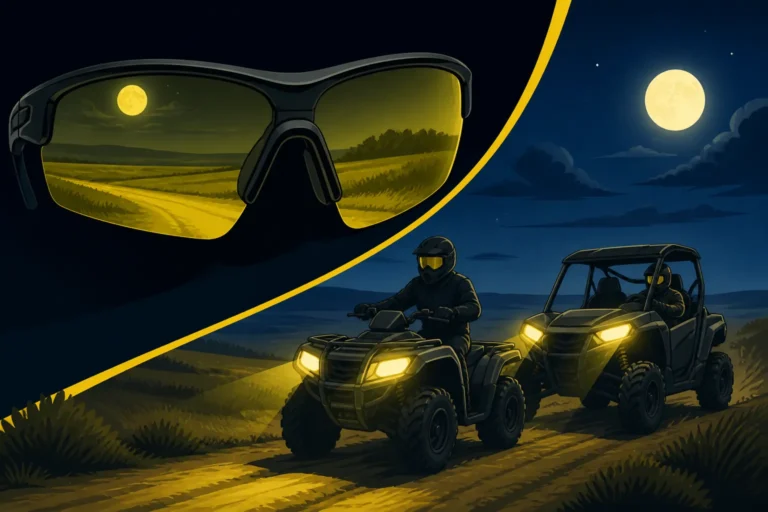
One common point of confusion for riders is understanding precisely when the "night operation" rules kick in. It's not necessarily tied to sunset alone. [Saskatchewan Rules for Riding After Dark] clarifies that these rules apply from one-half hour after sunset to one-half hour before sunrise. This is an important distinction because there's often a twilight period where visibility is already reduced, but it's not yet pitch black. Many people might assume they have more leeway, but the Act is quite clear on this window.
So, if you're planning a late afternoon ride that might extend into the evening, you need to be prepared. This isn't the time to question whether your lights are really needed; it’s the time to turn them on. The transition from dusk to dark can be surprisingly quick, especially in Saskatchewan's wide-open spaces, and getting caught without proper lighting during that crucial half-hour window could put you in a tough spot. Always check your lights before heading out, especially if there's any chance your ride will extend into this regulated period. It's a small pre-ride check that can save a lot of hassle.
Essential Front Lighting: Headlights and Auxiliary Lights
When you're out on your ATV or UTV in the Saskatchewan wilderness, your headlights are your eyes, piercing through the darkness to reveal what lies ahead. However, simply having a headlight isn't always enough to meet both legal requirements and your personal safety needs, especially on challenging terrain or in extremely dark conditions. Many riders find themselves looking to augment their factory lighting to gain an extra edge in visibility and safety. Understanding what's mandatory versus what's beneficial can make a huge difference in your night riding experience.
Mandatory Headlight Specifications
As per [Saskatchewan Lighting Requirements on a Machine], every all-terrain vehicle operating after dark or in periods of reduced visibility must be equipped with at least one headlight. This headlight must emit a white or amber light, and critically, it must be powerful enough to illuminate persons and vehicles at a safe distance ahead. While the Act doesn't usually specify a certain lumen count or beam pattern directly, the intent is clear: you need to see, and be seen, effectively. A dim, yellowed, or improperly aimed headlight won't cut it. It’s not just about having a light on; it’s about having a functional and effective light.
Many factory-installed headlights on newer ATVs and UTVs meet these requirements adequately. However, older machines, or those that have seen a lot of hard use, might have headlights that have degraded over time. Bulbs can dim, lenses can become cloudy or scratched, and wiring can corrode, all of which reduce the effectiveness of your primary lighting. Regular inspection and maintenance are vital. If you find yourself squinting or struggling to see obstacles even a short distance ahead, it's a clear sign that your headlight might not be up to snuff, and an upgrade or replacement is definitely in order. This isn't just for legal compliance but for your own safety on those unlit trails.
When to Consider Additional Auxiliary Lighting
While a single, functional headlight is the legal minimum, many experienced riders, especially those who venture off established trails or ride frequently at night, quickly realize that more light is better. This is where auxiliary lighting comes into play. Auxiliary lights can include spot beams, flood beams, or combination patterns, mounted strategically to supplement your main headlight. They can drastically improve your field of vision, helping you spot hazards that might otherwise remain in the shadows, such as hidden ruts, stumps, or wildlife. The extra illumination can also reduce eye strain on long night rides, making the experience much more enjoyable and safer.
Brands like SuperATV offer a wide array of auxiliary lighting solutions, from compact LED pods to powerful light bars, that can be integrated into your ATV or UTV. These can be particularly useful for those who engage in activities like night hunting, checking cattle after dark, or simply exploring challenging trails. When considering auxiliary lights, think about the type of riding you do most often. A wide flood beam might be perfect for slow-speed bush crawling, while a focused spot beam could be better for faster travel on wider trails. Just remember that while auxiliary lights are fantastic for off-road use, their use on public roads or ditches may be restricted to specific conditions, as they can cause excessive glare for oncoming traffic.
Avoiding Glare and Respecting Other Riders
With great power comes great responsibility, and this certainly applies to the powerful auxiliary lighting many riders choose to install. While a high-output LED light bar can turn night into day for you, it can be blinding and disorienting for others. The Act itself doesn't explicitly detail rules for auxiliary lights in the same way it does for headlights, but the principle of safe operation and avoiding undue hazard to others still applies. Blinding another operator, whether they are on an ATV, a snowmobile, or in a vehicle, is not only dangerous but can also lead to complaints or citations if an officer deems your lighting to be a nuisance or a safety risk.
When riding in areas where you might encounter others, such as popular [Saskatchewan Club Trails on Crown Land] or shared access points, it’s crucial to be considerate with your lighting. If you have auxiliary lights, be prepared to switch them off or dim them when approaching other riders or vehicles. Many light bars come with dual-intensity settings or can be wired to a separate switch for quick control. This etiquette is a key part of [Saskatchewan Trail Etiquette Locals Expect] and helps foster a positive riding environment for everyone. Investing in high-quality auxiliary lights from reputable brands like SuperATV often means you get more control over beam patterns and intensity, allowing you to be both seen and considerate.
Rear Lighting and Reflectors: Making Your Machine Visible from Behind
While seeing what's in front of you is often top of mind for safety, ensuring you're clearly visible from the rear is equally, if not more, critical when riding an ATV or UTV at night in Saskatchewan. Imagine a larger vehicle approaching from behind on a dusty grid road, or another rider coming up quickly on a dark trail. If your rear lighting is inadequate, you become a potential hazard, vulnerable to rear-end collisions. The province's regulations emphasize rear visibility for a very important reason: to prevent accidents that can be easily avoided with proper illumination.
Taillights: The Unsung Heroes of Night Riding
The taillight is often overlooked but is a mandatory component for night operation under [Saskatchewan's All Terrain Vehicles Act]. Your ATV or UTV must have at least one taillight that emits a red light, visible from a distance of at least 150 metres to the rear. This isn't just a faint glow; it needs to be a clear, steady red light that unequivocally signals your presence. Think about how important taillights are on cars – the same principles apply to off-road machines, especially when operating in shared spaces or areas where other traffic might be present. A malfunctioning or dim taillight makes you a ghost to anyone approaching from behind.
It's common for taillights to become caked with mud, dust, or snow, especially after a long day of riding. This significantly reduces their effectiveness, potentially making them almost invisible even if they are technically 'on'. Regular cleaning, along with checking the bulb and wiring, should be part of your pre-ride routine for any night excursion. If your taillight assembly is cracked or broken, it not only compromises its visibility but can also allow moisture and dirt to enter, leading to further electrical issues down the line. Replacing a faulty taillight is a simple and inexpensive fix compared to the potential consequences of not being seen.
Brake Lights: Signalling Your Intent
While the Act specifically mandates a taillight, most modern ATVs and UTVs also come equipped with a brake light that illuminates brighter when the brakes are applied. Though not always explicitly detailed as a separate mandatory item in the same way as a taillight in the core ATV Act, a functional brake light is a vital safety feature. It communicates your intention to slow down or stop, giving following riders or drivers precious extra seconds to react. On a bumpy trail or a slippery ditch, those few seconds can prevent a collision. Imagine a group ride at night; if only the lead rider has a working brake light, the entire group is at a heightened risk.
Consider the varying speeds and terrains involved in ATV and UTV riding. A sudden stop can be necessary at any moment due to an unexpected obstacle, a sharp turn, or even wildlife crossing your path. Without a clear brake light signal, a rider behind you might not anticipate your deceleration, leading to a close call or a full-on impact. Always check that your brake light functions correctly with both your hand and foot brakes (if applicable). If you have an older machine without a dedicated brake light, consider adding one as an aftermarket upgrade to significantly improve your rearward communication and overall safety.
The Role of Reflectors in Low Light
Even with excellent electrical lighting, reflectors play a crucial, passive role in making your machine visible, particularly if your electrical system fails or if the light source approaching you is at an unusual angle. The [Saskatchewan Equipment Checks by Officers] often include looking for these passive safety features. Reflectors don't require power, but they dramatically increase your visibility by bouncing back light from other sources. Many ATVs and UTVs come factory-equipped with red reflectors on the rear and sides, and sometimes amber reflectors on the front. These are not merely decorative; they're a secondary safety net.
While the Act focuses on active lighting, ensuring your reflectors are clean, intact, and properly positioned is a simple, effective way to enhance your night visibility. If a reflector is missing or damaged, it's a good idea to replace it. You can even add additional reflective tape or stick-on reflectors to areas of your machine that might be particularly hard to see, such as the sides of your cargo box or the rear of your fenders. This is especially useful for machines that are often used for utility purposes or are prone to getting very dirty, where active lights might become obscured. Think of reflectors as always-on backup lights, providing an extra layer of protection when you need it most.
Beyond the Basics: Other Important Lighting Considerations
While headlights and taillights form the bedrock of Saskatchewan's ATV and UTV lighting regulations, there are several other lighting considerations that can significantly impact both your safety and your compliance. From the functionality of turn signals to the legality of powerful light bars, and how local bylaws might affect you, understanding these nuances can prevent misunderstandings and ensure a smoother, safer riding experience. The world of off-road lighting extends beyond the simple on-and-off switch.
Turn Signals and Hazard Lights: When Are They Required?
Unlike street-legal automobiles, ATVs and UTVs in Saskatchewan are not universally required to have turn signals or hazard lights. The [Saskatchewan ATV Road Rules Explained] generally don't mandate them for typical off-road or ditch riding scenarios. This is largely because the primary operating environments often don't involve the same complex traffic patterns or the need for precise signalling as on paved roads. For many riders, hand signals are the accepted method of communicating turns or stops, particularly when riding in a group.
However, there's a significant "but" here. If you are operating your ATV or UTV on a public road where municipal bylaws permit it – such as in certain villages or towns that have created specific exemptions for ATV use – you might find that local ordinances impose additional requirements. In these specific cases, a municipality could require turn signals or even hazard lights for machines to operate safely alongside other vehicles. It's crucial to check local [Saskatchewan Municipal Bylaws on Roads] if you plan to ride your machine on any municipal street. For most off-road use, however, you won't be ticketed for lacking turn signals, but for enhanced safety and communication, particularly on [Saskatchewan Rules for a Side-by-Side Driver] which are often larger and used in more diverse environments, they can be a wise addition.
Mounted Work Lights and Light Bars: Use Cases and Legality
Many ATV and UTV owners, especially those using their machines for work or utility, install additional lighting such as powerful light bars or dedicated work lights. These are incredibly useful for tasks like checking fence lines, doing repairs after dark, or even setting up camp. Brands like SuperATV offer robust options specifically designed for the rigours of off-road use, providing a huge boost in illumination for specific tasks. While these lights are fantastic for their intended purpose, their use needs to be carefully managed to remain compliant with regulations.
The general rule of thumb is that these high-intensity lights, particularly light bars, are designed for off-road, non-traffic use. Operating them on public roads, grid roads, or even ditches when other traffic is present is typically prohibited due to the blinding glare they can produce. Imagine driving your truck and being hit by the full force of a powerful LED light bar – it's disorienting and dangerous. Therefore, if you have such lighting, it should be wired to a separate switch and only activated when you are completely clear of other traffic, operating off-road, and in a situation where the immense light is genuinely needed. Misusing these powerful lights can lead to fines under general safety or nuisance provisions, as well as being a serious safety hazard.
The Impact of Municipal Bylaws on Lighting
While the provincial Act sets the baseline for ATV and UTV lighting, municipalities in Saskatchewan have the power to enact their own bylaws that can either supplement or restrict certain operations, including lighting requirements. This is especially true for communities like Candle Lake or the District of Lakeland, which have specific municipal plate schemes and rules for ATVs. [Saskatchewan Rural Municipalities and Plates] means that what's perfectly legal in one rural municipality might be restricted or require additional equipment in another.
For example, a municipality might have a bylaw that allows ATVs on certain streets but requires them to have specific additional lighting like amber clearance lights or even turn signals, mirroring some highway vehicle requirements. Alternatively, they might have restrictions on the type of lighting that can be used within town limits, such as prohibiting the use of bright auxiliary light bars even during daylight hours if they deem them excessive. Before planning a ride that takes you into or through any populated area, it is always a good practice to research the local bylaws. A quick call to the municipal office can save you from an unexpected ticket or an unpleasant interaction with local enforcement.
Maintaining Your Lighting System for Optimal Safety
Riding an ATV or UTV at night in Saskatchewan relies heavily on a fully functional lighting system. It's not enough to simply have the lights installed; they need to be in top working order, consistently. Neglecting your lights can lead to reduced visibility, potential legal issues, and ultimately, a compromised safety experience. A proactive approach to maintenance and a basic understanding of troubleshooting common issues can ensure your machine is always ready for a safe night ride, no matter how challenging the conditions.
Pre-Ride Checks: Don't Leave Without Them
Before you even think about hitting the trail after dark, a thorough pre-ride check of your lighting system is non-negotiable. This simple routine can prevent a host of problems and ensure you comply with [Saskatchewan Lighting Requirements on a Machine]. It only takes a few minutes but can make all the difference. Start with your headlight: turn it on and physically check that it's shining brightly and clearly. Walk around to the rear and confirm your taillight is illuminated. Then, activate your brakes (both hand and foot, if applicable) to ensure your brake light brightens appropriately.
While you're checking, also take a moment to inspect the lenses for any mud, dirt, snow, or ice accumulation. A perfectly good light can be rendered useless if its output is blocked by debris. Wipe them clean with a soft cloth. Check for any visible damage to the light housings or wiring. A loose connection or a frayed wire can cause intermittent issues or complete failure. This quick, visual inspection should be as routine as checking your fuel level or tire pressure, especially when you know you'll be riding into the darker hours. This preventative measure is a key part of responsible ATV ownership and ensures compliance with the Act.
Troubleshooting Common Lighting Issues
Even with the best maintenance, sometimes things go wrong. Knowing how to troubleshoot common lighting issues can save your ride and ensure you don't get stuck in the dark. The most frequent culprits for lighting failures are usually simple to diagnose.
- Bulb Failure: If a single light isn't working, the first thing to check is the bulb. Bulbs can burn out, especially on machines that experience a lot of vibration. Carrying spare bulbs is a smart move, and replacing one is often a quick roadside fix.
- Fuse Blown: If multiple lights, or an entire circuit (like all front lights), suddenly stop working, a blown fuse is a likely suspect. Check your machine's fuse box (refer to your owner's manual for its location and the specific fuse for your lights). Always replace a blown fuse with one of the correct amperage to avoid further electrical problems.
- Loose or Corroded Connections: Electrical connections can loosen over time due to vibration, or corrode from exposure to moisture and mud. Inspect the wiring leading to your lights, checking for any visible damage, unplugged connectors, or green/white corrosion on terminals. A little dielectric grease on connections can help prevent future issues.
- Switch Failure: Less common, but sometimes a switch can fail. If all else seems fine, and you have power elsewhere, the switch itself might be the problem.
For more complex electrical issues, especially if you've recently added aftermarket accessories like a powerful SuperATV light bar, it might be worth consulting a professional.
| Component | Mandatory for Night Riding | Recommended for Enhanced Safety | Common Issues to Check |
|---|---|---|---|
| Headlight | Yes (White/Amber, sufficient range) | Yes, additional auxiliary lights | Burnt out bulb, cloudy lens, loose wiring |
| Taillight | Yes (Red, visible 150m rear) | Yes, bright LED upgrade | Burnt out bulb, mud/snow obstruction, damaged lens |
| Brake Light | Implicit (often part of taillight) | Yes, dedicated brighter light | Switch malfunction, bulb failure, wiring |
| Reflectors | Yes (Red rear/side) | Yes, additional reflective tape | Missing, damaged, covered in dirt |
| Turn Signals | No (provincially) | Yes, if riding on municipal roads | Bulb out, wiring issue, switch failure |
| Auxiliary Lights | No (provincially) | Yes, for off-road visibility | Wiring, switch, proper aim, glare |
Upgrading Your Lighting: Performance and Compliance
Many riders consider upgrading their ATV or UTV lighting, moving from older incandescent bulbs to more efficient and brighter LED units, or adding powerful auxiliary lights. This can significantly enhance your night riding experience, providing better visibility and making you more visible to others. When upgrading, it's important to balance performance with compliance. Simply adding the brightest light you can find without considering its beam pattern or proper installation can inadvertently create new problems.
When selecting upgrade components, look for high-quality aftermarket solutions. For instance, SuperATV offers a range of LED lights that are not only durable but also designed with specific beam patterns to maximize utility without creating excessive glare when used appropriately. Consider factors like beam type (spot for distance, flood for wide area, combo for versatility), durability (waterproof and shock-resistant), and ease of installation. Remember that any electrical upgrade should be done carefully, ensuring proper wiring and fusing to avoid overloading your machine's electrical system. While improved lighting is a fantastic safety enhancement, always keep the spirit of the [Saskatchewan's All Terrain Vehicles Act] in mind: safe operation, clear visibility, and consideration for others on the trail or ditch.
Disclaimer
This article is for general informational purposes only and does not constitute professional advice. Laws, prices and regulations vary by location and change over time. Consult a qualified professional for guidance on your specific situation.