Saskatchewan Rules for Riding Farm Ground
It's incredibly common for folks in Saskatchewan to want to hop on their ATV or side-by-side to get some work done around the farm, or just to enjoy a ride across their own acreage. But the rules around riding off-road vehicles in our province can be a real head-scratcher, especially when you're on private land like a farm. This guide is here to untangle the confusion, helping you understand exactly what's allowed and what's not when you're riding on farm ground in Saskatchewan.
Understanding the Basic Rules for Farm Ground
Many riders assume that if it's private land, anything goes. While there's a good chunk of truth to that when it comes to certain provincial regulations, it's not a complete free-for-all. Knowing the specifics of what the law says – and doesn't say – about private farm land is crucial for staying safe and out of trouble.
The 'Private Land' Exemption in Saskatchewan
One of the biggest sources of relief for many Saskatchewan ATV owners is that our provincial All Terrain Vehicles Act largely focuses on the operation of machines on public lands, highways, and ditches. This means that if you're operating your ATV strictly on private property, like your own farm or land where you have explicit permission, many of the Act's stricter provisions don't apply directly. This is a significant distinction from provinces where universal registration and plating are required regardless of where you ride. It’s why Saskatchewan stands out in that we have no provincial ATV registry or plate. [Saskatchewan Has No ATV Plate or Decal]
However, "private land" isn't a blanket term that covers all situations. Typically, this exemption applies to land that is privately owned, whether it's land you farm yourself, land owned by a family member, or land you've leased for agricultural purposes. It's about being on property where the public doesn't have a right of access. For example, using your quad to check fences on your pasture or move equipment across your fields generally falls squarely within this exemption. The Act itself defines certain types of land and machines that are explicitly excluded or have specific exemptions, and owner-occupied land is a prime example of where the provincial ATV rules take a backseat. [Saskatchewan Owner-Occupied Land Exemptions]
Owner Permission is Key
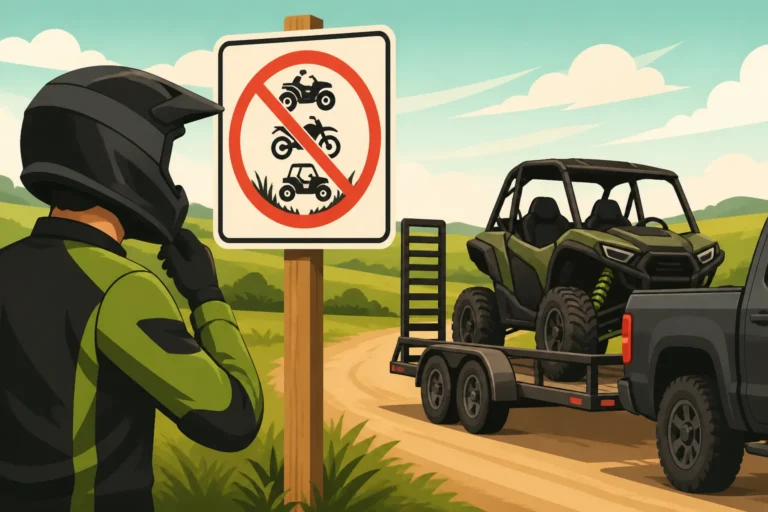
Even though the provincial ATV Act might not apply in full on private farm land, the fundamental principle of respecting property rights always does. This means that if you are not the owner of the farm land, you absolutely must have explicit permission from the landowner to ride there. Riding on someone else's land without their consent is trespassing, plain and simple, and that can lead to fines, legal action, and a whole lot of bad blood. [Saskatchewan Trespass Law for Riders]
Ideally, that permission should be in writing. A simple written note, an email, or even a text message can serve as valuable proof if there's ever a question. This is especially true if you're riding on land owned by a friend or relative. Misunderstandings can happen, and having something concrete to refer to can prevent a casual invite from turning into a sticky situation. Imagine a new neighbour seeing you ride and assuming you're trespassing; a quick confirmation from the landowner can clear things up immediately. Without proper proof of ownership for your machine, like a bill of sale, and explicit permission for the land, you could find yourself in a tight spot if a peace officer happens to investigate. [Getting Written Permission From a Farm Landowner]
Specific Scenarios on Farm Ground
The way you use your ATV on farm land can sometimes impact how the rules are perceived. Whether it's for getting tasks done or just blowing off steam, understanding the nuances of each scenario is important.
Riding for Agricultural Purposes
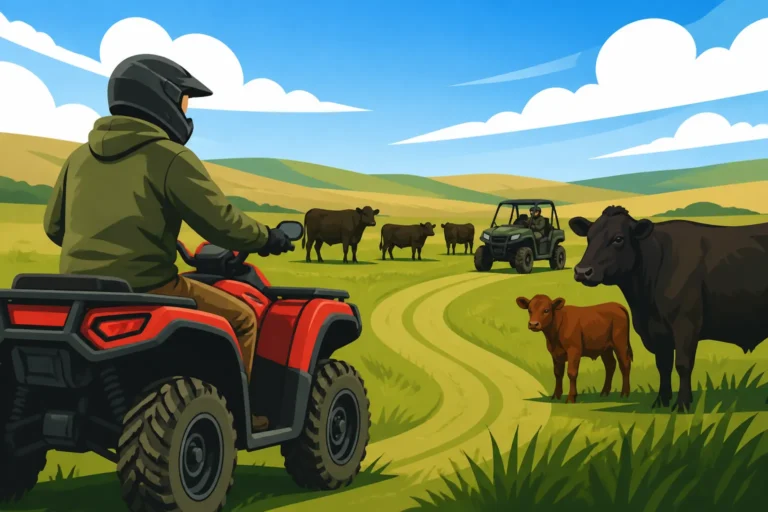
One of the most common uses for ATVs on farm ground is, of course, for actual farm work. Checking crops, looking for strays in the herd, hauling feed to animals, or carrying tools for field repairs are all typical scenarios where a quad proves invaluable. When your ATV is being used directly for these agricultural purposes, it aligns perfectly with the spirit of the private land exemption. The machine is seen as a tool, an extension of the farm operation, rather than purely a recreational vehicle.
In these situations, the focus shifts less from strict provincial regulations and more towards common sense, safe operation, and landowner liability. Farmers often equip their machines with specialized accessories, from sprayer attachments to small utility trailers, making their quads even more versatile for tasks like pest control or fence mending. Companies like SuperATV offer a wide array of utility accessories designed to enhance the capabilities of your ATV or UTV for farm applications, from winches for pulling stuck equipment to cargo boxes for hauling supplies, making farm work more efficient.
Recreational Riding on Farm Land
It's natural to want to enjoy your ATV for fun on your own property or a friend's expansive farm. Whether it's exploring new trails, mudding in a pasture after a rain, or simply cruising with the family, recreational riding is a big part of ATV ownership. Generally, if you have the landowner's explicit permission, recreational riding on private farm land is also exempt from many of the provincial Act's requirements. This means you don't need a provincial plate (because none exists for ATVs), nor are you necessarily bound by the same age restrictions or helmet laws that apply on public roads and trails.
However, "exempt from the Act" doesn't mean "no rules at all." You still have a moral and legal responsibility to ride safely and responsibly. Local municipal bylaws could still exist, though they are less common for strictly private farm land than for public spaces or shared-use areas. Parents, for instance, should still consider fundamental safety for younger riders, even if the provincial age rules don't legally apply on private property. For example, while the provincial Act details specific requirements for younger riders on public land, ensuring a [Saskatchewan Rules for a 12-Year-Old Rider] or a [Saskatchewan Rules for a 14-Year-Old Rider] has proper supervision and equipment on private land is just good practice. Always discuss expectations with the landowner regarding speed, areas to avoid, and any specific concerns they might have.
Crossing Public Roads to Access Farm Fields
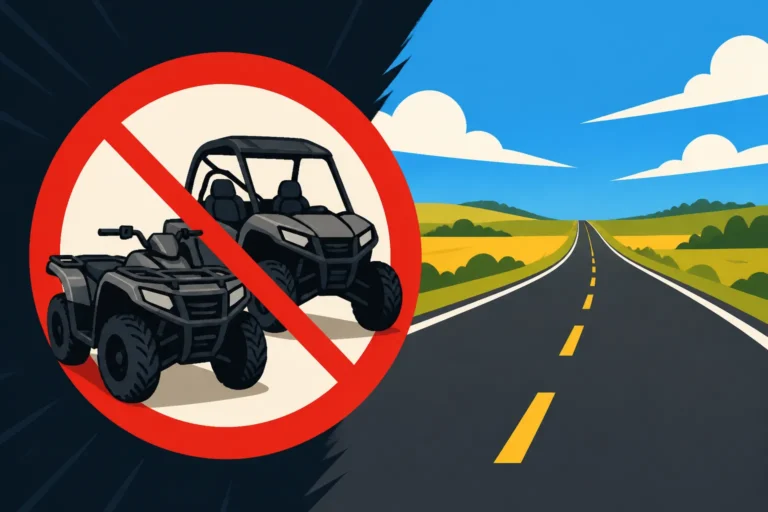
Here's where things get really important and often misunderstood. You might be riding happily on your back forty, but what if you need to cross a grid road or a provincial highway to get to another parcel of your land? The moment your ATV touches a public road, ditch, or highway, you are no longer covered by the private land exemption, and the full weight of the All Terrain Vehicles Act (and potentially the Traffic Safety Act) immediately applies.
This means that even for a brief crossing, you must adhere to all provincial requirements. This includes having a valid driver's license (or being supervised if you're a youth meeting specific exceptions), carrying adequate liability insurance, and ensuring all occupants are wearing approved helmets and appropriate eye protection. [Saskatchewan Helmet and Eye Protection Rules] When crossing, you must come to a complete stop, cross at a right angle by the shortest route, and if carrying passengers, they must dismount and walk across separately. [Saskatchewan Crossings Require Passengers to Dismount] This might seem like a lot for a quick hop across a road, but these rules are in place for everyone's safety, as public roads present different risks than open fields.
Practical Considerations and Best Practices
Beyond what's strictly legal, there are many practical considerations and best practices that make riding on farm ground safer, more responsible, and generally a better experience for everyone involved.
Liability and Insurance on Farm Land
Even with the private land exemption, accidents can and do happen. Whether it's a rollover, a collision with farm equipment, or an injury to a passenger, the question of liability is always present. While the provincial Act mandates liability insurance for riding on public land, your regular farm insurance or homeowner's policy might offer some coverage for ATV use on your own property. However, it's crucial to check with your insurance provider to understand the extent of your coverage. Don't assume anything.
Many riders opt for a dedicated ATV insurance policy, even if they primarily ride on private land, to ensure they have robust liability protection. This is especially vital if you have guests riding on your property. If a friend gets injured while riding your ATV on your farm, who pays for their medical bills or lost wages? Without adequate coverage, you could be personally on the hook. It's not just about what the law requires on public land, but what makes good financial sense for protecting yourself and others on private property. [Saskatchewan Insurance Requirements for Riders]
Machine Condition and Safety Gear
While the rules might be more relaxed on private farm land, that's no excuse to skimp on machine maintenance or personal safety gear. A well-maintained ATV is a safe ATV, regardless of where it's ridden. Regularly check your tires, brakes, lights, and fluids. A breakdown in a remote pasture can be just as inconvenient and potentially dangerous as one on a public trail.
And when it comes to personal protective equipment, just wear it! A helmet, eye protection (goggles or a face shield), sturdy footwear, long pants, and long sleeves should be standard attire for every ride. It doesn't matter if you're just puttering around the yard or pushing your machine through tough terrain; an unforeseen bump or tip-over can happen in an instant. High-quality gear not only protects you but can also improve your riding experience by keeping you comfortable and focused. Companies like SuperATV offer a range of robust protective components, from full skid plates to windshields, that can make your machine safer and more durable when working or playing on rough farm terrain.
Respecting the Land and Neighbors
Being a responsible ATV rider on farm ground extends beyond just following the letter of the law. It's also about showing respect for the land itself and for those who live nearby. Excessive noise can be a major nuisance for neighbours, even if you're on your own property. Be mindful of when and where you ride, especially if you're operating a particularly loud machine near residences. [Saskatchewan Noise Complaints About Quads]
Furthermore, consider the impact your riding has on the land. Avoid creating deep ruts in fields, especially in wet conditions, which can lead to erosion or damage crops. Stick to existing tracks where possible, and be aware of any environmentally sensitive areas, like wetlands or native grasslands. If you're riding on leased land or land belonging to someone else, always discuss these concerns with the landowner beforehand. They often have specific areas they want protected or particular times they prefer you don't ride. Good communication and respectful practices ensure that you can continue to enjoy riding on farm ground for years to come.
Here's a quick comparison of key differences when riding an ATV on private farm land versus public roads/ditches in Saskatchewan:
| Feature | On Private Farm Land (with permission) | On Public Roads/Ditches (where permitted) |
|---|---|---|
| Provincial Registration | Not required | Not required (for ATVs) |
| Provincial Plate/Decal | Not required | Not required (for ATVs) |
| Proof of Ownership | Recommended (Bill of Sale) | Recommended (Bill of Sale) |
| Driver's Licence | Not explicitly required by Act | Required (with exceptions for youth) |
| Minimum Age | No explicit minimum by Act | 16 years (with exceptions for 12-15 with supervision/training) |
| Helmet Requirement | Not explicitly required by Act | Required |
| Eye Protection | Not explicitly required by Act | Required |
| Liability Insurance | Highly recommended (farm/home policy) | Required ($200,000 minimum) |
| Local Bylaws | May apply, but less common | May apply |
| Trespass Laws | Always apply (permission needed) | N/A (unless trespassing on adjacent private land) |
Disclaimer
This article is for general informational purposes only and does not constitute professional advice. Laws, prices and regulations vary by location and change over time. Consult a qualified professional for guidance on your specific situation.