Do You Need a Licence for an ATV in Saskatchewan?
It's a question that trips up a lot of riders here on the prairies: Do you actually need a driver's licence to operate an ATV or UTV in Saskatchewan? With the wide-open spaces and the feeling of freedom these machines offer, it's easy to assume the rules are lax. But ignoring the requirements can land you in a heap of trouble, so let's clear up the confusion and make sure you're riding legally and safely.
The Saskatchewan Driver's Licence Requirement for ATVs
Navigating the rules for off-road vehicles in Saskatchewan can feel like driving through a blizzard with a foggy windshield. Many folks just assume that because it’s not a car or a truck on a paved highway, the same rules don't apply. But that's where the All Terrain Vehicles Act steps in to set things straight.
Who Needs a Driver's Licence to Ride an ATV?
The straightforward answer, which often surprises people, is yes, generally, you absolutely need a valid driver's licence to operate an ATV in Saskatchewan. This isn't just for riding down a main street; it applies to most situations where you're operating the machine. We're talking about any class of driver's licence – whether it's for your family sedan, your farm truck, or even a motorcycle. The key is that you need to be legally permitted to operate a motorized vehicle on public land. This requirement helps ensure that anyone behind the handlebars has at least a basic understanding of road safety, signs, and the responsibilities that come with operating machinery. It's not about being able to parallel park your quad, but about demonstrating a fundamental level of competence and awareness that reduces risks for everyone, including yourself.
The Critical Age Floor: Why Riders Under 16 Face Strict Rules
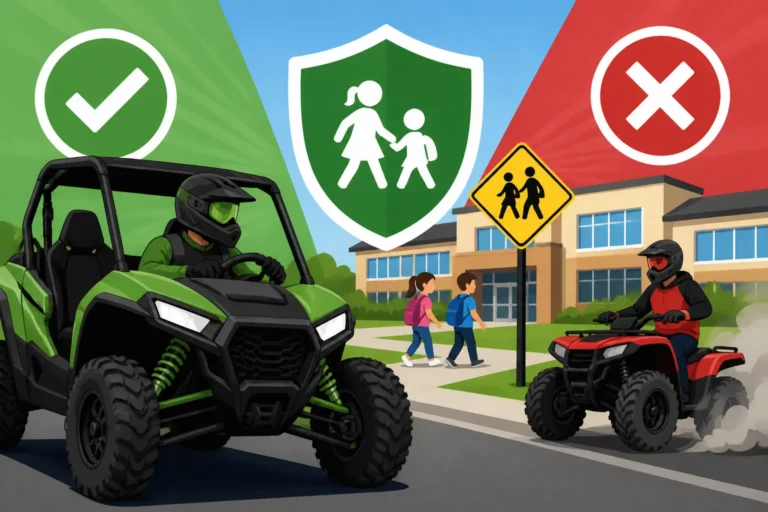
This is where things get really specific and often lead to misunderstandings, especially for families with eager young riders. In Saskatchewan, there's an absolute minimum age of 12 years old to operate an ATV, even with supervision. For any child under 12, operating an ATV is simply not allowed, full stop. This rule is in place for good reason: ATVs are powerful machines, and younger children often lack the physical strength, coordination, judgment, and risk perception needed to operate them safely, even at low speeds or on seemingly easy terrain.
For those between 12 and 15 years old, there's a conditional allowance. They can operate an ATV, but only under very specific circumstances. They must be directly supervised by an adult who meets certain criteria, or they must have completed an approved ATV safety course. This isn't just a suggestion; it's a legal requirement designed to protect our youth. It's heartbreaking to hear about accidents that could have been prevented if these rules were followed. We all want our kids to enjoy the outdoors, but safety has to come first, always.
Understanding the 365-Day Supervisor Rule
If you have a rider in your life who is 12, 13, 14, or 15 years old, and they haven't completed an approved ATV safety course, then the "supervisor rule" becomes your guiding principle. This rule isn't just about having an adult nearby; it's quite specific. The supervisor must:
- Be at least 18 years old.
- Hold a valid driver's licence themselves.
- Have held that driver's licence for a minimum of 365 days.
That last part, the "365-day" requirement, often catches people off guard. It's there to ensure the supervisor has substantial driving experience, not just a freshly minted licence. The supervisor isn't just a passenger; they are legally responsible for the actions of the young rider. This means if the young rider breaks a rule, the supervisor can be held accountable, even receiving the ticket! It's a significant responsibility, and it highlights just how seriously the province views the safe operation of these machines. Before you head out with a young rider, make sure you understand [What the 365-Day Supervisor Rule Actually Requires] and that your designated supervisor truly meets all the criteria. This rule is a cornerstone of youth ATV safety in Saskatchewan.
Exceptions and Special Circumstances for Riders
While the general rule is "licence required," like many things in life, there are always a few specific situations where the rules bend a little. It’s important not to confuse these exceptions with a free pass, though, as they are quite narrow and strictly defined.
Exemptions for Agricultural and Specific Private Land Use
One of the most common exceptions revolves around agricultural operations and certain uses on private land. If you're using your ATV for farming, ranching, or other agricultural purposes, you might find yourself exempt from some of the typical licence requirements, particularly if you're operating solely on land that you own or lease for these purposes. This makes sense in a province like Saskatchewan, where ATVs are integral tools for many farmers and ranchers, helping with everything from checking fences to herding cattle. Similarly, if you’re riding exclusively on private land that you own or have permission to use, and not venturing onto public roads, ditches, or Crown land, some aspects of the Act might not apply.
However, a crucial point here is that these exemptions are not blanket passes. They are typically tied to the specific activity and location. If you ride off your private land, even just across a grid road to another parcel, the general rules about licences, helmets, and insurance often kick right back in. It's a common misconception that "off-road" means "no rules anywhere." Always double-check [Saskatchewan Machines Used Only on Family Land] or [Saskatchewan Machines Used on a Farm] to understand the precise boundaries of these exemptions. The moment your wheels touch public property, you’re usually back under the full umbrella of the All Terrain Vehicles Act.
The Role of Approved Safety Courses for Youth
For young riders aged 12 to 15, an approved ATV safety course offers a fantastic alternative to the strict supervisor rule. Instead of always needing an experienced adult watching over them, completing one of these courses provides youth with the knowledge and skills to operate an ATV more safely and independently, within the age restrictions. These courses cover everything from proper riding techniques and hazard awareness to basic machine maintenance and environmental responsibility. They're designed to instil good habits and a strong understanding of ATV operation.
It's important to ensure the course your child takes is actually "approved" by the Administrator under the Act. There are reputable organizations that provide these certifications, and knowing [Which ATV Training Courses the Administrator Has Approved] is key. While the course itself doesn't grant them a driver's licence (that still comes at 16, or earlier for specific classes), it does empower them to ride more freely within the 12-15 age bracket, often opening up more opportunities for family rides or working on the farm without constant direct adult oversight. Think of it as investing in their safety and skill development.
What About Visitors from Other Provinces or Countries?
Saskatchewan welcomes riders from all over, and many wonder if their home province or state's licence is valid here. Generally, if you are a visitor to Saskatchewan, your valid driver's licence from your home province, territory, or country is recognized here for operating an ATV. This reciprocity is common across jurisdictions, meaning you don't need to get a Saskatchewan licence just for a visit.
However, this doesn't mean you're exempt from all of Saskatchewan's ATV rules. You still need to adhere to our province's regulations regarding age limits, helmet use, insurance, and where you can actually ride. For example, if you're from Alberta, where some rules might differ, you'll still need to follow Saskatchewan's specific requirements when you're on our trails and roads. It’s always a good idea for visitors to brush up on [Saskatchewan Rules for an Out-of-Province Machine] or specific guides like [Saskatchewan Visitors From Alberta] or [Saskatchewan Visitors From Montana] to ensure a smooth and legal riding experience. While your licence might travel, our local laws and safety standards certainly apply to everyone.
Beyond the Licence: Other Essential Requirements for Riders
Holding a valid driver's licence is a crucial first step, but it's just one piece of the puzzle when it comes to legal and safe ATV operation in Saskatchewan. There are other fundamental requirements that all riders must meet, and overlooking them can be just as problematic as riding without a licence.
Helmet and Eye Protection: Non-Negotiable Safety Gear
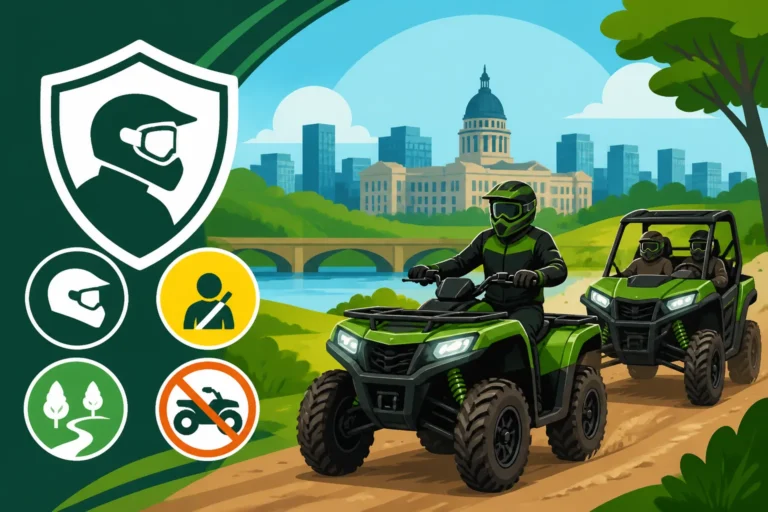
This is one area where there is absolutely no wiggle room: helmets and eye protection are mandatory for all ATV operators and passengers in Saskatchewan. This isn't just a suggestion for your own good; it's enshrined in law under [Saskatchewan Helmet and Eye Protection Rules]. A helmet is the single most important piece of safety gear you can wear, protecting your head from impacts in case of a rollover or collision. And it's not just any helmet; it must be one designed for ATV use, meeting specific safety standards. You'll usually find a compliance label inside that confirms it meets recognized standards.
Similarly, eye protection – whether it's goggles or a shatterproof face shield – is required. Dust, debris, branches, and even insects can impair your vision in a split second, leading to a dangerous situation. Think about the rough terrain and the high speeds some of us enjoy; clear vision is paramount. For night riding, tinted eyewear is a definite no-go. We've all seen riders cruising without helmets or with just sunglasses, and it's a dangerous gamble. Whether you're splashing through a creek or tearing up a wide-open field, always gear up properly. Manufacturers like SuperATV offer a range of accessories, including windshields and mirrors, that can enhance visibility and protection on your machine, but nothing replaces a certified helmet and proper eye protection worn by the rider.
Insurance Requirements for Operating an ATV
Another critical, often misunderstood, requirement is insurance. Just like a car, your ATV needs to be insured, at least with basic liability coverage, when it’s being operated. [Saskatchewan's Minimum Insurance Requirement] specifies that you must have at least $200,000 in third-party liability coverage. This protects you in case you're involved in an accident that causes injury or property damage to someone else. Accidents can happen in an instant, and without proper insurance, you could be facing substantial financial hardship.
When an officer stops you, whether it's on a grid road or at a trail entrance, one of the first things they'll ask for, right after your driver's licence, is [Saskatchewan Insurance Proof on the Trail]. This means carrying proof of your insurance with you while you ride. It could be a physical card or a digital copy on your phone, as long as it's readily accessible. Many riders get their ATV insurance through their existing auto insurance provider, or you can opt for a standalone policy from a specialized broker. Don't assume your home or auto policy automatically covers your quad; it often doesn't. Always verify your coverage before you hit the trail to avoid fines and potential personal liability.
The Importance of Carrying Proof and Understanding Local Bylaws
Beyond your driver's licence and insurance, it's just plain smart to carry other essential documents whenever you ride. While Saskatchewan doesn't have a provincial registration system for ATVs like it does for snowmobiles, having proof of ownership, such as a bill of sale, is incredibly important. This helps establish that the machine belongs to you, which can be crucial in cases of theft or if you need to prove ownership during a sale. Think of it as your machine's ID card. [Carrying Papers on a Grid Road] isn't just good practice; it's often expected by peace officers.
Furthermore, you absolutely need to be aware of local bylaws. While the province sets the overarching All Terrain Vehicles Act, individual rural municipalities, towns, and villages have the power to create their own bylaws regarding ATV use within their boundaries. This means that what's legal in one RM might be prohibited in the next. Some municipalities might allow ditch riding, others might ban it entirely, or set specific hours or speed limits. Certain areas might even have designated ATV routes or forbid ATVs on specific streets. Before you head out, especially if you're riding in a new area, take a few minutes to look up [Saskatchewan Municipal Bylaws on Roads] for that specific community. Many SuperATV riders choose to outfit their machines with storage bags or compartments to keep these important documents safe, dry, and readily accessible, along with other emergency gear. A little preparation goes a long way in avoiding an unwanted ticket or confrontation.
Common Misconceptions and Proactive Steps for ATV Riders
It's clear that riding an ATV in Saskatchewan comes with rules, but there are a few persistent myths that just won't quit. Clearing these up and taking proactive steps can make your riding experience safer and more enjoyable for everyone.
The Myth of "Off-Road Means No Rules"
This is perhaps the biggest and most dangerous misconception out there. The idea that "because it's off-road, there are no rules" is simply false and can lead to serious consequences. While ATVs are designed for off-road use, Saskatchewan's All Terrain Vehicles Act is specifically designed to govern their operation, regardless of whether you're on a trail, a ditch, or even sometimes on private land. This Act covers everything from age restrictions and helmet laws to speed limits on public property and impaired operation.
Riding under the influence, operating an unsafe machine, or engaging in reckless behaviour on an ATV is just as illegal and dangerous as doing so in a car. Peace officers are empowered to enforce the Act, and fines can be substantial. Even on Crown land, there are rules and regulations, and some areas may be closed to ATV use. Never assume that just because you're away from a paved highway, you're free from legal responsibilities. Always ride responsibly, within your capabilities, and with respect for the land and other users. Ignoring the rules doesn't make them disappear; it just makes you vulnerable to penalties and, more importantly, puts yourself and others at risk. To truly understand the framework, familiarize yourself with [Saskatchewan's All Terrain Vehicles Act].
Why Proper Documentation is Crucial, Even Without Registration
Saskatchewan does not have a provincial registration system for ATVs, which often leads to confusion. Many riders assume that because there's no registration, there's no official paperwork to keep track of. This couldn't be further from the truth. While you won't get a provincial plate or sticker, maintaining proof of ownership is absolutely vital. Your bill of sale is your primary document for proving you own your ATV. This is especially critical when you buy or sell a machine, as it establishes the chain of ownership. If your ATV is stolen, a clear bill of sale and serial number are essential for filing a police report and potentially recovering your machine. Without it, proving ownership can be a nightmare.
For those buying privately, it's paramount to get a detailed bill of sale and to verify the seller's identity and the machine's VIN. [How to Prove You Own an ATV in Saskatchewan] details the importance of this document. It's also critical if you ever need to make an insurance claim or if there's a dispute over ownership. Even though the province doesn't collect information on ATV ownership, you need to keep your own records in order. This isn't just good practice; it's a safeguard. Consider using a weather-resistant storage box from a brand like SuperATV on your machine to keep your essential documents safe and dry, rather than tucked into a damp pocket or forgotten at home. Remember, [Saskatchewan Bills of Sale Do the Work] of registration in proving ownership.
Resources for Staying Informed and Riding Responsibly
Staying on top of ATV regulations and best practices is an ongoing commitment for any responsible rider. The rules can evolve, and local conditions (like fire bans or trail closures) can change quickly. One of the best ways to stay informed is to connect with your local ATV community. Joining an ATV club, such as those listed under [Saskatchewan ATV Clubs Worth Joining], provides access to a wealth of knowledge, shared experiences, and up-to-date information on local trails, events, and regulations. These clubs often advocate for riders' rights, help maintain trails, and promote safe riding practices.
Beyond clubs, familiarize yourself with official government websites for Saskatchewan Parks, Culture and Sport or SaskEnergy for information on Crown land access, fire bans, and environmental regulations. Many rural municipalities also have their bylaws posted online. Education is your best defence against fines and accidents. Take the time to understand the Act, be aware of your surroundings, and always ride within the designated areas. A well-informed rider is a safe rider, and a safe rider helps ensure that we all continue to enjoy the incredible ATV opportunities Saskatchewan has to offer for years to come.
Here’s a quick summary of the driver's licence requirements based on age:
| Age of Operator | Driver's Licence Required? | Supervision Required? | Approved Safety Course Allowed? | Notes |
|---|---|---|---|---|
| Under 12 | No | No | No | Not permitted to operate an ATV at all. |
| 12-15 years old | No | Yes | Yes | Must be supervised OR have completed an approved ATV safety course. |
| 16 and older | Yes | No | No (unless for other purpose) | Must hold any valid class of driver's licence. |
Disclaimer
This article is for general informational purposes only and does not constitute professional advice. Laws, prices and regulations vary by location and change over time. Consult a qualified professional for guidance on your specific situation.