Saskatchewan’s Licence Rule Before the Exceptions
It’s easy to get confused about what you need to legally operate an ATV or UTV in Saskatchewan. Many provinces have complex registration and licensing systems, and it's natural to assume Saskatchewan operates similarly. This guide aims to clear up the foundational rules regarding driver’s licences for ATV operators in Saskatchewan, focusing on the core requirements before any exceptions are even considered. We’ll explore why these rules exist, what they mean for you, and the potential pitfalls of not adhering to them.
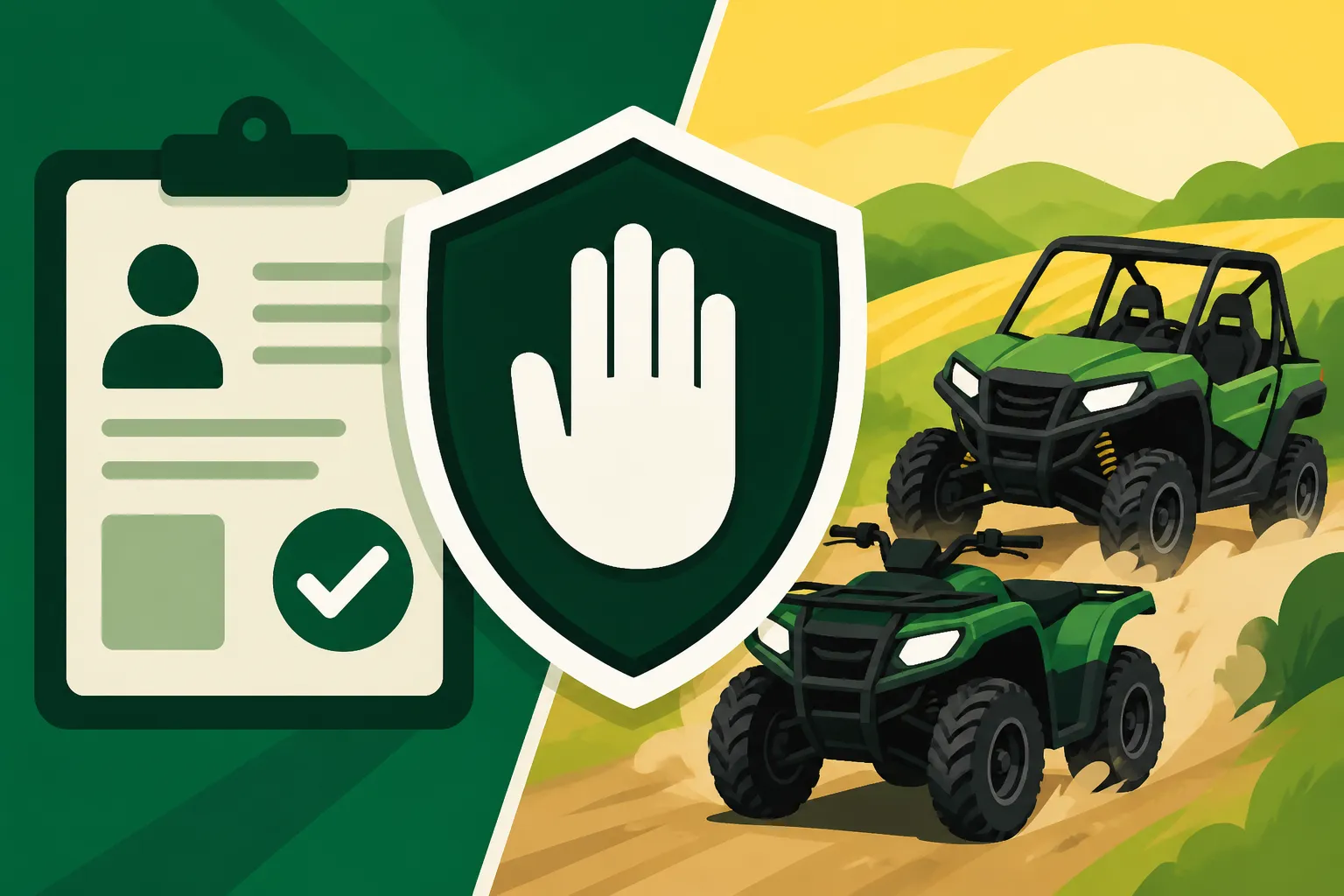
The Core Requirement: A Valid Driver's Licence for ATV Operators
Picture this: you've just hauled your shiny new quad out to your favourite backroad or a local staging area, ready for a day of adventure. You've got your helmet, your gear, and a full tank of gas. But have you checked your wallet for your driver's licence? In Saskatchewan, unlike some other jurisdictions that might have specific off-road licences or permit systems, the provincial legislation relies heavily on existing driver’s licence requirements for anyone operating an ATV or UTV. This means that for the vast majority of situations and operators, having a valid provincial driver's licence is not just a suggestion, but a fundamental legal obligation. It's a critical piece of paperwork that far too many riders overlook, assuming that because they're "off-road," the rules of the road don't apply. But when it comes to who can actually operate the machine, they absolutely do.
Why This Rule Exists in Saskatchewan
The requirement for a valid driver's licence isn't some arbitrary bureaucratic hurdle; it's rooted deeply in public safety and a practical approach to regulating machines capable of significant speed and power. The provincial government, through [Saskatchewan's All Terrain Vehicles Act], recognizes that operating an ATV or UTV requires a certain level of skill, judgment, and understanding of traffic laws, even when not directly on a paved highway. A driver's licence signifies that an individual has demonstrated these basic competencies through testing and experience. It suggests they understand road signs, rules of the right-of-way, and the general principles of safe vehicle operation, which are all transferable skills to ATV riding, especially when crossing roads or navigating shared spaces.
Think about it from a common-sense perspective. These machines, whether a utility quad or a high-performance side-by-side, are powerful. They accelerate quickly, can be challenging to control for inexperienced riders, and pose risks not just to the operator but also to passengers and other people or property in the vicinity. By mandating a driver's licence, the province aims to ensure that operators have at least a baseline of responsible driving habits. It’s part of a broader strategy to minimize accidents and ensure accountability. Without this foundational requirement, anyone, regardless of their experience or knowledge, could potentially be behind the handlebars, leading to a much more hazardous environment for everyone. This is also why [Saskatchewan Requires a Driver's Licence] even for what might seem like casual recreational riding.
What Constitutes a "Valid" Licence
When the law says you need a "valid driver's licence," it's not just talking about any old piece of plastic. It means a licence issued by the proper authority (Saskatchewan Government Insurance, or SGI, in this province, or a comparable authority if you're visiting from out-of-province) that is current, unexpired, and not suspended or revoked. This isn't the place for learner's permits unless specific supervisory conditions are met (which fall under exceptions, not the core rule). If your licence has restrictions – for example, a novice driver’s licence with conditions on passenger limits or time of day driving – those restrictions generally apply to your ATV operation as well, even if you’re riding on a ditch or a grid road.
So, if you’ve recently moved to Saskatchewan, your out-of-province licence is generally recognized for a period, but eventually, you’d need to get an SGI licence to ensure full compliance if you plan on long-term residency and ATV operation. For visitors, [Saskatchewan Rules for an Out-of-Province Machine] usually allow you to ride on your home province or state's licence, provided it's valid there and you meet Saskatchewan's other operational requirements. The key is that it must be a driver's licence for a motor vehicle, not just some off-road certification. A standard Class 5 licence for cars and light trucks is typically what most ATV operators will hold and what the Act envisions as a baseline. Maintaining its validity is crucial, as an expired or suspended licence means you are effectively riding without one, with all the associated legal risks.
The Minimum Age: 16 Years Old for Independent Operation
Beyond simply holding a driver's licence, there's a critical age component that often catches riders by surprise, especially parents hoping to get their teenagers into the sport. In Saskatchewan, the general rule is that you must be at least 16 years old to operate an ATV or UTV independently. This isn't just about physical capability; it ties directly into the maturity and judgment expected of someone controlling a powerful machine. It's a strict baseline that underscores the province's commitment to safety, attempting to mitigate risks associated with younger, less experienced operators.
Understanding the Age Threshold
The 16-year-old age floor for ATV operation is a straightforward rule: if you're under 16, you generally shouldn't be operating an ATV by yourself on public land, designated trails, or anywhere the Act applies. This aligns with the age at which individuals can obtain a learner's permit for a standard vehicle, suggesting a legislative link between the perceived maturity required for vehicle operation and ATV riding. It means that while a 14-year-old might be perfectly capable of riding a quad around a family farm, the moment they take that machine onto a public road allowance or a provincial trail where the Act applies, they could be in violation of the law. This distinction between private land and public areas is critical and often misunderstood. The core rule focuses on ensuring that operators have reached an age where they are presumed to have a greater capacity for understanding and adhering to safety regulations. [Saskatchewan Bans Riders Under 16] in these general contexts for good reason.
This age requirement isn't just about preventing accidents, though that's a huge part of it. It also impacts enforcement and liability. If a peace officer encounters a rider under 16 operating an ATV in a regulated area without meeting specific exceptions (which, again, we're not detailing here), tickets and other penalties can be issued, often to the owner of the machine or the supervising adult. It places a significant responsibility on parents and guardians to understand these rules. Even if a child has completed a safety course, the fundamental age requirement still stands for independent operation under the general rule. Parents often ask, "Do You Need to Register an ATV in Saskatchewan?" but an equally important question is "What are [Saskatchewan ATV Age Requirements]?" because the answer impacts who can ride it.
Why Age Restrictions Matter for ATV Safety
Age restrictions for ATV operation are vital for several reasons, all circling back to safety. First, younger riders, even if physically capable, often lack the experience to anticipate hazards or react appropriately in emergency situations. Their judgment may not be as developed, leading to impulsive decisions or an underestimation of risks. Secondly, ATVs and UTVs are powerful machines. They can be heavy, reach high speeds, and require a certain level of physical strength and coordination to handle safely, especially over varied terrain. While many youth-model ATVs exist, the general provincial legislation makes no distinction based on machine size for the core age rule; it focuses on the operator.
The statistics on ATV accidents often highlight the vulnerability of younger riders. They are more prone to rollovers, collisions, and other incidents that can result in serious injury or fatality. By setting a minimum age, Saskatchewan aims to reduce the likelihood of these tragic events. It encourages a more gradual introduction to ATV riding, ideally under supervised conditions or on private property where the provincial Act's general rules may not fully apply. This foundational age rule, combined with the driver's licence requirement, forms the bedrock of responsible ATV operation in the province, ensuring that those behind the controls possess both the maturity and the demonstrated skill to do so safely. Accessories from brands like SuperATV, which are designed to enhance safety and rider comfort, are excellent choices for any rider, regardless of age, once they meet these fundamental legal operating requirements. Investing in robust protection like skid plates or heavy-duty bumpers from SuperATV can also help safeguard your machine against damage, which is always a smart move for any rider.
Navigating the Penalties and Risks of Non-Compliance
Ignoring the foundational rules about operator licensing and age in Saskatchewan isn't just a minor oversight; it can lead to significant legal, financial, and personal consequences. Many riders, especially those new to the province or to ATV ownership, don't fully grasp the seriousness with which these regulations are enforced. A quick ride "just down the road" or letting an underage family member take the quad out for a spin can quickly escalate into a much bigger problem than anticipated. Understanding these risks is crucial for anyone planning to operate an ATV or UTV within Saskatchewan's jurisdiction.
The Financial and Legal Repercussions
The most immediate consequence of operating an ATV without a valid driver's licence or when underage in a regulated area is facing fines and charges. [Saskatchewan Fines Capped at $1,000] are no joke; a single infraction can set you back significantly, especially when court costs are factored in. Peace officers, including local RCMP, municipal police, and conservation officers, are empowered to enforce [The All Terrain Vehicles Act Runs 36 Sections] and will issue tickets for non-compliance. These aren't just warnings; they are legal citations that will require payment or a court appearance.
Beyond monetary fines, there can be other legal implications. If you are operating an ATV while your driver's licence is suspended or revoked (which falls under [Saskatchewan Disqualified Driver Offences]), the penalties are far more severe, potentially including larger fines, vehicle impoundment, and even further licence suspensions. For underage riders, the legal repercussions often extend to the adult owner or supervisor who allowed the operation, highlighting the responsibility that comes with quad ownership. The legal system doesn't differentiate between operating a car and operating an ATV when it comes to the validity of your licence; the principle of having a qualified, legally entitled operator remains constant.
Here's a quick overview of potential penalties:
| Infraction Category | Typical Consequence | Broader Impact |
|---|---|---|
| Unlicensed Operation | Fines, potential impoundment | Insurance invalidation, criminal record (severe) |
| Underage Operation | Fines (for operator/supervisor/owner), impoundment | Parental/owner liability, safety course mandate |
| Driving While Disqualified | Larger fines, extended licence suspension, impoundment | Serious criminal charges, major legal battles |
It’s not just about getting caught; it's about adhering to the law to ensure everyone's safety. For those looking to keep their machines in top legal condition, durable components and maintenance parts from reputable suppliers like SuperATV can ensure your machine is always trail-ready and less likely to cause issues that might attract unwanted attention from enforcement. Ensuring your machine is always in proper working order, with good tires and functional lights, is part of being a responsible rider, which goes hand-in-hand with being legally compliant.
Insurance, Liability, and Machine Seizure
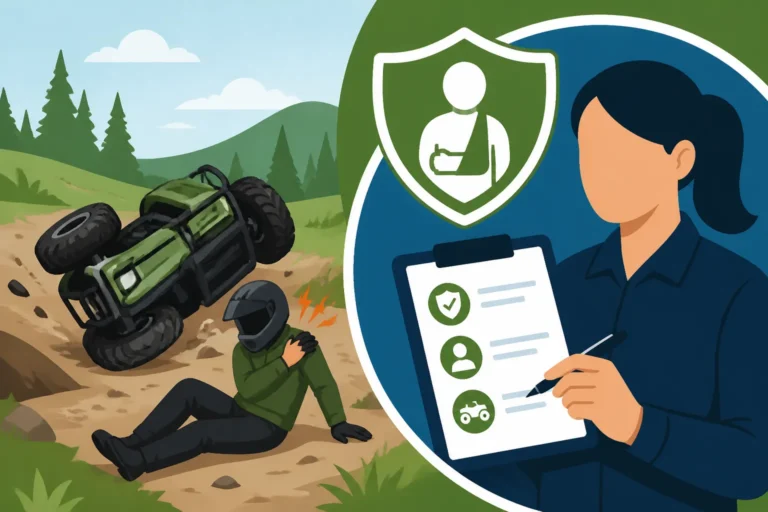
The legal consequences extend well beyond a simple ticket. One of the most severe risks of non-compliance is the potential invalidation of your insurance coverage. If you’re involved in an accident while operating an ATV without a valid driver’s licence or while underage, your insurance company could deny any claims for damages or injuries. This means you could be personally on the hook for potentially hundreds of thousands of dollars in medical bills, property damage, and legal fees. [Saskatchewan Insurance Requirements for Riders] are there for a reason, and they hinge on legal operation. Imagine a scenario where an unlicensed rider, even an adult, causes an accident with another vehicle or person. The financial devastation could be life-altering.
Furthermore, [Saskatchewan Owner Liability Rules] mean that as the owner of an ATV, you can be held responsible for the actions of anyone you permit to operate your machine. If you lend your quad to a friend who doesn't have a valid licence, or if your underage child takes it for a ride without meeting the supervisory exceptions, you could be facing civil lawsuits and severe financial penalties, even if you weren't personally operating the machine at the time. This "reverse onus" means the owner often has to disprove negligence, which is a tough battle.
In severe cases, or for repeated offences, an ATV or UTV can be seized and impounded by law enforcement. This means you lose access to your machine, incur impoundment fees, and face a complex process to get it back, if at all. These actions are designed to enforce compliance and remove unsafe operators and machines from public areas. Whether you're riding through a field or planning to cross a public road, understanding these rules is paramount. For visitors, remember that [Saskatchewan Rules for a Visiting Alberta Rider] or any other non-resident still require compliance with these core operator rules, even if your machine isn't registered here. A well-maintained machine, perhaps with custom accessories from SuperATV that enhance visibility or performance, is part of a responsible riding ethic that often goes hand-in-hand with legal compliance. Always carry your proof of insurance and licence when riding; it's what [Saskatchewan Insurance Proof on the Trail] is all about.
Disclaimer
This article is for general informational purposes only and does not constitute professional advice. Laws, prices and regulations vary by location and change over time. Consult a qualified professional for guidance on your specific situation.