Saskatchewan Rules for a 14-Year-Old Rider
It's incredibly exciting when your 14-year-old shows a keen interest in riding an ATV or UTV. You want to support their passion, but the rules around youth riders in Saskatchewan can feel like a tangled mess of regulations, exceptions, and "what ifs." Parents often worry about hitting the trails safely and legally, especially when provincial guidelines might seem a bit vague for this age group. This comprehensive guide is here to untangle those rules specifically for 14-year-old riders, helping you understand exactly what's required to keep them safe and on the right side of the law.
The Age Floor and What It Means for a 14-Year-Old
Let's cut right to it: the general minimum age for operating an ATV or UTV on public land in Saskatchewan is 16 years old. This is a common starting point that often causes confusion and frustration for parents of younger, eager riders. However, the good news for your 14-year-old is that there's a very clear and important exception built into [Saskatchewan ATV Age Requirements] under The All Terrain Vehicles Act. Your 14-year-old can legally operate an ATV or UTV, but it comes with specific, non-negotiable conditions. They fall into the category of "youth aged 12 to 15 years," which means supervision is key. This isn't just a suggestion; it's a legal requirement designed to ensure their safety and the safety of others.
The province recognizes that many youth grow up around these machines, especially in rural areas, and develop skills earlier. The law tries to strike a balance between encouraging responsible riding and preventing accidents. It acknowledges that a 14-year-old, while perhaps physically capable, might lack the judgment or experience to handle every situation independently on public land. This distinction is vital because it sets the framework for all other rules that apply to them. You can't just hand them the keys and send them off; there's a legal dance you both need to perform to ensure compliance and, most importantly, safety.
The General 16-Year-Old Rule
The blanket rule of 16 years old applies to any person operating an ATV on a public road, ditch, or Crown land without specific supervision or training. This is the default, and it means that if your 14-year-old is caught riding alone in an unauthorized area, they could face significant penalties. It's easy to think that if they're a good rider on the farm, it translates to public trails, but the law draws a very clear line. The intent behind this general rule is to ensure a certain level of maturity and driving experience, often associated with obtaining a learner's permit for a car, although an ATV doesn't require a traditional driver's license in the same way. The provincial act specifically outlines what constitutes an "all terrain vehicle" and where it can be operated. Understanding this baseline helps you appreciate the exceptions for younger riders.
The 12-Year-Old and Over Exception
Here's where your 14-year-old fits in. The Act makes a specific allowance: a person who is 12 years of age or older but under 16 years of age may operate an all terrain vehicle if they are under the direct supervision of a person who is at least 18 years of age and who has held a valid driver's licence for at least 365 days. This "direct supervision" isn't just about being in the same general area; it means the supervisor must be close enough to intervene immediately if needed, usually on another machine or in close proximity. This rule is a cornerstone for [Saskatchewan Rules for a 14-Year-Old Rider] and it highlights the responsibility placed on the adult supervisor. This provision recognizes that practical experience under guidance is a valuable teacher, but that ultimate responsibility remains with a seasoned adult. It's a system designed to mentor new riders, not just allow them to ride.
The All-Important Supervisor Rule and Its Exceptions
The supervisor rule is arguably the most critical component when it comes to a 14-year-old rider in Saskatchewan. It's not a suggestion; it's a legal mandate that carries significant responsibility for the supervising adult. This rule is in place to ensure that young riders, who are still developing their judgment and hazard perception skills, have an experienced guide with them at all times on public land. It's all about mitigating risk and providing immediate assistance if a situation arises.
The 365-Day Supervisor Requirement
As mentioned, for a 14-year-old to legally ride an ATV on public lands, they must be directly supervised by an adult who is at least 18 years old and has held a valid driver's license for a minimum of 365 days. This isn't just any adult; it's someone with a proven track record of safe operation of a motor vehicle. This "365-day" requirement is specifically designed to ensure the supervisor has ample experience behind the wheel themselves, indicating a level of road sense and responsibility that can then be passed on to the young rider. The supervisor is essentially acting as the responsible party for the youth's actions while riding. [Saskatchewan's 365-Day Supervisor Rule] means that if you just got your license last month, you don't qualify yet to supervise your child. This is a common pitfall parents overlook, assuming any licensed adult will do. It emphasizes that this isn't just about presence, but about demonstrated experience.
For example, imagine you and your 14-year-old are planning a weekend ride on some designated trails in the Porcupine Hills. You, as the parent, must not only be 18+ and have had your driver's license for over a year, but you also need to be actively supervising them. This often means riding your own machine near them, maintaining visual contact, and being ready to offer instruction or assistance. This rule isn't satisfied by just being in the general vicinity; it means direct, active supervision.
The Safety Course Alternative
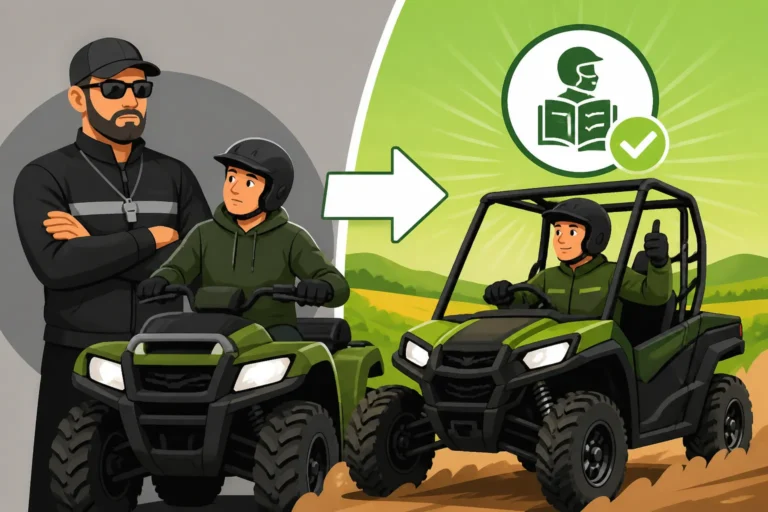
Here's where things get interesting and offer a bit more flexibility for your family. The Act provides an alternative to the direct, constant supervision for youth between 12 and 15 years old. If your 14-year-old completes a prescribed ATV safety course approved by the provincial administrator, they may then operate an ATV on public land without direct supervision. This is a fantastic option for families who want to empower their youth with formal training and allow them a bit more independence, all while ensuring they have a solid foundation in safety. [How a Safety Course Replaces a Supervisor] is a critical piece of information for many parents.
These courses typically cover everything from basic machine operation, pre-ride inspections, and safe riding techniques to environmental awareness and emergency procedures. They teach hazard avoidance, proper turning, braking, and hill climbing. The idea is that formal training instills good habits and provides the necessary knowledge to make safe decisions independently. Organizations like the Saskatchewan All Terrain Vehicle Association (SATVA) often offer or endorse such courses. Enrolling your child in one of these courses is a proactive step towards responsible riding and can open up more opportunities for them to enjoy their machine. It also gives parents peace of mind, knowing their child has received professional instruction. [Saskatchewan Youth Certification Options] outlines the types of training programs that are accepted.
For instance, after completing an approved safety course, your 14-year-old could join a group ride with other experienced riders, or even ride independently on designated trails, as long as they carry proof of their certification. This allows for greater freedom than constant direct supervision, but it requires that initial investment in their training.
Mandatory Safety Gear and Insurance
Beyond who can ride and who must supervise, there are crucial requirements regarding what your 14-year-old must wear and what kind of financial protection needs to be in place. These aren't minor details; they are fundamental to safety and legal compliance. Ignoring them can lead to serious injuries and hefty fines.
Helmet and Eye Protection Rules
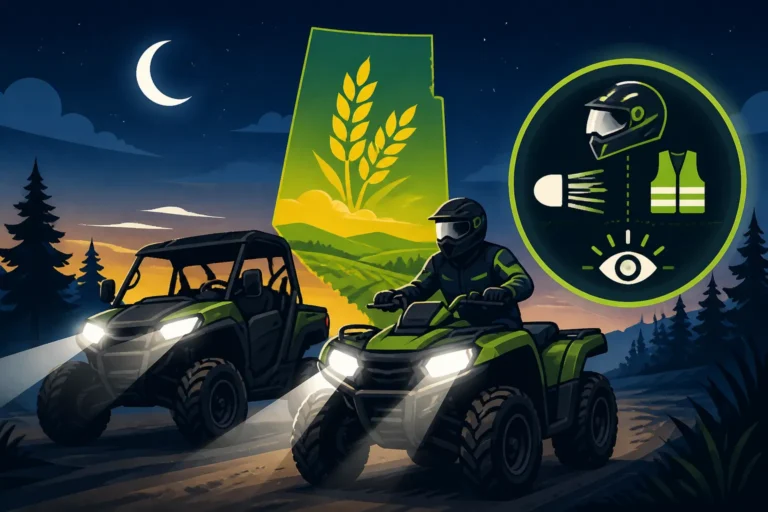
This is non-negotiable. Anyone operating an ATV or UTV in Saskatchewan, regardless of age, must wear an approved helmet and appropriate eye protection. For a 14-year-old, this is especially critical given their developing motor skills and risk assessment. The helmet must be designed for ATV use and meet recognized safety standards (e.g., DOT, Snell). It's not enough to wear a bike helmet or a construction hard hat; it needs to be an actual ATV helmet with a chinstrap securely fastened. [Saskatchewan Helmet and Eye Protection Rules] are explicit for a reason: head injuries are among the most severe in ATV accidents.
Eye protection, such as goggles or a face shield, is equally important to protect against dust, debris, insects, and branches. A branch to the eye at speed could have catastrophic consequences. Think of it this way: your vision is paramount for safe operation. For parents, this means investing in a properly fitting helmet and goggles that are comfortable for your child. A poorly fitting helmet offers inadequate protection and can be distracting. When looking for durable gear, consider brands like SuperATV for your accessories, but always prioritize safety-certified helmets and eye protection from reputable manufacturers.
Minimum Insurance Requirements
While Saskatchewan does not require ATVs to be registered with the province (unlike snowmobiles), there is still a mandatory insurance requirement for operating an ATV on public property. Every operator of an ATV on public land or public road allowance must carry minimum liability insurance. The specific amount required is generally set at a minimum of $200,000 in third-party liability coverage. This means that if your 14-year-old is involved in an accident that causes injury or damage to another person or their property, this insurance helps cover those costs. [Saskatchewan Minimum Insurance Requirement] is often overlooked because of the lack of provincial registration.
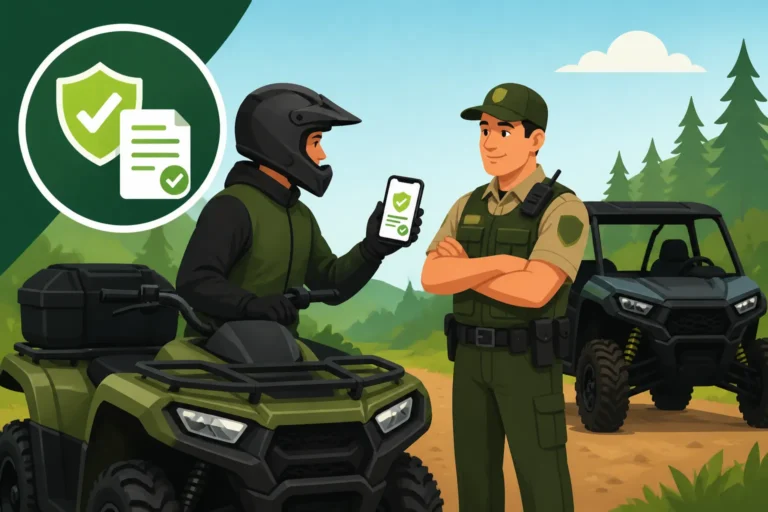
It's crucial to understand that even if your 14-year-old is riding under supervision or has completed a safety course, this insurance is still a must. If they cause an accident without adequate insurance, you, as the owner or supervisor, could be held personally liable for damages. This can be financially devastating. Talk to your insurance broker about obtaining a specific ATV insurance policy, or confirm if your existing home or auto policy offers any coverage for off-road vehicles – though dedicated ATV policies are generally recommended for comprehensive protection. Proof of insurance should always be carried with the rider or supervisor when on public land. [Saskatchewan Insurance Requirements for Riders] details what you need to have on hand.
Where a 14-Year-Old Can Actually Ride in Saskatchewan
Navigating where your 14-year-old can ride legally can be just as confusing as understanding the age and supervision rules. Saskatchewan has a mix of public and private land, and the rules differ significantly for each. It's not a free-for-all, and knowing the boundaries is crucial to avoid trespassing fines or other penalties.
Private Land Exemptions
This is often the simplest scenario for youth riders. If the 14-year-old is operating the ATV on private land that they own, or on private land with the explicit permission of the owner, many of the provincial Act's restrictions on age, license, and supervision don't apply. This is a common situation for youth growing up on farms or acreages. [Saskatchewan Private Land Exemptions] means that if your family owns a quarter section, your 14-year-old can ride there without a supervisor, even if they haven't taken a safety course.
However, even on private land, common sense and a strong focus on safety should always prevail. Helmets and eye protection are still highly recommended to prevent injury, and it's always wise to ensure the rider has a basic understanding of safe operation. While the law might be more relaxed, physics and injury risk are not. Many parents use their own private land as a safe learning environment, gradually introducing more complex terrain as their child's skills develop.
Designated Trails and Crown Land Access
When it comes to public lands, things get more regulated. Saskatchewan has some fantastic riding opportunities on designated trails, particularly within certain provincial parks and on Crown land. For your 14-year-old to ride these areas, they must adhere to the supervision rules (or the safety course exemption) and have the required insurance and safety gear.
Provincial Parks: Some provincial parks, like Moose Mountain Provincial Park and Narrow Hills Provincial Park, have designated ATV trails. However, access typically requires a park permit and often an acknowledgement of park rules. These permits are usually free, but they come with specific conditions, such as staying on marked trails and sometimes even taking an information session. [Saskatchewan Park Regulations for Machines] are in place to protect the environment and other park users. Your 14-year-old would still need to meet the supervision or safety course requirements to ride here.
Crown Land: General Crown land access is often permitted, but riders must be aware of specific prohibitions or restrictions, especially regarding ecologically sensitive areas, wildfire bans, or active grazing leases. It’s always best to check with the Ministry of Environment for any current restrictions or specific rules for the area you plan to visit. [Saskatchewan Crown Land Access Rules] are important to consult, as not all Crown land is open for ATV use. Remember, even if riding on Crown land is permitted, the provincial Act's rules for supervision, safety gear, and insurance still apply to your 14-year-old.
Ditch Riding and Grid Roads
Riding in road ditches and on the shoulders of certain public roads is a common practice for ATVs in Saskatchewan, especially in rural areas. However, there are strict rules for this, and your 14-year-old must adhere to them. The Act specifies that ATVs can be operated in the ditch or shoulder of a provincial highway or public road, but only under specific conditions, such as staying at least two metres from the travelled portion of the highway. There are also rules about direction of travel, speed limits, and crossing highways. [Saskatchewan Rules for Riding a Ditch] are critical to understand, as a moment of inattention can put a rider in harm's way of vehicle traffic.
Grid Roads: While many people use grid roads for ATV travel, the rules are nuanced. Often, the ditch is the only legal place to ride, not the travelled portion of the road itself, unless a specific municipal bylaw permits it. [Saskatchewan Rules for Riding a Grid Road] emphasizes caution, as these roads are shared with heavy agricultural equipment and other vehicles. This highlights the importance of checking local municipal bylaws. Some rural municipalities have specific bylaws that either permit or prohibit ATV use on certain roads or within their boundaries. Always check with the local RM office before riding in an unfamiliar area.
Where Riding is Prohibited
It's equally important to know where your 14-year-old absolutely cannot ride. These typically include:
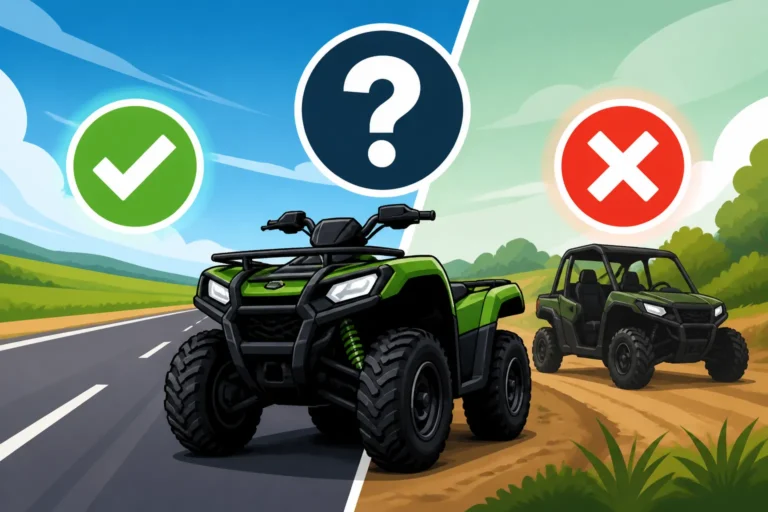
- Paved Highways: Riding an ATV on the paved portion of any provincial highway is generally prohibited.
- Designated Urban Areas: Most cities and towns have bylaws prohibiting ATV operation within their limits, except for very specific purposes (e.g., utility work). [Saskatchewan Rules for Riding a Town Street] are usually very restrictive.
- Ecological Reserves & Protected Areas: Many protected natural areas strictly prohibit motorized vehicle use to preserve sensitive habitats. [What an Ecological Reserve Means for Saskatchewan Riders] is something you'll want to review carefully.
- Snowmobile Trails in Winter (sometimes): While many snowmobile trails are open to ATVs during the summer, they are strictly reserved for snowmobiles once the snow flies. [Saskatchewan Snowmobile Trails Closed in Winter] is an important distinction to avoid conflicts and fines.
Understanding these boundaries is paramount. A map, a phone call to the local RM, or a quick check of provincial park regulations can save you and your 14-year-old from fines, or worse, an accident. With proper supervision (or certification), the right gear, and a clear understanding of where they can legally go, your 14-year-old can safely and responsibly enjoy the vast and beautiful riding opportunities Saskatchewan has to offer.
Here’s a quick overview of the key considerations for a 14-year-old rider in Saskatchewan:
| Requirement | Details for a 14-Year-Old Rider |
|---|---|
| Minimum Age | Generally 16 for public land, BUT 12-15 years old with exception. |
| Supervision | MANDATORY, unless safety course completed. |
| Supervisor's Quals | Must be 18+, held valid driver's licence for 365+ days. |
| Safety Course Option | Approved course replaces direct supervision. |
| Helmet | MANDATORY – approved for ATV use, properly fastened. |
| Eye Protection | MANDATORY – goggles or face shield. |
| Driver's Licence | NOT required for ATV (but supervisor needs one for 365+ days). |
| Provincial Registration | NOT required for ATV (but check municipal plates). |
| Liability Insurance | MANDATORY (minimum $200,000) for public land use. |
| Permitted Riding Areas | Private land (with permission), designated park trails, legal ditches/shoulders, some Crown land (check restrictions). |
| Prohibited Riding Areas | Paved highways, most urban areas, ecological reserves. |
Disclaimer
This article is for general informational purposes only and does not constitute professional advice. Laws, prices and regulations vary by location and change over time. Consult a qualified professional for guidance on your specific situation.