Saskatchewan Rules for a Visiting Montana Rider
Welcome, fellow powersports enthusiasts! If you're planning an ATV or UTV adventure from Montana into the beautiful, vast landscapes of Saskatchewan, you're in for a treat. However, what might seem straightforward in Montana can get a little tricky up here, especially when it comes to rules about your off-road machine. Many riders from south of the border are surprised by some of our unique regulations, or lack thereof, particularly concerning registration. This guide is here to help you understand exactly what you need to know and do to ensure your Saskatchewan riding experience is smooth, legal, and truly unforgettable.
Understanding Saskatchewan's Unique Approach to ATV Registration
One of the biggest eye-openers for visitors from Montana, where ATV registration is often standard practice, is Saskatchewan's provincial stance on off-highway vehicles. It's a fundamental difference that underpins many other rules.
The Core Difference: No Provincial Plate or Decal
Here in Saskatchewan, the province itself does not register ATVs or UTVs. That's right, there's no central provincial registry, no province-wide plate to apply for, and no annual decal to renew. This can be a huge point of confusion. You won't find a provincial government office that issues ATV registration certificates or licence plates like you might be accustomed to in Montana. When you see a local rider on the trail, they likely won't have a provincial plate on their quad, because [Saskatchewan Has No ATV Plate or Decal]. This also means there's no provincial registration fee to pay, which can be a pleasant surprise.
For a Montana rider, this means you don't need to worry about trying to register your machine with the Saskatchewan provincial government. Your Montana registration, if you have one, primarily serves as proof of ownership and compliance with your home state's laws, but it won't be "transferred" or recognized as a Saskatchewan registration because one simply doesn't exist. This lack of a provincial system is a key characteristic of [Why Saskatchewan Never Built a Quad Registry].
What to Carry from Montana to Prove Ownership
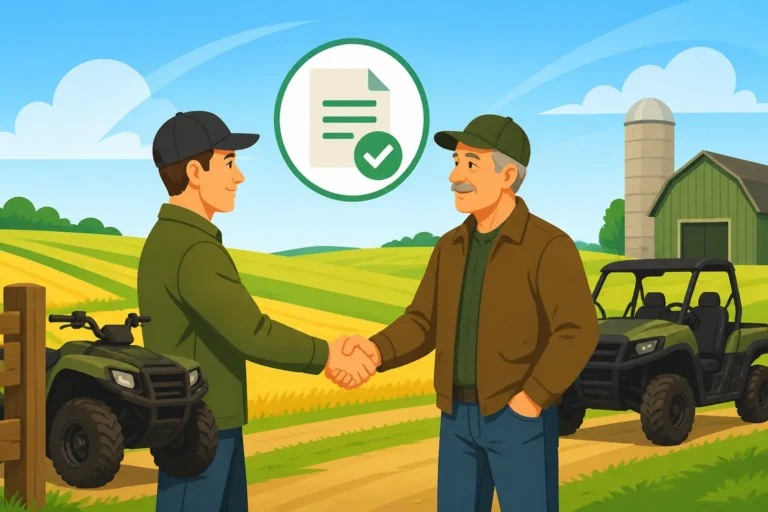
Even without a provincial registration, proving ownership is still absolutely crucial when you're riding in Saskatchewan. A peace officer might ask you to confirm that the machine you're operating belongs to you or that you have permission to use it. For a visiting Montana rider, your primary document will be your bill of sale.
Think of your bill of sale as your machine's birth certificate and deed rolled into one. If you've financed your machine, bringing along your loan agreement or a lease document can also serve as proof of your legal right to possess and operate the ATV or UTV. If your machine is registered in Montana, bringing that registration certificate is an excellent idea, as it acts as further corroboration of ownership. The key is to have something tangible that clearly shows the vehicle identification number (VIN) and ties you to the machine. Without a registration system, these documents are vital. It's always a good practice to carry copies of these documents with you, perhaps laminated or kept in a waterproof bag, whenever you're out riding. For more details on what counts, you can look into [Saskatchewan Proof of Ownership on the Trail].
Navigating Saskatchewan's Specific Riding Rules
While provincial registration might be absent, Saskatchewan does have comprehensive rules governing how and where ATVs and UTVs can be operated. These apply to everyone, residents and visitors alike, and they might differ from what you're used to in Montana.
Licensing, Age, and Safety Gear: Non-Negotiables
Operating an ATV or UTV in Saskatchewan isn't like riding a bicycle; it comes with serious responsibilities and legal requirements.
First, you need a valid driver's licence. For visiting Montana riders, your valid Montana driver's licence is perfectly acceptable. You do not need to obtain a special Saskatchewan licence. This means [Saskatchewan Requires a Driver's Licence] applies to you just as it does to a local rider.
Second, age restrictions are strict. Generally, you must be 16 years of age or older to operate an ATV or UTV in Saskatchewan. There are exceptions for younger riders (12-16 years old) who have successfully completed an approved safety course or are under the direct supervision of an adult who has held a driver's licence for at least 365 days. If you're bringing a younger rider with you, be absolutely sure they meet these criteria. [Saskatchewan Bans Riders Under 16] is a rule that's taken seriously.
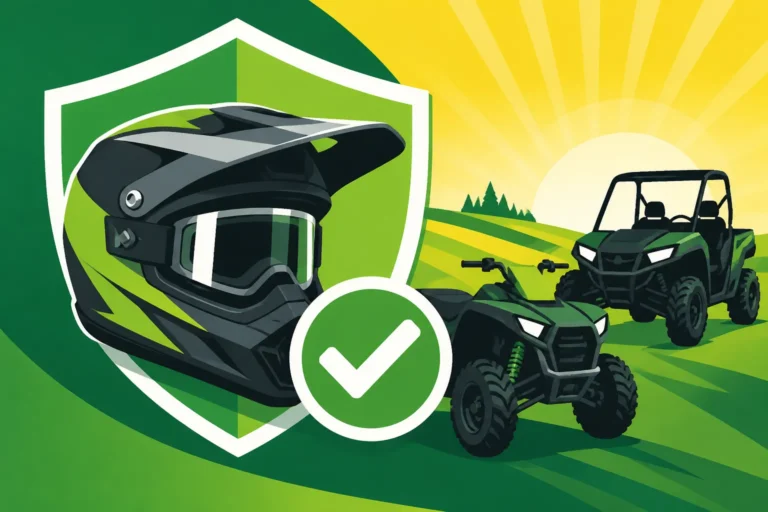
Third, safety gear is mandatory. This isn't just a recommendation; it's law. All operators and passengers must wear an approved helmet that meets specific safety standards (e.g., DOT, Snell, ECE). The helmet must be properly fastened. Additionally, you must wear eye protection, such as goggles or a face shield, to protect your eyes from debris, dust, and insects. A visit to any SuperATV catalogue will show you the vast array of helmets and goggles that meet these requirements, ensuring you're both safe and comfortable. Ignoring these rules can lead to fines and puts you at significant risk. Check out [Saskatchewan Helmet and Eye Protection Rules] for the specifics.
Ditch Riding and Road Access: A Different Ballgame
This is often one of the most surprising areas for out-of-province riders. In Saskatchewan, there are very specific rules about where you can operate an ATV or UTV, especially concerning public roads and ditches.
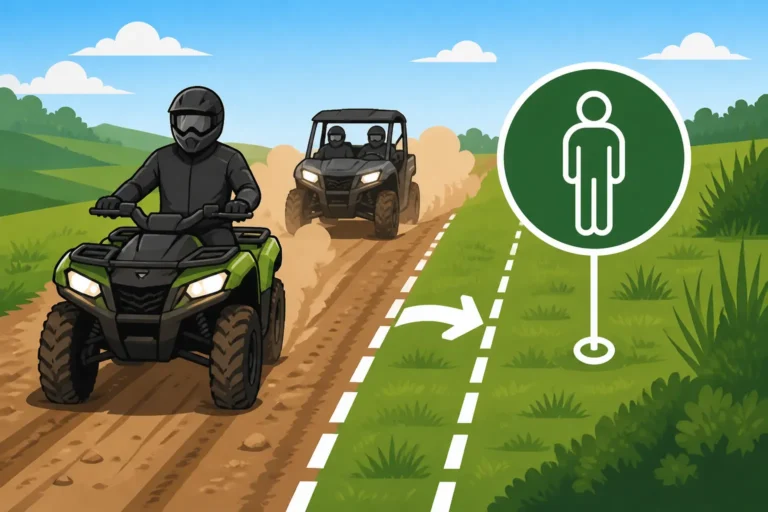
You generally cannot ride on the travelled portion of a provincial highway. However, you can often ride in the ditch adjacent to highways, provided you stay at least two metres (approximately 6.5 feet) from the travelled portion. This "2-metre rule" is fundamental. [Saskatchewan Ditch Riding and the 2-Metre Rule] is crucial knowledge. When you encounter a road allowance or grid road, you may be able to ride on it, but always be aware of local municipal bylaws that might prohibit or restrict such activity.
Crossing highways has its own rules: you must stop, yield to all traffic, cross by the shortest route, and all passengers must dismount before crossing. You cannot ride across a bridge or weir unless specific signage allows it.
Speed limits are also a factor. When riding on a road allowance or in a ditch, your speed generally cannot exceed 80 km/h (approximately 50 mph). After dark, there are additional lighting requirements for your machine, and you must travel in the same direction as vehicular traffic if you're near a roadway. These rules are designed for safety, given the prevalence of farming equipment and other vehicles on rural roads.
Insurance: Your Essential Safety Net
Even though Saskatchewan doesn't register ATVs, liability insurance is absolutely mandatory for operating any ATV or UTV. You must carry a minimum of $200,000 in third-party liability coverage. This means that if you're involved in an accident and cause injury or damage to another person or their property, your insurance will cover the costs up to that limit.
For visiting Montana riders, your existing ATV/UTV insurance policy from Montana should cover you in Saskatchewan, provided it meets or exceeds our minimum liability requirement. It's crucial to confirm this with your insurance provider before you cross the border. Ask them specifically if your policy extends coverage to Saskatchewan, Canada, and if it meets the $200,000 minimum. Always carry proof of insurance with you while riding, just as you would in Montana. An officer can ask to see it, and not having it can result in a ticket. Learning about [Saskatchewan Insurance Proof on the Trail] is a good idea. Many riders choose to add comprehensive and collision coverage to protect their own machine from damage or theft, especially if they've invested in quality accessories from a brand like SuperATV.
Where You Can (and Can't) Ride: Land Access and Local Bylaws
Saskatchewan offers incredible riding opportunities, but knowing where you're allowed to go is just as important as knowing how to ride.
Crown Land and Private Property: Getting Permission
Saskatchewan has vast tracts of Crown land (public land), but access rules can vary. Some Crown land is open to ATVs, while other areas may be restricted or closed, especially during specific seasons (like fire season) or in sensitive ecological zones. You'll often find signs indicating restrictions, or you might need to check with the Ministry of Environment for specific areas. The general rule of thumb is: if you don't know, don't go. Always err on the side of caution.
When it comes to private land, including agricultural fields, pastures, and wooded areas, you must have explicit permission from the landowner before riding. Trespassing is a serious offence and can lead to fines and strained relationships with local residents. This also applies to grazing leases, which are Crown lands leased to private individuals for ranching; you typically need the leaseholder's permission to ride there. Understanding [Saskatchewan Crown Land Access Rules] is vital for planning your route. Always be respectful of fences, gates, and livestock.
Municipal Bylaws: The Local Twist
While the province doesn't register ATVs, individual cities, towns, villages, and rural municipalities in Saskatchewan do have the authority to create their own bylaws governing ATV use within their boundaries. This is where things can get a little complex for visitors expecting uniformity.
Some municipalities might have bylaws that:
- Permit or prohibit ATV use on specific streets or within town limits. For instance, a small village might allow ATVs on certain streets to access trails, while a larger town might ban them completely.
- Establish their own local plate or permit systems. Places like the District of Lakeland or Candle Lake have their own municipal plate programs for ATVs and UTVs if you intend to ride on their municipal roads or within their jurisdiction. These are local permits, not provincial.
- Impose specific speed limits or curfews.
It's absolutely critical to research the local bylaws for any specific municipality you plan to visit or ride through. A quick call to the municipal office or a visit to their website before your trip can save you a lot of grief. [Saskatchewan Municipalities With ATV Bylaws] is a topic many local riders keep an eye on, and you should too. Don't assume that just because you can ride in the ditch of a highway near one town, you can do the same within the boundaries of another.
Preparing Your Machine for Saskatchewan Adventures
Ensuring your ATV or UTV is properly equipped and maintained is crucial for a safe and enjoyable trip to Saskatchewan, especially given our diverse terrain and weather conditions.
Essential Gear and Maintenance Checks
Before heading north from Montana, give your machine a thorough once-over. Basic maintenance is key: check your oil, tire pressure, brakes, and fluid levels. Make sure all your lights are working, especially if you plan to be out around dusk or after dark, as specific lighting is required. Your machine should also have a working muffler and spark arrestor to minimize noise and reduce wildfire risk. Many riders opt for aftermarket protection like full skid plates or A-arm guards from SuperATV to protect vital components from rocks and stumps common on some Saskatchewan trails.
Consider the terrain you'll be riding. Will it be rocky trails, muddy bush, or dusty grid roads? Equip your tires accordingly. Packing a basic tool kit, a tire repair kit, a small air compressor, and a winch (if your machine doesn't have one integrated) can be a lifesaver, especially if you venture into remote areas. A GPS device or a reliable map app on your phone, along with a power bank, is also highly recommended, as cell service can be spotty outside of populated areas.
Spark Arrestors and Fire Preparedness
Saskatchewan experiences wildfire seasons, usually from spring through fall, and preventing fires is a serious concern. Your ATV or UTV must be equipped with a spark arrestor that is in good working order. A spark arrestor helps prevent hot carbon particles from escaping your exhaust and potentially igniting dry vegetation. You should inspect it regularly.
Furthermore, during periods of high fire risk, there may be fire bans or restrictions on ATV use on Crown land or in specific areas. These bans are put in place to protect our forests and communities and are strictly enforced. Always check the current fire ban status for the region you intend to ride in before you head out. Websites for Saskatchewan's Ministry of Environment or local municipal pages will usually have up-to-date information. Ignoring a fire ban can result in significant fines and, more importantly, could contribute to a devastating wildfire. It’s also a good idea to carry a small shovel and a fire extinguisher on your machine, especially when riding in dry conditions. Being prepared means everyone stays safe and the trails remain open for future enjoyment.
Before you load up your quad and point it north, remember that a little preparation goes a long way. Understanding these Saskatchewan-specific rules will help ensure your visit is filled with fantastic riding memories, rather than unexpected headaches. Enjoy the ride, and welcome to Saskatchewan!
Disclaimer
This article is for general informational purposes only and does not constitute professional advice. Laws, prices and regulations vary by location and change over time. Consult a qualified professional for guidance on your specific situation.